
Chess strategy understanding Normal Worksheets for Ages 7-8
3 filtered results
Difficulty Level
Grade
Age
-
From - To
Subject
Activity
Standards
Unlock the strategic minds of young learners with our "Chess Strategy Understanding Normal Worksheets for Ages 7-8" from Kids Academy. Specially crafted to enhance analytical thinking and problem-solving skills, these engaging worksheets introduce key chess concepts tailored for beginners. Kids will learn essential strategies, develop foresight, and build confidence through step-by-step activities designed to make chess both fun and educational. Safe and easy to download, our printable resources provide a solid foundation in chess, fostering cognitive growth. Give your child the tools to master the game while nurturing critical thinking and creativity—start their chess journey today!
Favorites
With answer key
Interactive
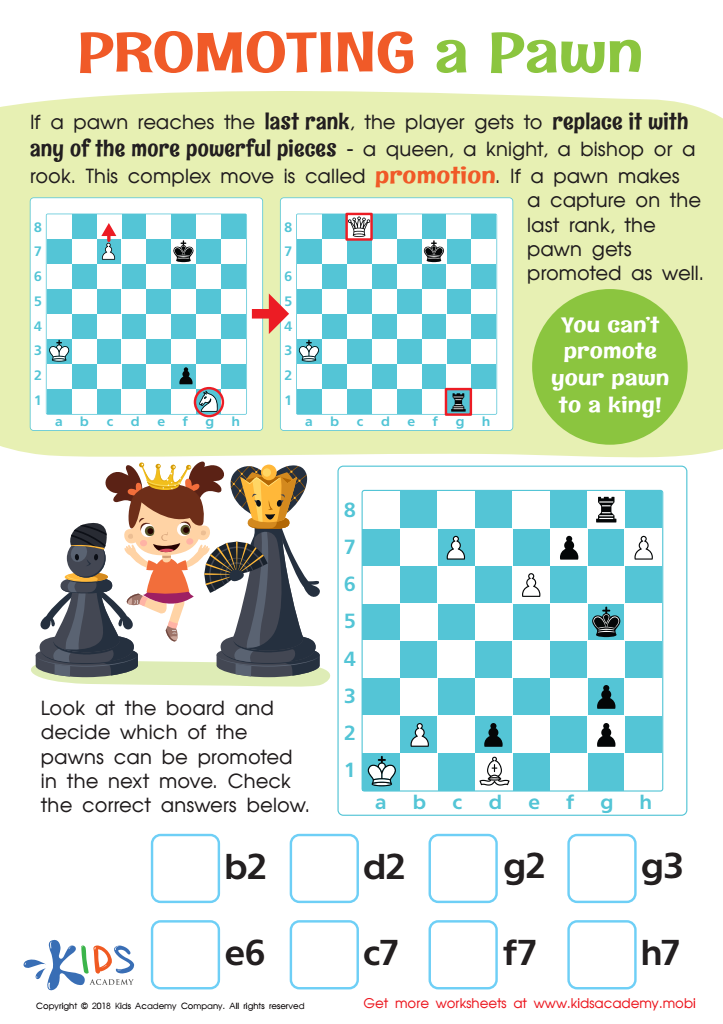
Promoting a Pawn Worksheet
Teach your kids all about pawns with this fun worksheet! Pawns may seem restricted, but experienced players can guide them across the board. If a pawn reaches the last rank, the player can upgrade it to a more powerful piece (e.g. queen, knight), or promote it if it captures an enemy piece. Give them the tools to master the game!
 Assign to My Students
Promoting a Pawn Worksheet
Worksheet
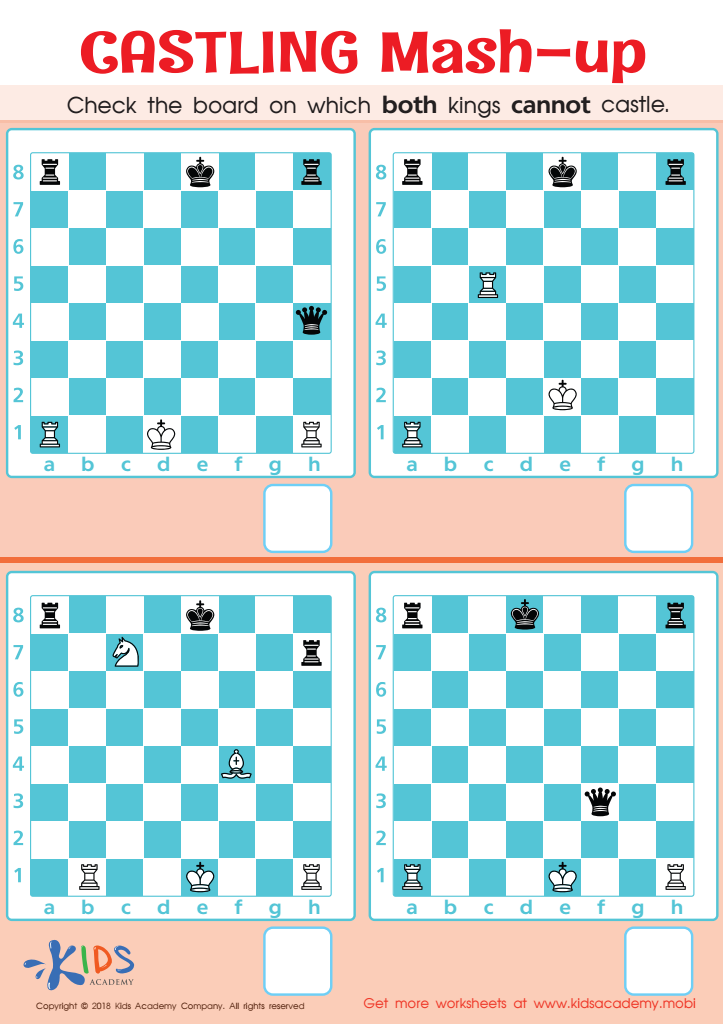
Castling Mash–up Worksheet
Before starting the worksheet, ensure your child understands castling in chess. If not, take time to explain it. Once they have a clear grasp of the rules, help them complete the exercise. Check the board to ensure that neither king can castle.
Castling Mash–up Worksheet
Worksheet
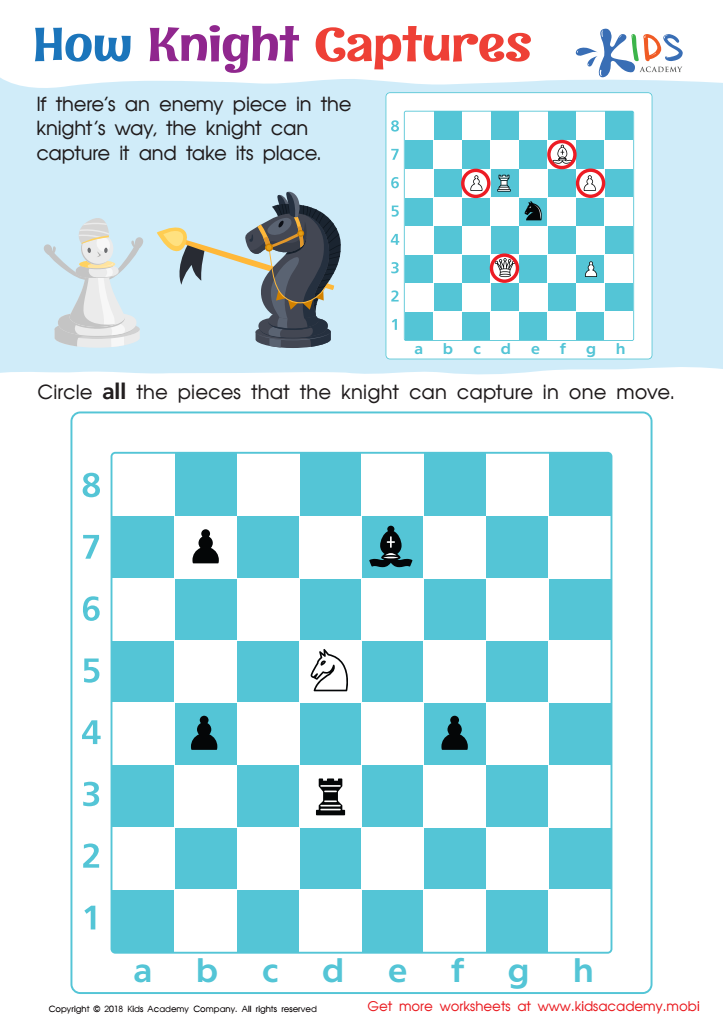
How Knight Captures Worksheet
Test your child's knowledge of chess pieces by asking them to identify the knight. It is shaped like a horse and its goal is to capture the enemy king in order to win the game. The knight has the advantage of being able to jump over other pieces, taking them out and taking their place. See how many pieces the knight can capture in one move with this worksheet.
How Knight Captures Worksheet
Worksheet
Join Kids Academy for Free
Who is primarily going to use this learning content?







Introducing chess to children aged 7-8 can be incredibly beneficial for their cognitive and emotional development. Chess strategy enhances critical thinking, problem-solving skills, and the ability to plan ahead. At this age, children's brains are highly plastic, making it the optimal time to develop these skills.
Firstly, understanding chess strategies encourages logical thinking. Children learn to weigh the consequences of their moves, fostering a robust analytical mindset. This logical foundation extends beyond chess, aiding in math proficiency and science exploration.
Secondly, chess improves concentration and focus. To successfully play the game, players must give their full attention to anticipate their opponent's moves. This refinement in focus can translate to better performance in school and other activities.
Thirdly, the game teaches patience and emotional resilience. Wins and losses in chess are direct outcomes of one’s strategies, offering a safe space for children to experience and deal with mistakes and setbacks. They learn perseverance and the value of incremental progress.
Lastly, chess fosters social interaction and respect. Whether playing online or face-to-face, young players interact with peers and adults in meaningful ways, learning sportsmanship and respectful competition.
In conclusion, the cognitive and emotional benefits granted by an understanding of chess strategies make it a valuable activity for children in early grades.








