
Strategic thinking development Normal Worksheets for Ages 7-8
7 filtered results
Difficulty Level
Grade
Age
-
From - To
Subject
Activity
Standards
Unlock the potential of young minds with our strategic thinking development worksheets tailored for ages 7-8. Designed to challenge and engage, these printable worksheets are an excellent resource for enhancing problem-solving skills, critical thinking, and decision-making abilities. Each activity encourages children to think ahead, plan their moves, and consider multiple solutions, laying a strong foundation for future academic and personal success. Perfect for parents and educators alike, our worksheets provide a fun and interactive way to boost strategic thinking while keeping kids motivated and eager to learn. Start building brighter, sharper minds today!
Favorites
With answer key
Interactive
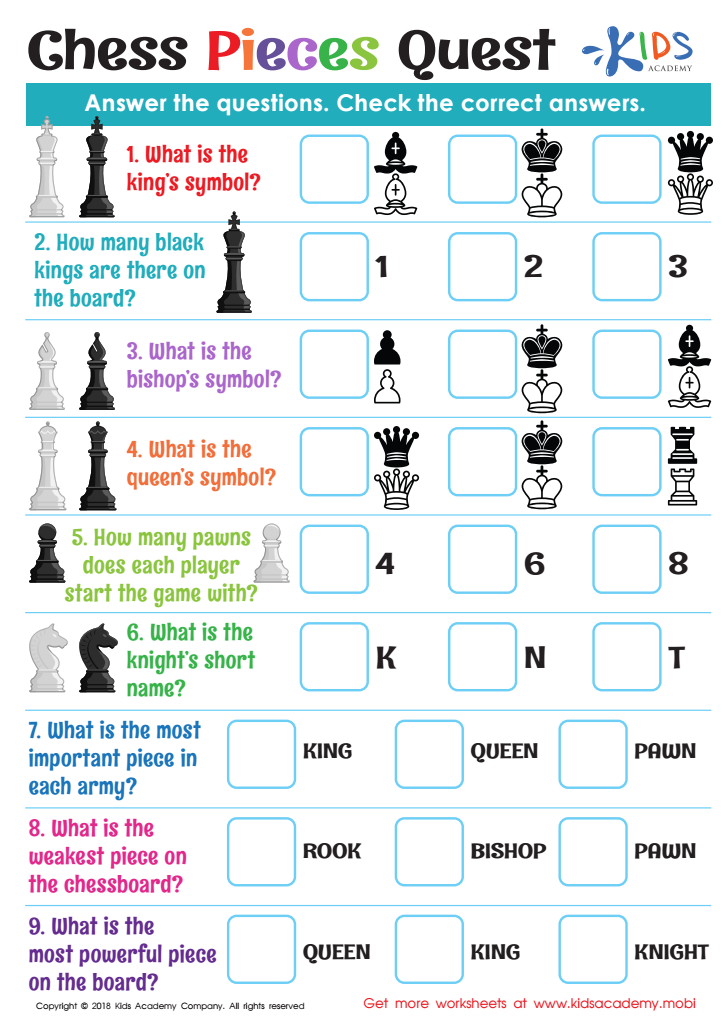
Chess Pieces Quest Worksheet
Help your child prepare for the chess quest by refreshing their knowledge of the symbols and characteristics of each chess piece. Then, have them try the 9 questions on this worksheet. These questions will assess their understanding of the symbols and how many pieces each player starts with.
 Assign to My Students
Chess Pieces Quest Worksheet
Worksheet
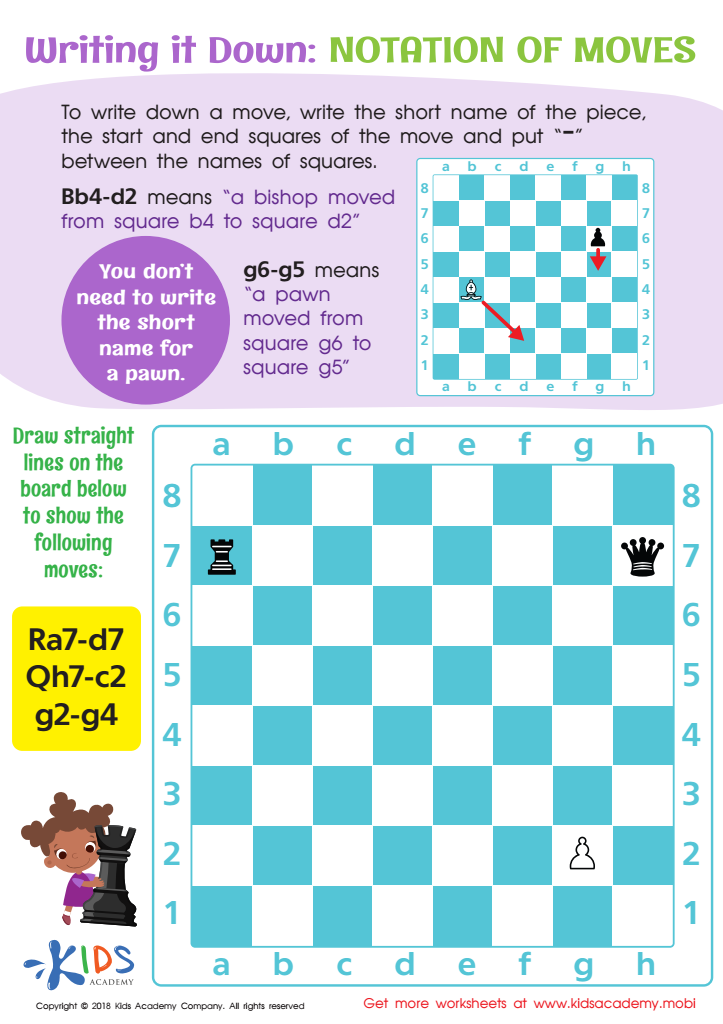
Notation of Moves Writing it Down Worksheet
Notating chess moves can be tricky for kids to learn. This worksheet will help them better understand it. To notate a move, write the piece's short name, start and end squares, and separate them with a "-". For instance, Bd4-d2 means a bishop moved from b4 to d2. No need to write pawns' short names.
Notation of Moves Writing it Down Worksheet
Worksheet
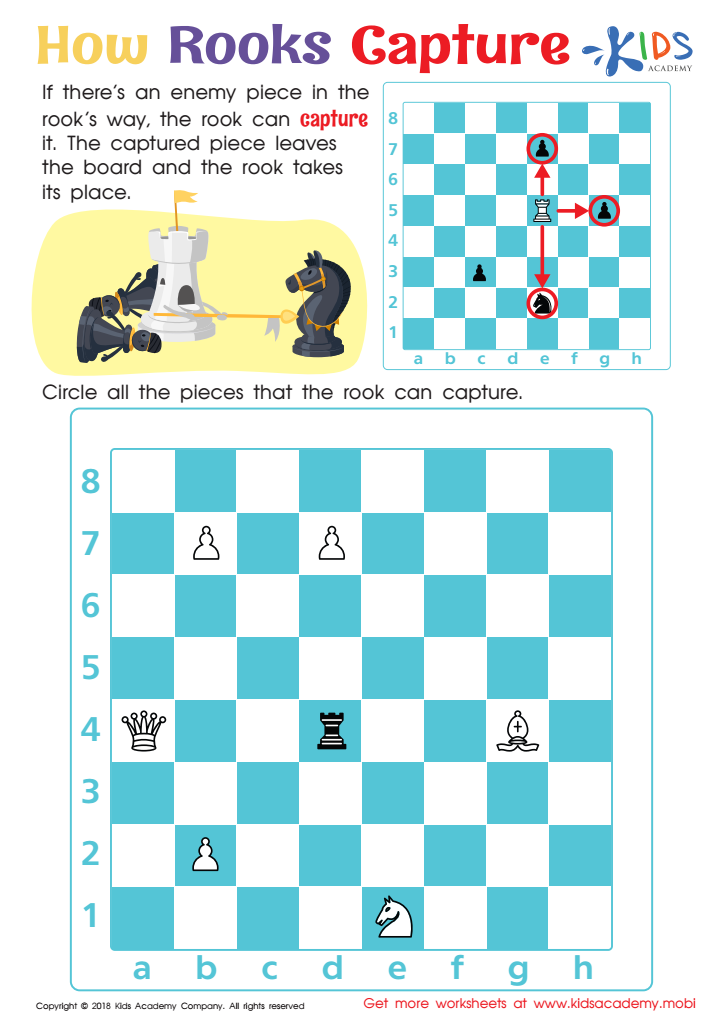
How Rooks Capture Worksheet
Chess is a game that requires skill, concentration and planning. Players must move their chess pieces strategically to capture pieces from their opponent. Do your kids know how to use the rook to capture pieces? Go through the worksheet with them and circle the pieces the rook can capture.
How Rooks Capture Worksheet
Worksheet
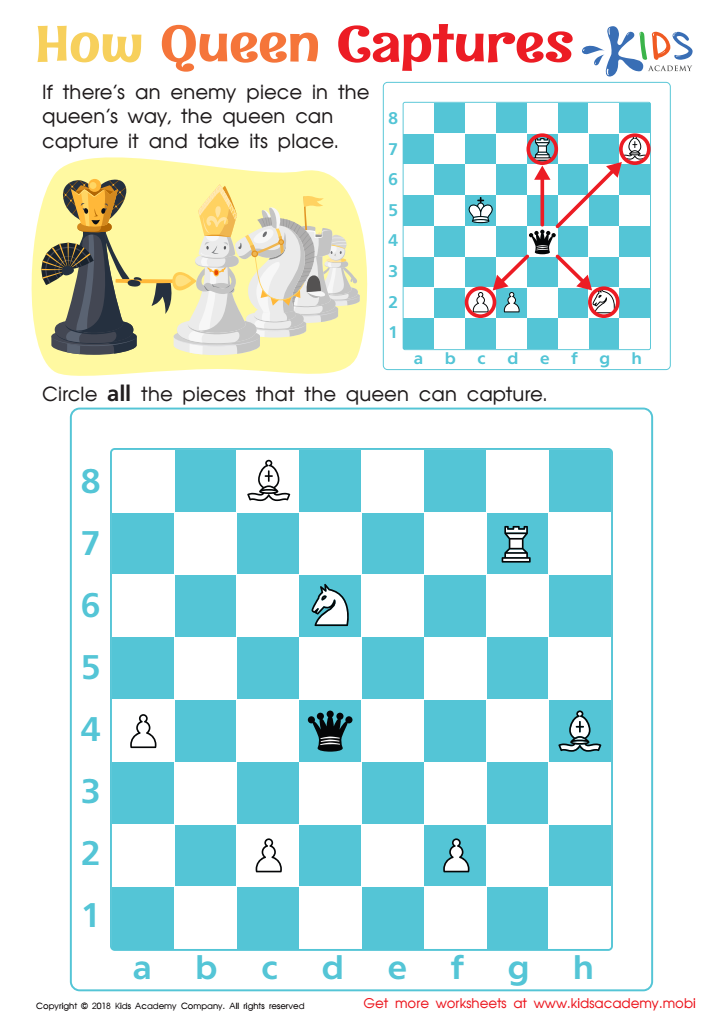
How Queen Captures Worksheet
Chess is a great game for sharpening math skills, strategic thinking, and knowledge of how each piece moves. If your child is interested, introduce them with this worksheet. It demonstrates how the queen can capture opposing pieces, such as another queen, and take their place.
How Queen Captures Worksheet
Worksheet
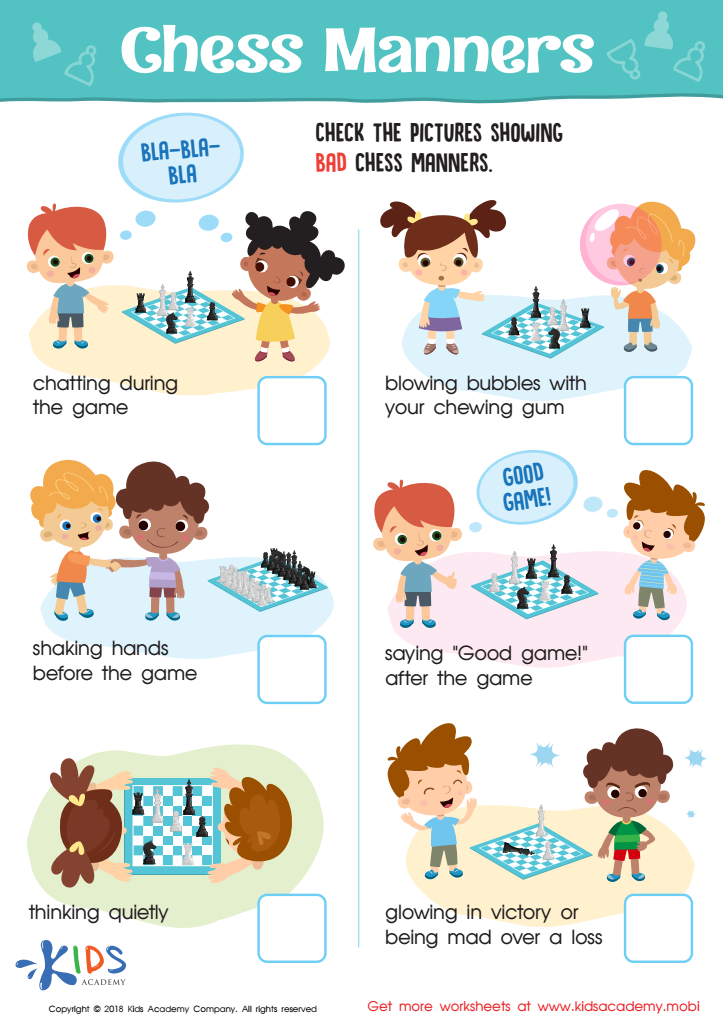
Chess Manners Worksheet
Teach your child chess manners in addition to table and social ones. Chess has clear rules and etiquette which must be followed for a proper game. Review this worksheet with your kid and discuss the pictures that show inappropriate behaviours. This will help them understand how to play the game correctly and with good manners.
Chess Manners Worksheet
Worksheet
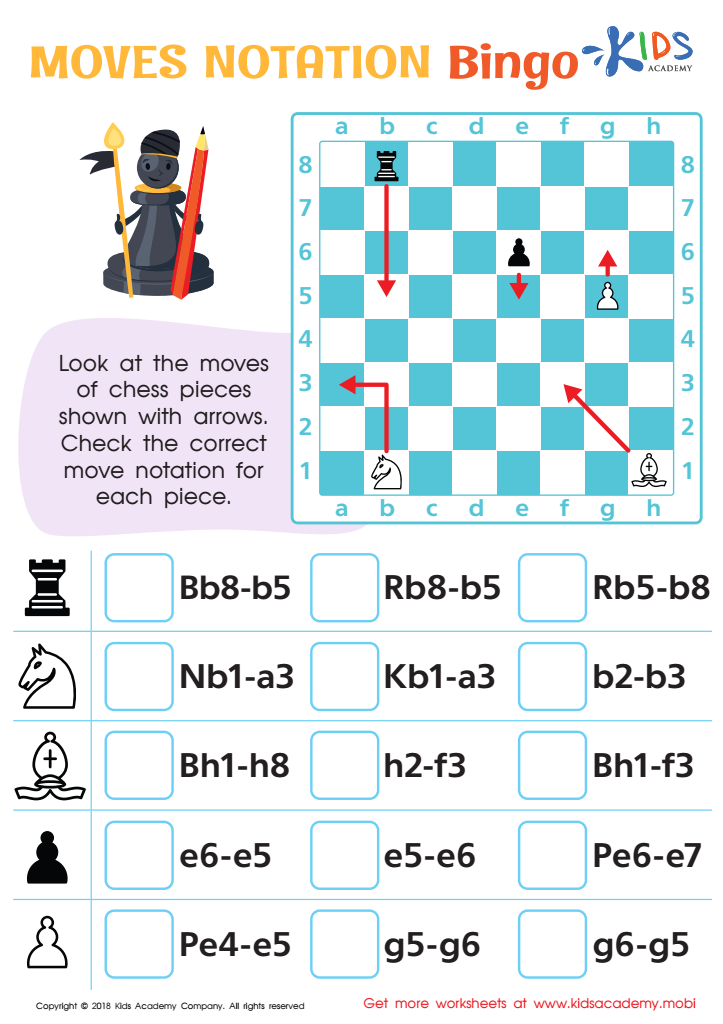
Moves Notation Bingo Worksheet
Test your child's chess notation skills with this simple worksheet. Download the PDF which shows a chess board and arrows pointing to pieces. Ask your child to identify the moves and note them down correctly. The notations needed are for bishop, pawn, rook and knight. Up to 80 words.
Moves Notation Bingo Worksheet
Worksheet
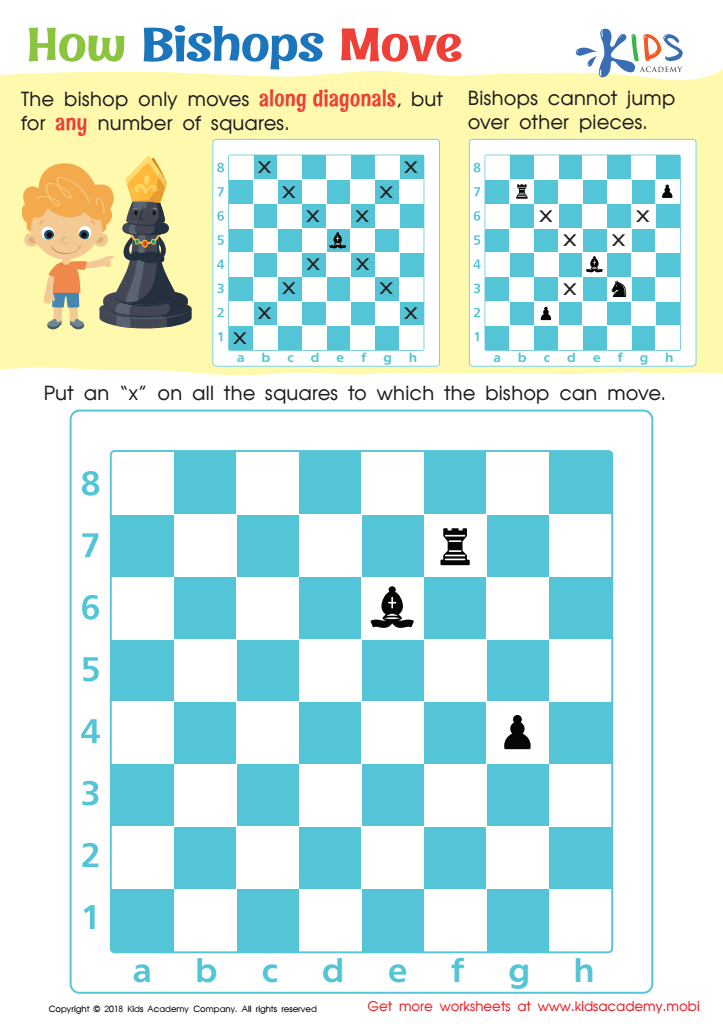
How Bishops Move Worksheet
There is no such thing as too much sharpening of skills. Encourage your child to learn more about chess technicalities with this simple worksheet. It shows them how a bishop moves: along diagonals any number of squares, but it can't jump over other pieces.
How Bishops Move Worksheet
Worksheet
Join Kids Academy for Free
Who is primarily going to use this learning content?



.jpg)


Strategic thinking development is crucial for children aged 7-8 as it lays the foundation for essential cognitive and life skills. At this stage, children's brains are rapidly developing, and they become more able to understand complex concepts and relationships. Encouraging strategic thinking benefits their academic abilities, such as problem-solving and critical reasoning, which are vital for subjects like mathematics, reading comprehension, and science.
For parents and teachers, fostering strategic thinking in this age group aids in nurturing independent thinkers who can make reasoned decisions. Engaging children in activities like puzzles, strategy games, and group projects helps them learn to evaluate options, foresee potential outcomes, and develop plans to achieve specific goals. These skills are not just academic; they enhance everyday decision-making, teaching children to approach challenges methodically rather than impulsively.
Moreover, developing strategic thinking enhances social competence by fostering negotiation and cooperation skills through team-oriented tasks. It nurtures emotional intelligence, as children learn to anticipate and consider others' perspectives, cultivating empathy and better interpersonal interactions.
Ultimately, instilling strategic thinking early creates confident, capable individuals who are well-prepared to navigate future complexities, both in education and in life. This investment in cognitive development ensures they grow into adept problem-solvers and critical thinkers, equipped for successful personal and professional lives.








