Time recognition Normal Worksheets for Ages 7-8
5 filtered results
-
From - To
Discover our engaging and educational Time Recognition Normal Worksheets, specially designed for children ages 7-8. These worksheets provide a fun and interactive way for kids to learn to read analog and digital clocks, understand hour and minute hands, and practice telling time to the nearest five minutes. Ideal for reinforcing classroom learning at home, each worksheet includes colorful illustrations and practical exercises that foster critical thinking and time management skills. Help your child build a solid foundation in time recognition and ensure they are well-prepared for future math challenges. Visit Kids Academy today and enhance your child's learning experience.
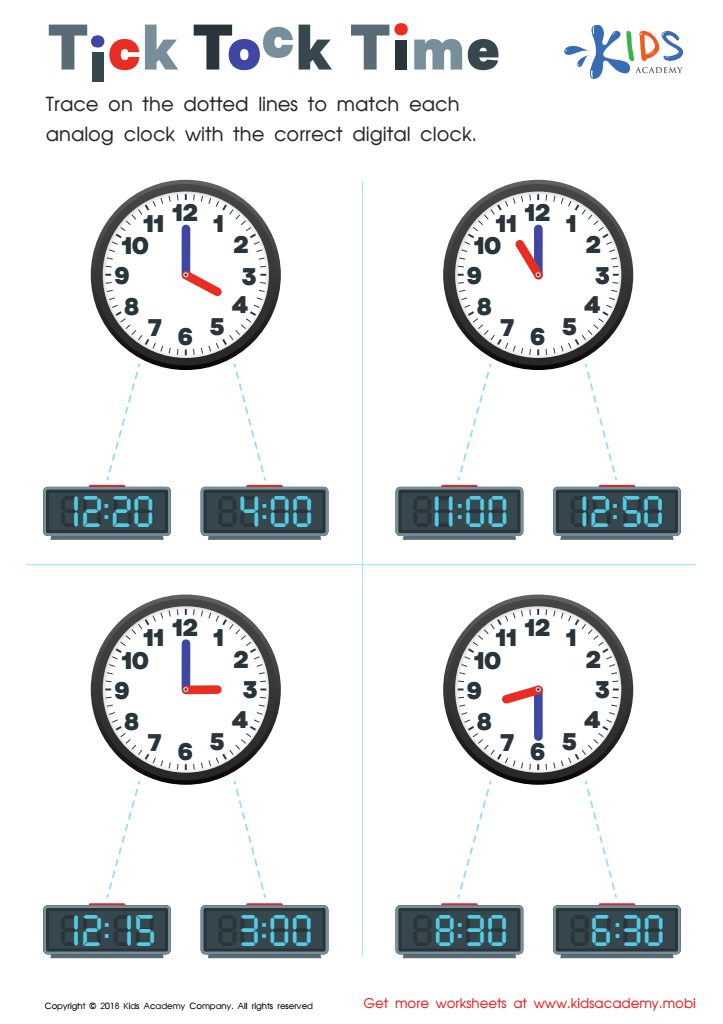
Tick Tock Time Worksheet
 Assign to My Students
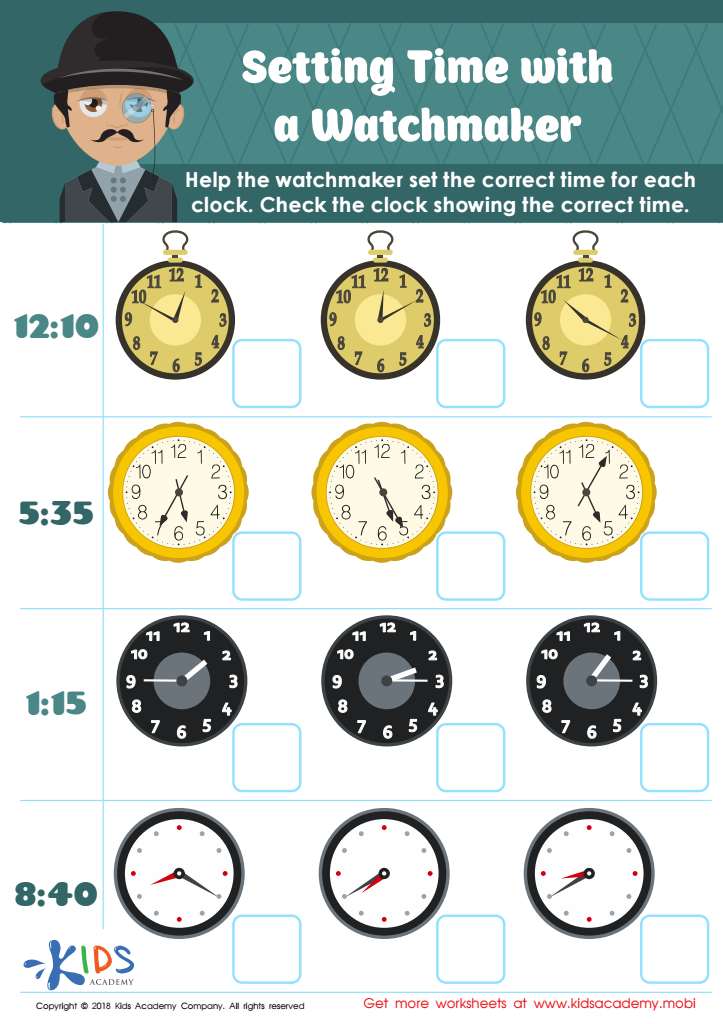
Setting Time with Watchmaker Worksheet
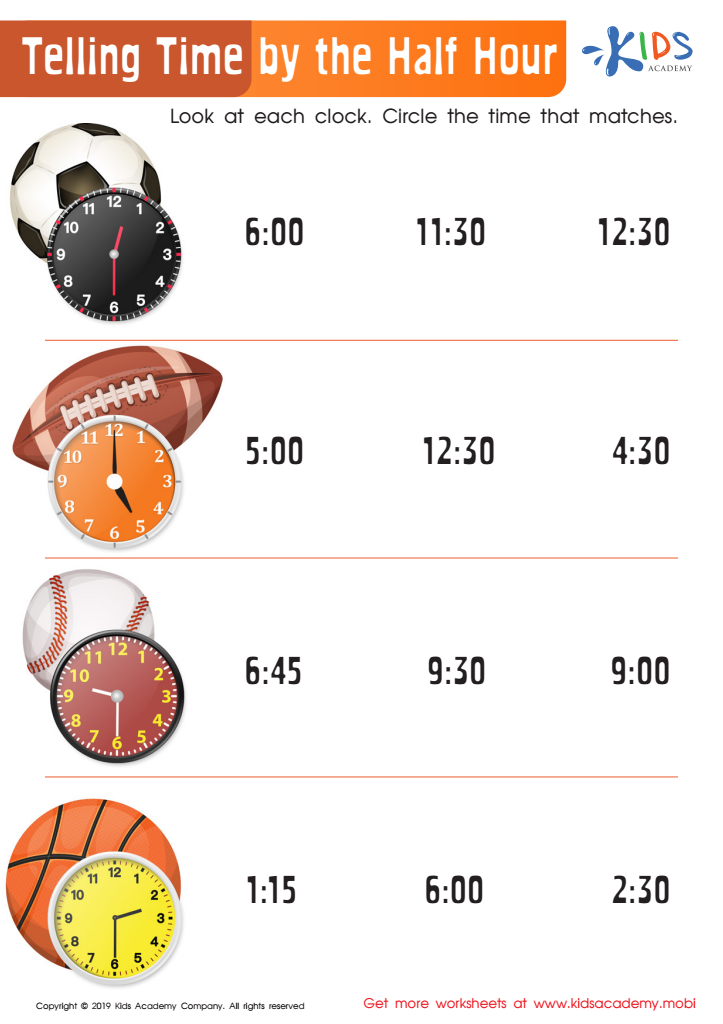
Telling Time by the Half Hour Worksheet
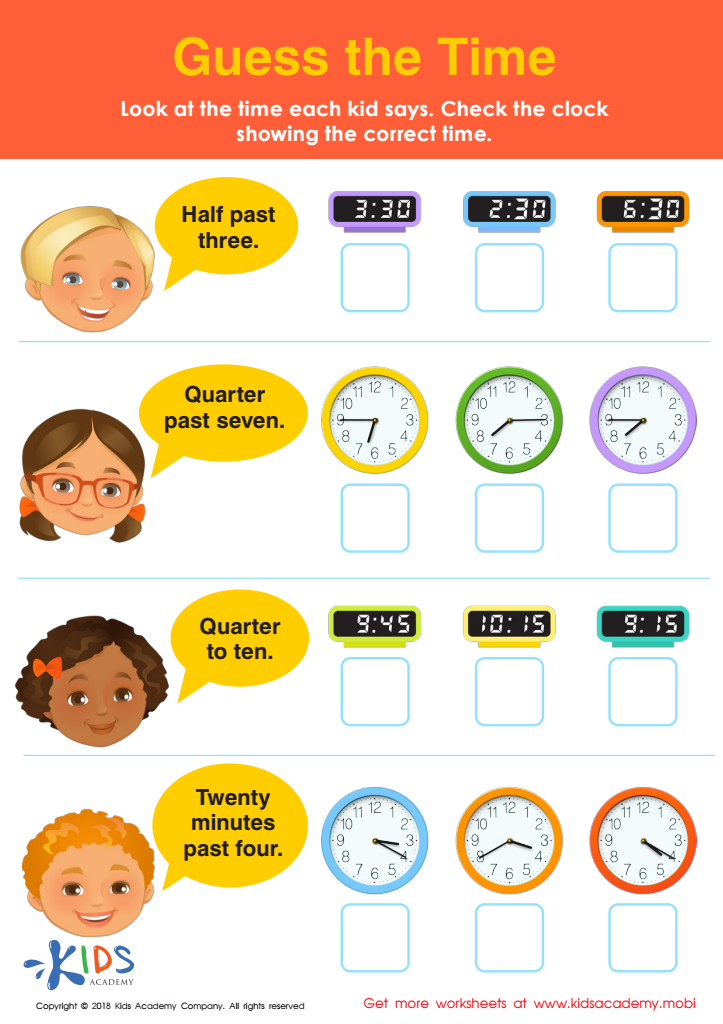
Guess the Time Worksheet
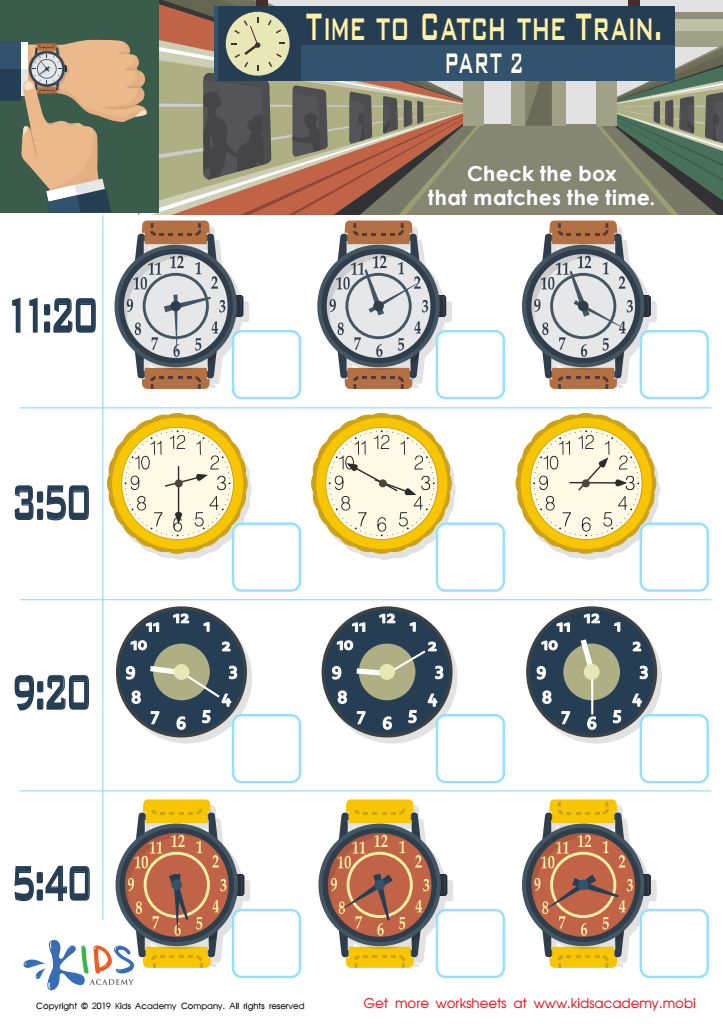
Time to Catch the Train Part 2 Worksheet







Time recognition is an essential skill for children ages 7-8, and it plays a significant role in their overall development. At this stage, children transition from relying on adults to becoming more autonomous, and understanding time helps them navigate their daily routines effectively. When children recognize time, they can create a structure that enhances their ability to manage tasks, leading to improved responsibility and time management skills.
From a parent's perspective, encouraging time recognition fosters a child's sense of independence, enabling them to better handle morning routines, homework schedules, and bedtime without constant reminders. This not only supports the child’s growth but also reduces the need for incessant parental involvement in everyday tasks.
Teachers benefit from students who understand time, as this knowledge promotes a controlled classroom environment where students transition smoothly between activities and adhere to punctual timelines. It also enables students to develop essential academic skills such as sequencing events, which is crucial in understanding narratives and performing well in subjects like math and science.
Moreover, learning to read a clock introduces children to numerical concepts and basic arithmetic, enhancing their cognitive abilities. Overall, time recognition is not just about knowing when certain events occur but is a foundational skill that encourages discipline, independence, and academic proficiency.








