Logical Reasoning Normal Addition & Subtraction Worksheets for Ages 7-8
6 filtered results
-
From - To
Boost your child’s logical reasoning skills with our engaging Normal Addition & Subtraction Worksheets designed specifically for ages 7-8! These interactive worksheets not only reinforce foundational math concepts but also encourage critical thinking through problem-solving exercises and fun activities. Each worksheet is thoughtfully crafted to challenge young minds while encouraging independent learning. With a variety of exercises, including word problems and number puzzles, students can develop their analytical skills in a playful environment. Perfect for classroom use or at-home practice, these worksheets are a valuable resource for parents and educators alike, fostering a deeper understanding of mathematics in early learners!
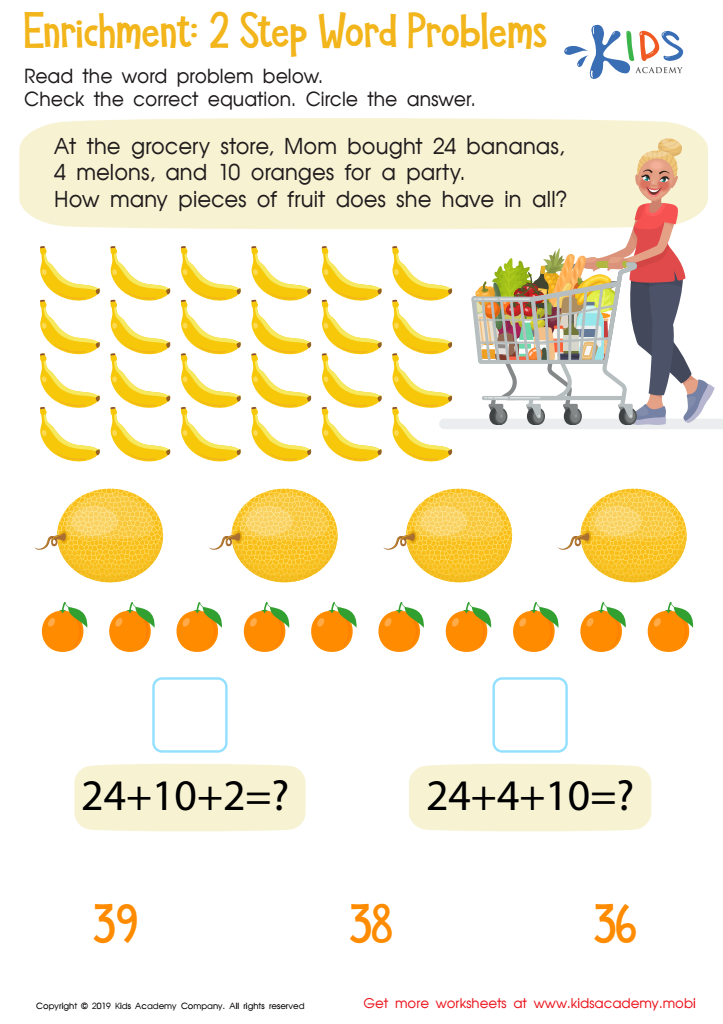
Enrichment -2 Step Word Problems Worksheet
 Assign to My Students
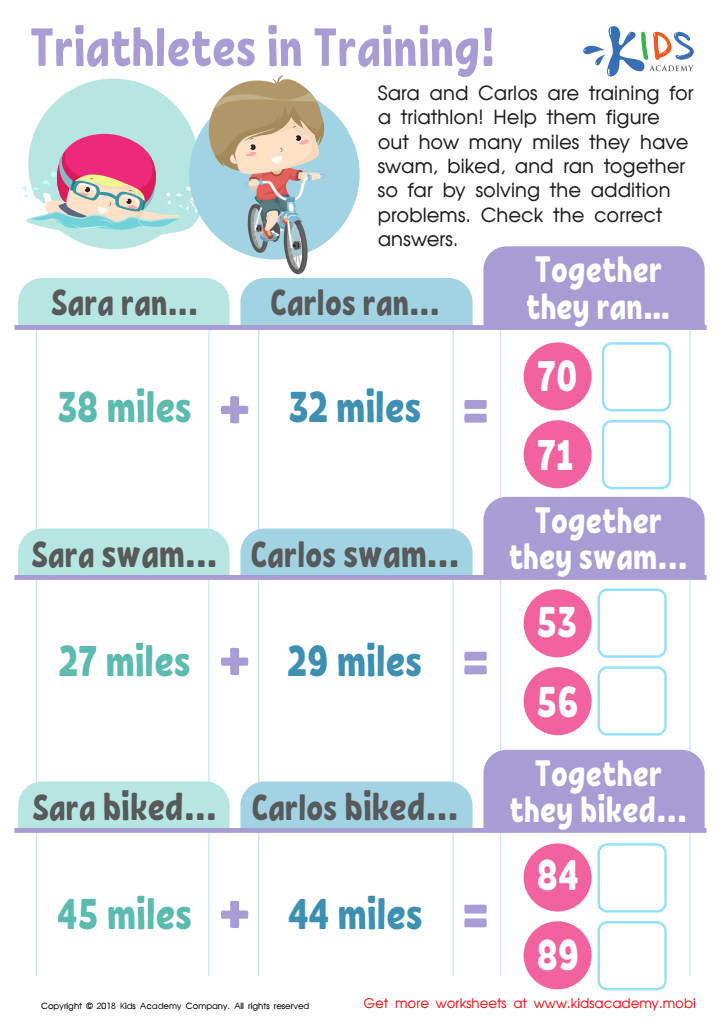
Triathletes in Training Worksheet
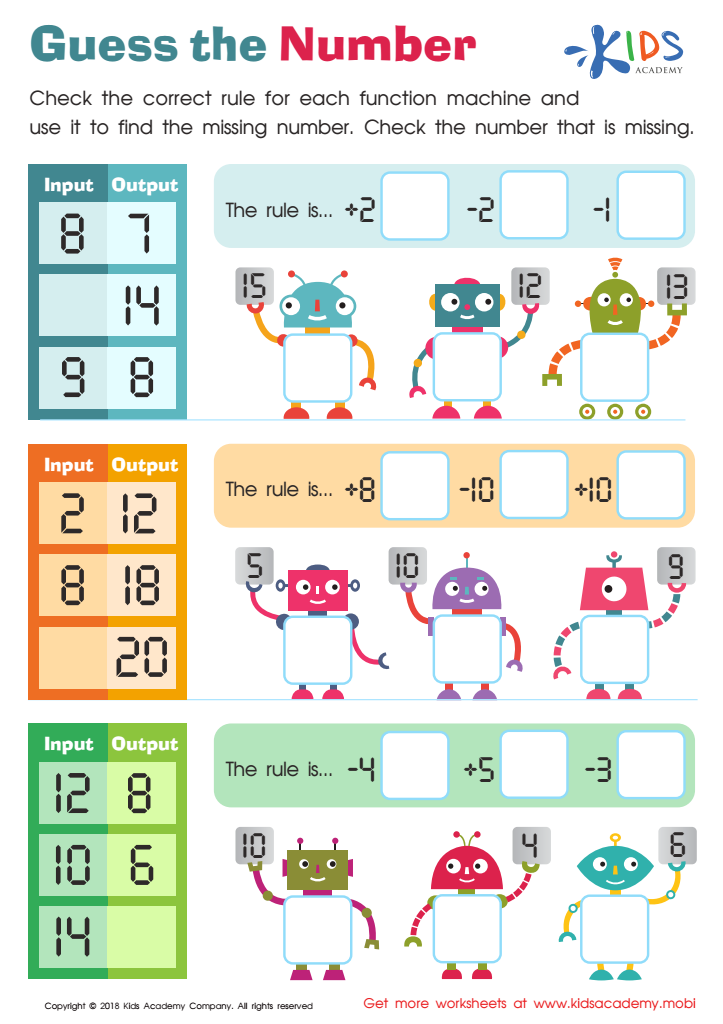
Guess the Number Worksheet
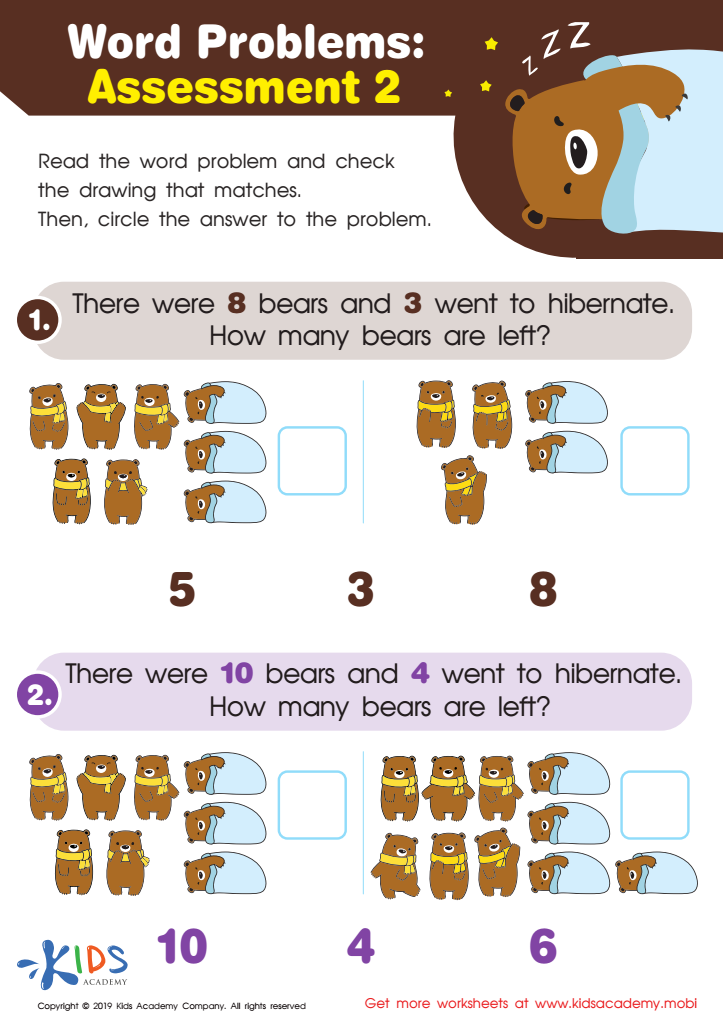
Word Problems: Assessment 2 Worksheet
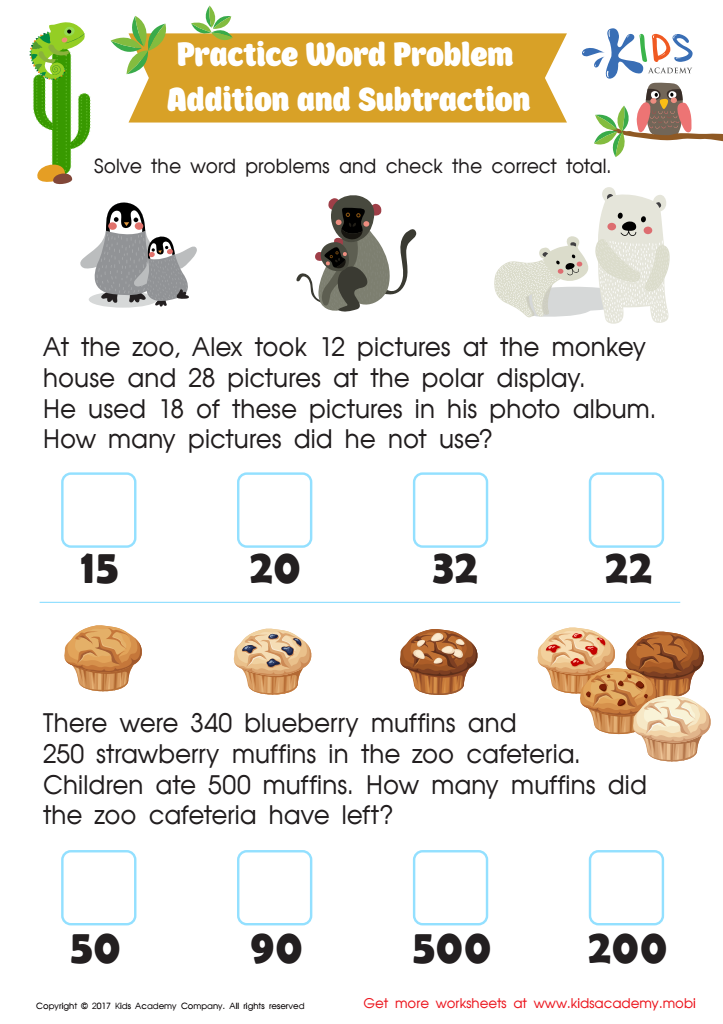
Addition and Subtraction: Word Problems Worksheet
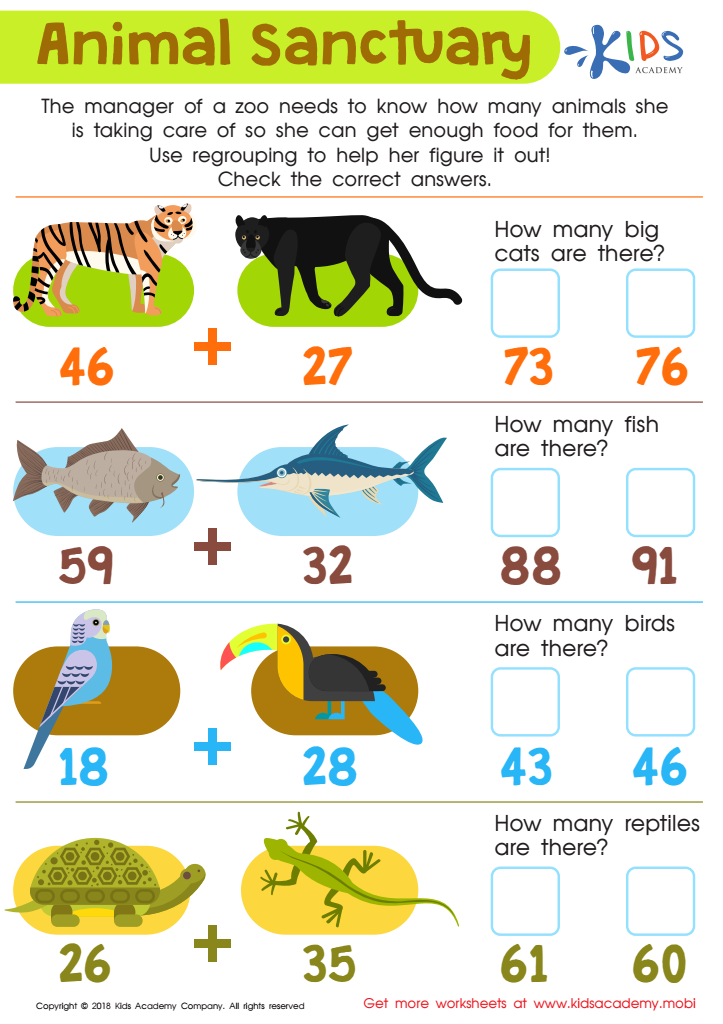
Animal Sanctuary Worksheet








Logical reasoning, particularly in the context of normal addition and subtraction, is crucial for children aged 7-8 as it lays the groundwork for their mathematical understanding and problem-solving abilities. At this age, children are transitioning from concrete to more abstract thinking, and developing analytical skills becomes essential.
Firstly, fostering logical reasoning helps children grasp not just how to perform calculations but why they work. Understanding the principles behind addition and subtraction encourages a deeper comprehension of number relationships, which is fundamental for more advanced math concepts like multiplication, division, and later algebra.
Secondly, strong logical reasoning skills foster critical thinking, aiding students in real-life decision-making. For instance, when faced with various options or problem-solving situations, children learn to evaluate their choices logically, becoming more adept thinkers overall.
Moreover, engaging with logical reasoning also promotes confidence in math, a subject where many students harbor anxiety. When children feel comfortable applying their reasoning skills, they're more likely to engage positively with math tasks, resulting in better academic performance.
In summary, parents and teachers should prioritize logical reasoning in addition and subtraction to nurture robust mathematical skills, critical thinking, and confidence in young learners, ensuring they are well-prepared for future academic challenges.








