Understanding patterns Normal Addition & Subtraction Worksheets for Ages 7-8
3 filtered results
-
From - To
Unlock the potential of your young learner with our "Understanding Patterns: Normal Addition & Subtraction Worksheets for Ages 7-8." These engaging worksheets are designed to build foundational math skills, focusing on pattern recognition through addition and subtraction exercises. Tailored for children aged 7-8, each activity aims to enhance critical thinking and problem-solving abilities. Perfect for at-home practice or supplemental classroom learning, our resources make mastering math fun and accessible. Foster a love for numbers and boost confidence with our expertly crafted worksheets, ensuring a solid mathematical foundation for your child’s future academic success.
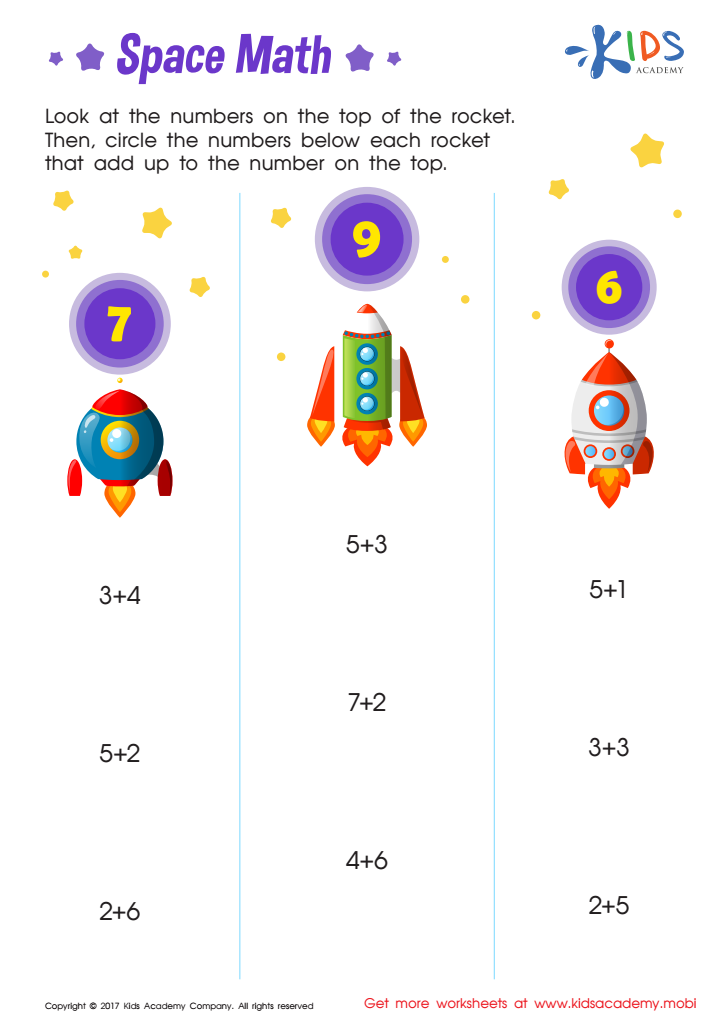
Addition: Space Math Worksheet
 Assign to My Students
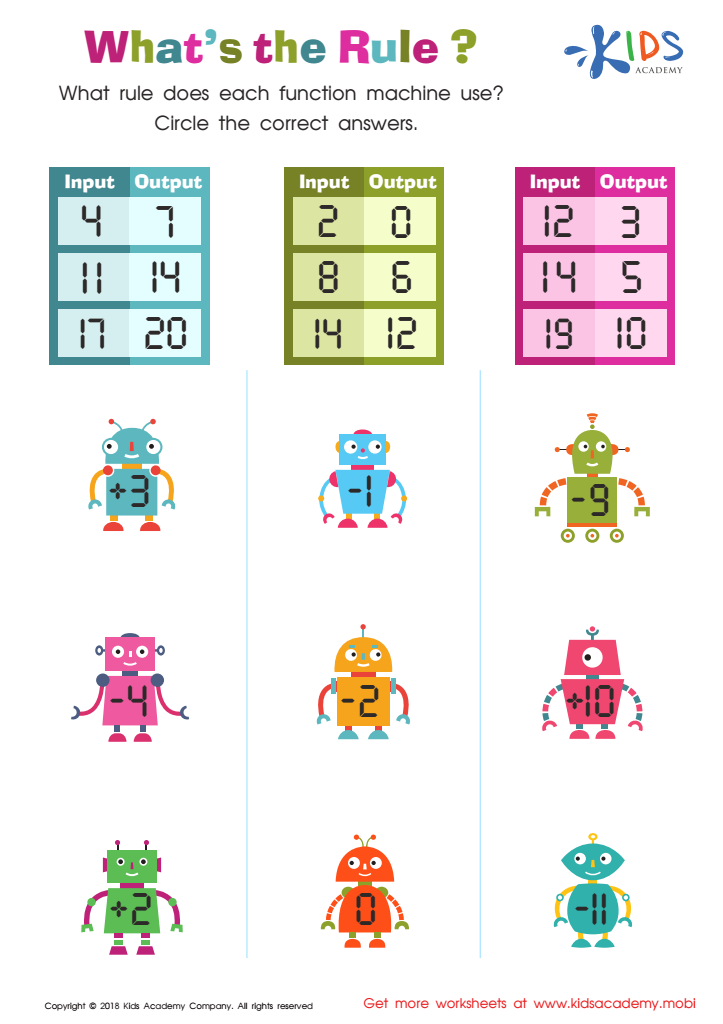
What's the Rule Worksheet
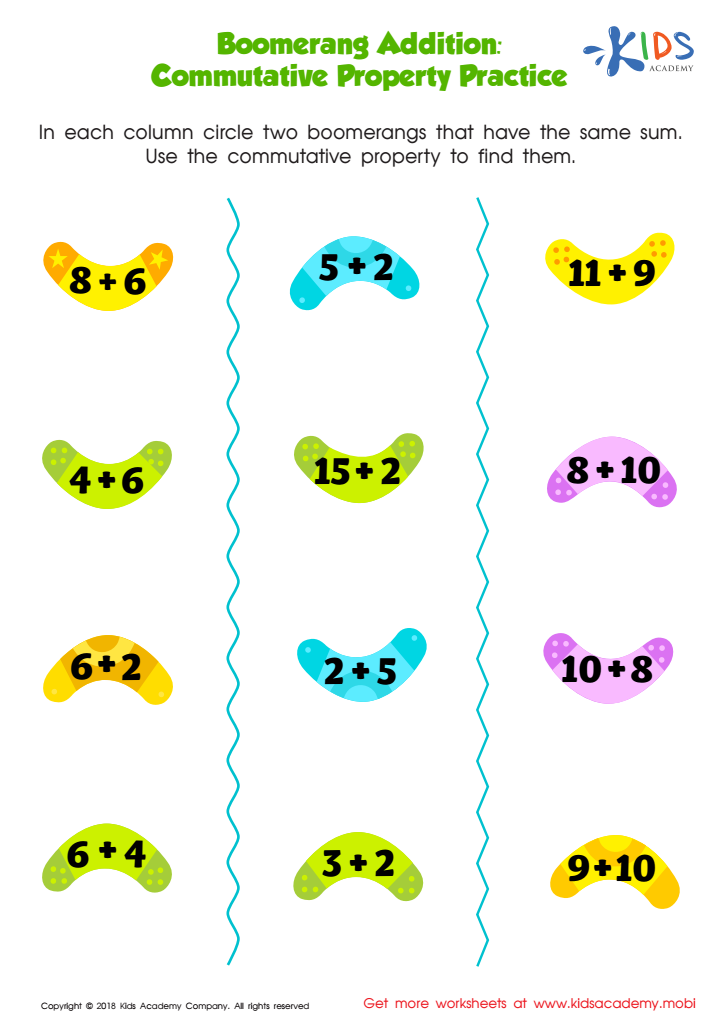
Boomerang Addition Worksheet








Understanding addition and subtraction patterns is crucial for children ages 7-8 as it lays the essential groundwork for more advanced mathematical concepts. At this stage, kids are typically in second or third grade, where they transition from basic arithmetic to more complicated math problems. Recognizing patterns in addition and subtraction helps them develop critical thinking and problem-solving skills.
When children can spot patterns, they start to grasp concepts like equality, the properties of numbers, and arithmetic relationships. For instance, understanding that adding 3 to a number is the same as adding 2 and then adding 1 (because 3 = 2+1) enhances their mental math abilities. This reduces reliance on finger counting or visual aids, building confidence and speed in mathematics.
Patterns also help children see mathematics as a coherent and logical system rather than isolated facts to memorize. This recognition can make learning math more enjoyable and less intimidating, encouraging a positive attitude towards the subject. Parents and teachers should emphasize these patterns because they can connect math to everyday situations, establishing relevance and piquing curiosity. Additionally, these foundational skills are essential for future topics in math, such as multiplication, division, and algebra. Understanding patterns in addition and subtraction sets children up for long-term academic success.








