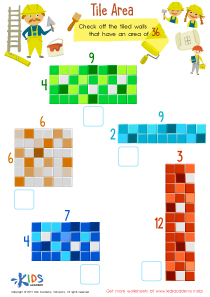
Mathematical reasoning Normal Numbers Worksheets for Ages 7-8
6 filtered results
Difficulty Level
Grade
Age
-
From - To
Subject
Activity
Standards
Enhance your child's mathematical reasoning skills with our engaging Normal Numbers Worksheets, specially designed for ages 7-8. These worksheets focus on helping young learners understand and apply the concept of normal numbers through fun, interactive exercises. Your child will explore key skills, including number recognition, counting, and basic operations, all while boosting their confidence in math. Each worksheet is visually appealing and age-appropriate, ensuring an enjoyable learning experience. Ideal for home or classroom use, our worksheets provide a solid foundation for mathematical reasoning, paving the way for future success in math. Begin your journey towards confident math mastery today!
Favorites
With answer key
Interactive
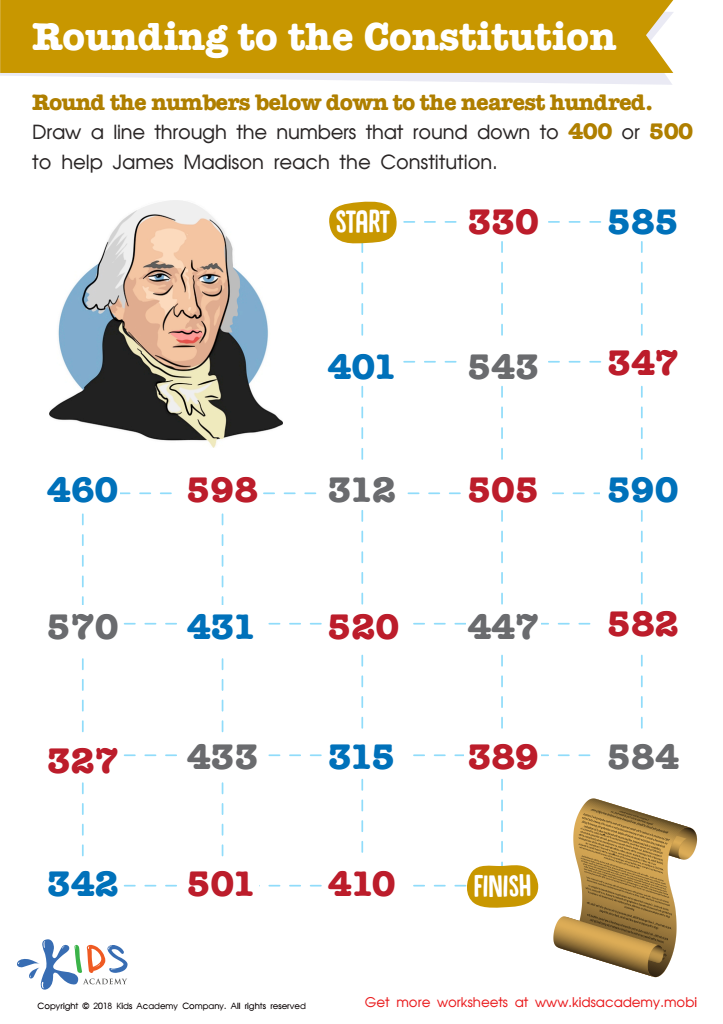
Rounding to the Constitution Worksheet
Before starting this traceable worksheet, ask your students: who is James Madison? If they know, you're doing great! If not, now's your chance to give a quick history lesson. Then, ask them to round the numbers to the nearest numbers. Get your students to draw a line through the numbers that round down to 400/500, to help James Madison reach the Constitution.
 Assign to My Students
Rounding to the Constitution Worksheet
Worksheet
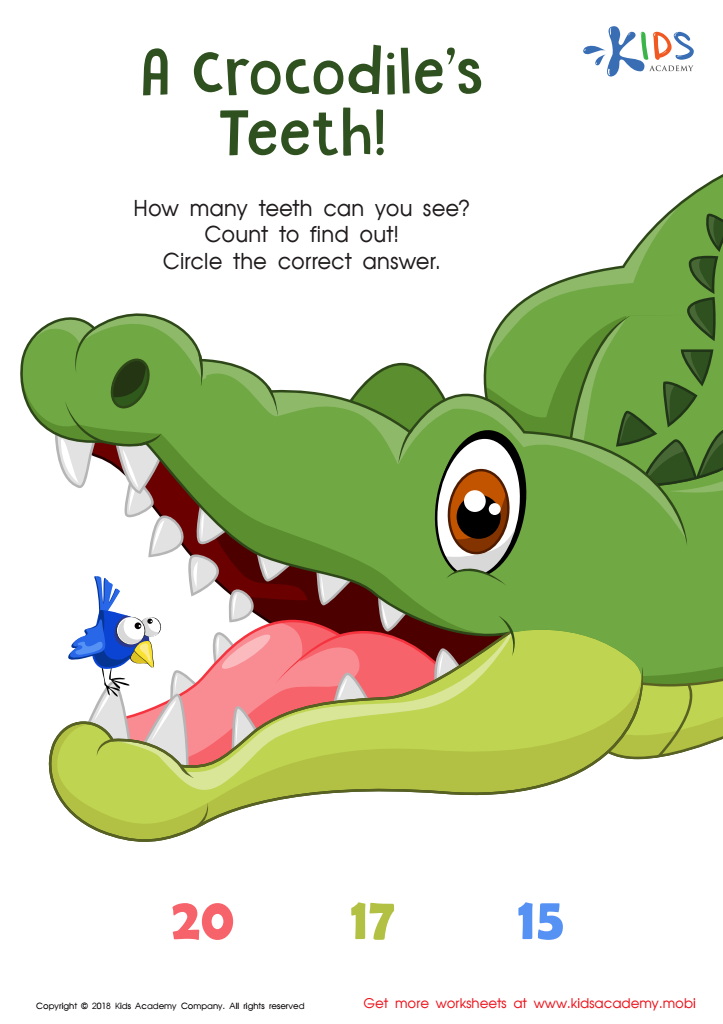
A Crocodile's Teeth Worksheet
Show your child the animal image and ask them to identify it. If they watch animal shows, they'll likely be interested. Count the teeth together, then look at the options and help them circle the right one.
A Crocodile's Teeth Worksheet
Worksheet
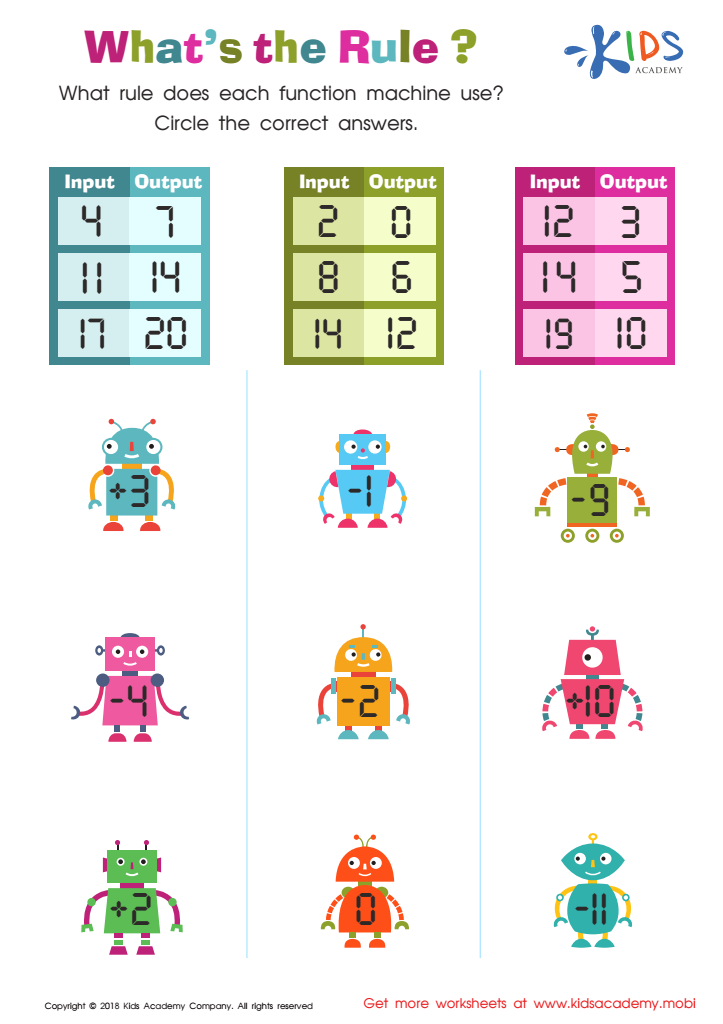
What's the Rule Worksheet
Robots are here to help your child find the relationship between each set of numbers! Adorably illustrated worksheets use vivid pictures that each contain a rule. Look at each function machine and find the pattern or relationship between the input and output. Then, complete the sheet by circling the correct answer!
What's the Rule Worksheet
Worksheet
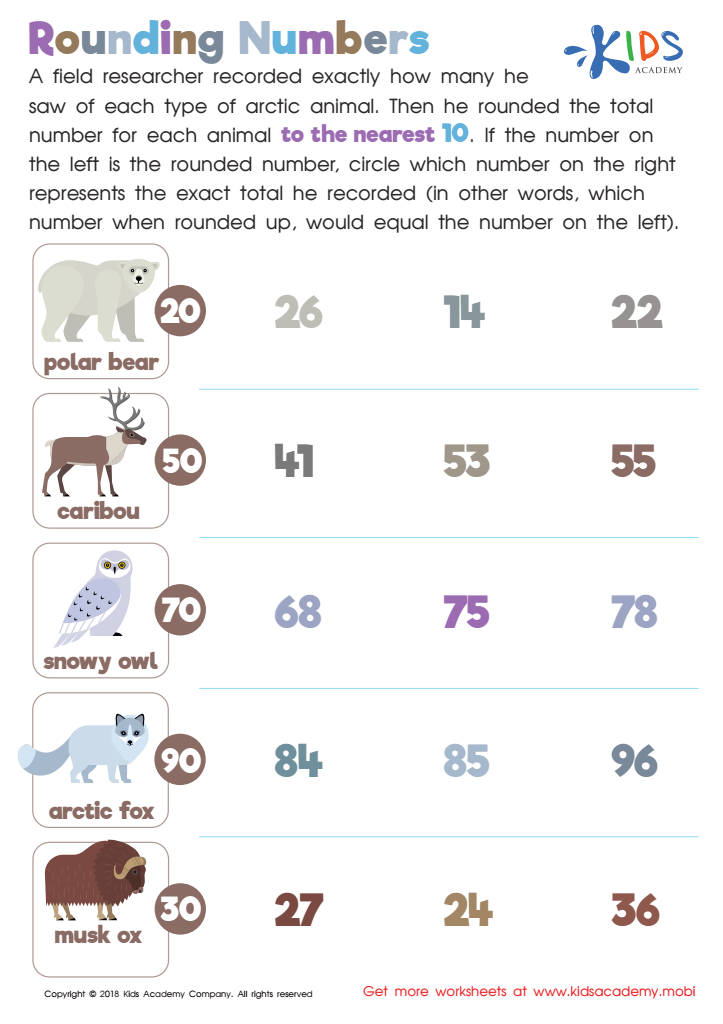
Rounding Numbers Worksheet
Take a trip north with this cute rounding math worksheet! Perfect for mastering number work, it adds a twist to the usual rounding practice. Help your child by getting them to view each animal picture to find the exact total of the rounded number. Then, look at the numbers on the right to determine what number was used to create the rounded total.
Rounding Numbers Worksheet
Worksheet
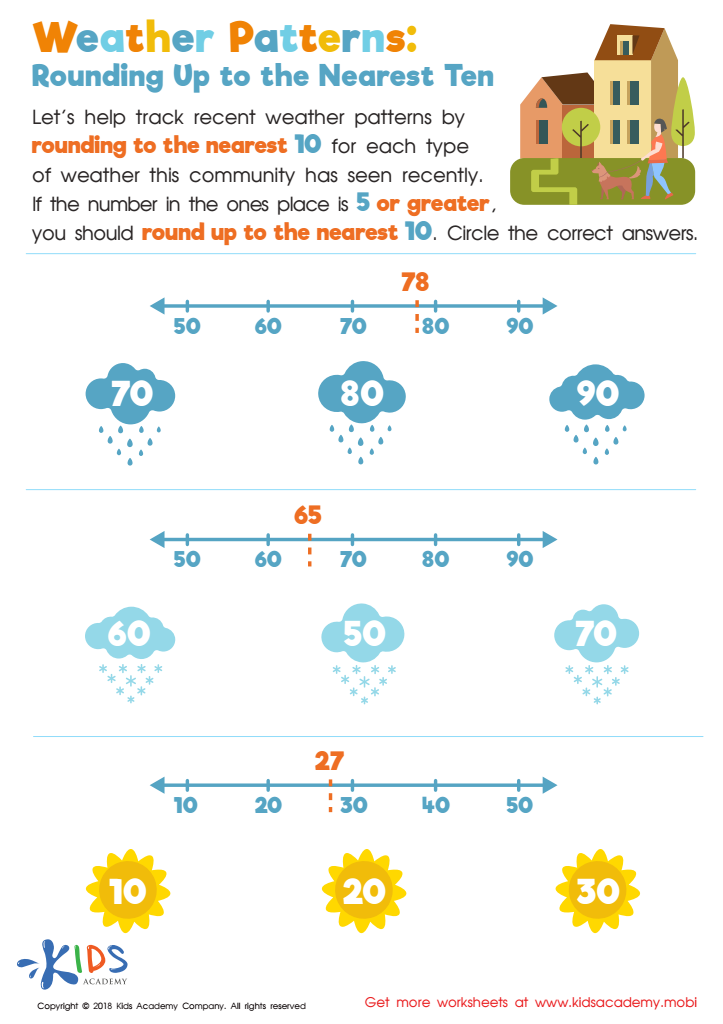
Weather Patterns Worksheet
Use this Weather Patterns worksheet to help your kids develop their mathematical skills. Get them to round the recent weather patterns to the nearest 10 and round up if the number in the ones place is 5 or higher. Work with them to figure out which answers are correct and get them to circle them.
Weather Patterns Worksheet
Worksheet
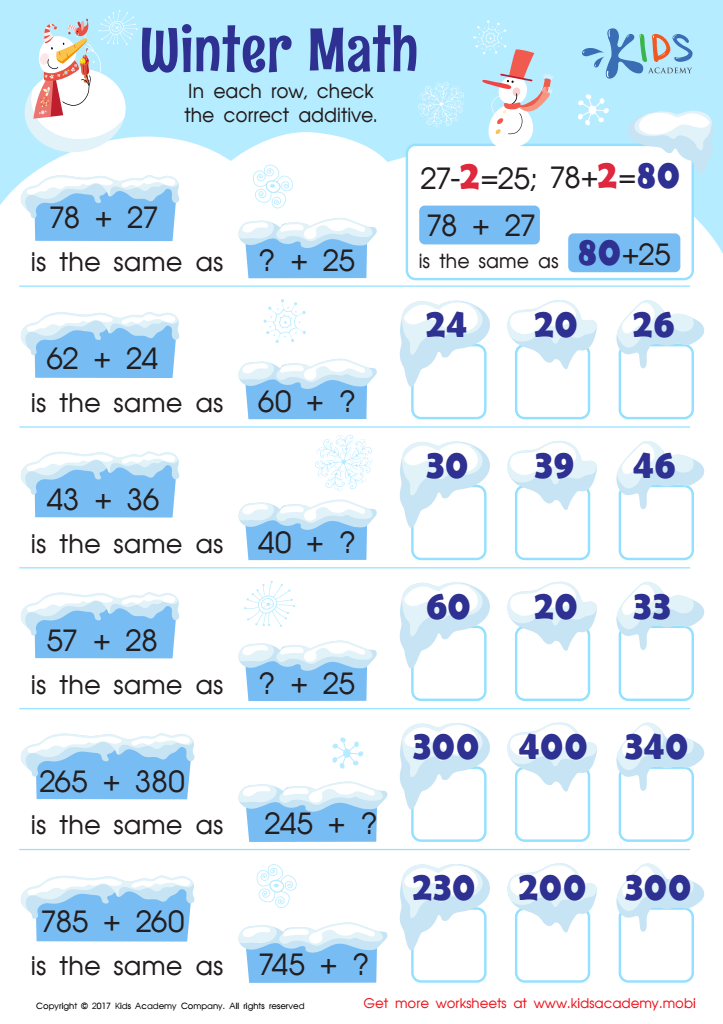
Free Addition Worksheet
Perfect for a wintry day, challenge your 3rd grader to compare addition equations and fill in the missing numbers in the PDF.
This winter-themed worksheet is sure to bring a smile while your 3rd grader practices their addition skills. Perfect for a blustery day, challenge your child to compare addition equations and complete the missing numbers in the PDF.
Free Addition Worksheet
Worksheet
Join Kids Academy for Free
Who is primarily going to use this learning content?








Parents and teachers play a crucial role in fostering a strong foundation in mathematical reasoning, particularly in understanding normal numbers, for children aged 7-8. At this developmental stage, children are not just learning to calculate; they're beginning to understand the reasoning behind numbers and their patterns. This is essential for nurturing critical thinking and problem-solving skills that extend beyond mathematics.
Normal numbers introduce concepts of probability and fairness, helping children grasp the idea that in a well-distributed set of random numbers, every digit has an equal chance of appearing. By engaging with these ideas, children develop a more intuitive understanding of randomness, which is pivotal as they tackle broader mathematical concepts later on.
Moreover, laying a solid groundwork in reasoning about numbers promotes confidence and curiosity in young learners. When children understand the "why" behind the numbers, it not only enhances their mathematical skills but also encourages them to explore and enjoy learning. As these foundational skills are built, they set the stage for more advanced mathematical topics in the years to come. In essence, grasping mathematical reasoning in normal numbers equips children with essential life skills, instilling a love for learning and a positive approach to challenges.