Number Sequencing Normal Numbers Worksheets for Ages 7-8
5 filtered results
-
From - To
Introduce your child to the fun and engaging world of number sequencing with our specially designed worksheets for ages 7-8. These worksheets help young learners grasp the concept of ordering numbers in a sequence, paving the way for stronger mathematical skills. Each worksheet offers a variety of activities that not only make learning enjoyable but also enhance critical thinking and problem-solving abilities. Perfect for home or classroom use, they will support your child’s learning journey by providing a structured yet stimulating approach to mastering number sequences. Start boosting your child’s math confidence today!
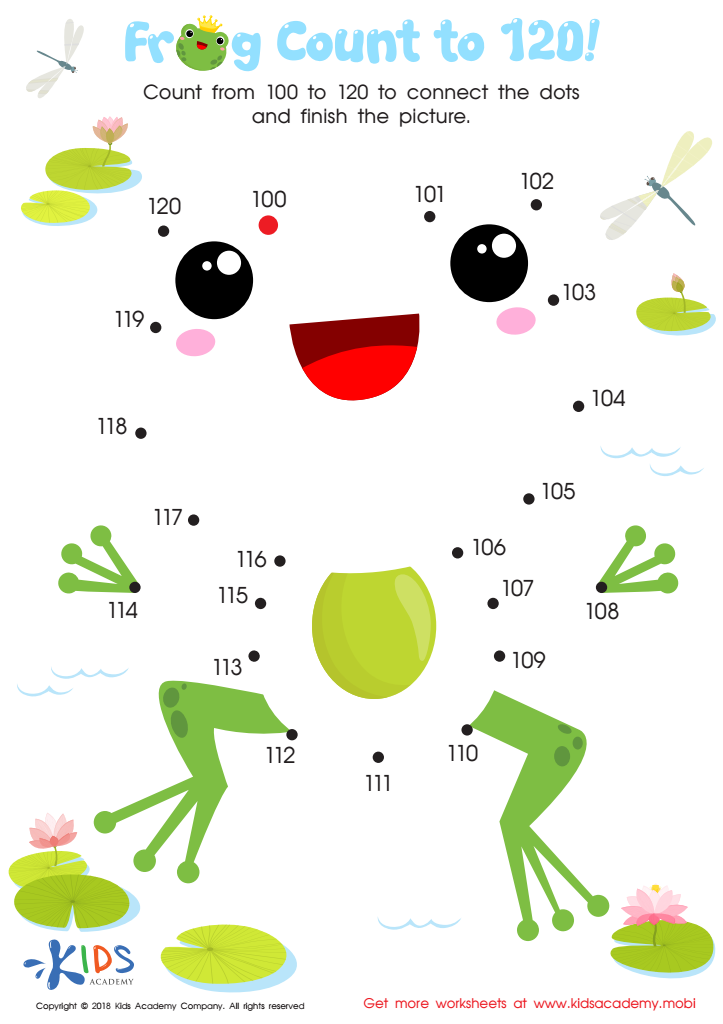
Frog Count to 120 Worksheet
 Assign to My Students
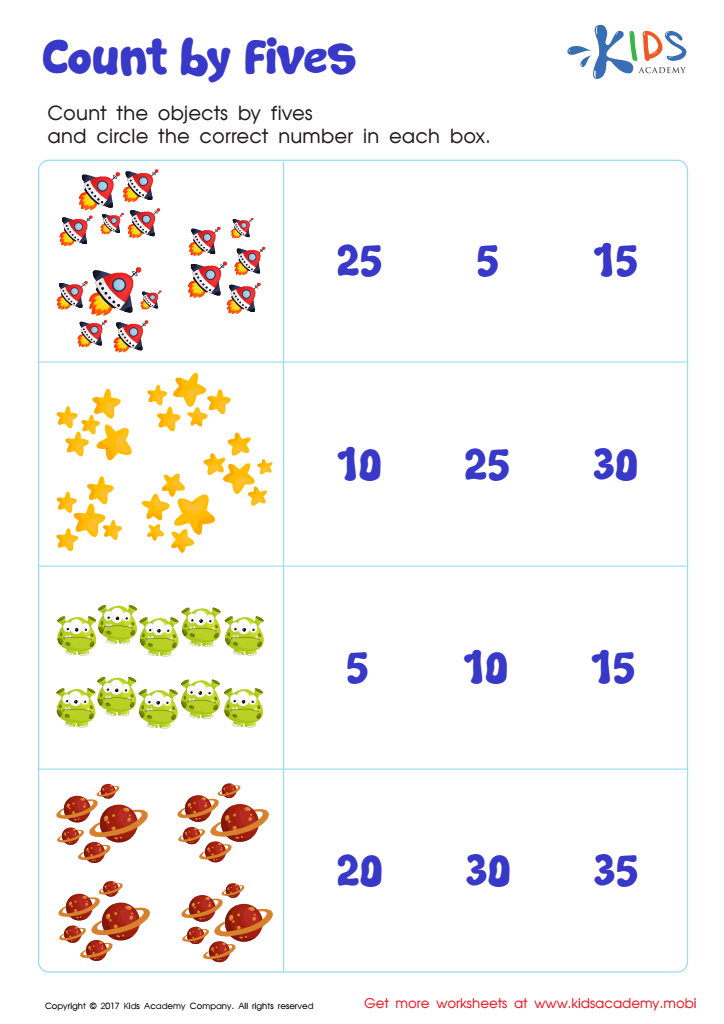
Skip Counting by 5s: Space Math Printable
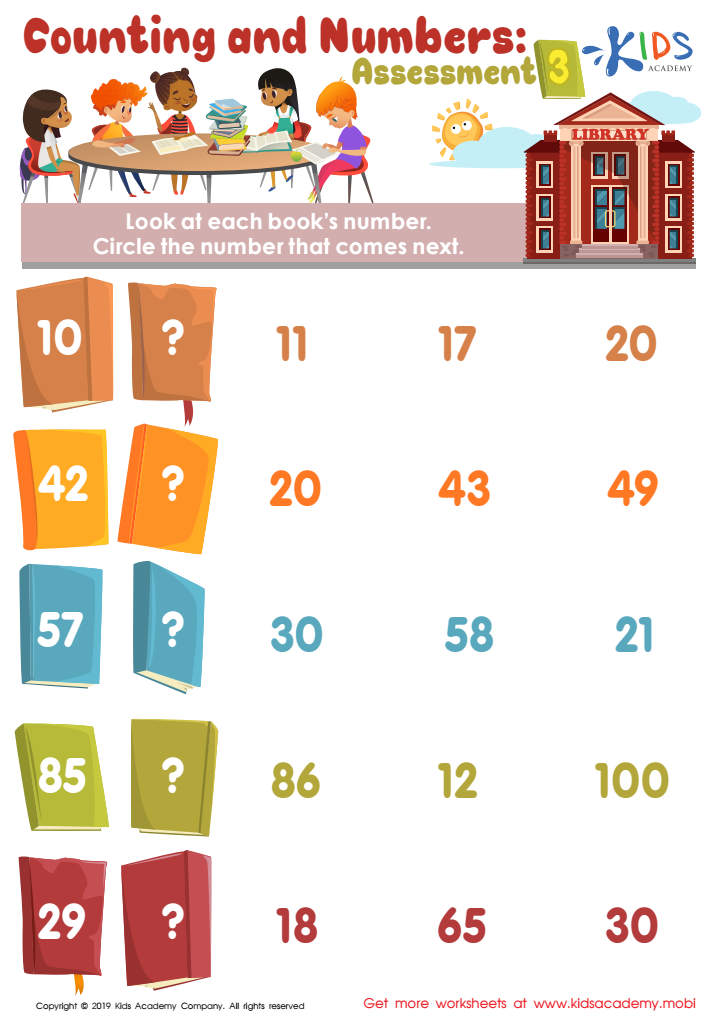
Counting and Numbers: Assessment Worksheet
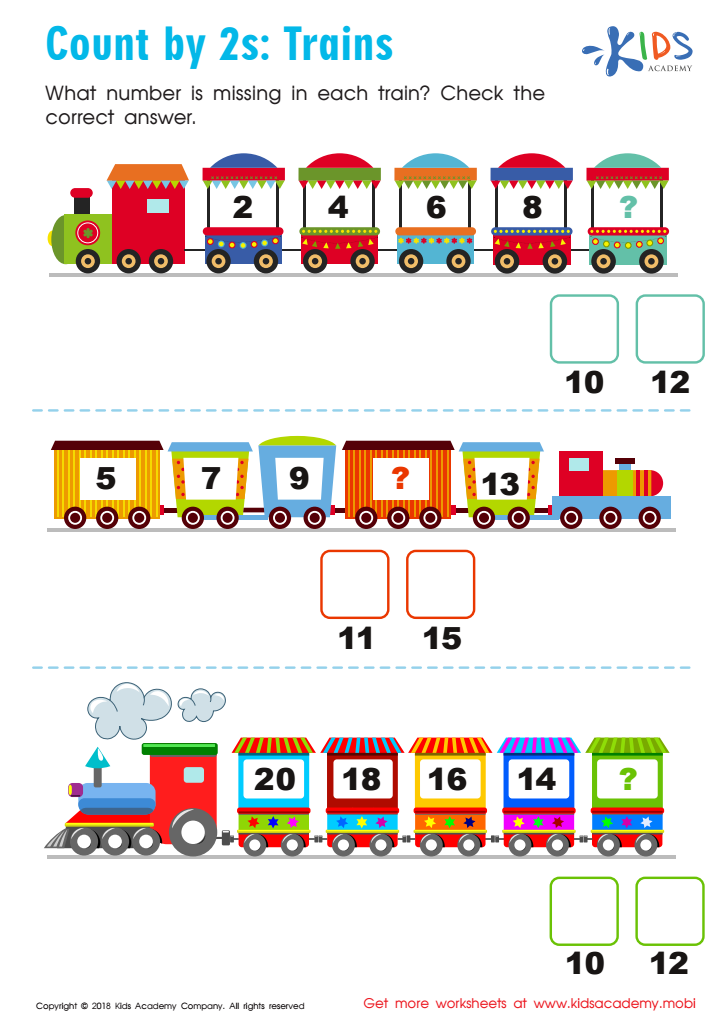
Count by 2's: Trains Worksheet
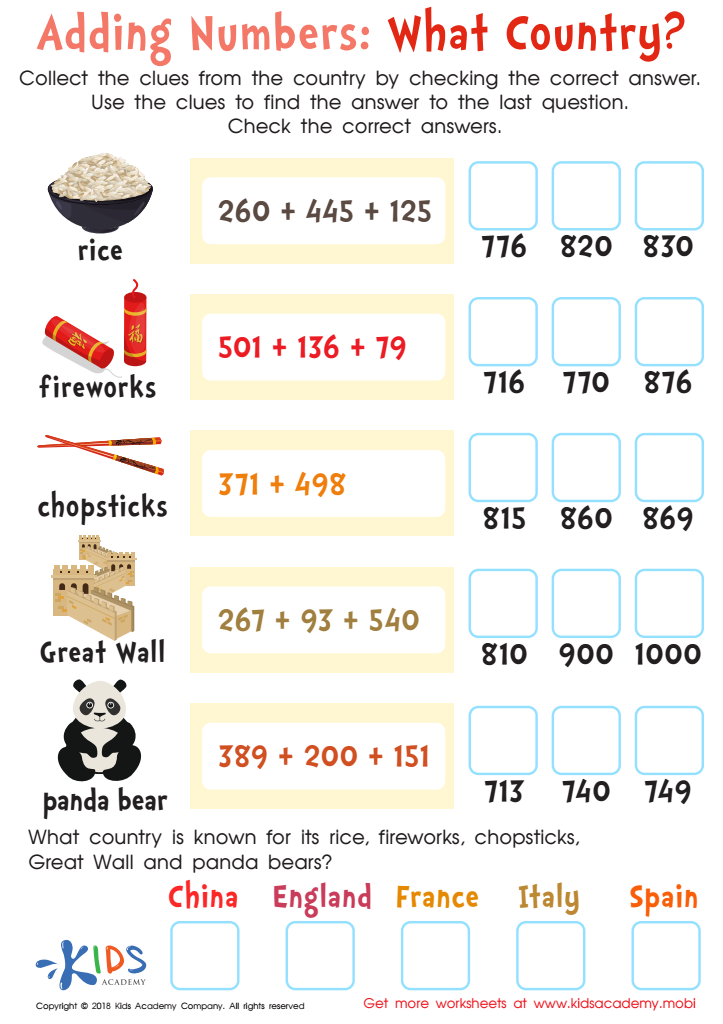
Adding Numbers: What Country Worksheet







Number sequencing is a fundamental skill that sets the groundwork for more advanced mathematical concepts. For children aged 7-8, mastering number sequences aids in developing a strong number sense, which is crucial for arithmetic operations like addition, subtraction, multiplication, and division. Understanding number sequences helps children recognize patterns, predict trends, and establish the concept of order, all of which are essential for logical reasoning.
For parents, fostering skills in number sequencing can support your child in building confidence and competence in mathematics. A solid grasp of number sequences makes it easier for children to understand the curriculum-related topics they encounter in school, ensuring they stay on track with educational milestones.
Teachers can play a pivotal role by incorporating number sequencing activities into their lesson plans. When children practice sequencing, they improve their ability to concentrate, enhance their memory, and refine their problem-solving skills. Engaging activities like puzzles, games, and practical exercises can make learning number sequencing enjoyable, setting a positive attitude toward mathematics.
Everybody learns better through structure. Number sequencing provides a scaffold for future learning and academic achievement, making it a crucial skill for young learners. Encouraging proficiency in this area ensures a solid mathematical foundation, preparing children for the more complicated concepts they will encounter later.








