
Cognitive Development Normal Math Worksheets for Ages 7-8
11 filtered results
Difficulty Level
Grade
Age
-
From - To
Subject
Activity
Standards
Our Cognitive Development Normal Math Worksheets for ages 7-8, designed by Kids Academy, provide engaging and educational activities to bolster young learners' mathematical foundations. These expertly crafted worksheets aim to enhance problem-solving skills, boost logical thinking, and develop core math knowledge through practice and repetition. Covering essential topics like addition, subtraction, and basic geometry, each worksheet aims to make learning fun and effective. Ideal for both classroom and home use, our resources help guide children as they navigate and master important cognitive milestones in their math education journey. Explore and support your child's mathematical growth with these fantastic tools.
Favorites
With answer key
Interactive
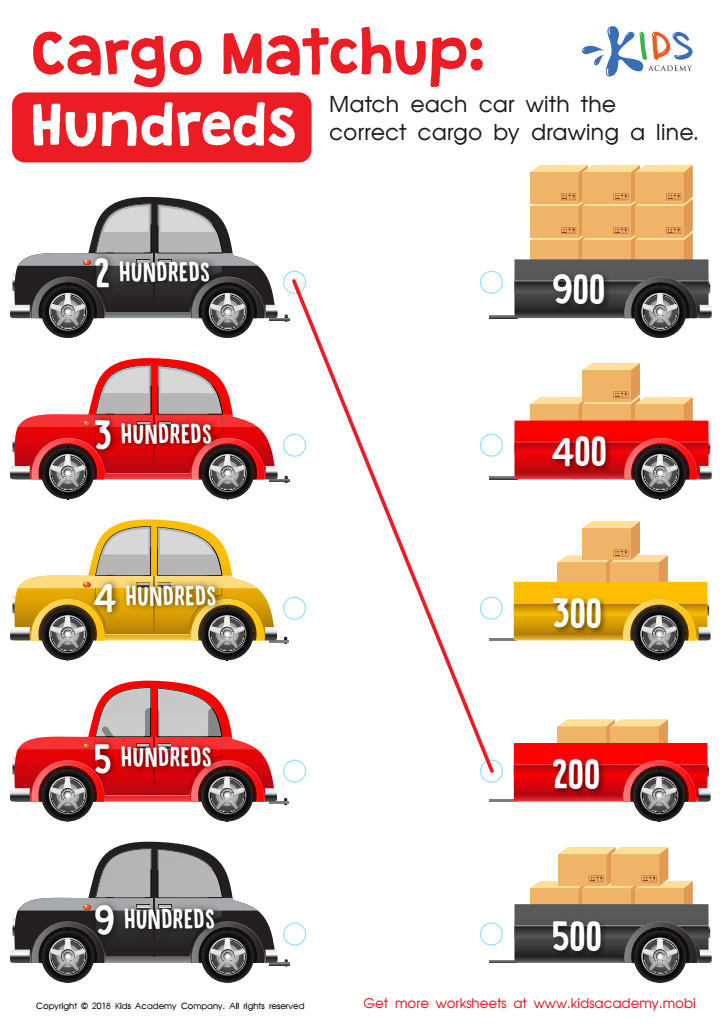
Cargo Matchup: Hundreds Worksheet
Introduce your child to counting in the hundreds using this simple worksheet. Match each car to its correct cargo by drawing a line. If they can count 1-100, they can learn to count in the hundreds! Help them master this skill with the worksheet and they'll be counting away in no time.
 Assign to My Students
Cargo Matchup: Hundreds Worksheet
Worksheet
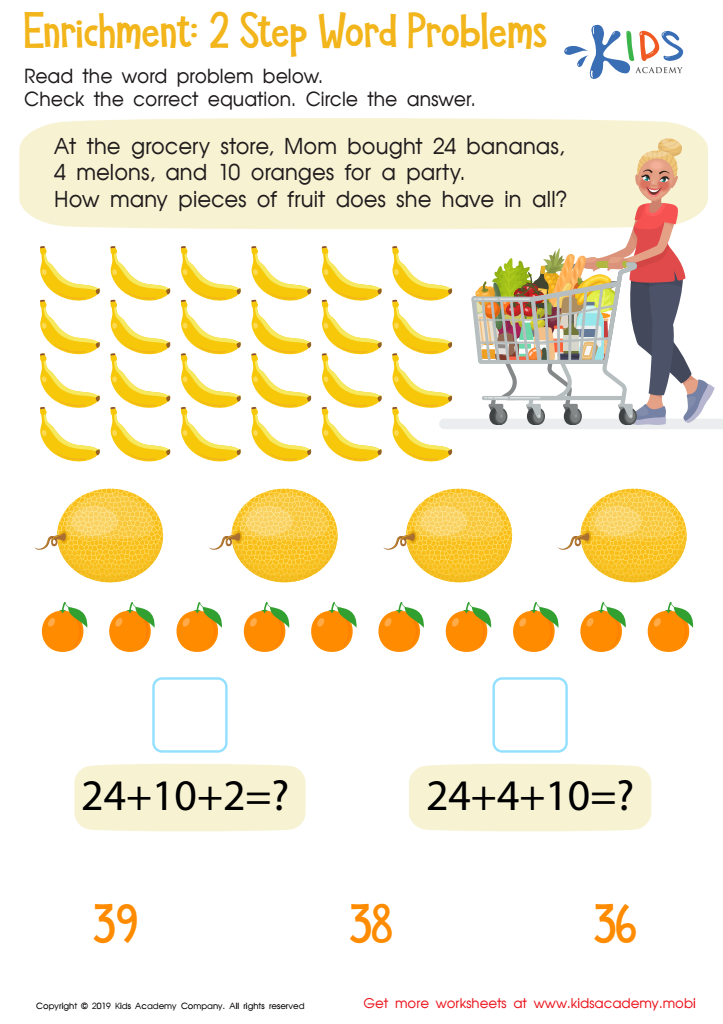
Enrichment -2 Step Word Problems Worksheet
Help your students learn math easier and faster with this colorful worksheet. Read the word problem and then guide them in checking the correct equation and finding the answer. Your students will benefit from the extra help, as they work through new concepts each day.
Enrichment -2 Step Word Problems Worksheet
Worksheet
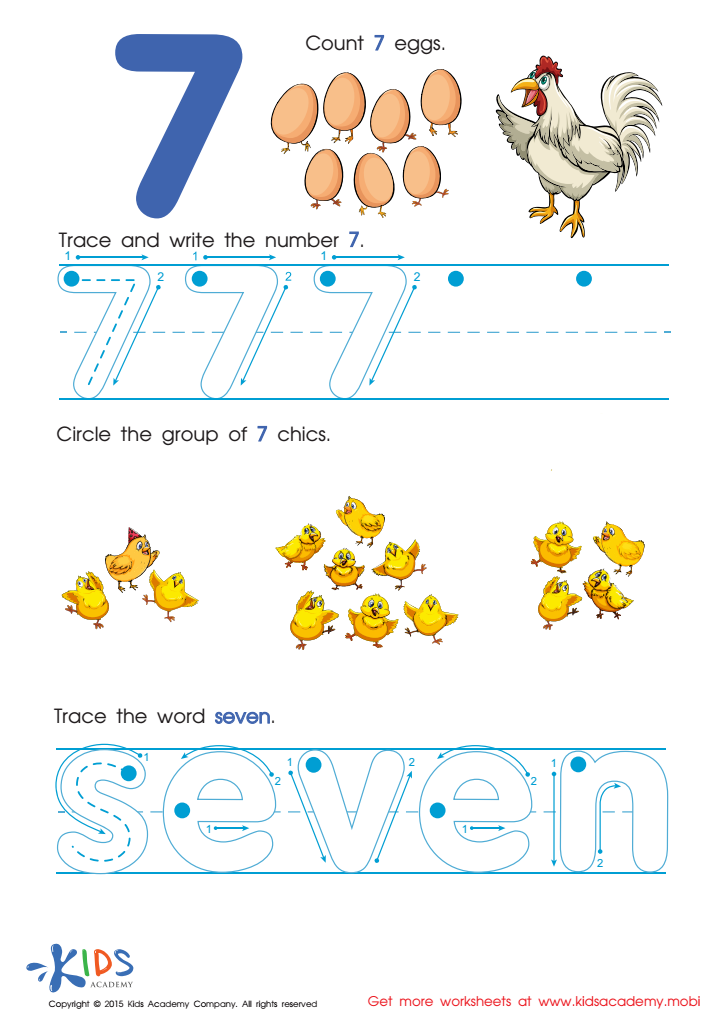
Trace And Write Number 7 with Fun Worksheet
Try one with a cute hen and its seven eggs! Trace and write the number 7, circle the group of seven chicks, and trace the word "seven". Fun and educational!
Trace And Write Number 7 with Fun Worksheet
Worksheet
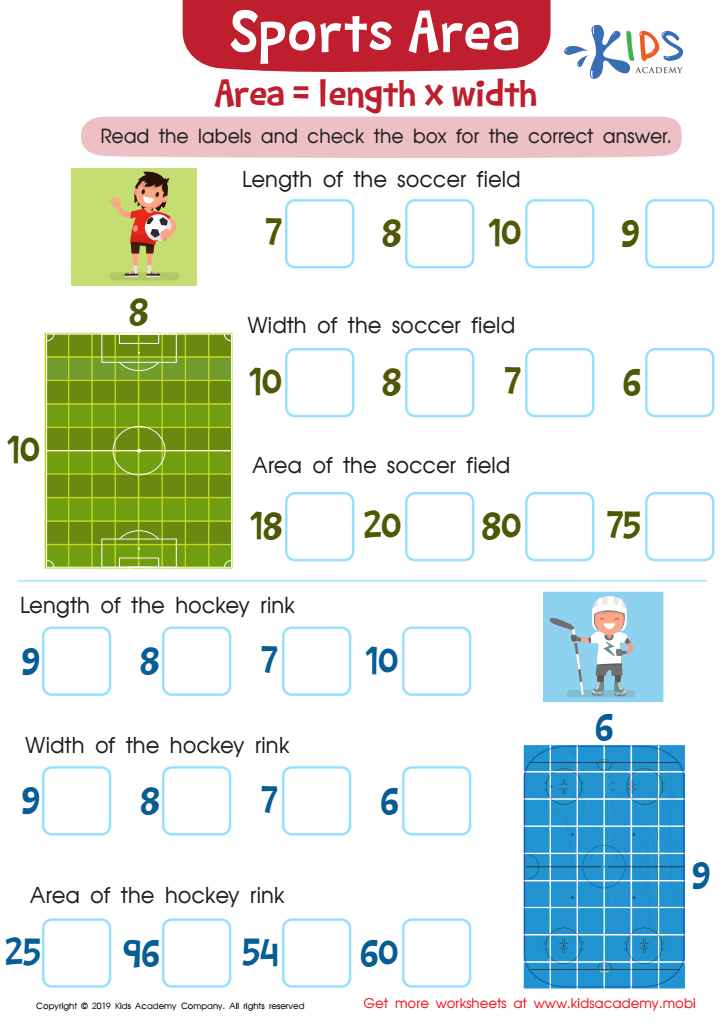
Sports Area Worksheet
Help your preschoolers understand area by showing them it's just length x width. Point to the picture in the worksheet, get them to read the labels and select the right answer. Encourage them that calculating areas of shapes, objects and places isn't too hard!
Sports Area Worksheet
Worksheet
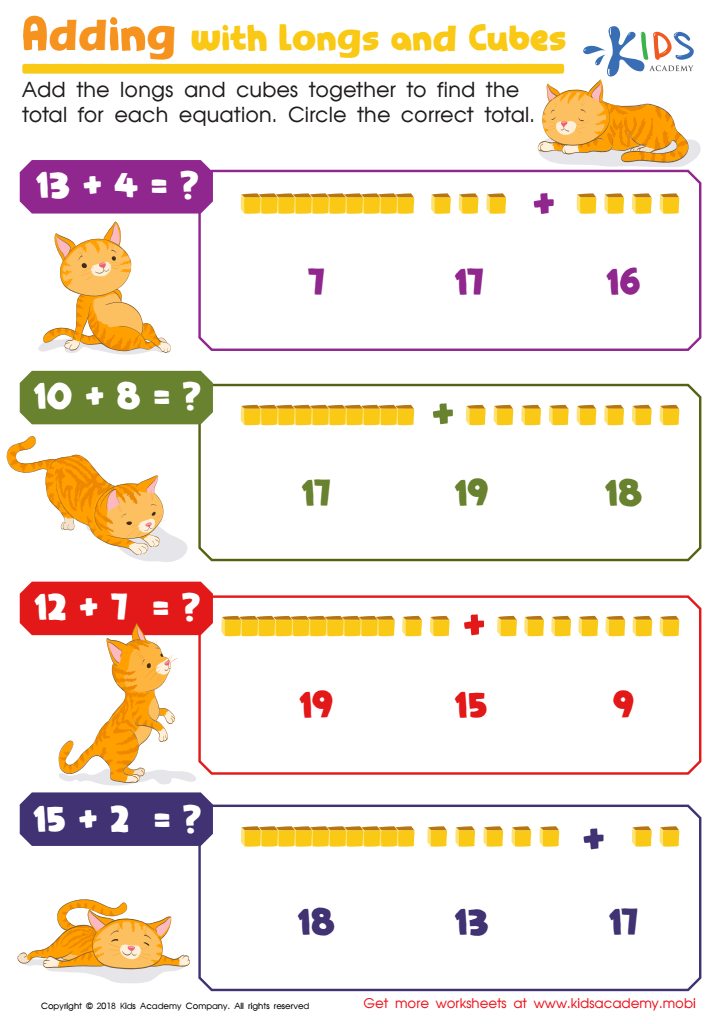
Adding With Longs and Cubes Worksheet
Math might not be your child's favorite, but they must master it to advance. If they're having difficulties or don't like it, use this worksheet to make it easier. Have them add longs and cubes together to find the total for each question, then circle the correct answer. This exercise can help make math experiences better.
Adding With Longs and Cubes Worksheet
Worksheet
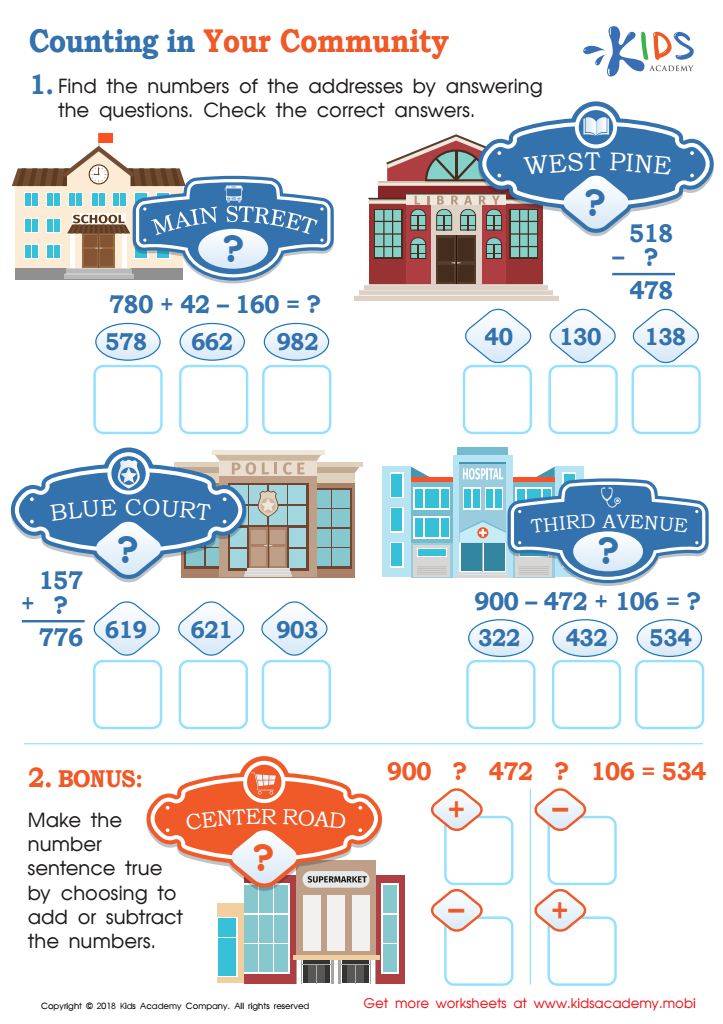
Counting in Your Community Worksheet
Introduce your kids to the idea of a community, where different people and buildings co-exist, each playing their part for the community's progress. Ask them to name the buildings they see in their community. Then work through this worksheet to find the numbers of the addresses by answering the questions. Check the answers once they've solved the equations.
Counting in Your Community Worksheet
Worksheet
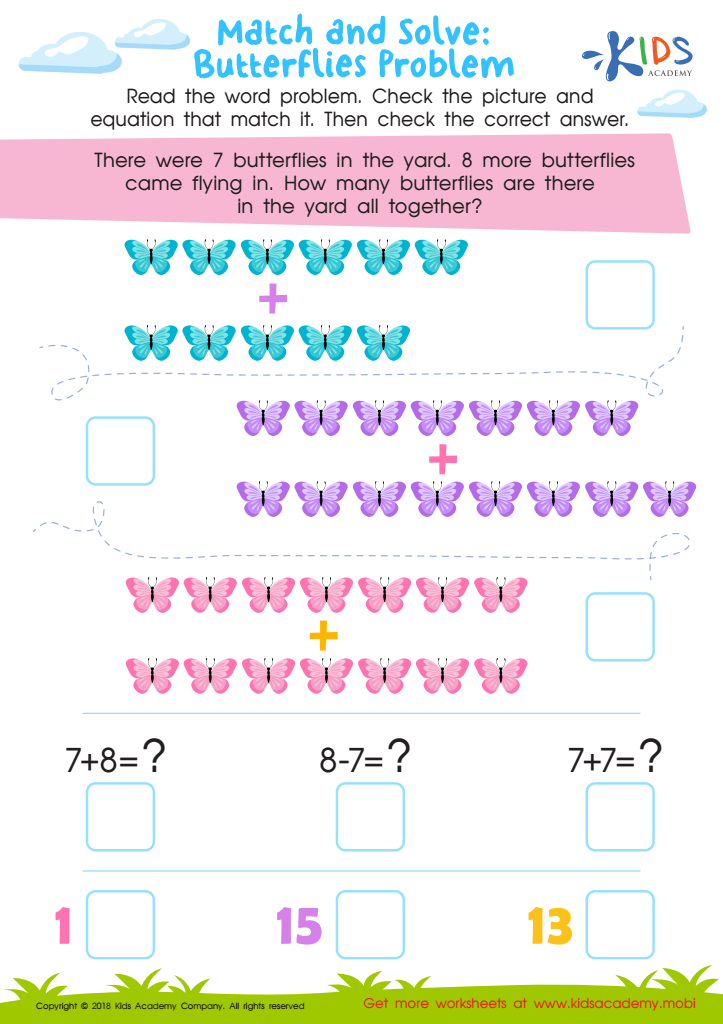
Match and Solve: Butterfly Problem Worksheet
Kids should practice math problems in different ways. This fun worksheet uses butterflies to represent numbers in word problems. Help your child read the problem and count the butterflies to find the correct illustration. Then, pick the equation with the correct answer and find the solution. Tick the box to complete! (80 words)
Match and Solve: Butterfly Problem Worksheet
Worksheet
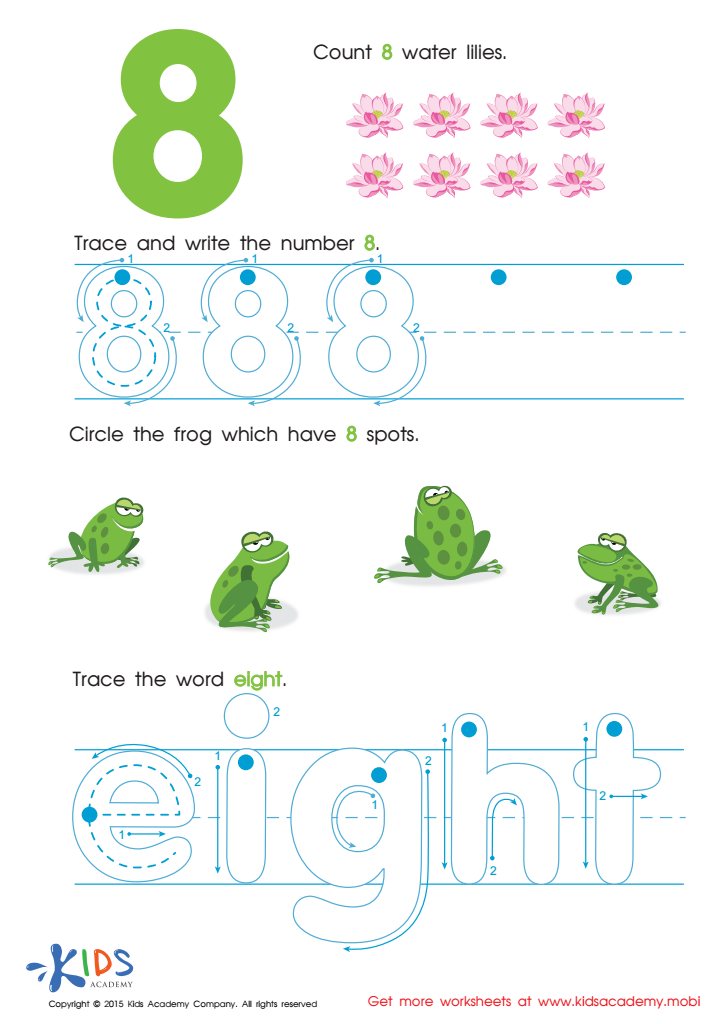
Learn Number 8 Easily Worksheet
Kids can trace, write numbers and learn to pronounce them through exciting activities and games. Try our number worksheets for preschoolers to make learning fun!
Learn Number 8 Easily Worksheet
Worksheet
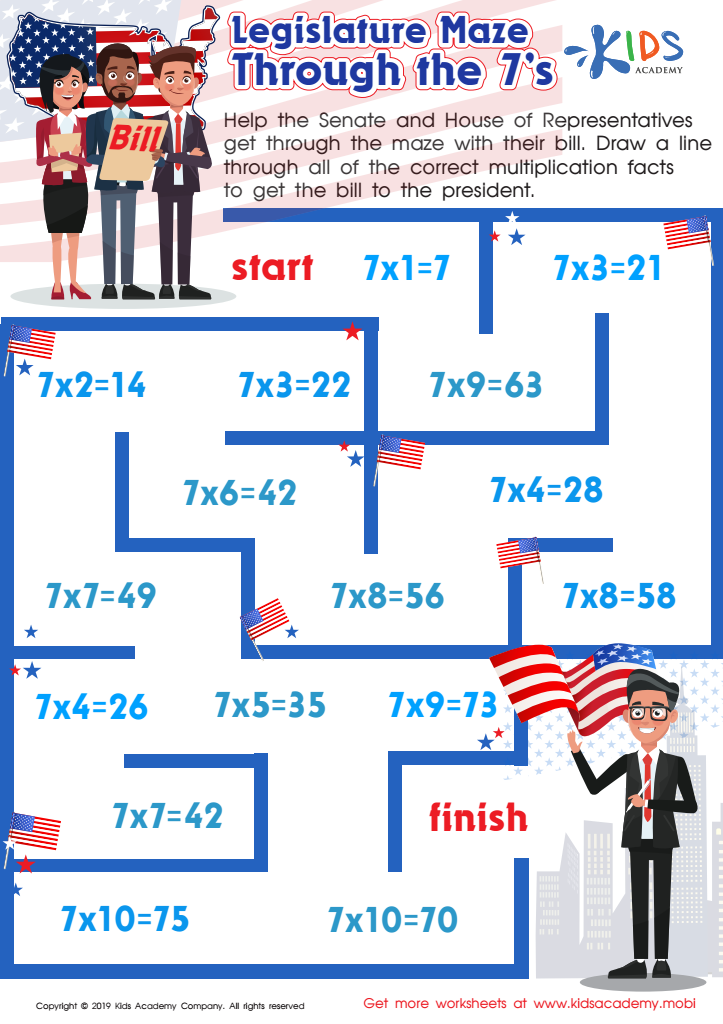
Legislature Maze Through the 7’s Worksheet
Students can review their math and social studies skills with this exciting worksheet. By drawing a line through only the correct multiplication facts in the 7x multiplication table maze, they can lead the members of Congress to the President to get the law signed and finish the puzzle.
Legislature Maze Through the 7’s Worksheet
Worksheet
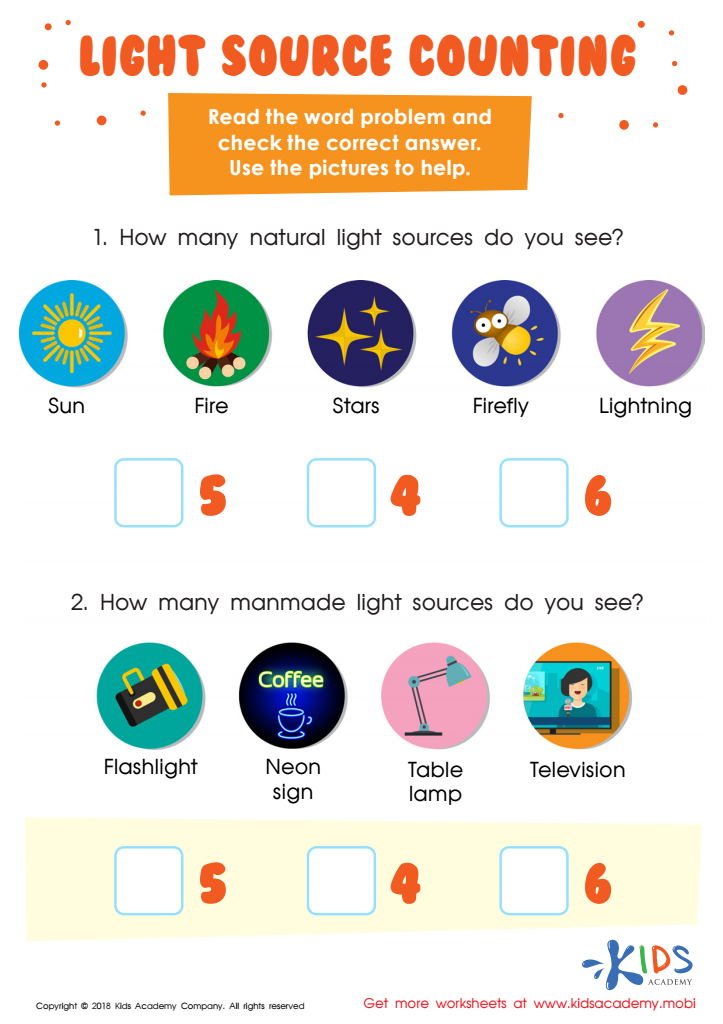
Light Source Counting Worksheet
Help your students properly understand and interpret word problems with this worksheet. Read each problem aloud and have them check the correct answers. Pictures are included to aid in problem-solving. If they're still struggling, be sure to provide guidance and support.
Light Source Counting Worksheet
Worksheet
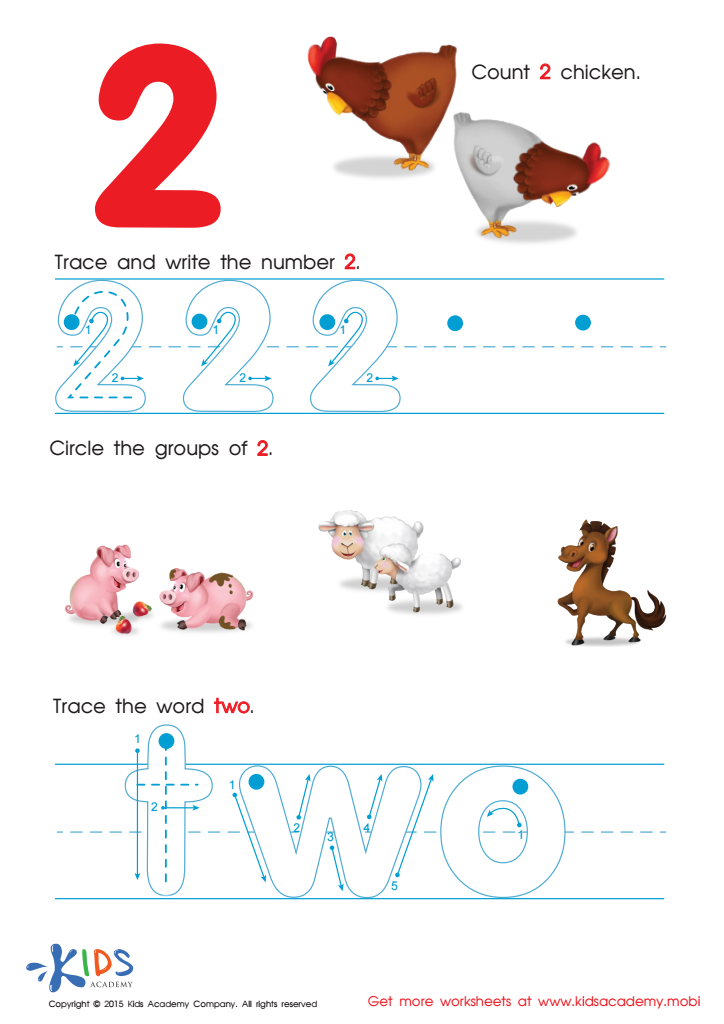
Learn to Write the Number 2 Worksheet
Teaching numbers should be fun! Ask your kids to count the two chicks, circle the groups of two among the animals, then trace and write the number and word. Get more fun worksheets from Kids Academy.
Learn to Write the Number 2 Worksheet
Worksheet
Join Kids Academy for Free
Who is primarily going to use this learning content?







The cognitive development of children aged 7-8 is a crucial period that sets the foundation for their future learning and problem-solving abilities. During this stage, kids transition from concrete operational thinking to more complex abstract thinking. They begin to grasp basic mathematical concepts such as addition, subtraction, multiplication, and division, which are essential for later mathematical learning and everyday problem-solving.
Understanding math at this age contributes significantly to a child’s confidence and academic self-esteem. Early competence in math promotes a positive attitude towards learning and instills a growth mindset, which can impact their performance across various subjects in school. This period also helps children develop critical thinking and logical reasoning skills, which are integral to success in many aspects of life beyond academics.
Parents and teachers who pay attention to early cognitive development in math can identify learning challenges or gaps early on. This allows for timely interventions or enrichment activities that tailor to the child’s specific needs, fostering a more supportive and effective learning environment. Moreover, engaging in math-related activities at home or in the classroom makes learning enjoyable, helping children to see math as a dynamic and interesting subject rather than a chore. This sets them up for ongoing curiosity and lifelong learning.








