
Comparing Fractions Normal Math Worksheets for Ages 7-8
4 filtered results
Difficulty Level
Grade
Age
-
From - To
Subject
Activity
Standards
Introduce your child to the exciting world of fractions with our "Comparing Fractions Normal Math Worksheets" for ages 7-8. These engaging worksheets are specifically designed to build fundamental math skills, as children compare and order fractions in a fun and interactive way. Perfect for home or classroom use, each worksheet combines colorful illustrations with practical exercises to make learning enjoyable. Promote critical thinking and boost your child’s confidence in math through structured practice. Start exploring today to enhance your child’s numeracy skills while fostering a love for learning. Visit Kids Academy to download and transform fractions into fun!
Favorites
With answer key
Interactive
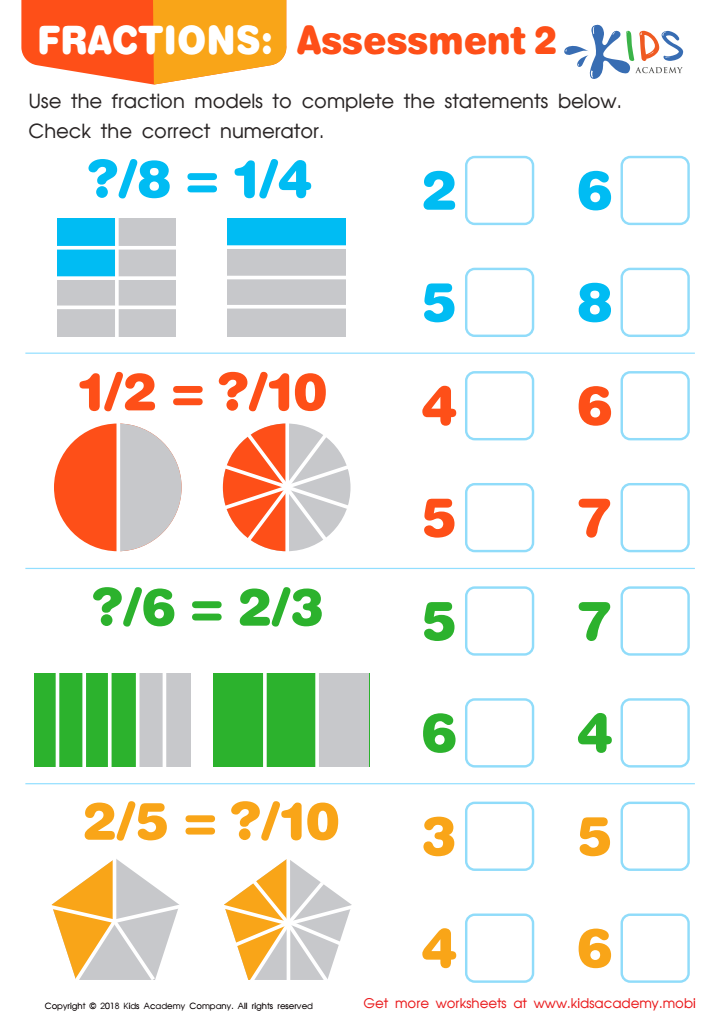
Fractions: Assessment 2 Worksheet
Help your kids understand fractions better with this worksheet. Ask them to complete the fraction statements using the fraction models on the left and then check the correct numerators. This can help clear up any confusion they may have with fractions and fraction models.
 Assign to My Students
Fractions: Assessment 2 Worksheet
Worksheet
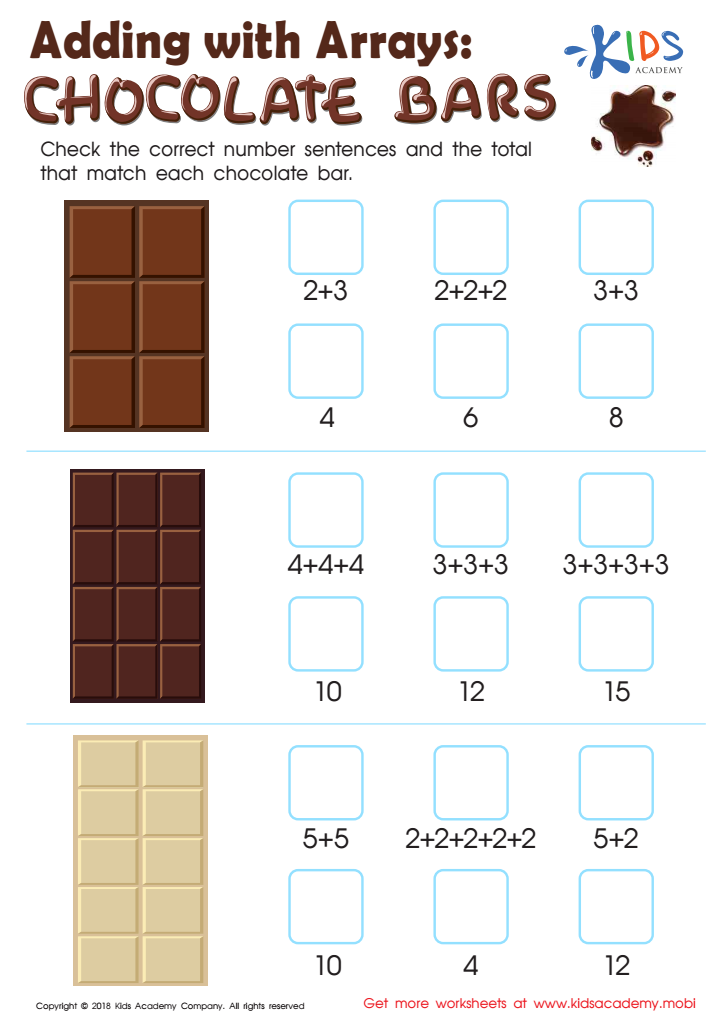
Adding with Arrays: Chocolate Bars Worksheet
Kids love chocolates! Gauge how enthused your kids get when you mention them. This worksheet is a fun exercise about chocolates - get your kids to check the correct number sentences and totals for each chocolate bar. Reward their hard work with some chocolates - extra incentive for a job well done!
Adding with Arrays: Chocolate Bars Worksheet
Worksheet
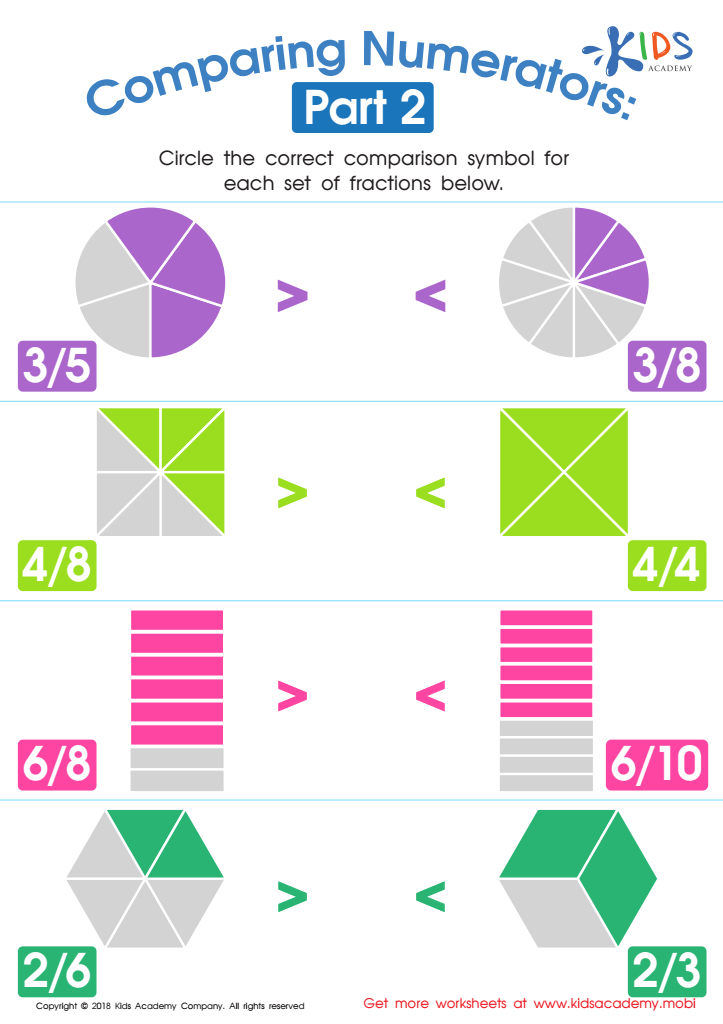
Comparing Numerators Part 2 Worksheet
Before beginning this exercise, your child should have knowledge of fractions, including counting and identifying them in shaded areas of shapes. In the pdf, they must compare two fractions in each set and circle the symbol for the larger fraction. Help them as needed.
Comparing Numerators Part 2 Worksheet
Worksheet
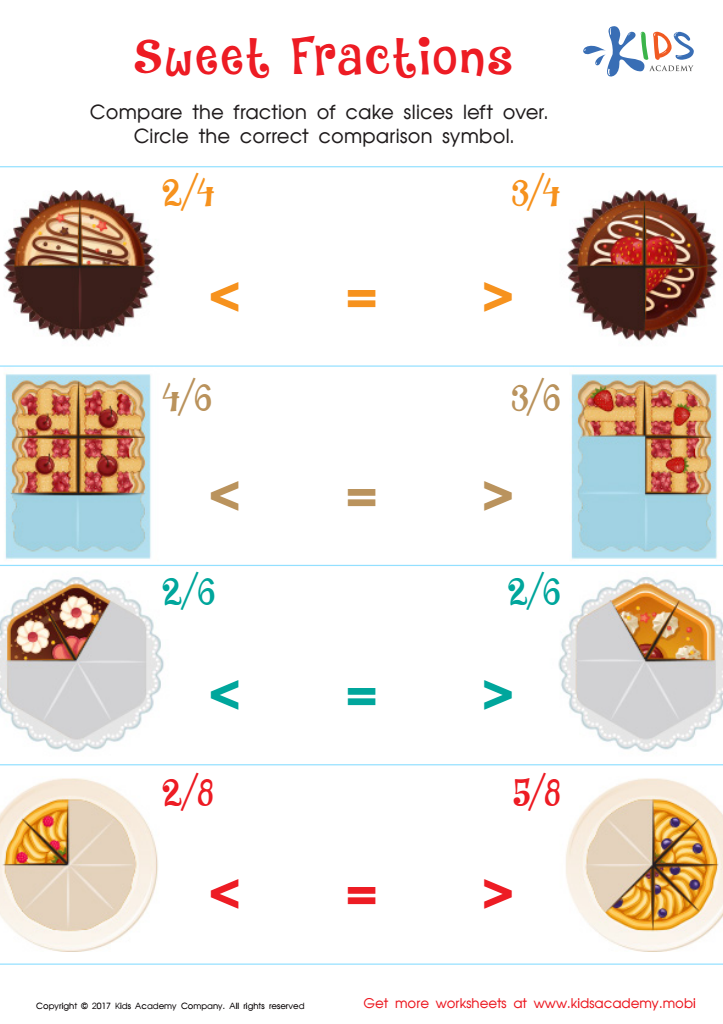
Compare Fractions Worksheet
This compare fractions worksheet is great for 3rd graders to learn and understand fractions in a fun way. Let them explore fractions visually with the help of sweet treats!
Compare Fractions Worksheet
Worksheet
Join Kids Academy for Free
Who is primarily going to use this learning content?







Understanding how to compare fractions is essential for children aged 7-8 because it builds fundamental math skills that are crucial for their academic development. First, comparing fractions enables young learners to develop number sense, which is critical for more advanced math concepts such as algebra and geometry. By understanding fractions, kids can recognize parts of a whole, which helps them grasp percentages and ratios used in everyday life.
Additionally, mastering fractions boosts problem-solving skills. When children learn to compare and order fractions, they engage in logical reasoning and critical thinking. This skill is transferable to other areas of learning, assisting them in solving real-world problems more effectively.
Parents and teachers should particularly care about this because a strong foundation in fractions can increase a child’s confidence in math. Early math success fosters a positive attitude towards the subject, which is important for sustained academic achievement. Moreover, fractions are a part of the curriculum and standardized testing, so it’s important that students have a clear understanding to excel in these areas.
Finally, knowing how to compare fractions at a young age helps children in practical scenarios, such as cooking or dividing items evenly. This practical application reinforces the importance of the skill, making learning relevant and meaningful. Thus, by emphasizing the comparison of fractions, parents and teachers set children up for a successful, confident future in mathematics.








