Understanding biodiversity Normal Math Worksheets for Ages 7-8
3 filtered results
-
From - To
Explore our "Understanding Biodiversity Normal Math Worksheets" designed specifically for children aged 7-8. These engaging worksheets combine foundational math skills with themes of biodiversity, encouraging young learners to grasp important ecological concepts while refining their arithmetic abilities. Each worksheet incorporates fun, relatable scenarios that introduce children to various plant and animal species, fostering a deeper appreciation for the environment. From addition and subtraction in earth-themed puzzles to data interpretation involving animal populations, students will enjoy a holistic learning experience. Empower your child to become both a budding mathematician and an eco-conscious citizen with our thoughtfully crafted resources.
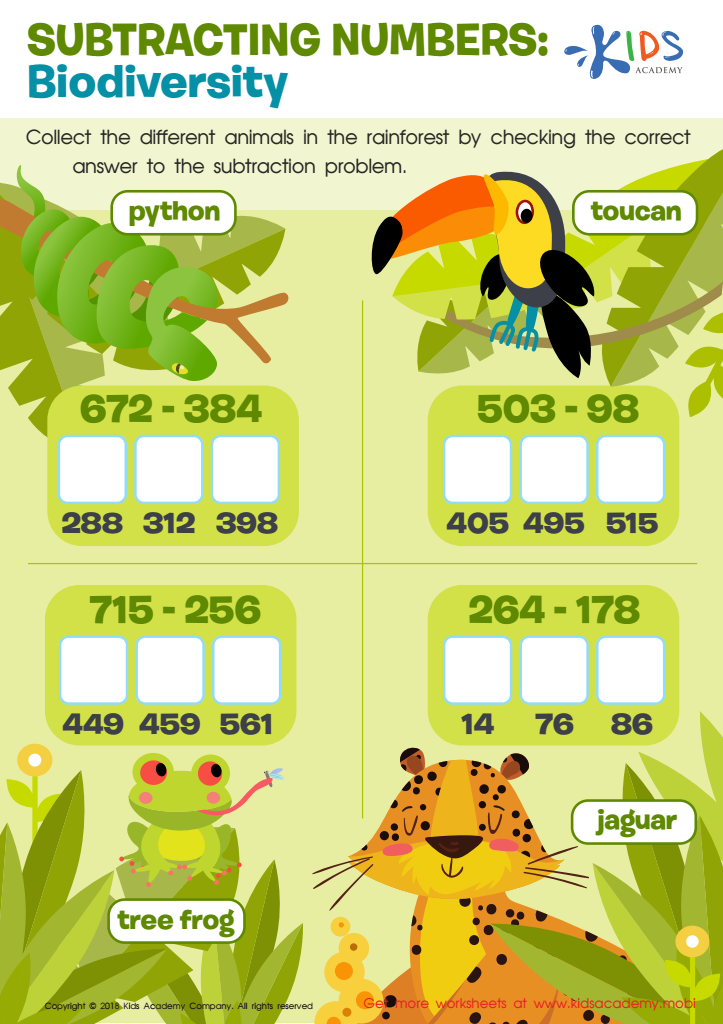
Subtracting Numbers: Biodiversity Worksheet
 Assign to My Students
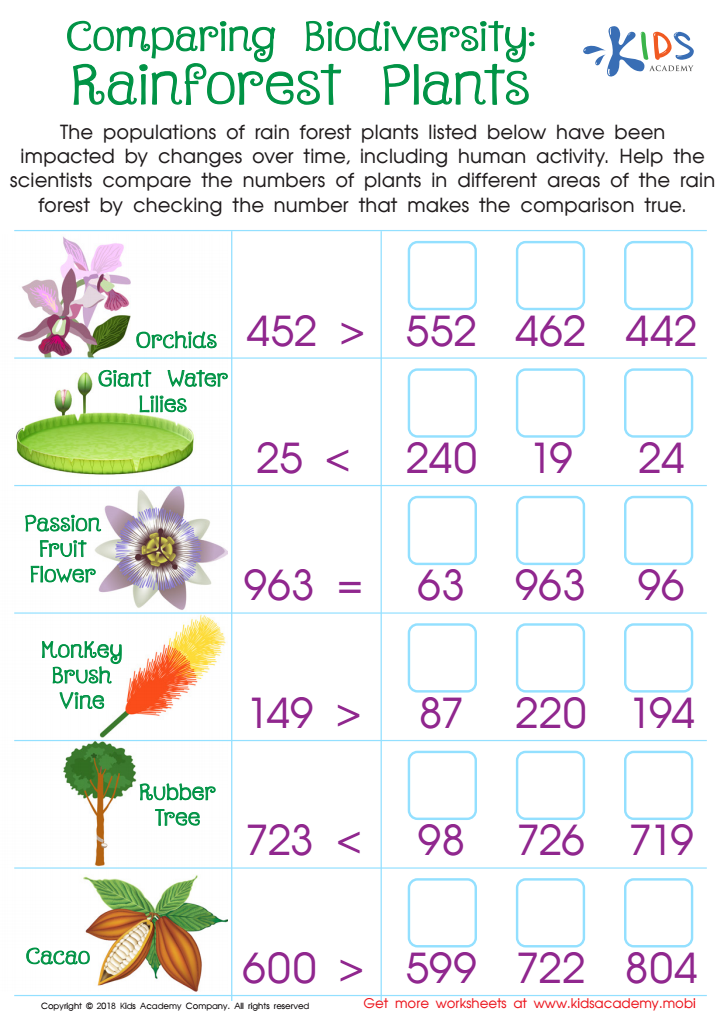
Comparing Biodiversity: Rainforest Plants Worksheet
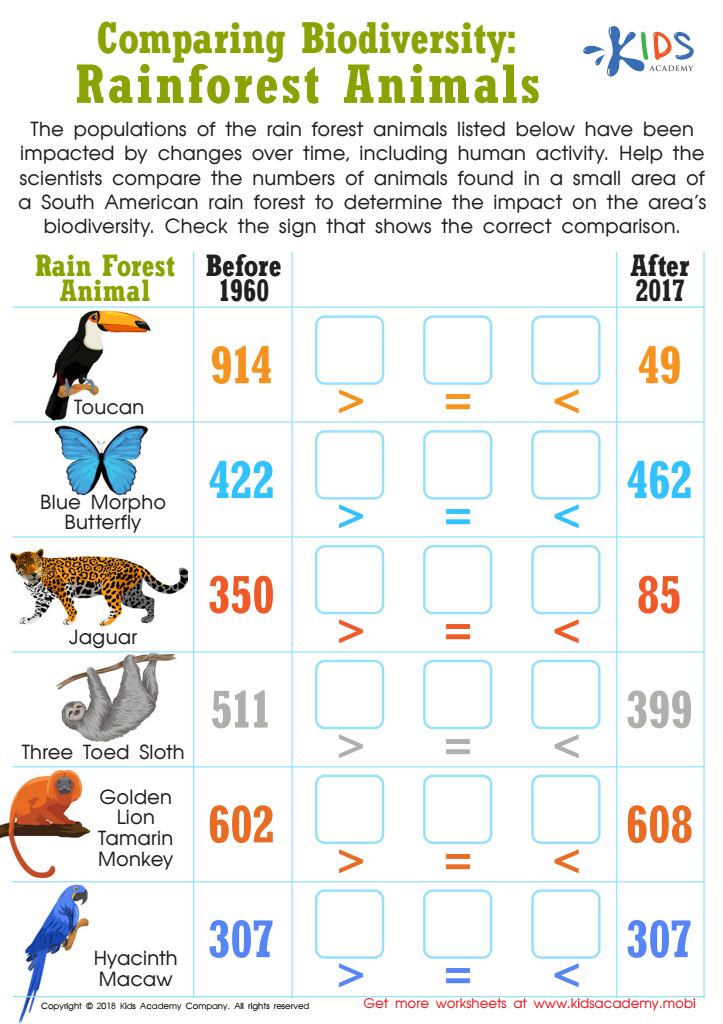
Comparing Biodiversity: Rainforest Animals Worksheet



Understanding biodiversity, particularly through engaging concepts like "Normal Math," is crucial for parents and teachers of children aged 7-8. At this age, children are developing foundational skills in math and science, and incorporating biodiversity into these subjects can promote critical thinking and a sense of environmental stewardship.
Biodiversity refers to the variety of life on Earth, encompassing different species, ecosystems, and genetic diversity. When children learn about this topic through math, they engage with real-world data, fostering analytical skills, such as interpreting information and identifying patterns. This approach makes learning more relevant, linking math to the world around them.
Furthermore, early exposure to biodiversity cultivates curiosity and an appreciation for nature, essential traits for future conscientious citizens. It encourages discussions about conservation, ecosystems, and the interconnectedness of life, highlighting the importance of protecting the planet.
By integrating biodiversity into educational activities, both parents and teachers can enhance children's understanding and promote meaningful learning experiences. This cultivates a sense of responsibility toward the environment, inspiring the next generation to become proactive guardians of nature, ultimately benefiting society at large. The incorporation of these concepts into their learning journey is vital for creating informed, sensitive, and engaged individuals.








