Word Recognition Normal Consonant Digraphs Worksheets for Ages 7-9
5 filtered results
-
From - To
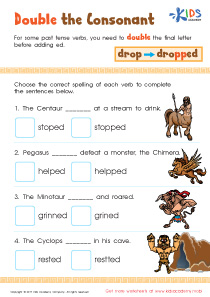
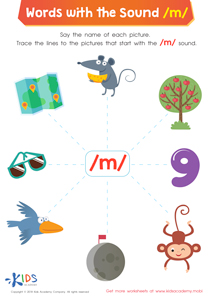
Discover engaging Word Recognition Normal Consonant Digraphs Worksheets designed for ages 7-9! Our printable resources help young learners master consonant digraphs, enhancing their reading and spelling skills in a fun, interactive way. With a variety of exercises, kids will recognize common consonant combinations through games, puzzles, and exercises tailored to boost their literacy. These worksheets not only support early reading development but also build confidence in word recognition. Perfect for classrooms or home learning, our materials are aligned with educational standards, making them an effective tool for nurturing critical reading skills. Start exploring our collection and inspire a lifelong love for reading!
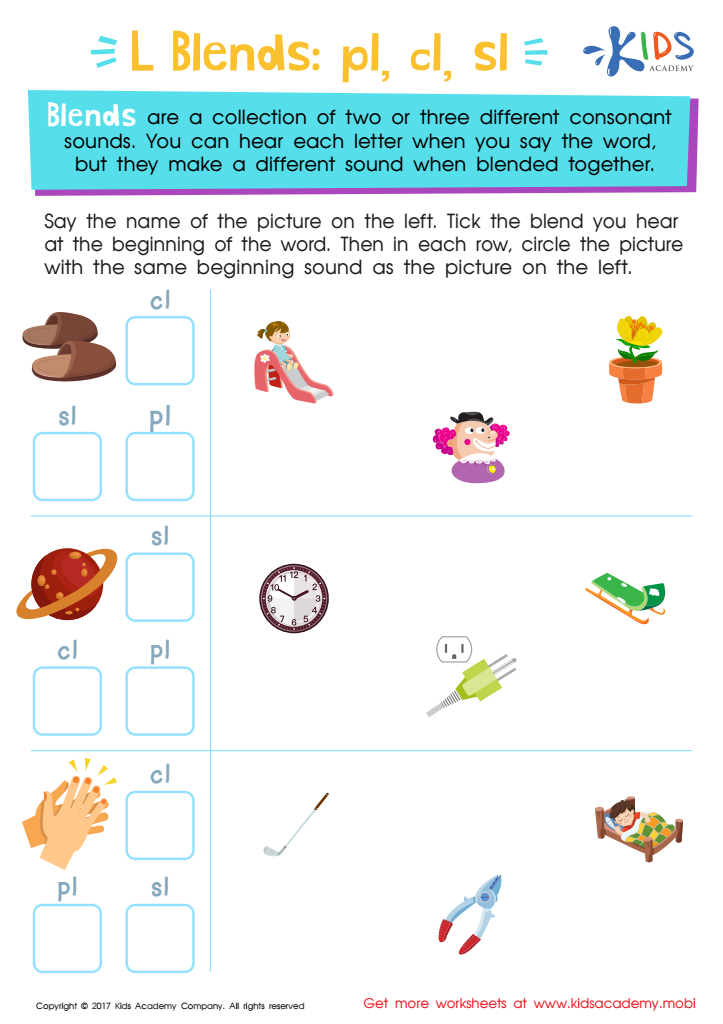
L Blends: "Pl", "Cl" and "Sl" Printable
 Assign to My Students
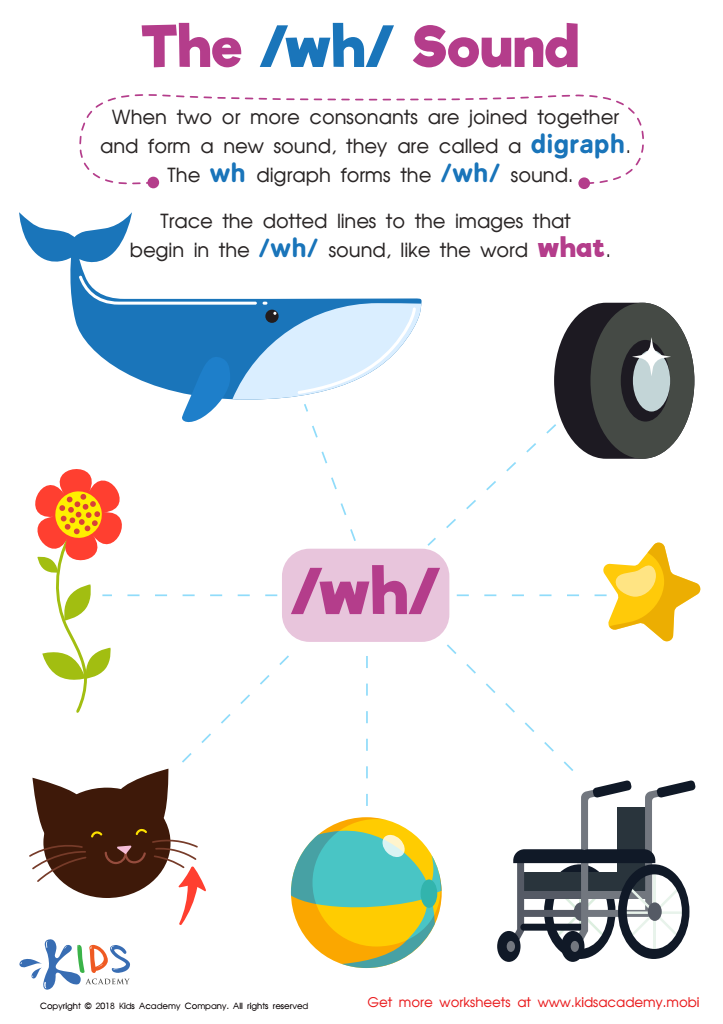
The /wh/ Sound Worksheet
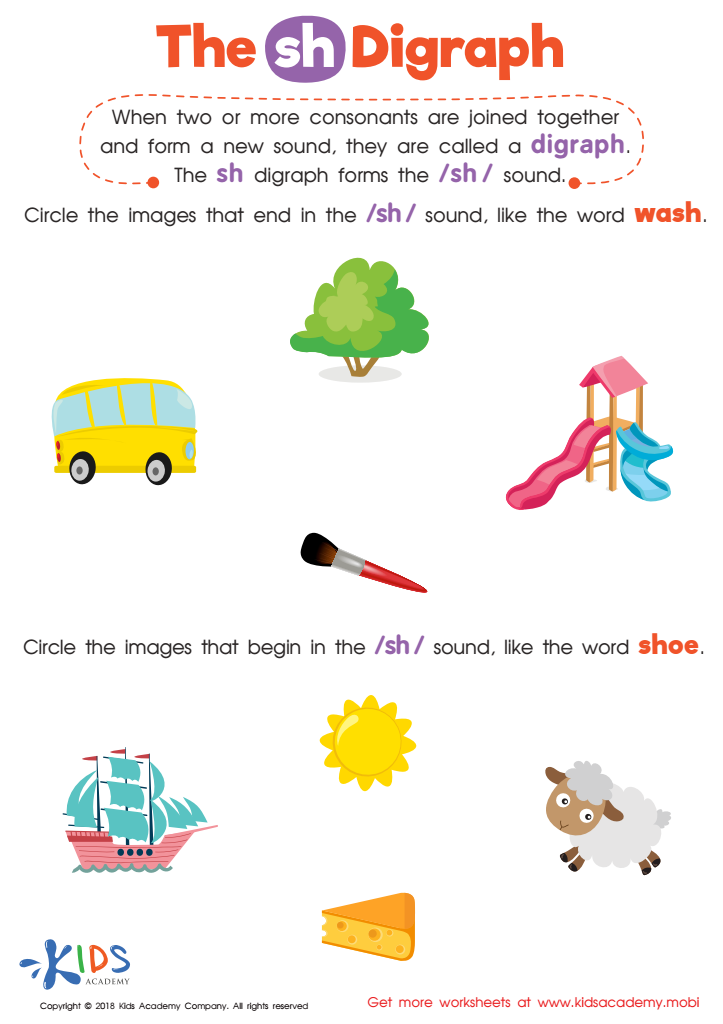
The SH Digraph Worksheet
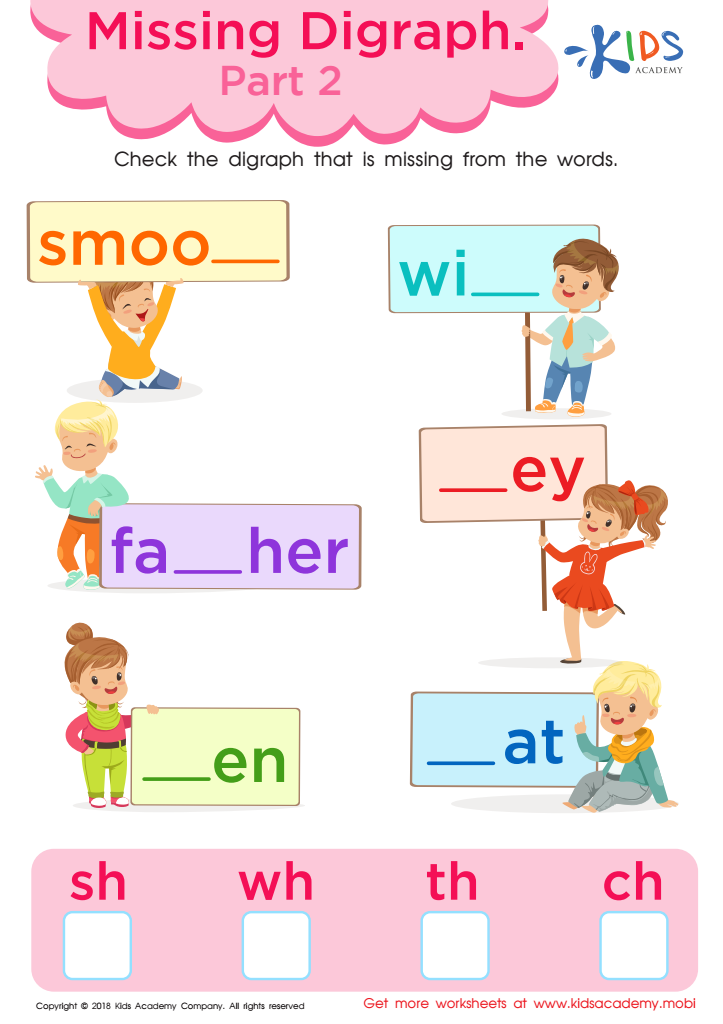
Missing Digraph: Part 2 Worksheet
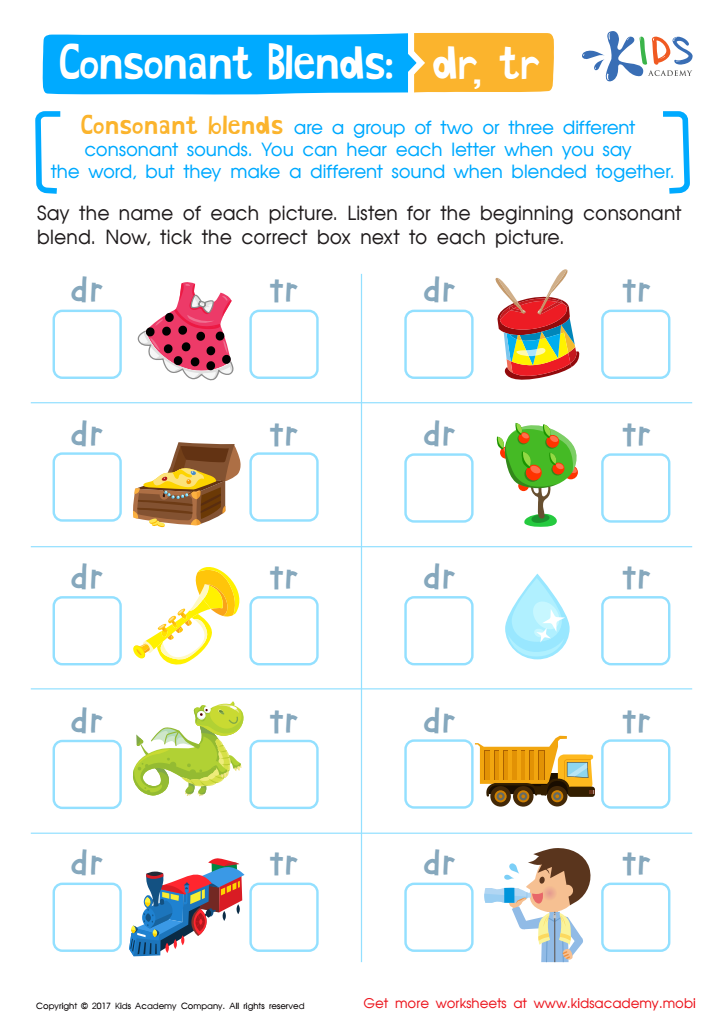
Consonant Blends: "Dr" and "Tr" Printable


Word recognition, particularly in the context of normal consonant digraphs (like 'ch,' 'sh,' and 'th'), is crucial for children aged 7-9 as they are at a pivotal stage in developing their reading skills. Mastering these sound combinations enhances their phonetic awareness, enabling them to decode words more effectively. This is especially important because fluency in reading influences a child's overall academic performance.
Parents and teachers should care about normal consonant digraphs because they contribute to a child's ability to comprehend texts across subjects. When children recognize digraphs, they can tackle complex vocabulary with confidence, leading to improved comprehension and engagement with reading materials. Fostering this skill supports early literacy development, as it lays the groundwork for understanding more complex linguistic structures later on.
Additionally, recognizing and practicing consonant digraphs can boost a child's spelling abilities. Spelling is integrative to writing, and proficiency here complements literacy as a whole. Moreover, phonemic awareness is linked to larger cognitive skills such as problem-solving and critical thinking. Therefore, parents and teachers should prioritize teaching normal consonant digraphs not only to support reading and writing but also to promote lifelong learning skills in their children.