
Reading proficiency Normal Phonics Worksheets for Ages 7-9
5 filtered results
Difficulty Level
Grade
Age
-
From - To
Subject
Activity
Standards
Our "Reading Proficiency Normal Phonics Worksheets for Ages 7-9" are designed to build strong foundational reading skills in young learners. These engaging worksheets focus on essential phonics concepts, such as letter combinations, sounds, and word recognition, to help children enhance their reading accuracy and fluency. Each activity is crafted to be fun and interactive, ensuring kids stay motivated while mastering the basics of phonics. Ideal for classroom use or additional practice at home, these worksheets support your child in becoming a confident, proficient reader. Explore our collection to give your child the best start on their reading journey.
Favorites
With answer key
Interactive
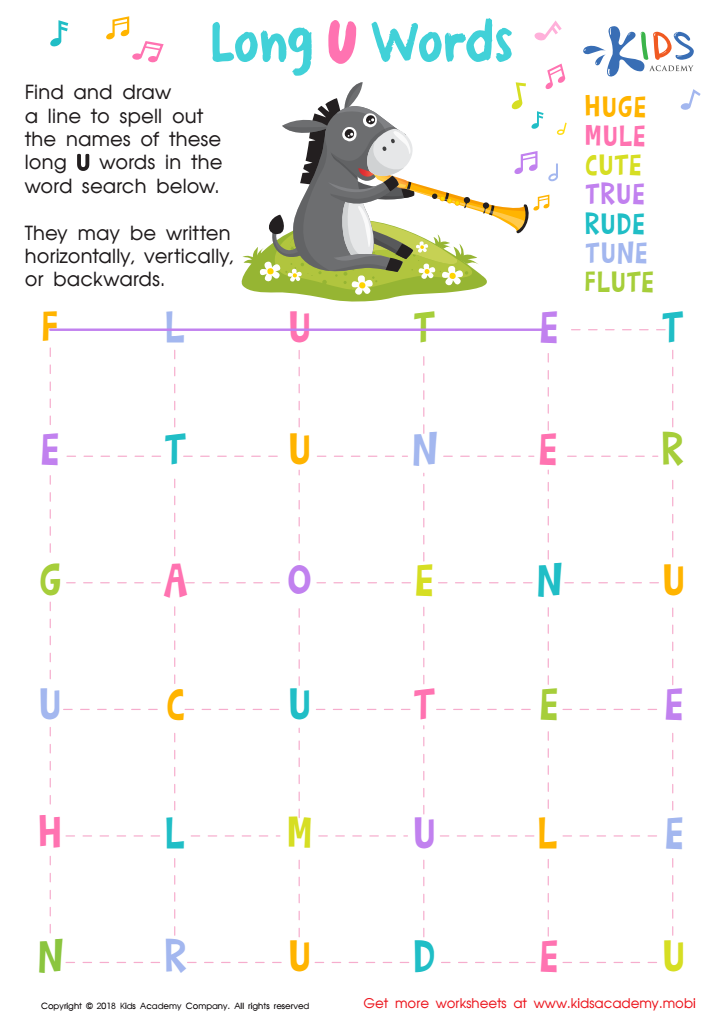
Long /u/ Words Worksheet
Your child needs to learn phonetics to enunciate and differentiate words. This fun worksheet encourages them to find and draw lines connecting the long 'U' words in the word search. Help them read the words on the right side of the picture, then look for them in the word search (horizontally, backwards or vertically).
Long /u/ Words Worksheet
Worksheet
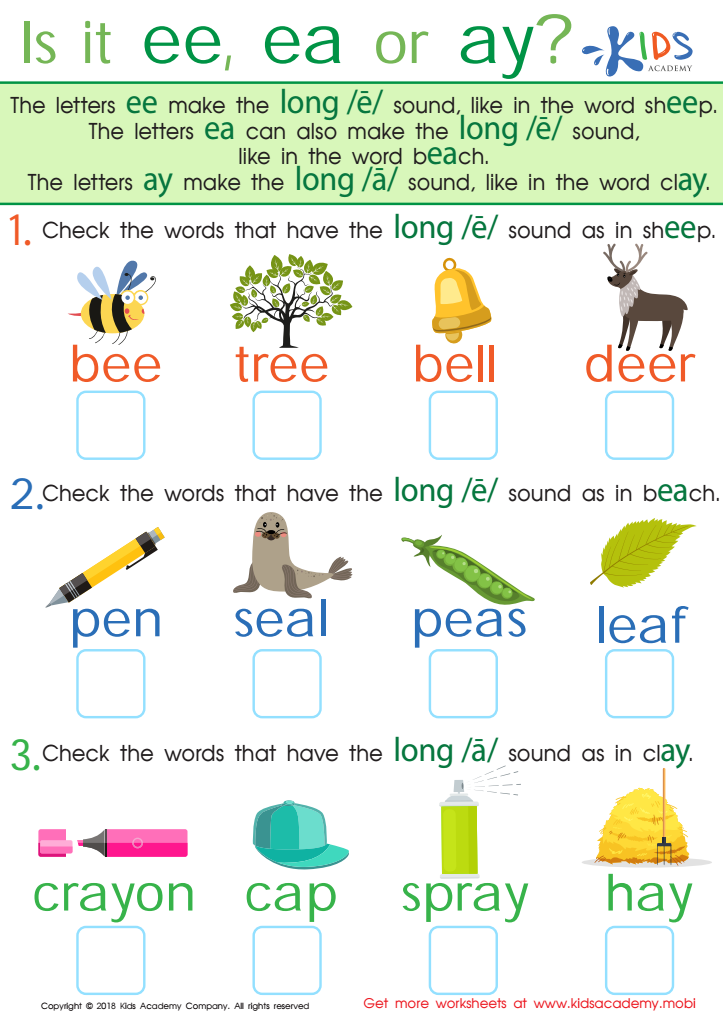
Is It EE, EA, or AY? Worksheet
When 'ee', 'ea' and 'ay' are in words, they usually make the long /e/ and /a/ sounds. Examples of words with 'ee' are "sheep", 'beach' and 'seat' with 'ea', and 'clay' and 'play' with 'ay'. Check this colourful worksheet with your kids; help them find the words that make the long /e/ sound like 'sheep'.
Is It EE, EA, or AY? Worksheet
Worksheet

Long and Short U Worksheet
Revised: Spice up your lesson on long and short vowels with this fun printout! Kids read the words "tube" and "tub," then reinforce the sound by coloring in the words and pictures. It's a great way to make phonics class enjoyable!
Download (PDF)
 Assign to My Students
Assign to My Students
Long and Short U Worksheet
Worksheet
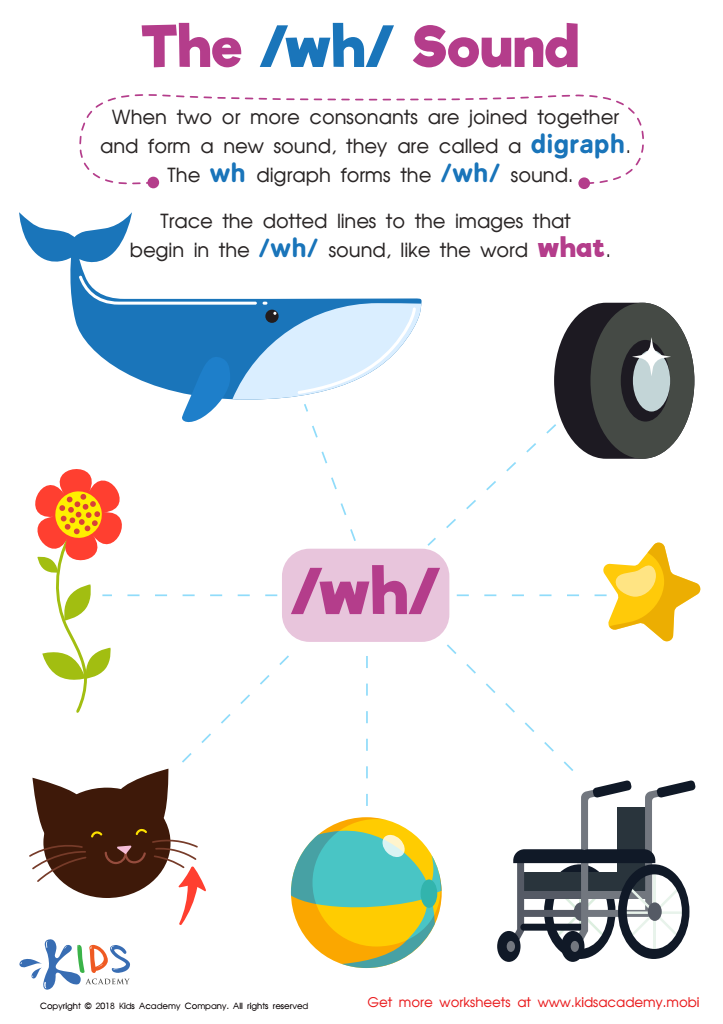
The /wh/ Sound Worksheet
Digraphs join two consonants to make a new sound, like /wh/. Give examples, like "whale", "when" and "why". Ask kids to name pictures in a worksheet and trace dotted lines to images beginning with the /wh/ sound; "what" is one example.
The /wh/ Sound Worksheet
Worksheet
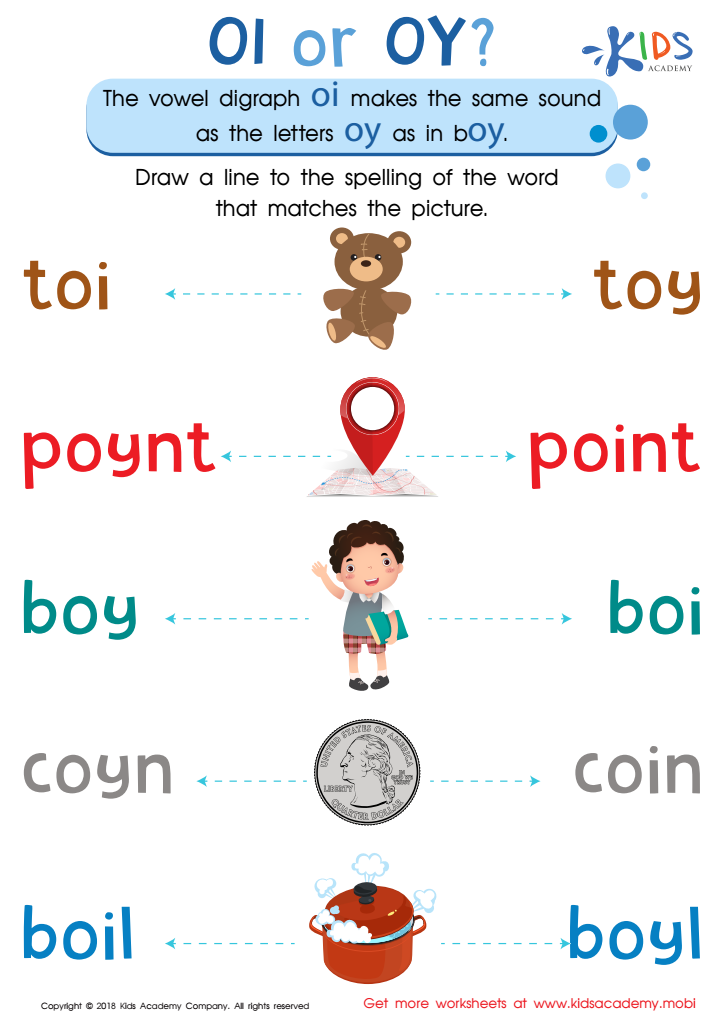
Reading: OI and OY Worksheet
Ask your students if they know the rule for words with /oi/ or /oy/ sound. If not, it's easy to learn! Rule: If /oy/ at end of word, spell with 'oy'; if /oi/ in middle of word, spell with 'oi'. Use this worksheet to help them master these digraphs and improve their ability to decode.
Reading: OI and OY Worksheet
Worksheet
Join Kids Academy for Free
Who is primarily going to use this learning content?








Developing reading proficiency through phonics for ages 7-9 is pivotal because it forms the foundation of a child's educational journey and broader personal development. Phonics teaches children the relationship between letters and sounds, enabling them to decode new words, improving reading fluency, and facilitating the comprehension of text. This age range, typically corresponding to second and third grades, is a critical window for solidifying literacy skills.
When children recognize patterns in phonics, they gain confidence in reading, which in turn stimulates their interest and enjoyment in books. A strong grasp of reading by 9 is often indicative of future academic success, as reading is integral to subjects across the curriculum. Poor reading skills at this stage can lead to difficulties in other academic areas, lower self-esteem, and long-term educational struggles.
Moreover, proficient readers engage more deeply with texts, enhancing their vocabulary, critical thinking, and general knowledge. Parents and teachers promoting phonics-focused reading instruction help ensure children do not fall behind, potentially preventing the need for remedial education later. Caring about and investing in reading proficiency via phonics equips children with essential tools for effective communication and lifelong learning.







