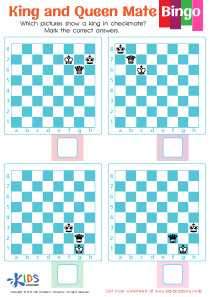
Chess strategy understanding Normal Chess Worksheets for Ages 7-9
3 filtered results
-
From - To
Explore our "Chess Strategy Understanding Worksheets" designed specifically for budding chess enthusiasts aged 7-9. These engaging and interactive worksheets introduce young players to fundamental chess strategies, enhancing their decision-making and critical thinking skills. Our resources feature age-appropriate exercises focusing on tactics like controlling the center, tactical pieces movement, and recognizing patterns in gameplay. By practicing with these worksheets, children will gain confidence and improve their strategic understanding of chess. Perfect for home or classroom use, our printable materials make learning chess fun and accessible! Start your child's chess adventure today with our thoughtfully crafted worksheets.
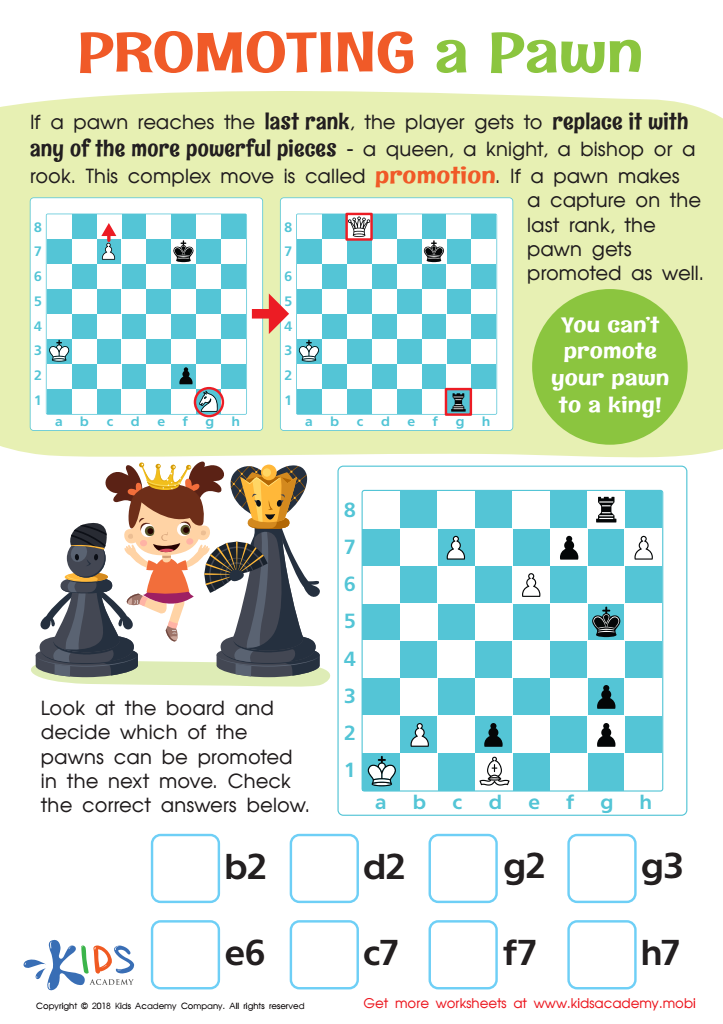
Promoting a Pawn Worksheet
 Assign to My Students
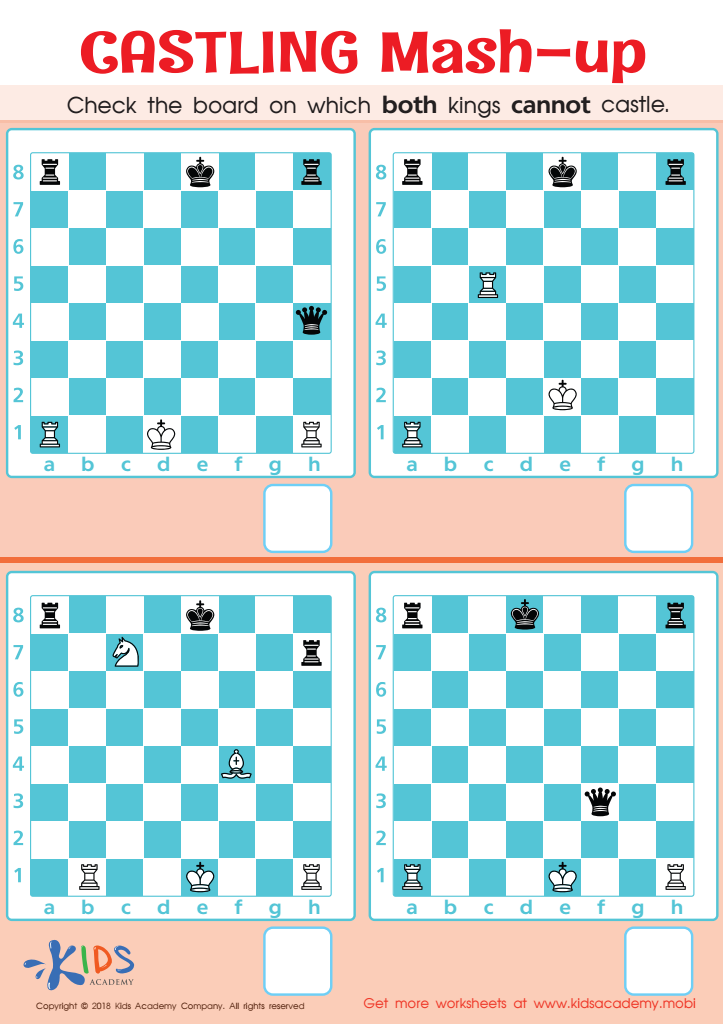
Castling Mash–up Worksheet
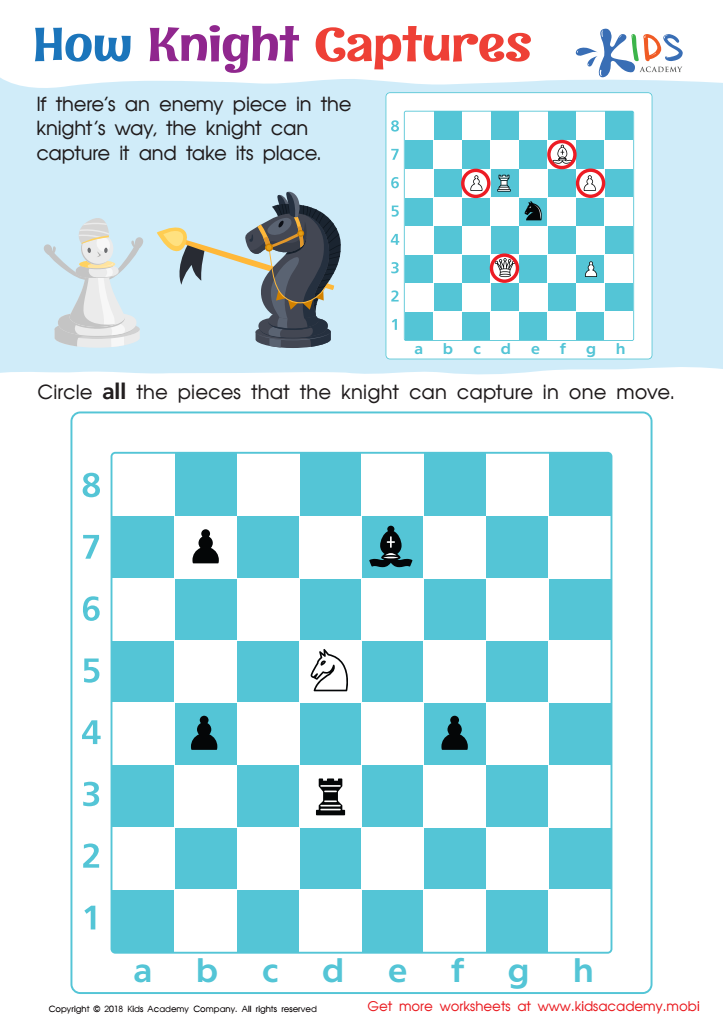
How Knight Captures Worksheet








Understanding chess strategy is valuable for parents and teachers when introducing the game to children ages 7-9 for several reasons. Firstly, chess enhances critical thinking and problem-solving skills. As children learn to anticipate their opponent’s moves and plan their strategies, they cultivate the ability to think ahead and make logical decisions. This skill transcends the board, positively affecting their academic performance and daily decision-making.
Secondly, mastering chess strategies fosters patience and perseverance. Young players must learn that each move carries consequences, teaching them to process failure as a part of learning. This attitude can help children tackle challenges in other areas, encouraging resilience.
Additionally, chess promotes social skills. Playing with peers or family members offers opportunities for teamwork and communication. Children learn sportsmanship by respecting opponents, leading to an understanding of fair play and collaboration.
Lastly, understanding chess strategy prepares children for more complex concepts in the future. The foundational skills gained in chess support their cognitive development, benefiting them in other subjects, especially mathematics and logic-oriented disciplines. For these reasons, parents and teachers should nurture an interest in chess, providing children with tools essential for success both on and off the chessboard.