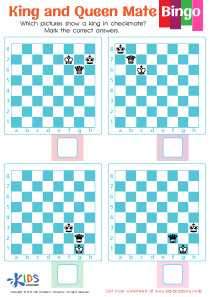
Strategic thinking development Normal Chess Worksheets for Ages 7-9
7 filtered results
-
From - To
Boost your child's strategic thinking skills with our Normal Chess Worksheets designed for ages 7-9. These worksheets provide a fun and engaging way for young learners to grasp essential chess concepts while enhancing critical thinking and problem-solving abilities. Each printable activity introduces age-appropriate challenges that promote logical reasoning and decision-making. Perfect for both classroom use and at-home learning, our resources encourage kids to think several moves ahead and develop a love for the game. Give your child a head start in strategic thinking and watch them excel in chess and beyond! Explore our collection of engaging worksheets today!
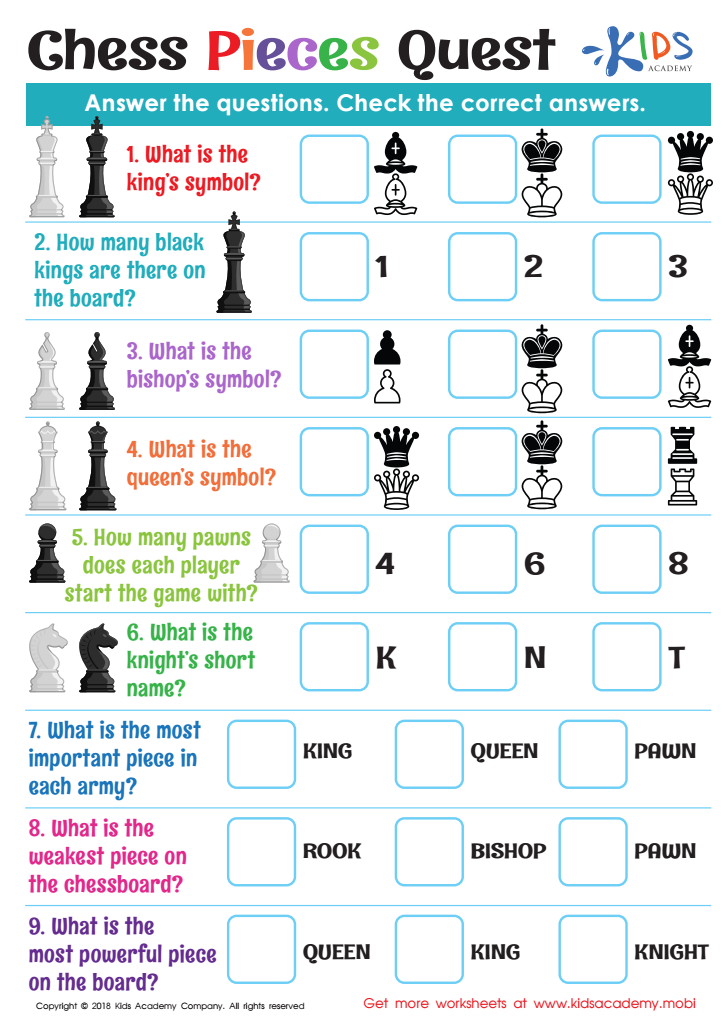
Chess Pieces Quest Worksheet
 Assign to My Students
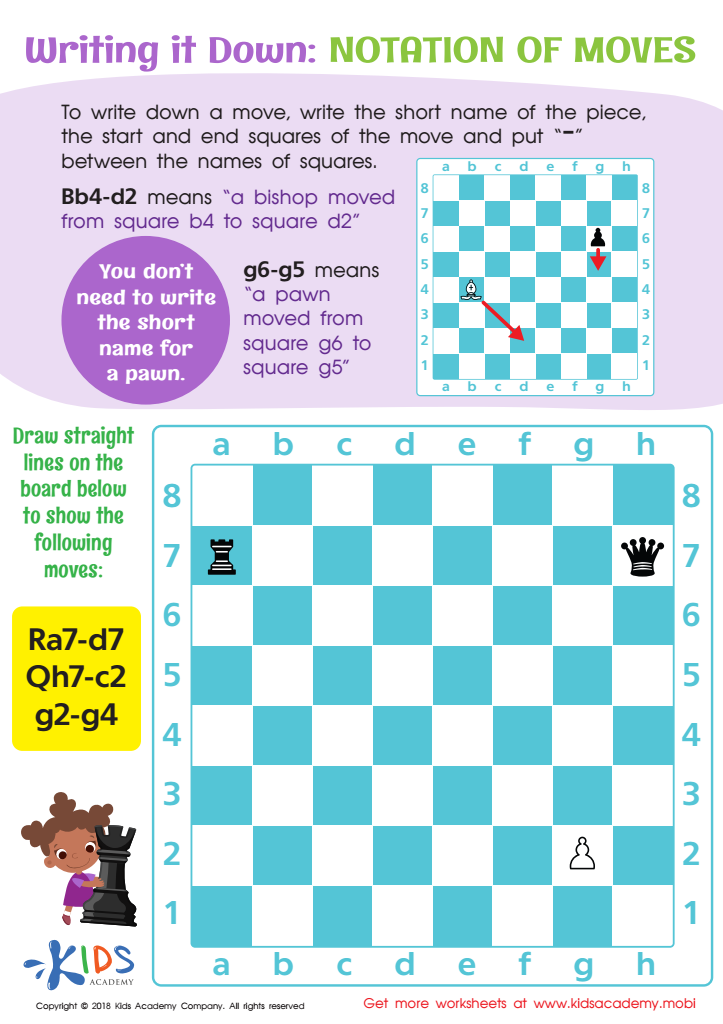
Notation of Moves Writing it Down Worksheet
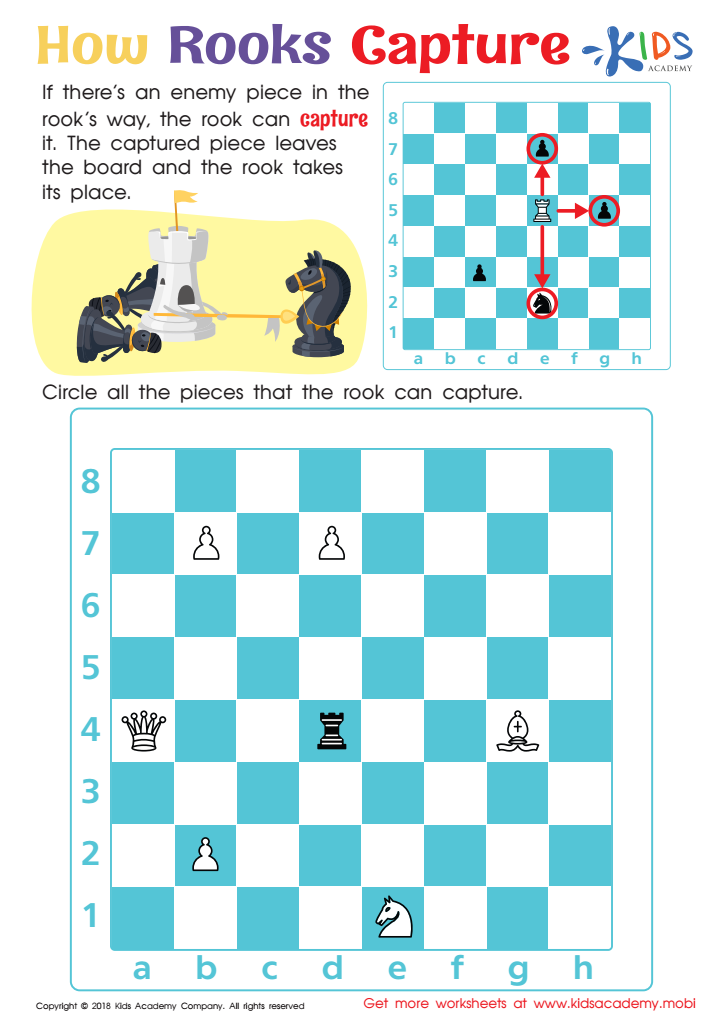
How Rooks Capture Worksheet
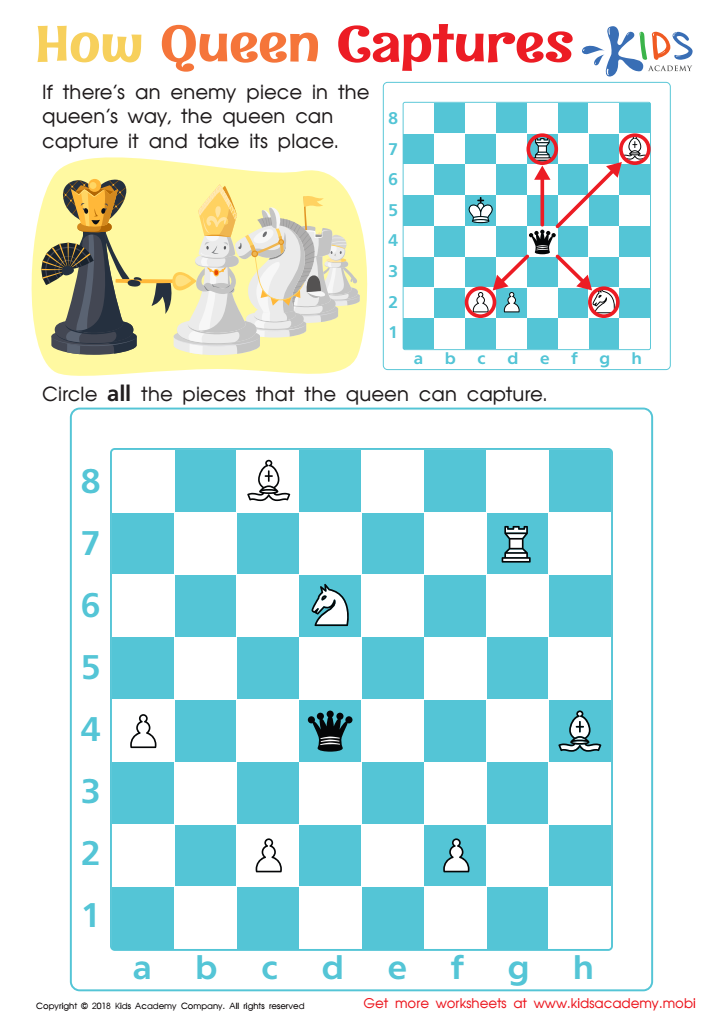
How Queen Captures Worksheet
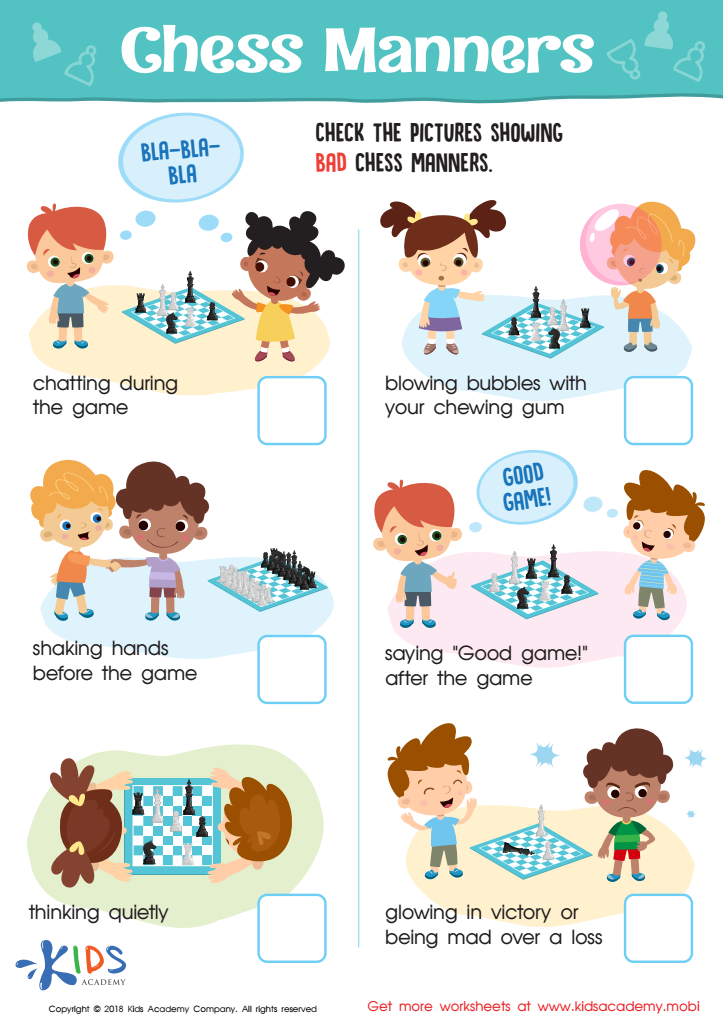
Chess Manners Worksheet
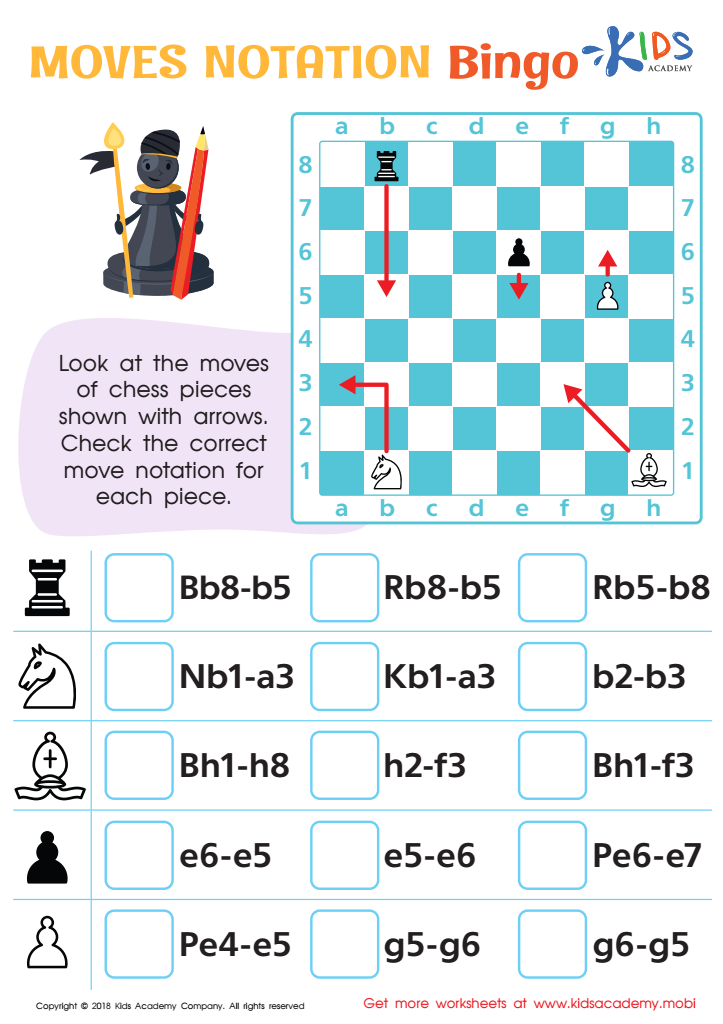
Moves Notation Bingo Worksheet
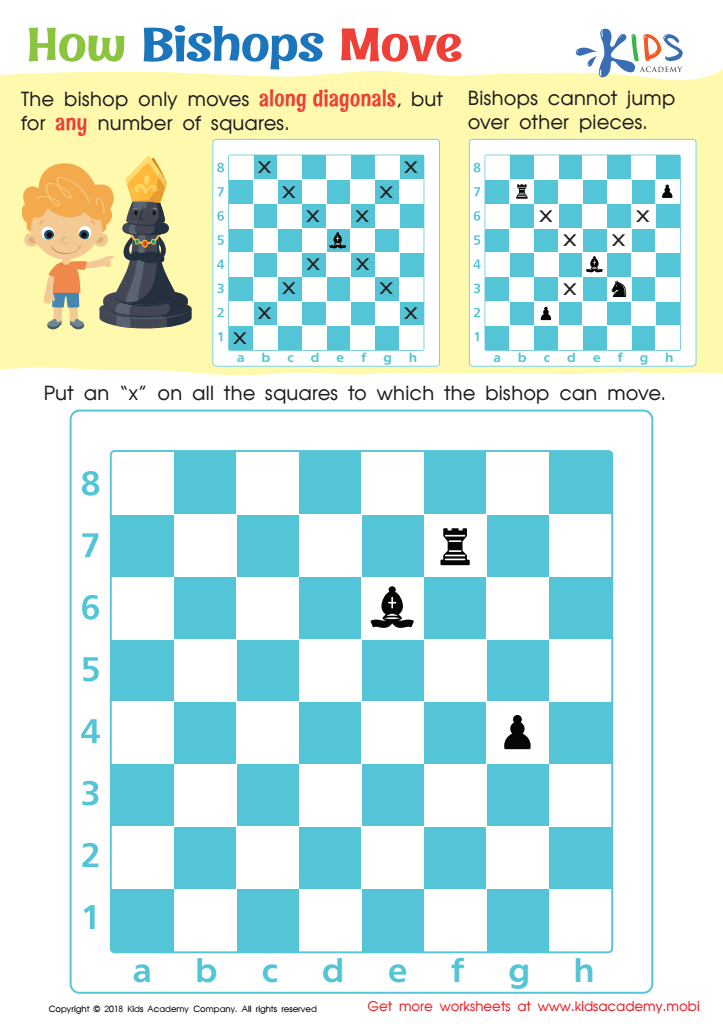
How Bishops Move Worksheet







Strategic thinking development is crucial for children aged 7-9, especially through an engaging game like chess. Parents and teachers should prioritize this because strategic thinking fosters critical cognitive skills essential for academic and personal growth. Chess encourages problem-solving, as children learn to analyze various positions, anticipate opponents' moves, and develop long-term plans. These abilities directly translate into better performance in subjects like mathematics and science, where logic and reasoning are pivotal.
Moreover, playing chess fosters patience, focus, and resilience. Children learn to concentrate on a task for extended periods and accept both wins and losses gracefully. This builds emotional intelligence and provides them with coping strategies, which are essential life skills.
The social aspect of chess should not be overlooked; it promotes healthy competition and teaches teamwork and communication skills. Playing with peers helps children develop friendships and learn respect for others.
Additionally, introducing strategic thinking through chess aligns with modern educational goals that advocate for critical thinking and creativity. In a world increasingly reliant on these skills, chess serves as an enjoyable and interactive tool to prepare children for future challenges. By nurturing strategic thinking now, parents and educators empower children to navigate life's complexities with confidence and insight.