Grammar application Normal Worksheets for Ages 7-9
3 filtered results
-
From - To
Enhance your child's grammar skills with our Normal Worksheets specifically designed for ages 7-9! These engaging worksheets are perfect for young learners, providing a fun and interactive way to explore essential grammar concepts. Covering topics such as sentence structure, punctuation, and parts of speech, our resources encourage creativity while reinforcing key learning objectives. Each worksheet is tailored to boost comprehension and retention, ensuring your child develops a strong foundation in English language skills. With colorful layouts and age-appropriate exercises, our Grammar Application worksheets make learning enjoyable. Start your child's grammar adventure today!
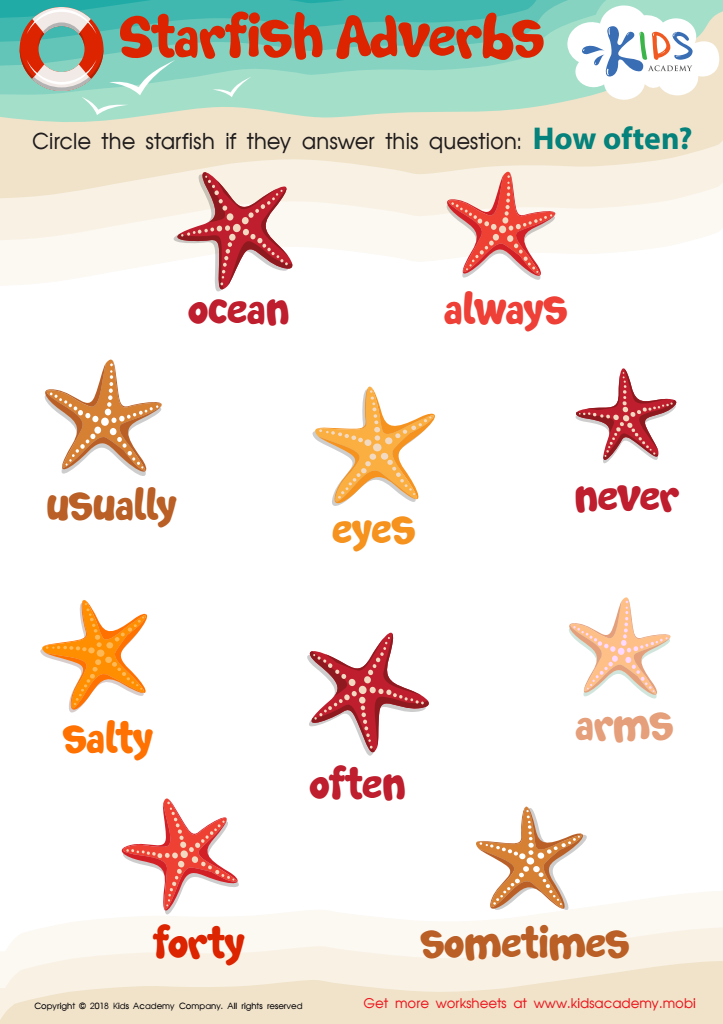
Starfish Adverbs Worksheet
 Assign to My Students
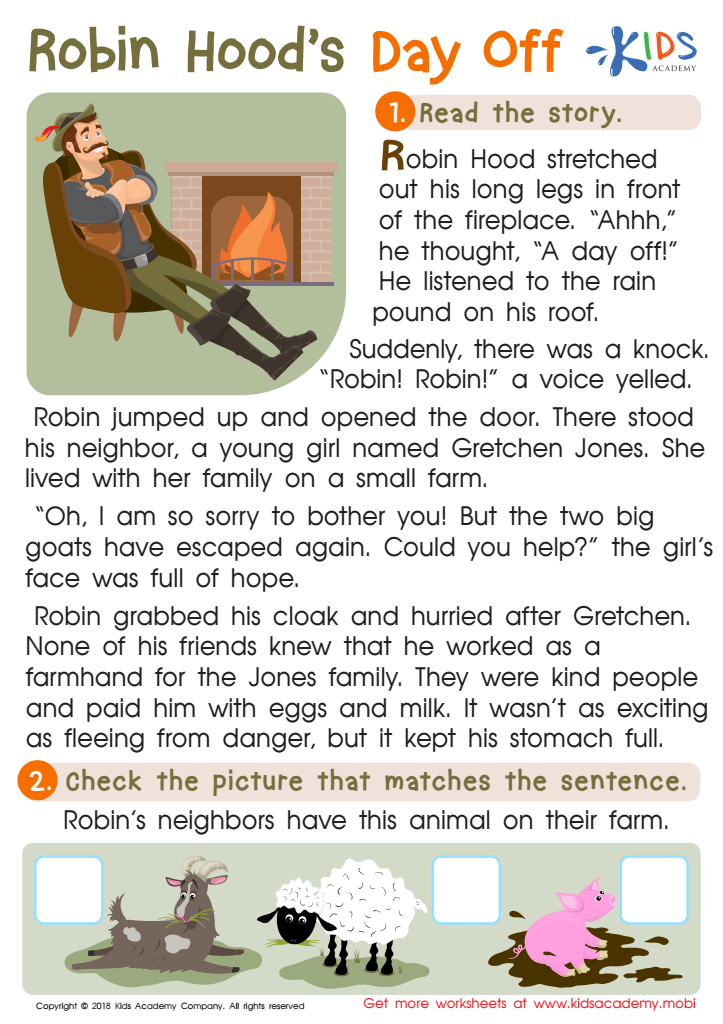
Robin Hood's Day Off Worksheet
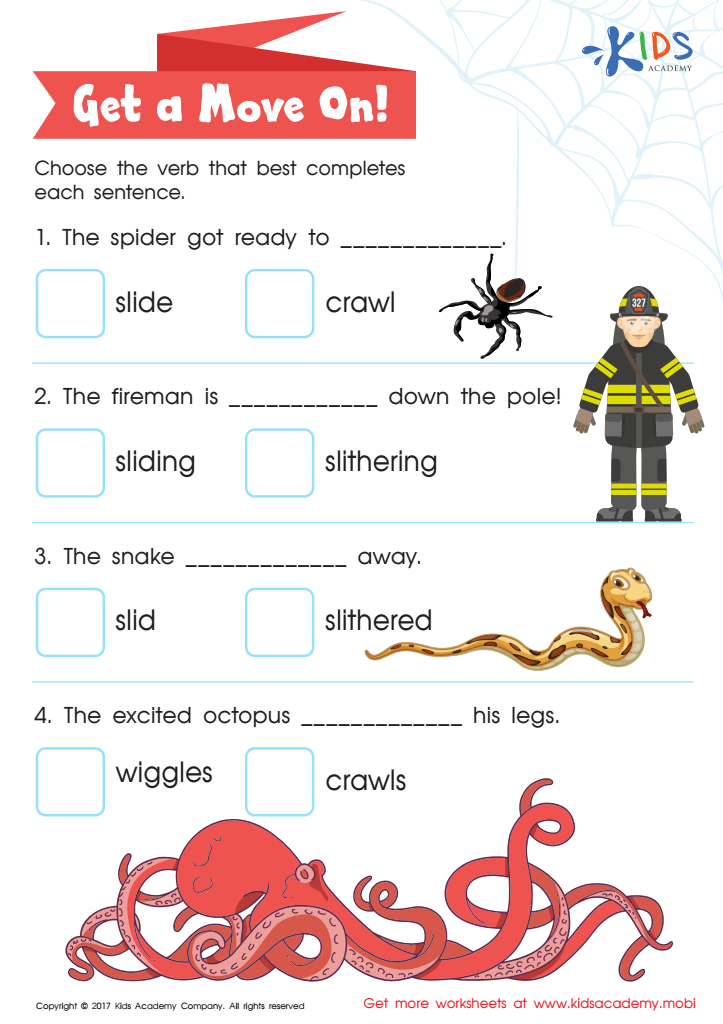
Verb Worksheet







Parents and teachers should prioritize grammar application for children aged 7-9 because it lays the foundational skills essential for effective communication and literacy. At this developmental stage, children are expanding their vocabulary and starting to write longer sentences. A solid grasp of grammar helps them articulate their thoughts clearly and accurately, enabling meaningful interaction with peers and adults.
Understanding grammar rules, such as subject-verb agreement and correct punctuation, empowers children to express themselves confidently in both written and spoken forms. This skill is not just academic; it fosters critical thinking and enhances comprehension across subjects. As children begin to read more complex texts, their knowledge of grammar aids in decoding phrases and understanding nuanced meanings.
Moreover, effective grammar usage cultivates self-esteem and encourages a love for language and storytelling. Children who communicate clearly are often more engaged in classroom discussions and collaborative projects. For parents, this focus on grammar can facilitate enriching conversations with their children, enhancing learning experiences at home. In essence, paying attention to grammar application in early grades is crucial for developing lifelong communication skills that will benefit children academically and socially.








