
Grammar enhancement Normal Worksheets for Ages 7-9
3 filtered results
Difficulty Level
Grade
Age
-
From - To
Subject
Activity
Standards
Discover our engaging Grammar Enhancement Normal Worksheets designed specifically for children ages 7-9. These thoughtfully crafted worksheets help young learners strengthen their grammar skills in a fun and interactive way. Featuring a variety of activities, including sentence structure exercises, punctuation practice, and vocabulary-building challenges, these resources make learning grammar enjoyable. Perfect for classroom settings or at-home practice, our worksheets align with educational standards and support key grammar concepts. Enhance your child's writing and communication abilities while boosting their confidence. Explore our collection today and help your child become a master of grammar!
Favorites
With answer key
Interactive
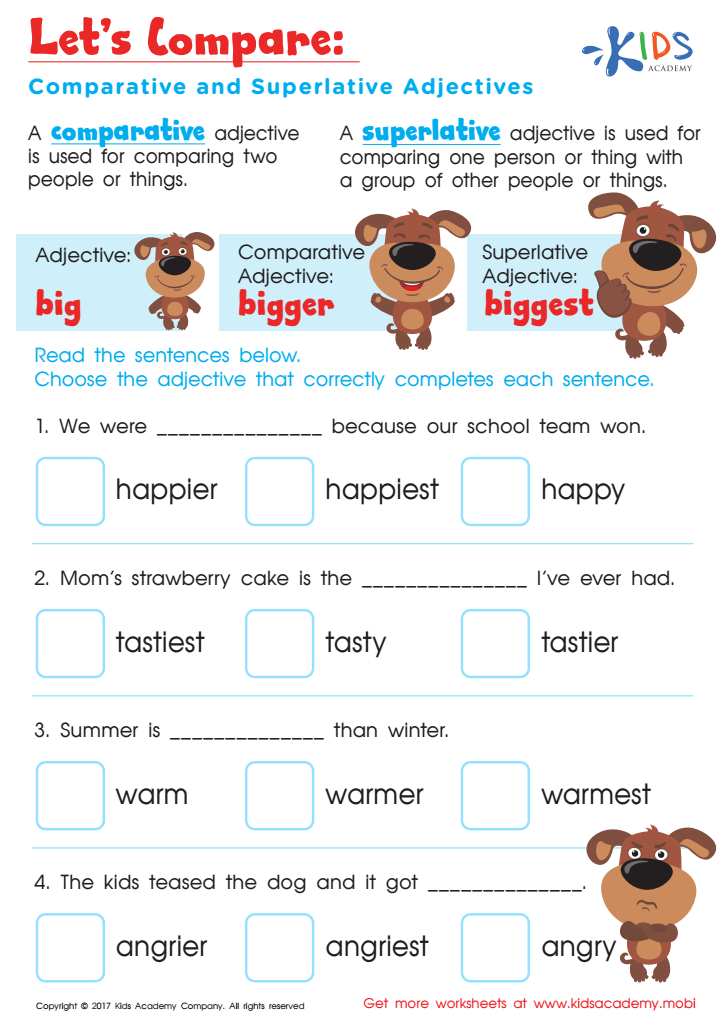
Comparative and Superlative Worksheet
Kids can discover the difference between comparative and superlative adjectives and practice using them correctly - is it big, bigger, or biggest? Perfect for grade 3.
 Assign to My Students
Comparative and Superlative Worksheet
Worksheet
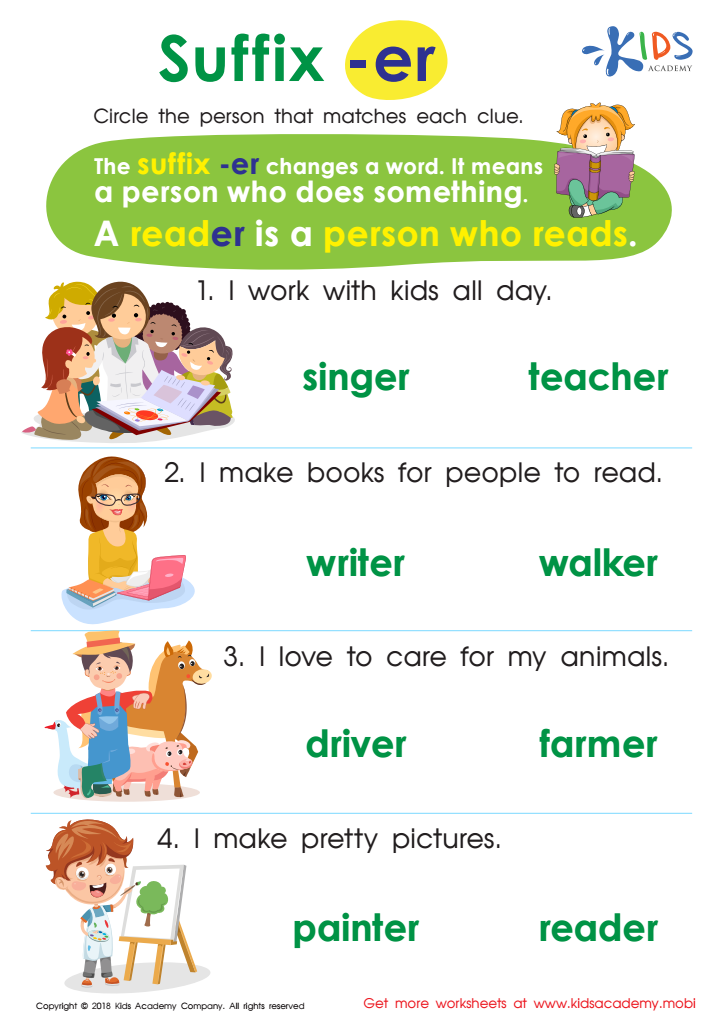
Suffix –er Printable Worksheet
Kids learn how powerful suffixes are with this printable worksheet. Read the sentence clues and select the word it describes. Discuss how the suffix alters the original word. Amazing how two letters can transform meanings!
Suffix –er Printable Worksheet
Worksheet
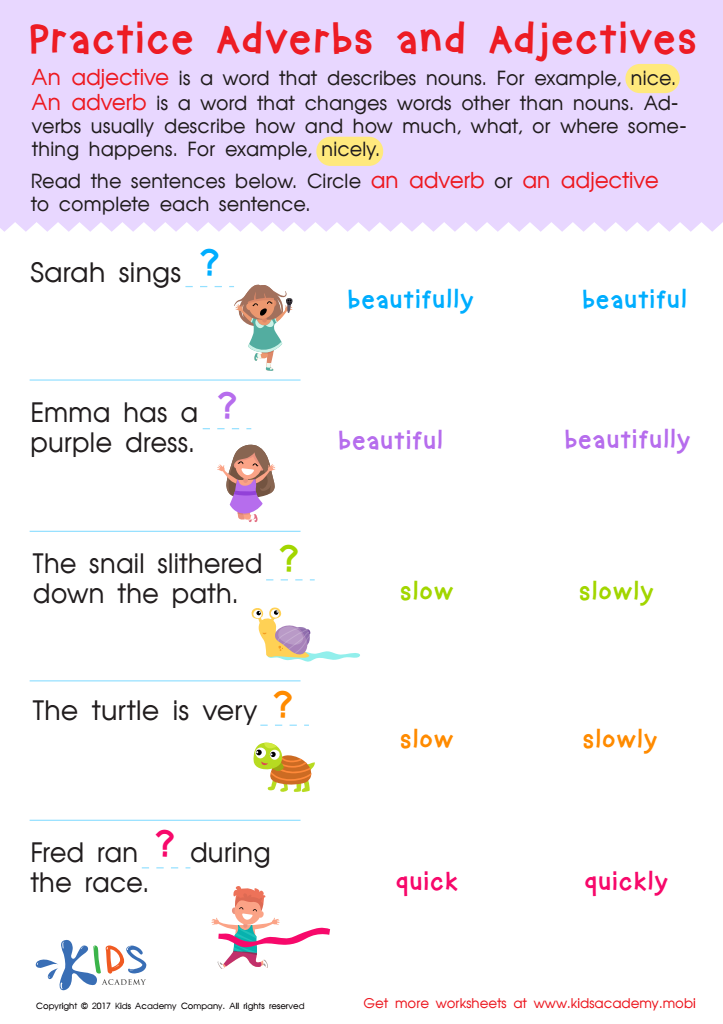
Adverbs and Adjectives Worksheet
Kids Academy's PDF worksheet on Adjectives and Adverbs explains how to use them and offers practice sentences. Children must circle the adjective or adverb to complete each sentence. Maximize their knowledge with this fun and informative exercise!
Adverbs and Adjectives Worksheet
Worksheet
Join Kids Academy for Free
Who is primarily going to use this learning content?








Grammar enhancement for children aged 7-9 is crucial for several reasons. At this formative stage, children are developing essential communication skills that will serve as a foundation for their future academic endeavors and everyday interactions. A strong grasp of grammar helps students express their thoughts clearly and accurately, making their writing and speech more effective and engaging.
Understanding grammar also enhances reading comprehension. When children know how sentences are structured, they can decode texts more easily, leading to better understanding and retention of information. Additionally, mastery of grammar can boost children's confidence in their academic work, reducing frustration when it comes to expressing themselves in writing assignments or during class discussions.
Furthermore, reinforcing grammar skills at this young age prepares students for more complex writing tasks in later grades. It lays the groundwork for critical thinking and editing skills, as they learn to recognize and correct their grammatical errors. In our increasingly competitive academic landscape, strong language skills can also provide an advantage for future educational opportunities. Ultimately, supporting grammar enhancement in young children equips them with the tools they need to succeed both in school and in life. Thus, parents and teachers play a vital role in prioritizing this essential aspect of early literacy.








