Reading analog clocks Normal Worksheets for Ages 7-9
3 filtered results
-
From - To
Enhance your child's time-telling skills with our engaging Reading Analog Clocks Worksheets, designed specifically for ages 7-9. These worksheets provide fun and interactive exercises that make learning to read analog clocks enjoyable and effective. With colorful illustrations and a variety of activities, children will practice telling time to the nearest hour, half-hour, and quarter-hour. Each worksheet encourages students to develop a solid understanding of clock face concepts, while promoting critical thinking and problem-solving abilities. Perfect for at-home practice or classroom use, our worksheets are great resources to reinforce essential math skills and build confidence in young learners. Dive into time-telling today!
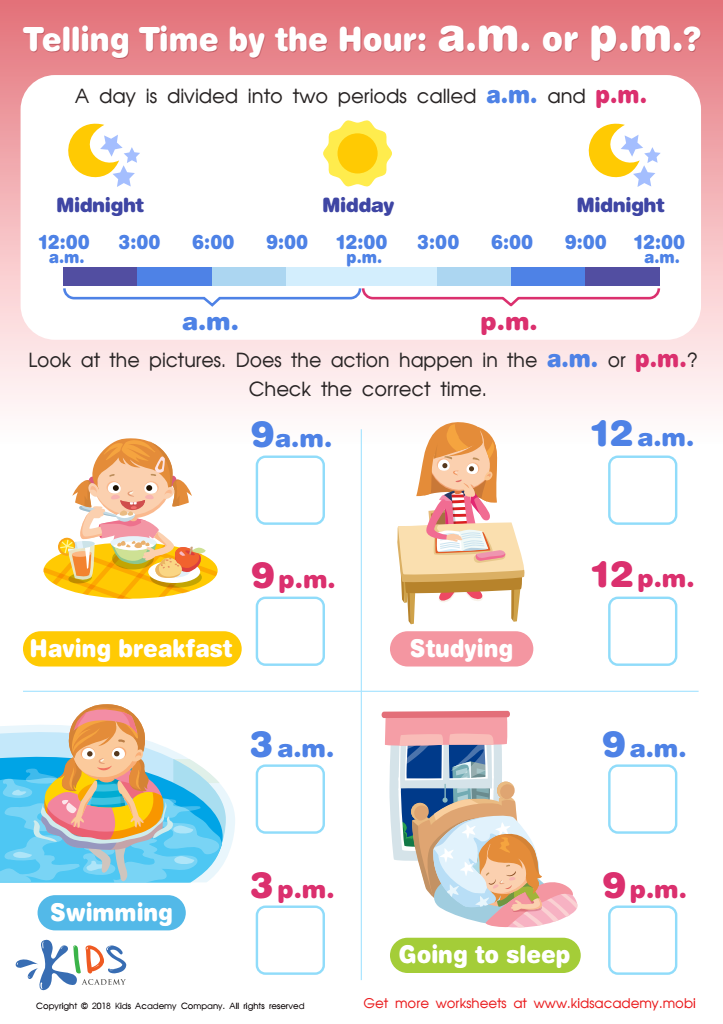
Tilling Time by the Hour: a.m. or p.m.? Worksheet
 Assign to My Students
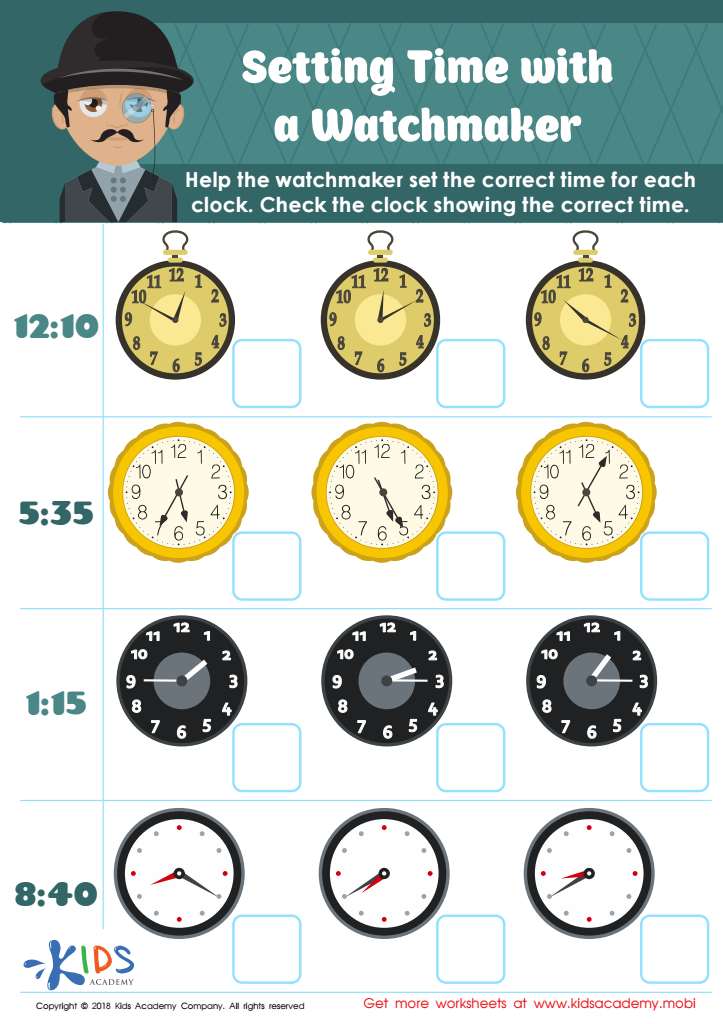
Setting Time with Watchmaker Worksheet
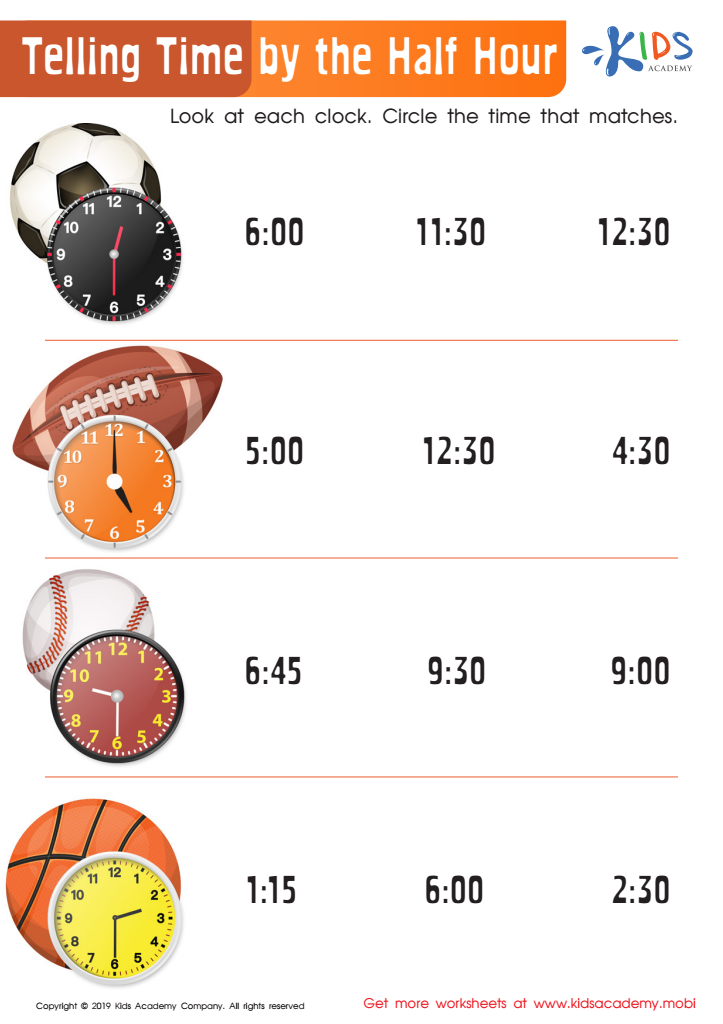
Telling Time by the Half Hour Worksheet






Teaching children to read analog clocks is an essential skill that offers numerous benefits. For parents and teachers, understanding why this skill matters can enhance a child's overall education.
Firstly, learning to read analog clocks fosters critical thinking and problem-solving skills. Children must understand the relationship between the hour and minute hand, encouraging them to engage with mathematics concepts like counting, addition, and subtraction. Recognizing the passage of time can also aid in developing a sense of responsibility and time management, teaching kids to manage their schedules and understand importance timelines.
Additionally, analog clocks often feature in daily life, especially in traditional settings—such as schools or public spaces—making it crucial for children to have a functional understanding of these clocks. This ability builds confidence and ensures they navigate their environments effectively.
Reading an analog clock also encourages children to connect with their surroundings and reduces reliance on digital devices. It fosters a sense of grounding in time, helping kids appreciate the world around them. Ultimately, parents and teachers play a crucial role in promoting this skill, as it lays a foundation for comprehensive learning and real-life application, paving the way for independent, capable individuals.








