
Reading skills development Normal Worksheets for Ages 7-9
5 filtered results
Difficulty Level
Grade
Age
-
From - To
Subject
Activity
Standards
Enhance your child's reading abilities with our engaging "Reading Skills Development Worksheets" designed specifically for ages 7-9. These thoughtfully crafted worksheets promote essential reading comprehension, vocabulary building, and critical thinking skills through fun activities and exercises. Our resources cater to various learning styles, making reading an enjoyable experience for every child. Whether you’re reinforcing lessons at home or complementing classroom learning, these worksheets provide the necessary support to foster a love for reading. Explore our collection and watch your child gain confidence and proficiency in their reading journey today! Ideal for parents and educators alike.
Favorites
With answer key
Interactive
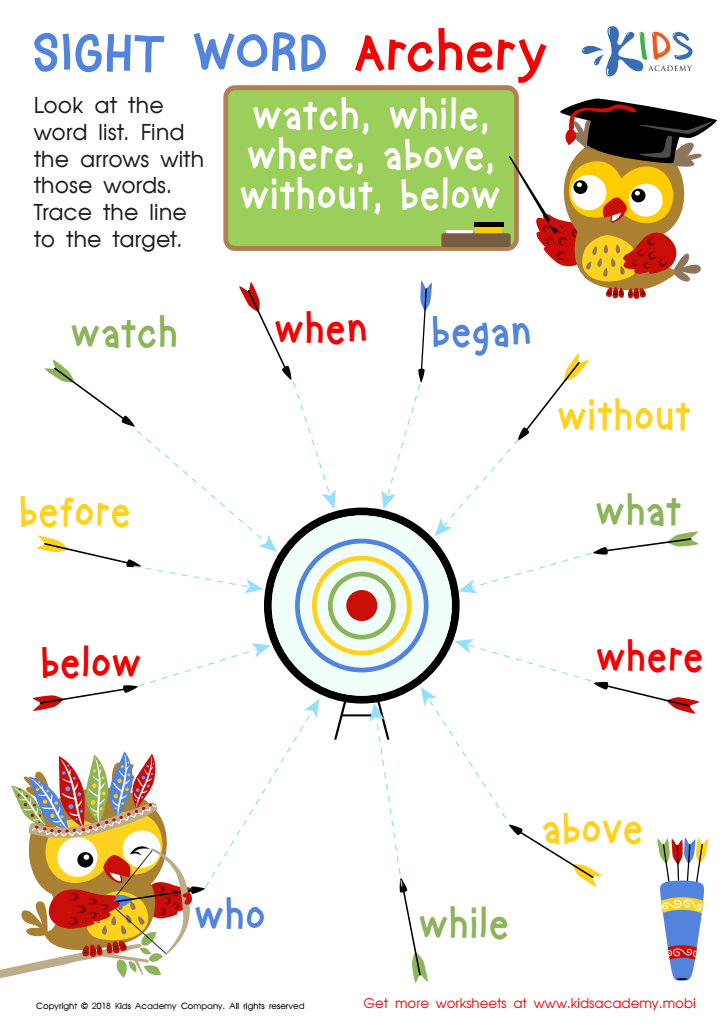
Sight Word Archery Worksheet
Read the words list with your kids, pointing at each one. Ask them to do the same. Help them find the arrows with those words and trace the line to the target in the centre.
 Assign to My Students
Sight Word Archery Worksheet
Worksheet
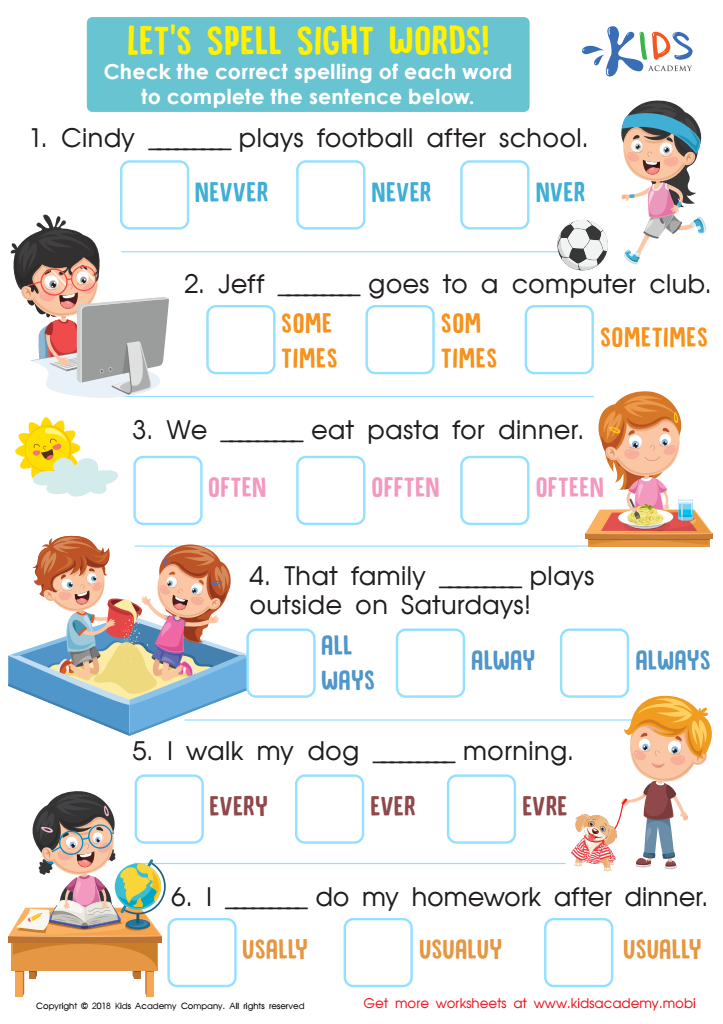
Let's Spell Sight Words Worksheet
Help your kids spell tricky sight words by asking them to spot differences in the sentences of activities they do regularly. This worksheet contains incomplete sentences, with the correct spelling of the word in the options for them to fill in. Get them to look out for words with the wrong spellings.
Let's Spell Sight Words Worksheet
Worksheet
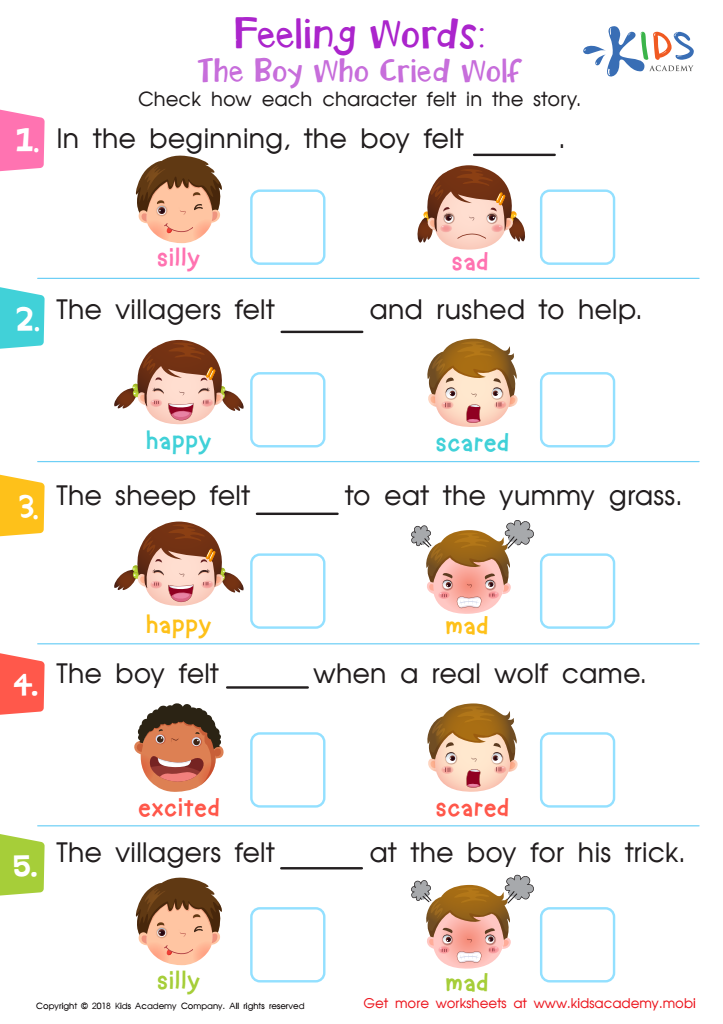
Feeling Words: The Boy Who Cried Wolf Worksheet
This worksheet helps students infer characters' traits and feelings by reading The Boy Who Cried Wolf. They choose the correct emotion for each character to improve their story comprehension. A great resource for the reading classroom, it teaches an essential comprehension skill.
Feeling Words: The Boy Who Cried Wolf Worksheet
Worksheet
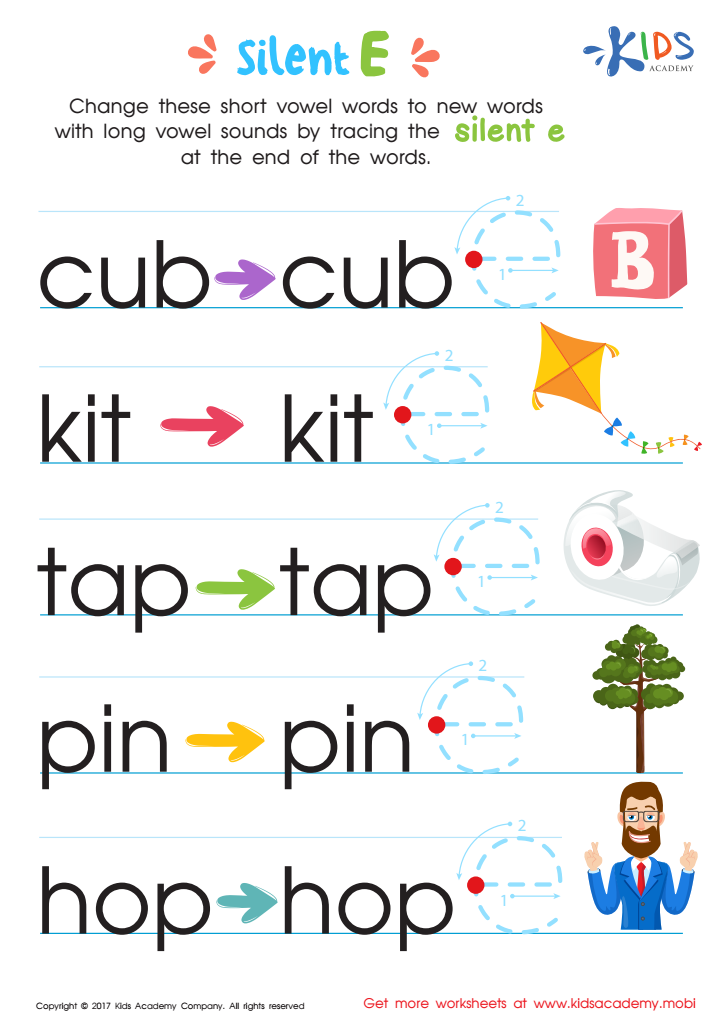
Silent E Words Worksheet
The letter e is amazing - it changes words without making a sound! Boost spelling and phonics with this Silent e worksheet from Kids Academy - fun and colorful!
Silent E Words Worksheet
Worksheet
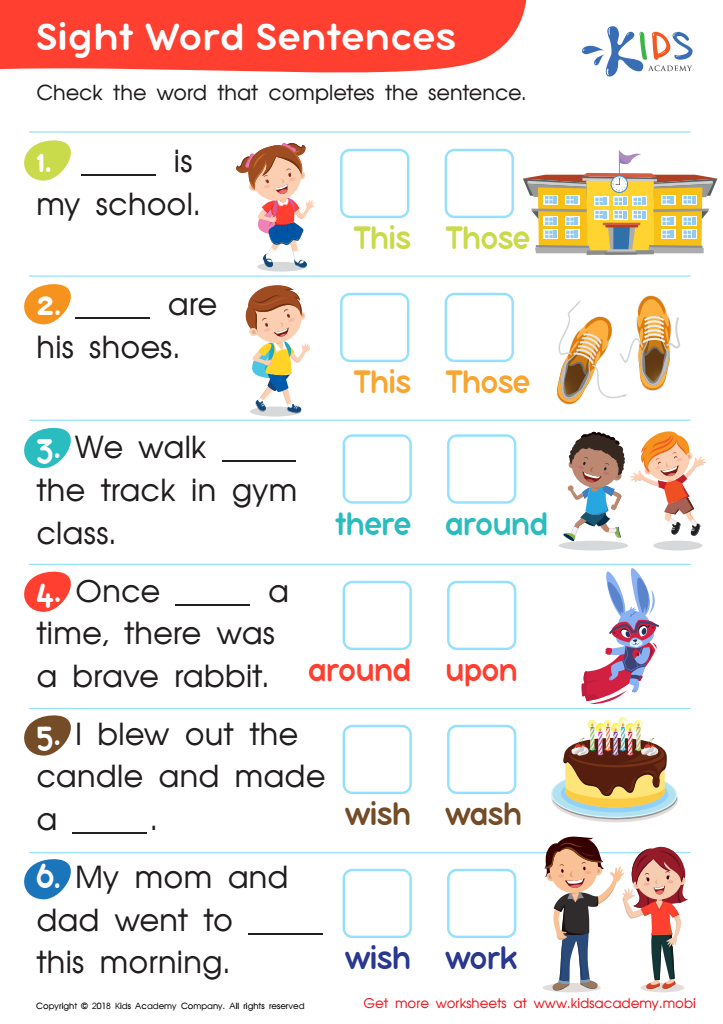
Sight Word Sentences Worksheet
Improve reading fluency! Have students fill in the blank with the correct sight word to complete sentences. Sight words are often tricky to decode - they don't follow phonics or spelling rules. To read smoothly, young learners must know them by memory. Use this printable and help kids master their sight words!
Sight Word Sentences Worksheet
Worksheet
Join Kids Academy for Free
Who is primarily going to use this learning content?






Reading skills development for children ages 7 to 9 is crucial for several reasons. During this formative stage, children transition from learning to read to reading to learn, making reading skills foundational for academic success. Proficient reading improves a child’s ability to understand various subjects, including math and science, where comprehension is key to problem-solving and critical thinking.
Additionally, strong reading skills enhance vocabulary and language development, enabling children to express their thoughts and ideas more effectively. This age group is also susceptible to developing attitudes towards reading that can last a lifetime. Encouraging a love for reading can foster curiosity and a desire for lifelong learning.
Parents and teachers should recognize that struggles with reading can affect a child’s confidence and self-esteem. Supporting children through engaging reading activities and access to diverse reading materials can help mitigate these challenges. Furthermore, strong reading skills are linked to better social skills as children often engage in discussions and share stories with peers.
In summary, prioritizing reading skills development not only facilitates academic progress but also nurtures emotional well-being and personal growth in children ages 7 to 9, ultimately laying the groundwork for their future success.








