Recognizing Patterns Normal Worksheets for Ages 7-9
5 filtered results
-
From - To
Discover our engaging and educational "Recognizing Patterns" normal worksheets designed specifically for ages 7-9. These worksheets are perfect for enhancing your child's cognitive abilities and problem-solving skills. Each worksheet is crafted to help children identify, analyze, and extend patterns through a variety of fun and interactive tasks. With colorful designs and diverse exercises, our worksheets make learning enjoyable and effective. They are an excellent resource for both classroom and home use, ensuring that children master the fundamental concept of pattern recognition while developing critical thinking and analytical skills. Make learning exciting with Kids Academy!
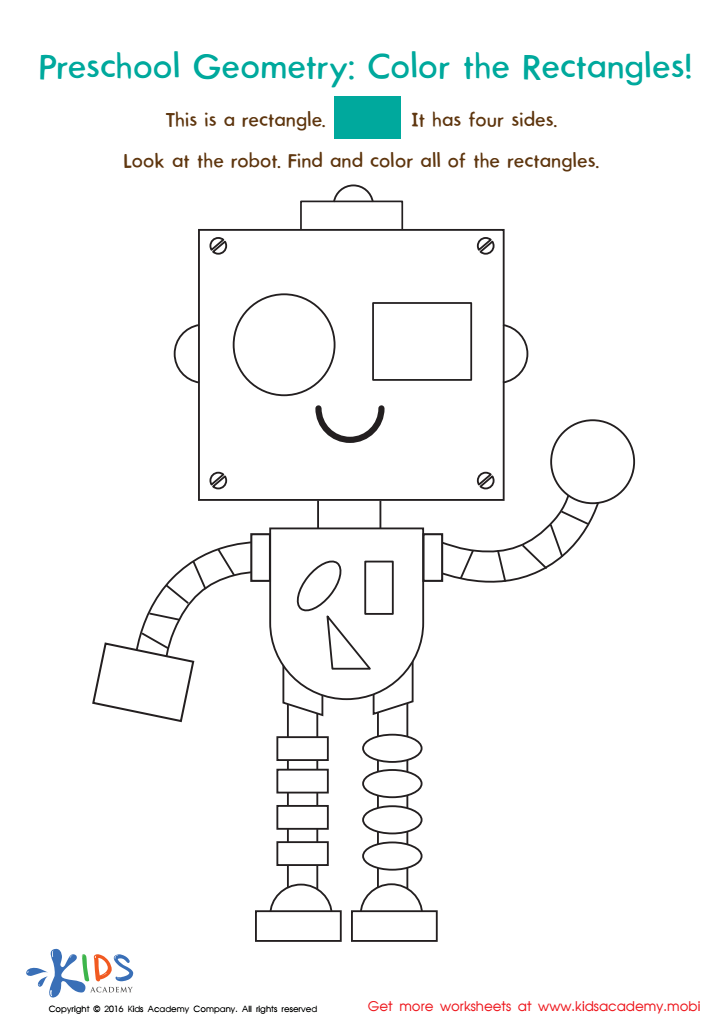
Geometry Worksheet
 Assign to My Students
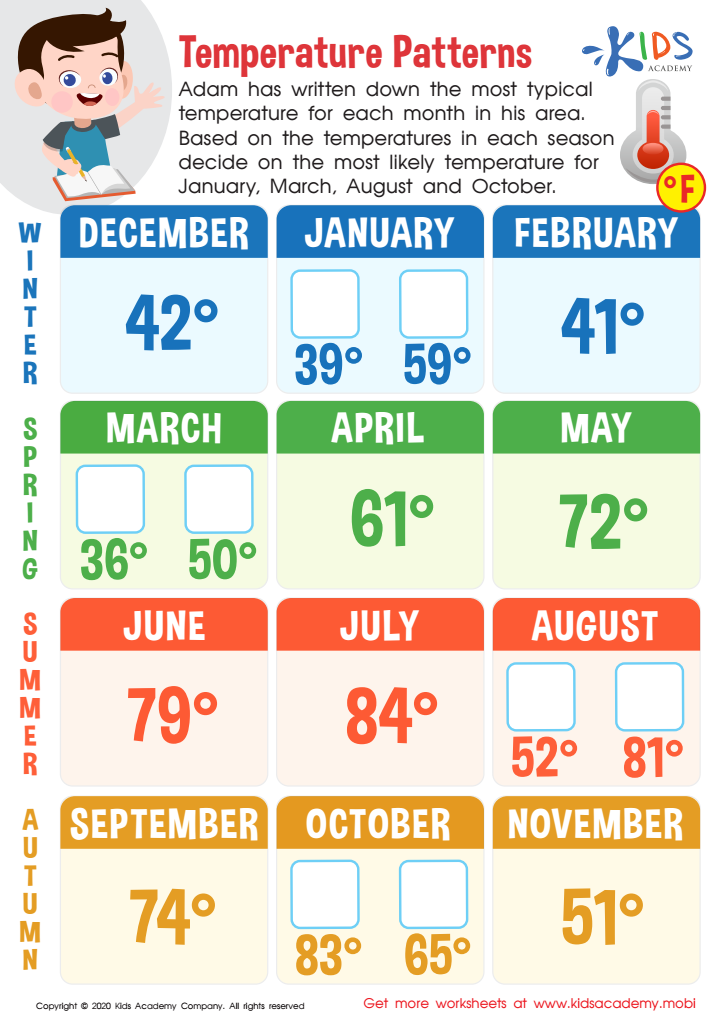
Temperature Patterns Worksheet
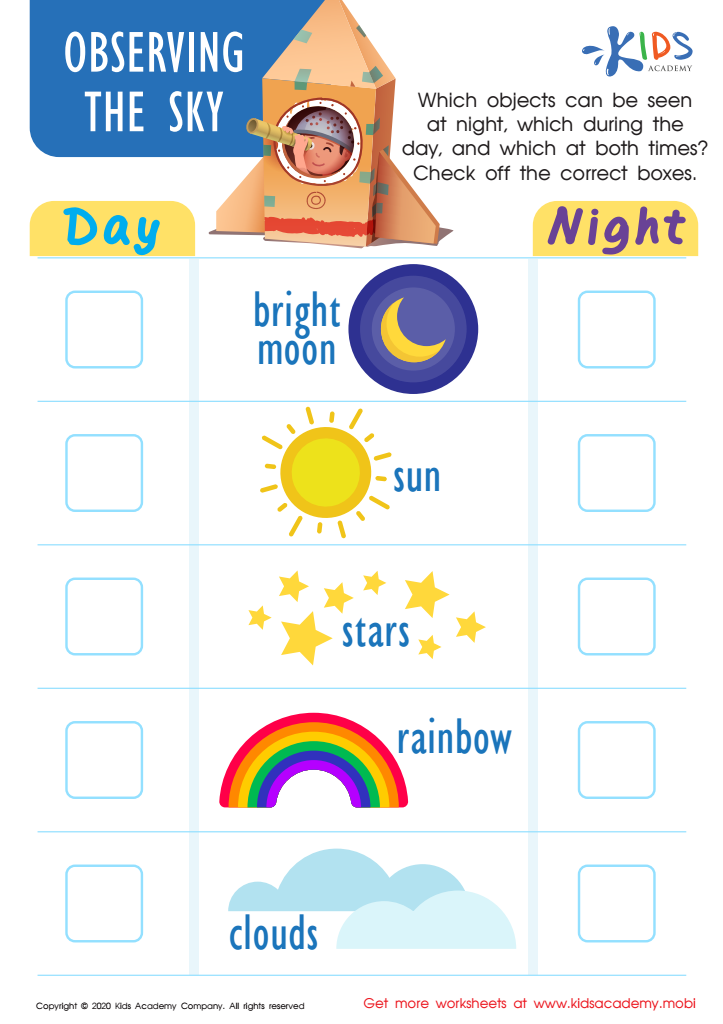
Observing the Sky Worksheet
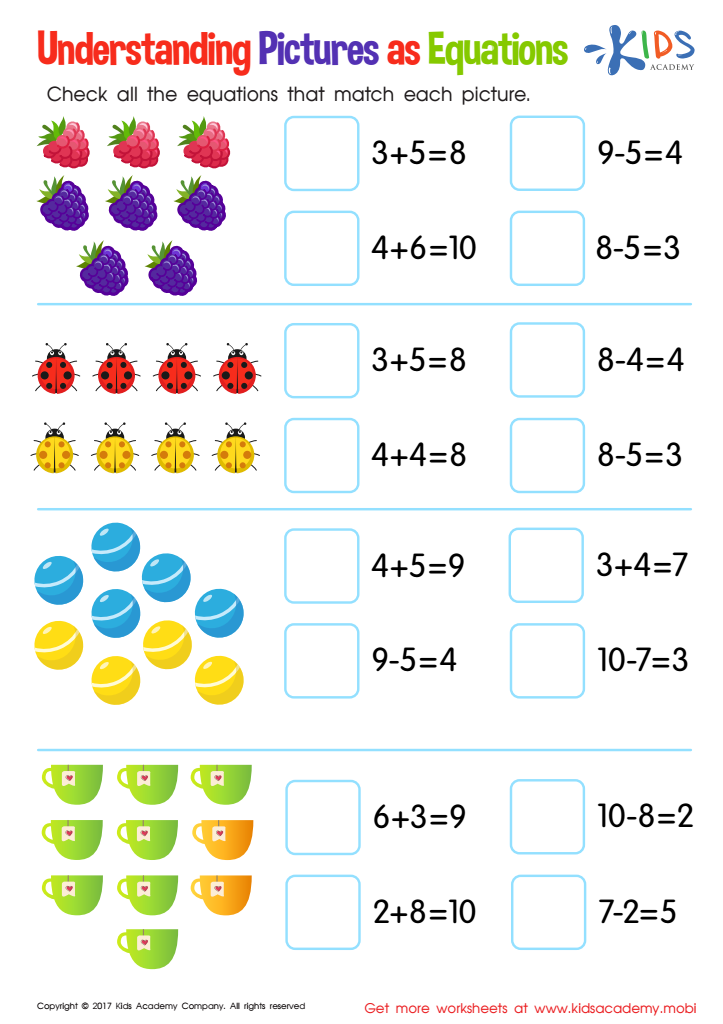
Understanding Pictures as Equations Worksheet
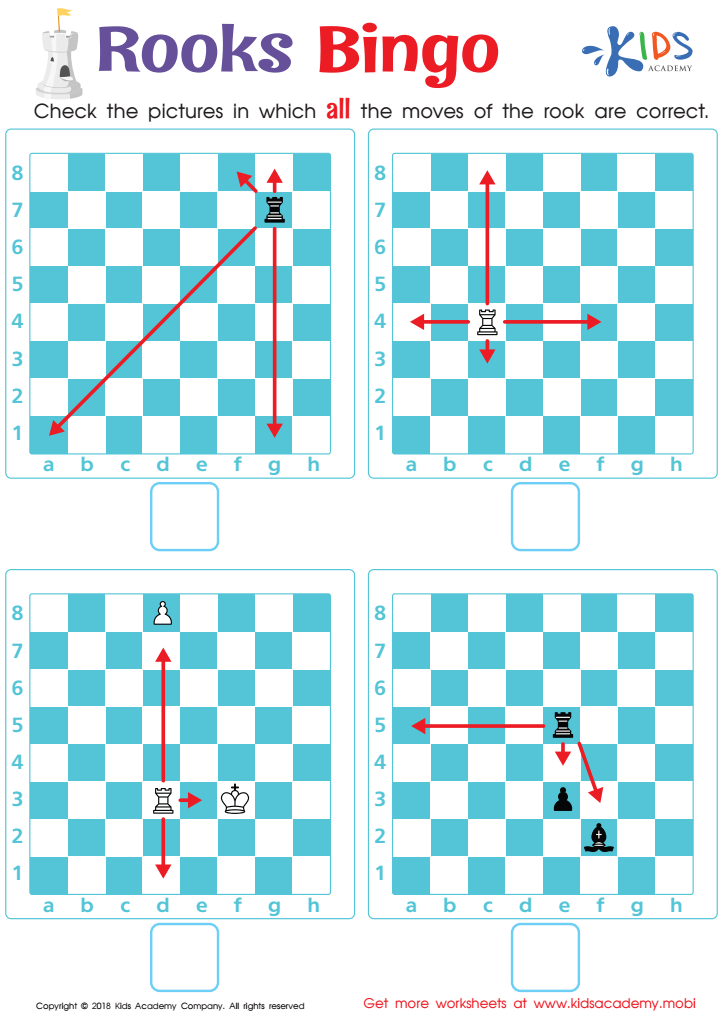
Rooks Bingo Worksheet








Recognizing patterns is a crucial skill for children aged 7-9, being essential for both academic and personal development. At this developmental stage, their brains are exceptionally receptive to recognizing patterns, which can be harnessed to foster critical thinking and problem-solving abilities. Patterns in math, for instance, help children understand numbers, shapes, and relationships, forming the foundation for more complex arithmetic and algebraic concepts. Beyond math, recognizing patterns supports reading comprehension as students identify sequences and predict story progression, enhancing literacy skills.
From a social perspective, recognizing patterns improves children's ability to understand routines and social cues, making it easier for them to navigate daily activities and interactions. It promotes a sense of structure and predictability, which is essential for their emotional security and confidence. Additionally, early pattern recognition has been linked to better executive functioning, helping children prioritize tasks, manage their time, and develop organizational skills.
Teachers and parents can foster this ability through engaging activities like puzzles, games, and guided explorations. Encouraging this skill not only aligns with educational standards but also ensures children are better equipped to tackle challenges both in and out of the classroom, laying a robust groundwork for lifelong learning and adaptability.








