
Sound-letter association Normal Worksheets for Ages 7-9
4 filtered results
Difficulty Level
Grade
Age
-
From - To
Subject
Activity
Standards
Our "Sound-Letter Association Normal Worksheets for Ages 7-9" are expertly crafted to enhance your child's reading skills through fun and engaging activities. Designed by educational professionals, these worksheets help young learners build a strong understanding of the connection between sounds and letters. Through a variety of interactive exercises, children can practice phonics, develop decoding skills, and expand their vocabulary. Perfect for classroom and at-home learning, our resources support children in achieving literacy milestones while keeping them motivated and delighted. Equip your child with the foundational skills essential for confident reading.
Favorites
With answer key
Interactive
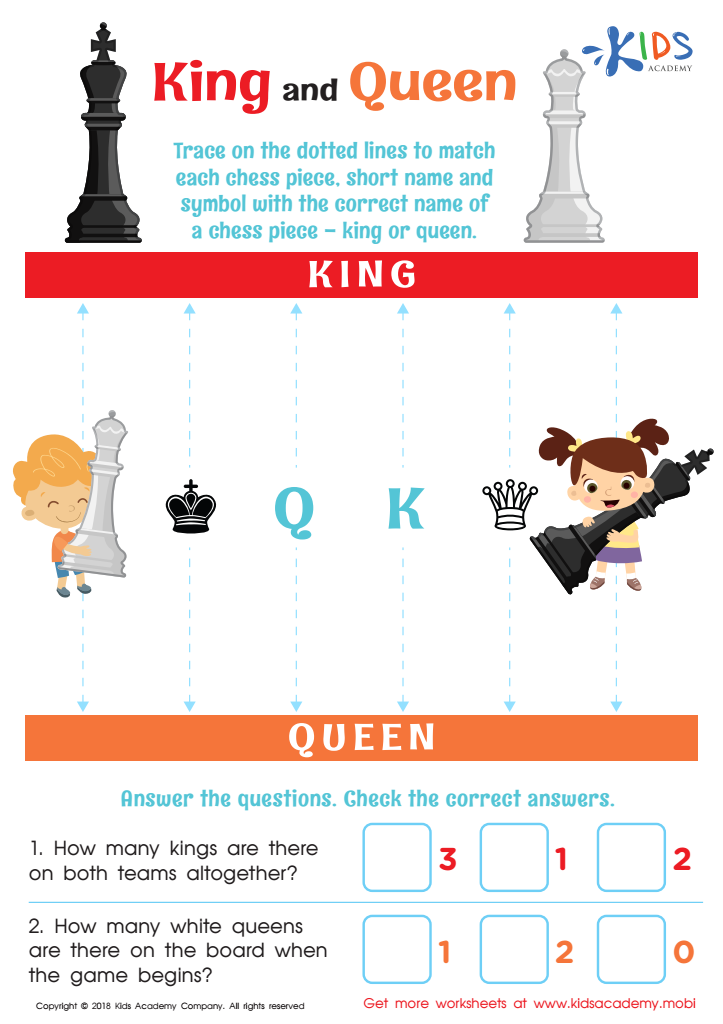
King and Queen Worksheet
Instruct your kids to trace the dotted lines to match each chess piece, short name, and symbol with either king or queen.Answer the questions at the bottom and check the answers. This exercise will help your children to differentiate between a king and queen chess piece and know their symbols.
King and Queen Worksheet
Worksheet
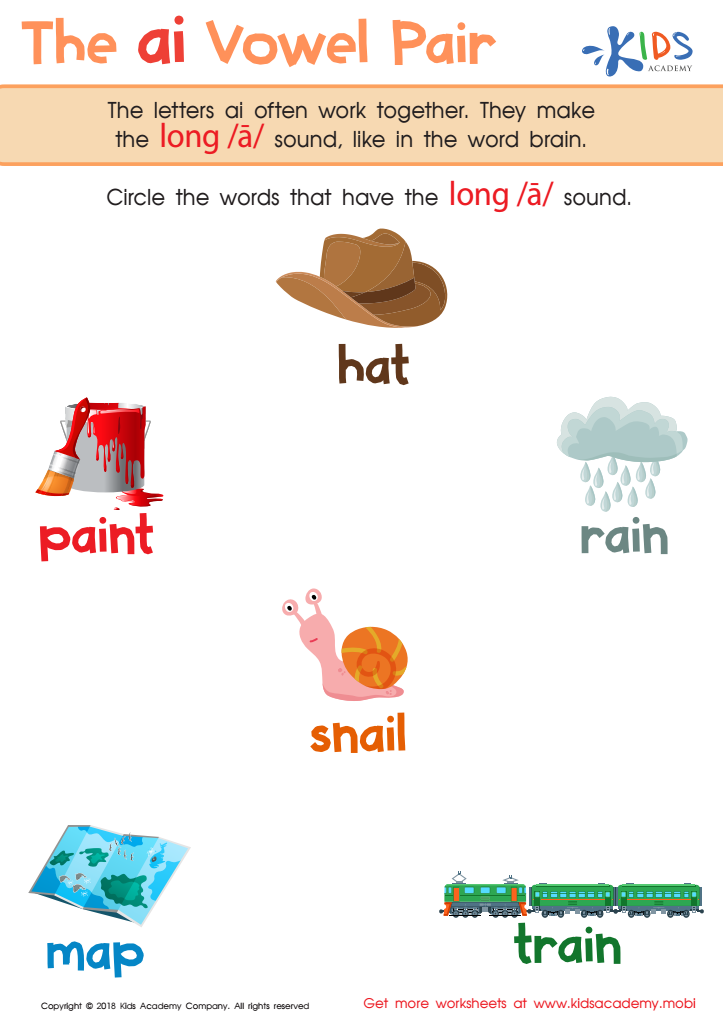
The AI Vowel Pair Worksheet
Vowel pairs make different sounds than individual letters. The 'ai' combination often forms the long /a/ sound, like in 'brain' and 'strain'. Get your kids to look at the pictures in the worksheet, identify each and say the name aloud. Help them circle the words with the long /a/ sound.
The AI Vowel Pair Worksheet
Worksheet
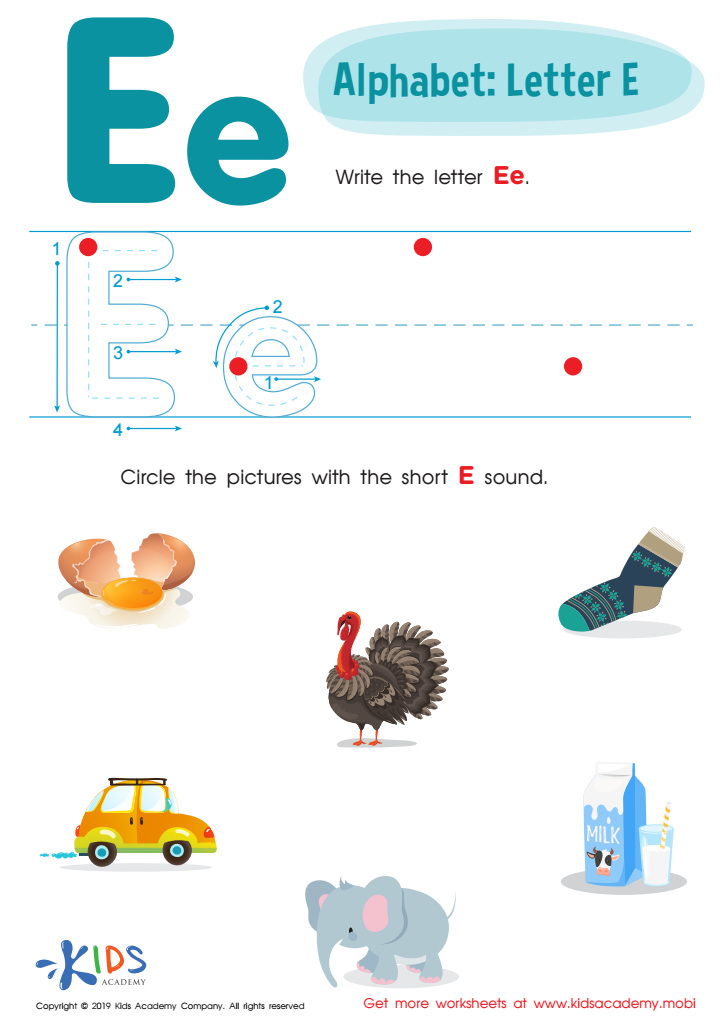
Letter E Tracing Worksheet
Students trace and write uppercase and lowercase letter E. They sound out "E" words, choosing those with short "E" sounds. Preschoolers identify the difference between the 'E' sounds in words like "egg" and "turkey." A tracing sheet helps them to understand.
Letter E Tracing Worksheet
Worksheet
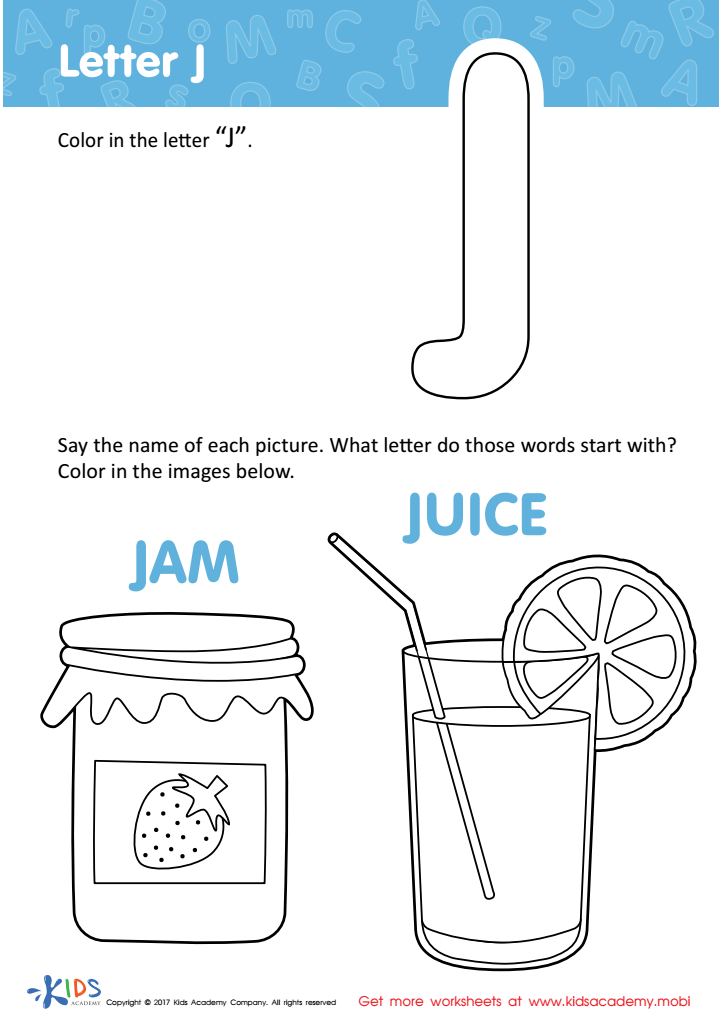
Letter J Coloring Sheet
Practice the letter 'J' with your little one with this fun coloring page! Pictures of jar, juice, jam and jelly make it an enjoyable experience for kids. Learning the letter and coloring is fun for even the youngest learners.
Download (PDF)
 Assign to My Students
Assign to My Students
Letter J Coloring Sheet
Worksheet
Join Kids Academy for Free
Who is primarily going to use this learning content?








Sound-letter association, or phonics, is incredibly important for children aged 7-9 because it serves as the foundation for reading and writing skills. During these formative years, kids transition from merely recognizing words by sight to understanding the relationship between letters and sounds. This foundational skill, known as phonemic awareness, helps them decode new words, improves their spelling, and allows for smoother and more confident reading.
For parents and teachers, focusing on sound-letter associations aids in the early detection of reading difficulties. When kids grasp phonics, they're better equipped to approach unfamiliar words systematically, boosting both their reading fluency and comprehension. Children who struggle in this area might find reading laborious, potentially leading to frustration and a lack of interest in learning.
Moreover, phonics-based interventions can significantly improve literacy outcomes. Research consistently shows that children proficient in sound-letter associations perform better academically. By investing time and resources in teaching phonics, parents and teachers offer children the tools necessary to achieve academic success and cultivate a lifelong love of reading.
In summary, sound-letter association is a crucial component of early literacy, making it essential for parents and teachers to nurture this skill. Doing so sets children on a path towards academic achievement and a deep, sustained engagement with learning.








