Space knowledge Normal Worksheets for Ages 7-9
5 filtered results
-
From - To
Explore the wonders of the universe with our engaging "Space Knowledge Normal Worksheets for Ages 7-9." Designed to captivate young minds, these worksheets offer fun and educational activities that introduce children to celestial bodies, planets, stars, and more. Nurture their curiosity about space through puzzles, coloring, and thought-provoking questions that align with educational standards. Perfect for both classroom settings and at-home learning, these worksheets enhance developmental skills while sparking interest in astronomy. Embark on a cosmic journey of learning with our Space Knowledge worksheets, making the vast universe accessible and exciting for young explorers.
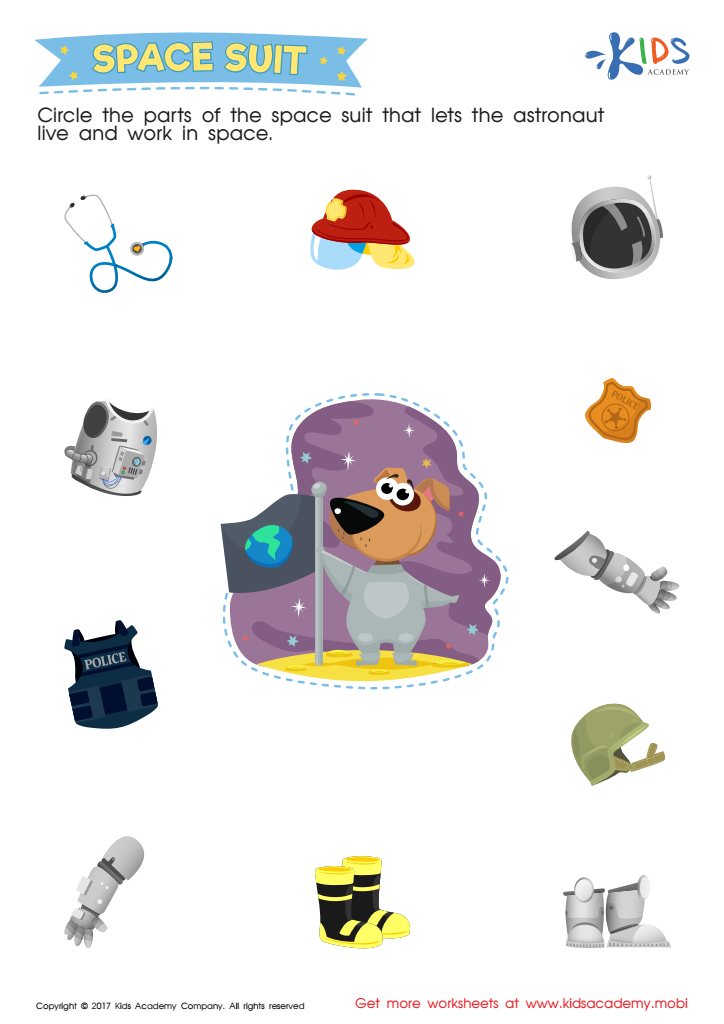
 Assign to My Students
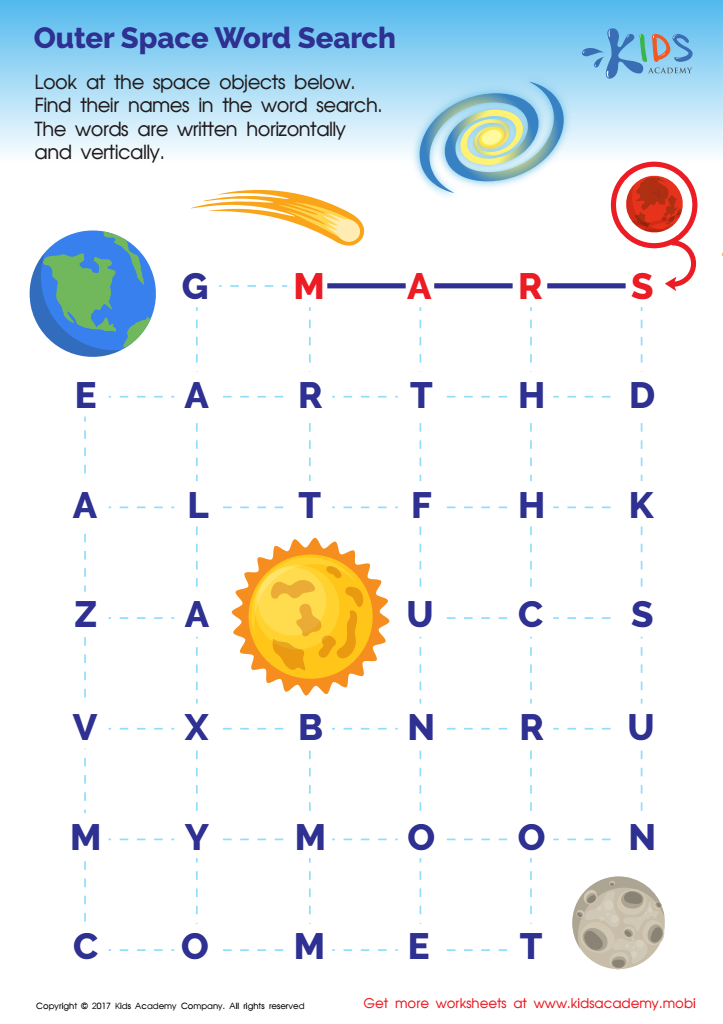
Outer Space Word Search Printable
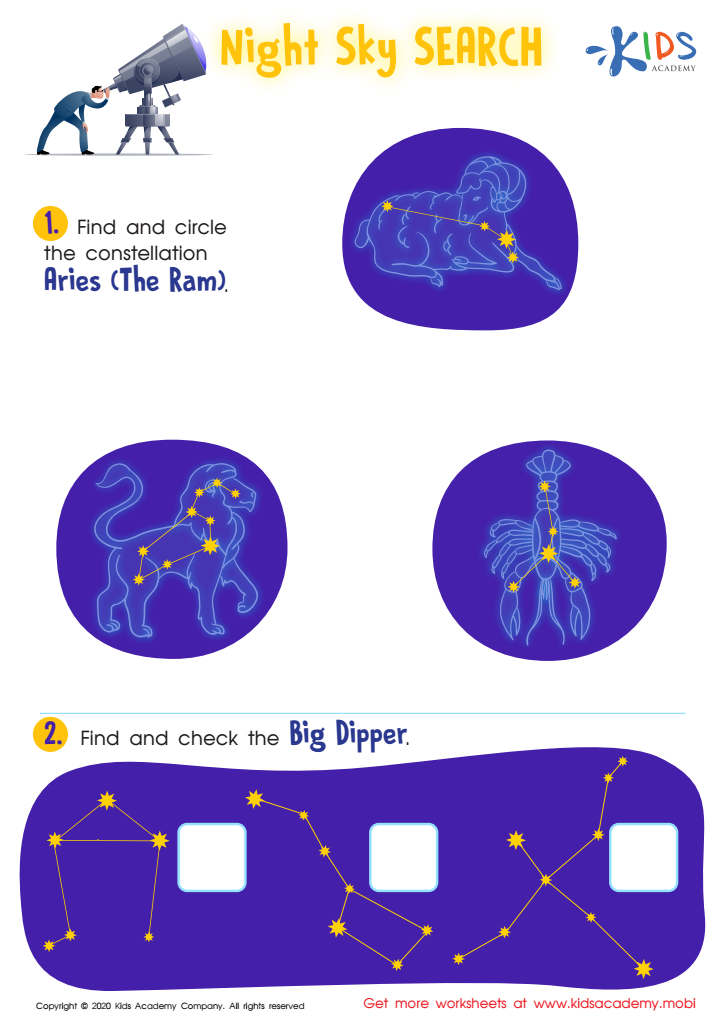
Night Sky Search Worksheet
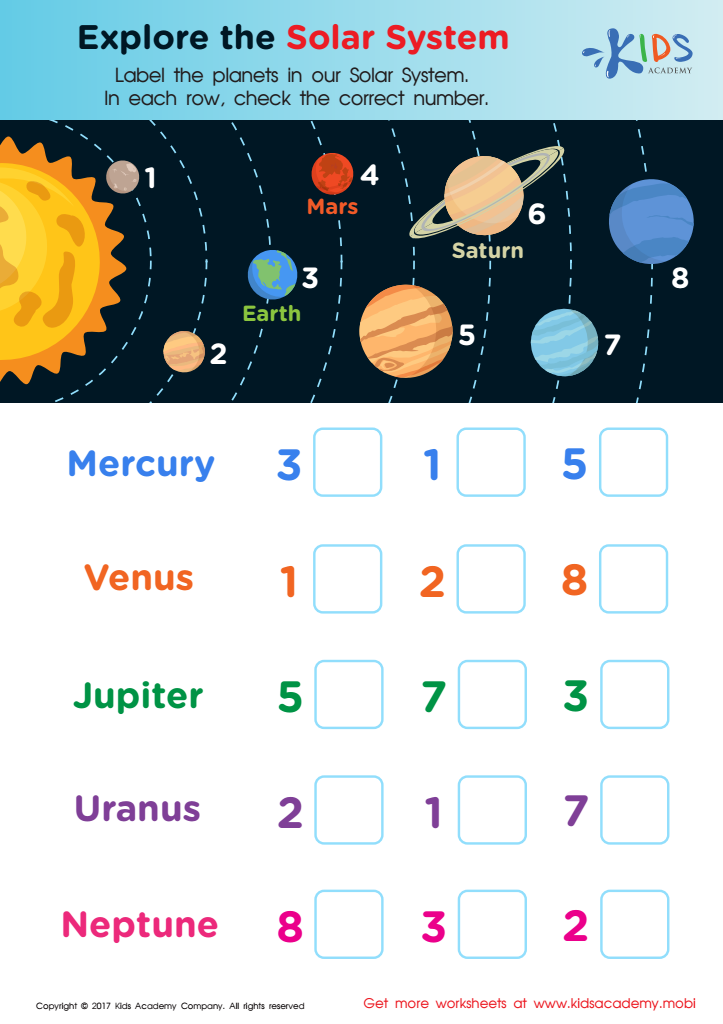
Solar System Planets Worksheet
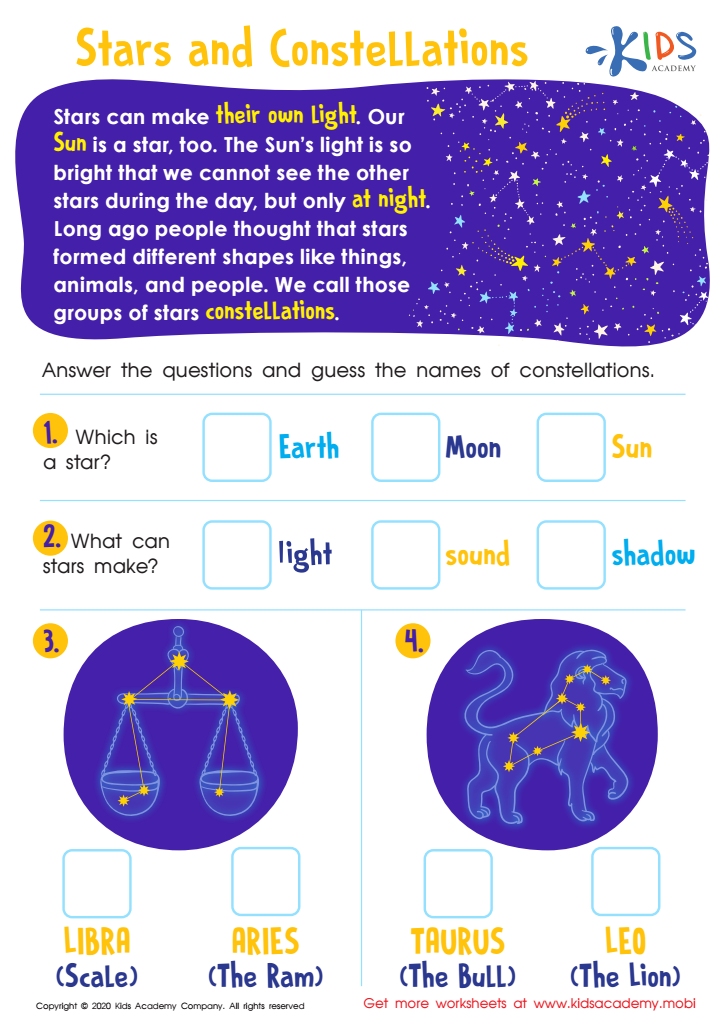
Stars and Constellations Worksheet







Space knowledge is a crucial component of a child's education and overall development, especially for kids aged 7-9. At this inquisitive stage, young minds are naturally curious and eager to learn about the world beyond their immediate environment. Teaching them about space stimulates that curiosity, ignites imagination, and fosters scientific thinking.
Understanding space provides young students with foundational knowledge in various areas of science and technology. This knowledge serves as a building block for more complex future learning in physics, astronomy, and even engineering. Space education helps kids grasp fundamental concepts like the Earth's rotation, the existence of other planets, and the vastness of the universe, promoting a sense of wonder and respect for nature.
Moreover, space topics often come with exciting stories of adventures, astronauts, and celestial phenomena that capture children's attention, making learning enjoyable. This increased engagement can enhance focus and improve overall academic performance.
From a social perspective, learning about space encourages teamwork through collaborative projects, and nurtures problem-solving skills by exploring how space missions are planned and executed. Additionally, it can inspire future careers in STEM fields, helping develop the next generation of scientists, engineers, and innovators.
In essence, teaching space knowledge at an early age builds a foundation for lifelong learning, creative thinking, and problem-solving skills, vital qualities for both personal and societal growth.








