Understanding base ten Normal Worksheets for Ages 7-9
3 filtered results
-
From - To
Discover our engaging "Understanding Base Ten Normal Worksheets" designed specifically for ages 7-9. These worksheets help young learners grasp the fundamental concept of base ten, essential for building a strong math foundation. Each worksheet features a variety of fun activities, including number identification, place value exercises, and simple addition/subtraction problems using base ten blocks. Ideal for classrooms or at-home learning, these resources promote problem-solving skills and critical thinking while keeping students motivated. Explore our comprehensive collection to enhance your child's confidence in mathematics and support their educational journey with enjoyable, structured practice! Perfect for parents and teachers alike!
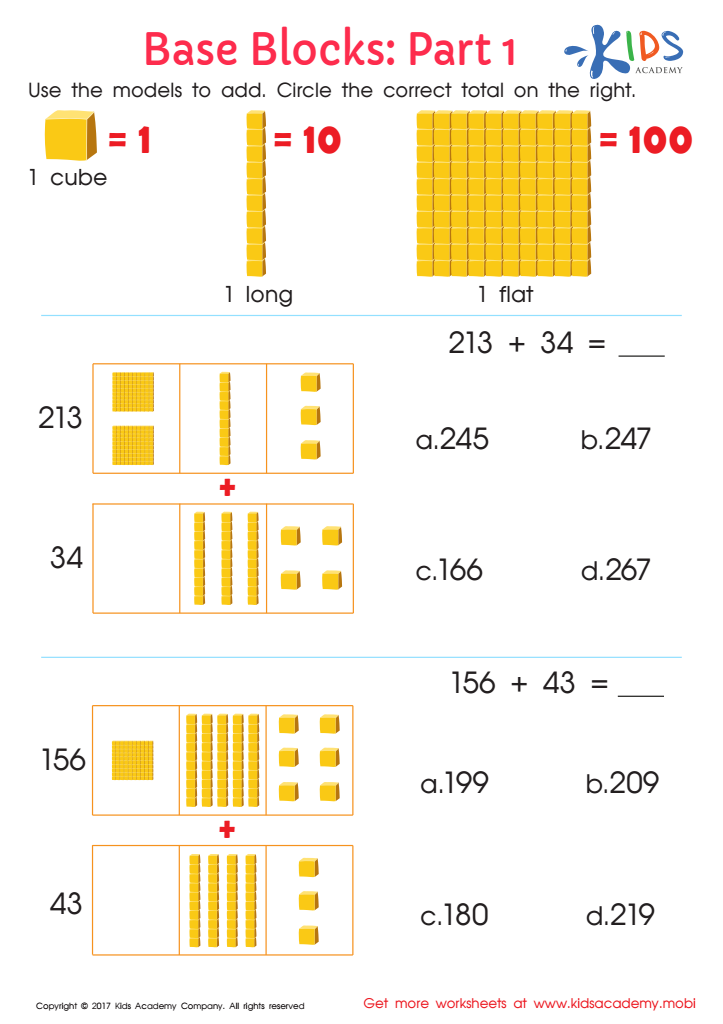
Base Ten Blocks Worksheet: Part 1
 Assign to My Students
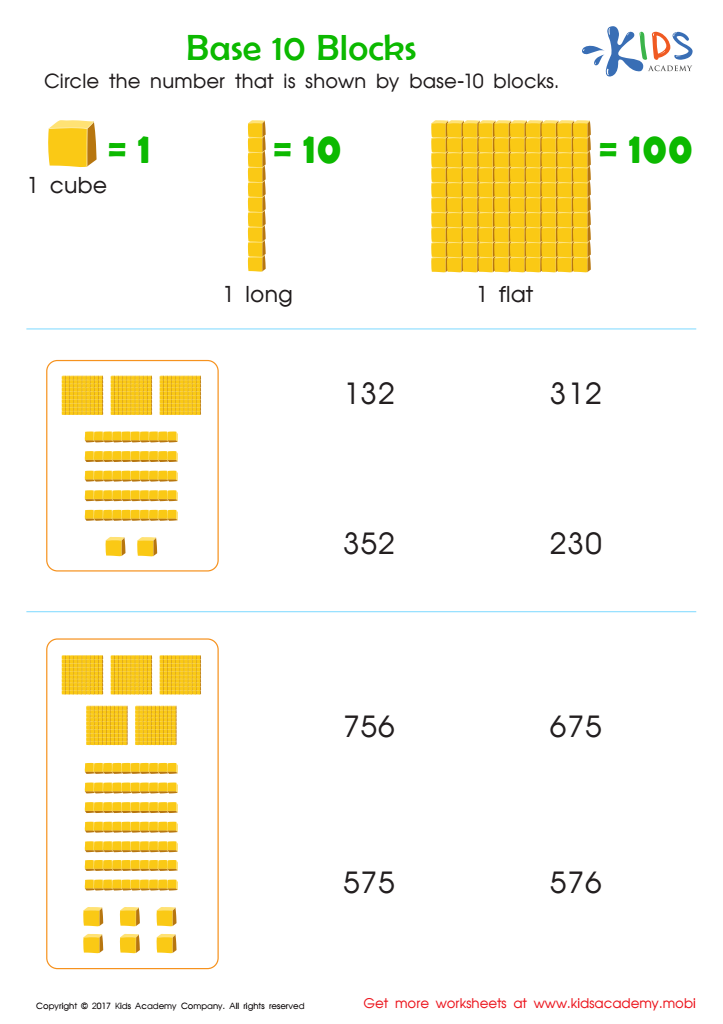
Base Ten Blocks Worksheet
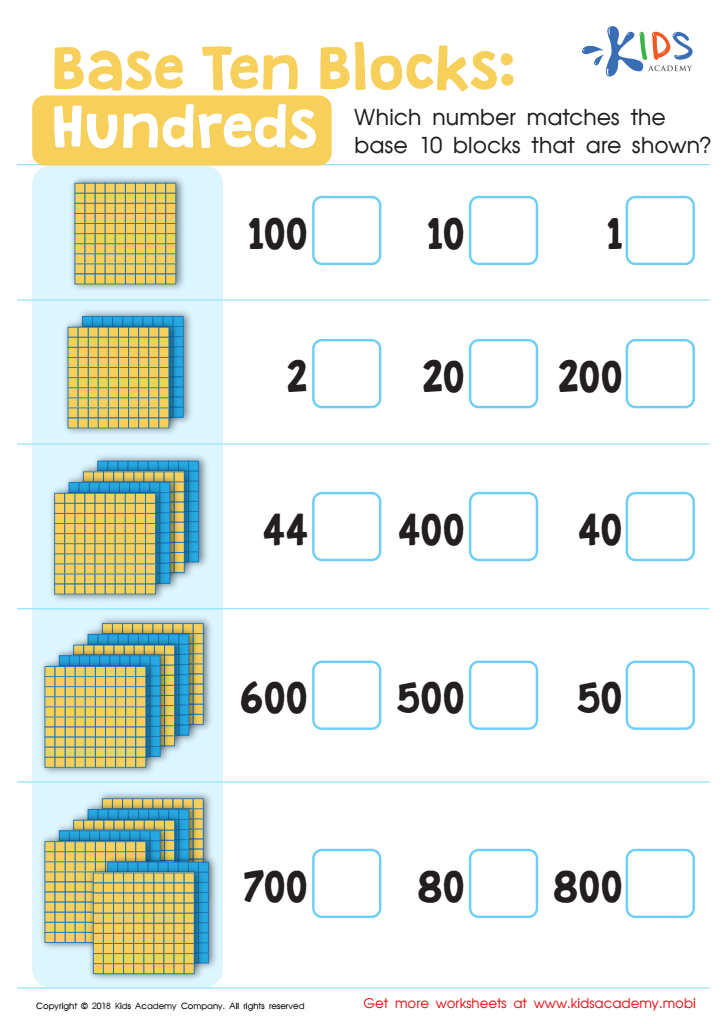
Base Ten Blocks: Hundreds Worksheet







Understanding base ten is crucial for children aged 7-9 as it forms the foundation for their arithmetic skills and overall mathematical understanding. During these formative years, kids transition from concrete counting methods to more abstract mathematical concepts. Base ten provides a systematic way of organizing and manipulating numbers, helping children comprehend larger numbers and perform operations such as addition, subtraction, multiplication, and division more effectively.
When students grasp the base ten system, they develop essential skills such as place value recognition, which helps them understand how numbers are composed of tens, hundreds, and beyond. This understanding is vital not only for basic math but also for problem-solving and measurement activities encountered later in their education.
Teachers and parents should actively engage students in base ten concepts with hands-on activities involving manipulatives like blocks or grids that illustrate number values visually. This encourages children to explore and visualize numbers, making abstract concepts more tangible. Ultimately, a solid comprehension of base ten sets the stage for advanced mathematical learning, builds confidence, and fosters a lifelong appreciation for math, equipping students with the necessary skills for future academic and real-world applications.








