Understanding communities Normal Worksheets for Ages 7-9
3 filtered results
-
From - To
Unlock the world of communities with our engaging "Understanding Communities Normal Worksheets" designed for children ages 7-9. These interactive worksheets provide a fun and educational experience, helping your students grasp the concept of community roles, relationships, and structures. Through a variety of activities, learners will explore familiar places, key figures, and the diverse elements that make up their communities. Perfect for classroom or home use, these resources promote critical thinking and social awareness. Foster your child's understanding of the world around them while developing valuable skills. Download today and inspire a love for learning about the communities we live in!
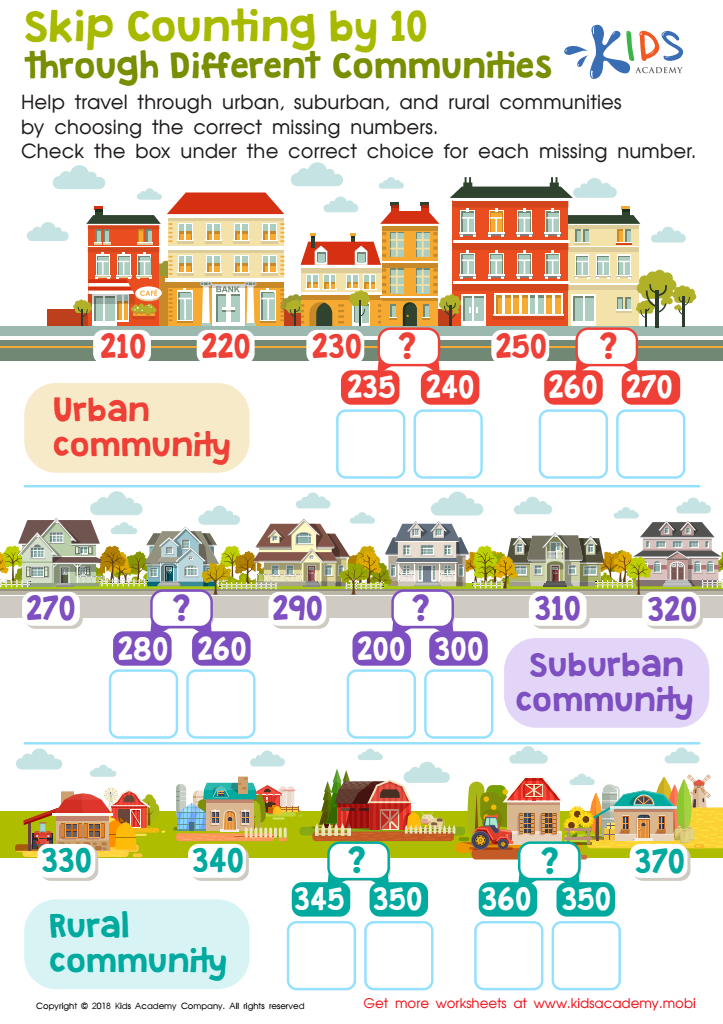
Skip Counting by 10 through Different Communities Worksheet
 Assign to My Students
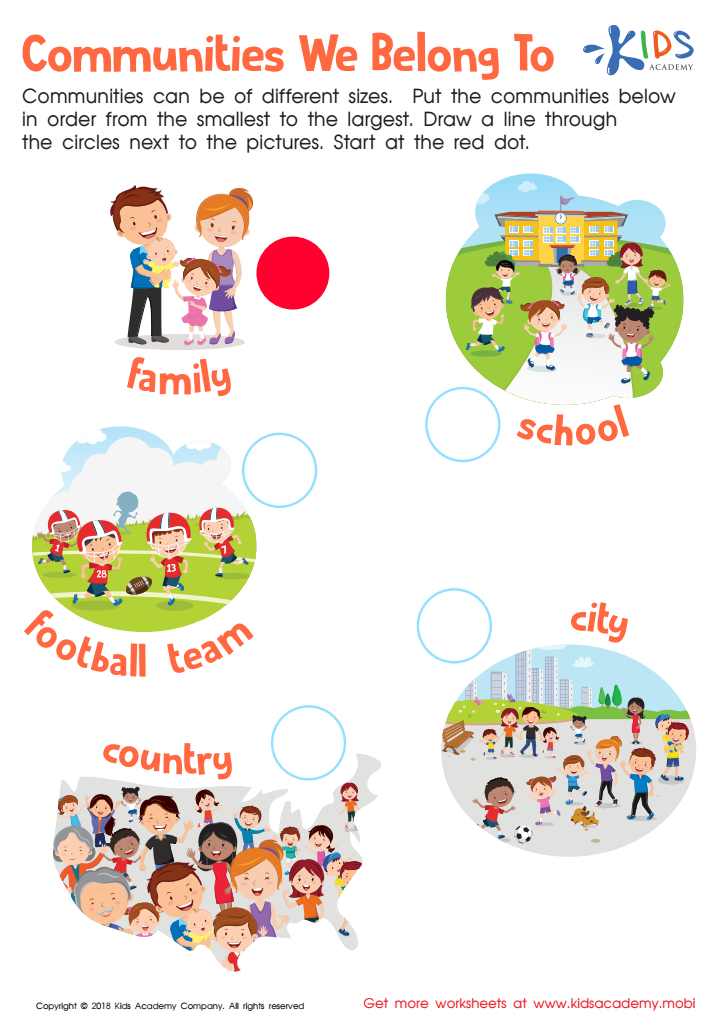
Communities We Belong to Worksheet
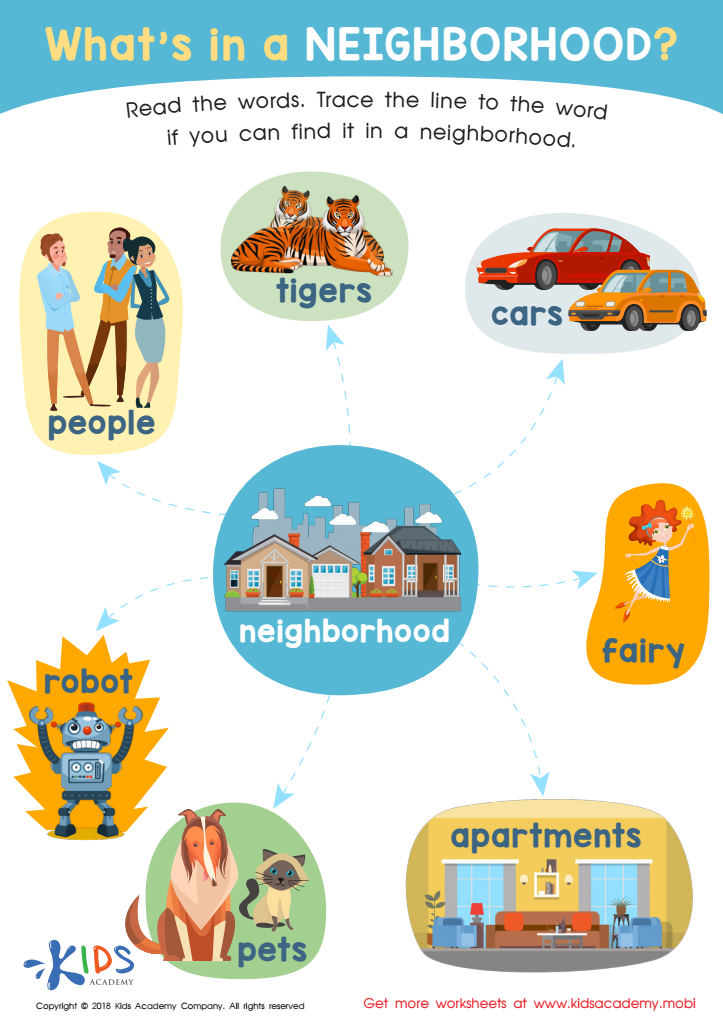
What's in a Neighborhood? Worksheet







Understanding communities is crucial for children aged 7-9 because it helps them develop a sense of belonging and identity. At this age, children are starting to notice the world around them, including the diverse groups and cultures within their communities. Teachers and parents play a vital role in nurturing this awareness, as it fosters empathy, respect, and appreciation for differences.
When children learn about their community, they become more engaged citizens. They understand the importance of various community roles, such as firefighters, teachers, and healthcare workers, which can inspire them to think about their own future contributions. This knowledge can help build their social skills, enabling them to interact positively with peers from different backgrounds.
Moreover, discussions about community issues, such as local needs and environment, empower children to voice their opinions and encourage civic responsibility. Engaging with community members can also provide children with tangible examples of teamwork and problem-solving. Understanding their community enriches their worldview, strengthens familial bonds, and reinforces the importance of collaboration and respect. Therefore, caring about community understanding is essential for nurturing informed, compassionate, and conscientious young individuals.








