Understanding comparisons Normal Worksheets for Ages 7-9
4 filtered results
-
From - To
"Understanding Comparisons Normal Worksheets for Ages 7-9" are engaging, educational tools designed to enhance critical thinking and comprehension skills in young learners. These printable worksheets focus on comparing quantities, sizes, and lengths, fostering essential problem-solving abilities. Perfect for both classroom and home use, they aid in building a solid foundation for math and reading fluency. With vibrant illustrations and varied activities, children enjoy learning through fun and interactive exercises. Boost your child's logical reasoning and analytical skills today with our expertly crafted comparison worksheets, suitable for all learning styles and abilities.
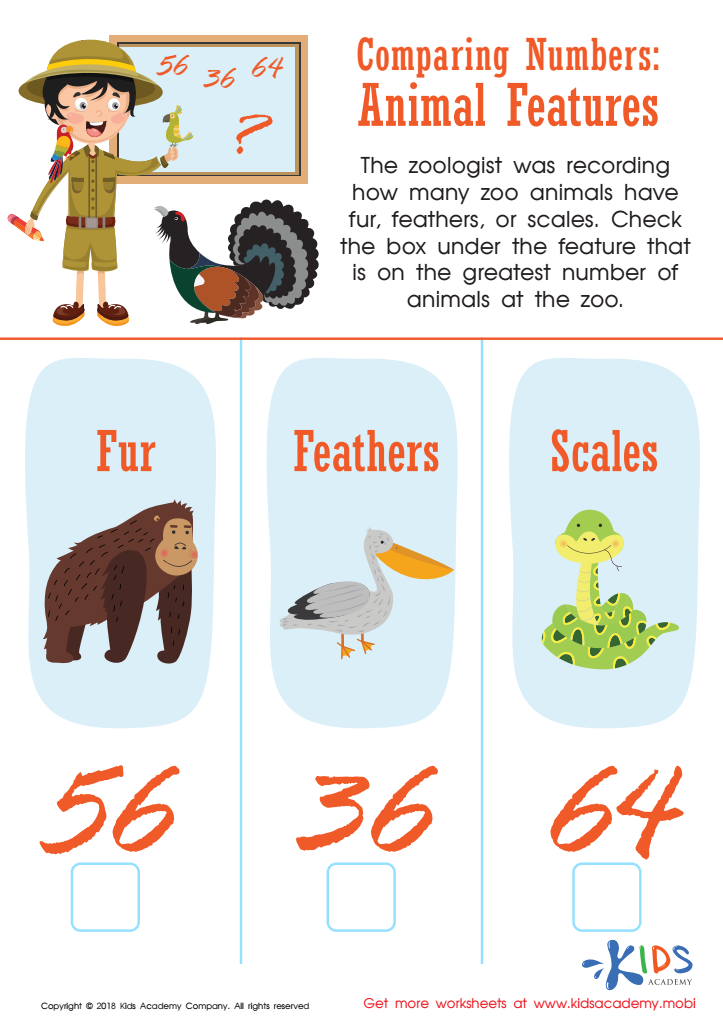
Animal Features Worksheet
 Assign to My Students
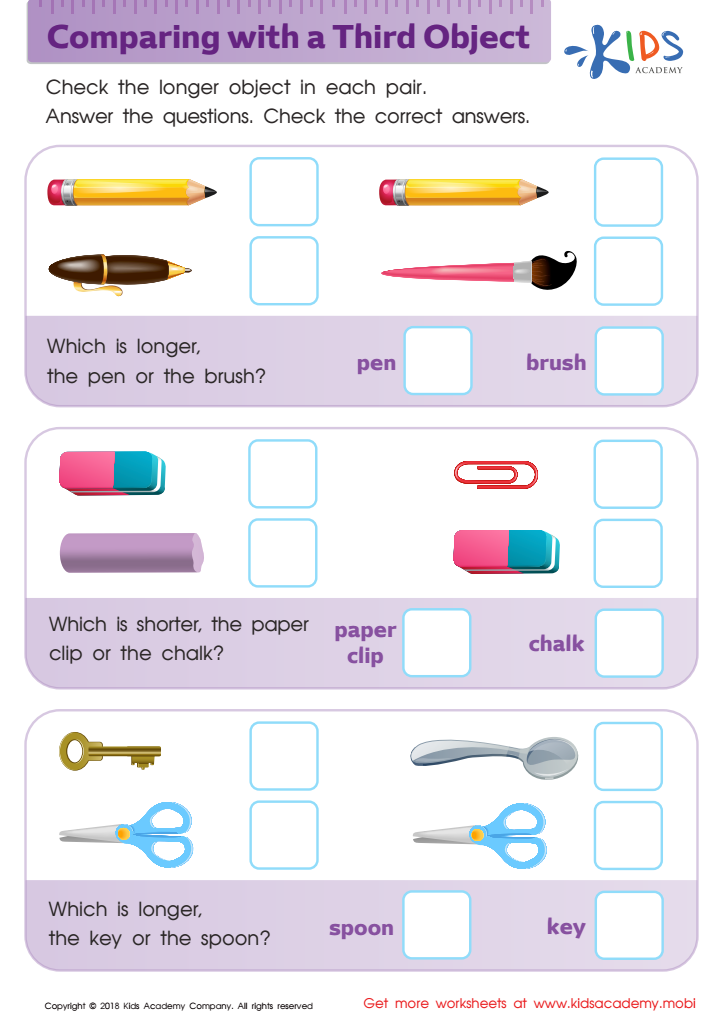
Comparing with a Third Object Worksheet
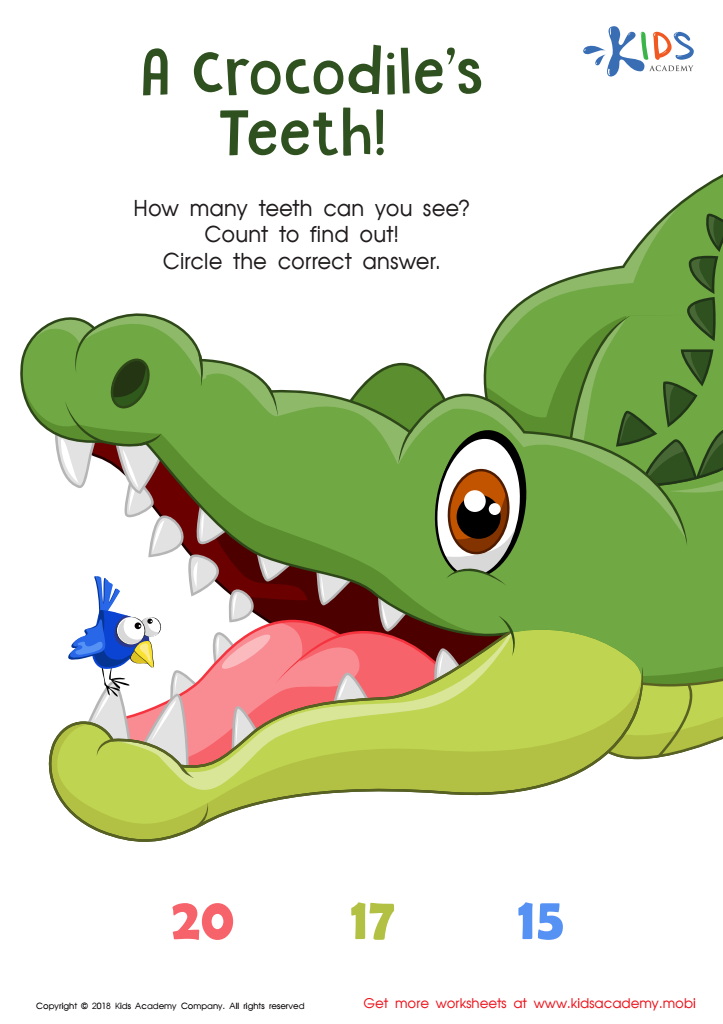
A Crocodile's Teeth Worksheet
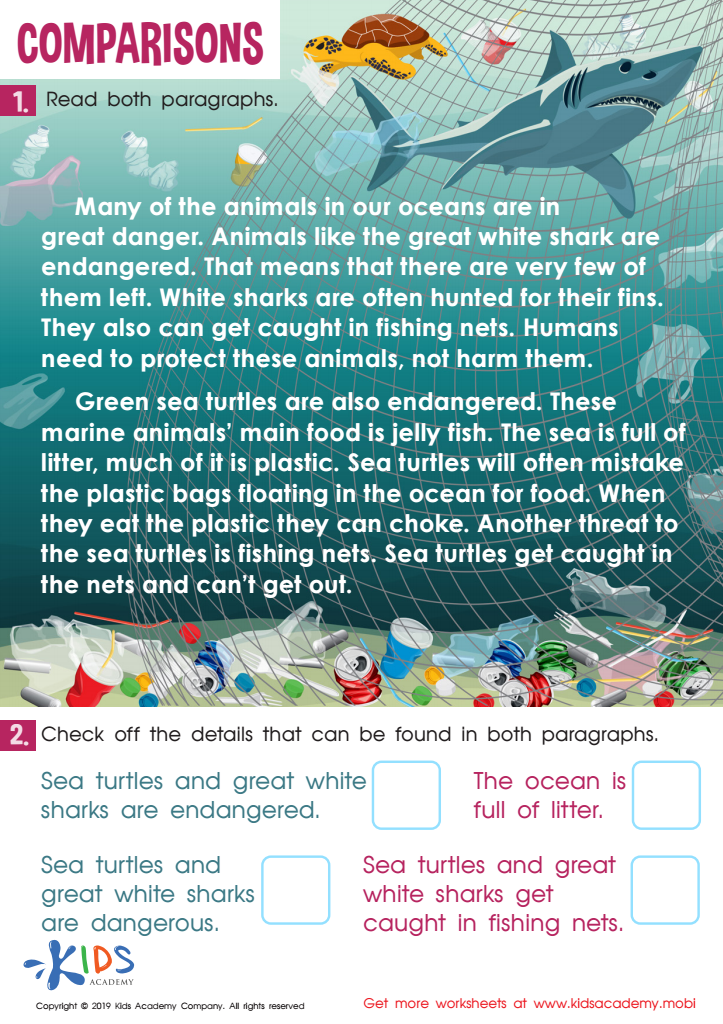
Comparisons Worksheet





Understanding comparisons is fundamental for children aged 7-9 as it helps them develop critical thinking skills essential for academic success and everyday decision-making. Comparisons involve evaluating similarities and differences, which fosters analytical skills. When kids compare objects, ideas, or numbers, they learn to observe details, recognize patterns, and make informed judgments.
In mathematics, the ability to compare helps children grasp fundamental concepts like greater than, less than, and equal to, forming a foundation for more complex arithmetic and problem-solving. For instance, comparing numbers aids in understanding place value, which is crucial for performing accurate calculations.
Beyond academics, comparisons are integral to developing social and emotional intelligence. Understanding how individuals and situations differ can nurture empathy and help children navigate social interactions more effectively. For example, recognizing varying cultural backgrounds fosters inclusivity and open-mindedness in social settings.
Furthermore, mastery of comparisons enhances communication skills, as children learn to articulate similarities and differences clearly, improving both verbal and written expression. Teachers and parents who foster these skills provide students with critical tools not just for school, but for lifelong learning and interpersonal development. In essence, fostering a keen understanding of comparisons in young learners equips them with a versatile cognitive skill set valuable in diverse aspects of life.








