Understanding measurements Normal Worksheets for Ages 7-9
8 filtered results
-
From - To
Discover engaging and educational "Understanding Measurements" worksheets designed for children ages 7-9 at Kids Academy. Our expertly crafted printables help young learners grasp fundamental measurement concepts through fun, interactive activities. Each worksheet provides practical exercises that introduce various measurement techniques, including length, weight, and volume, ensuring kids develop essential math skills. Ideal for both classroom and home use, our resources are aligned with curriculum standards to support comprehensive learning. Encourage your child's confidence in mathematics with our vibrant and easy-to-understand materials. Jumpstart their measurement journey today at Kids Academy!
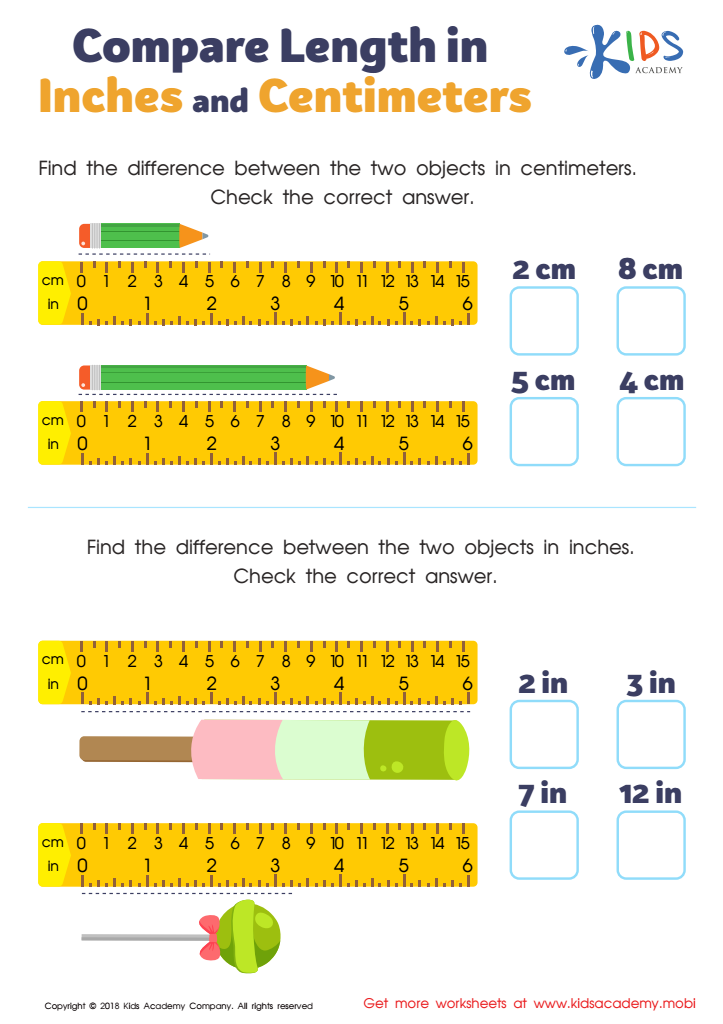
Compare Length in Inches and Centimeters Worksheet
 Assign to My Students
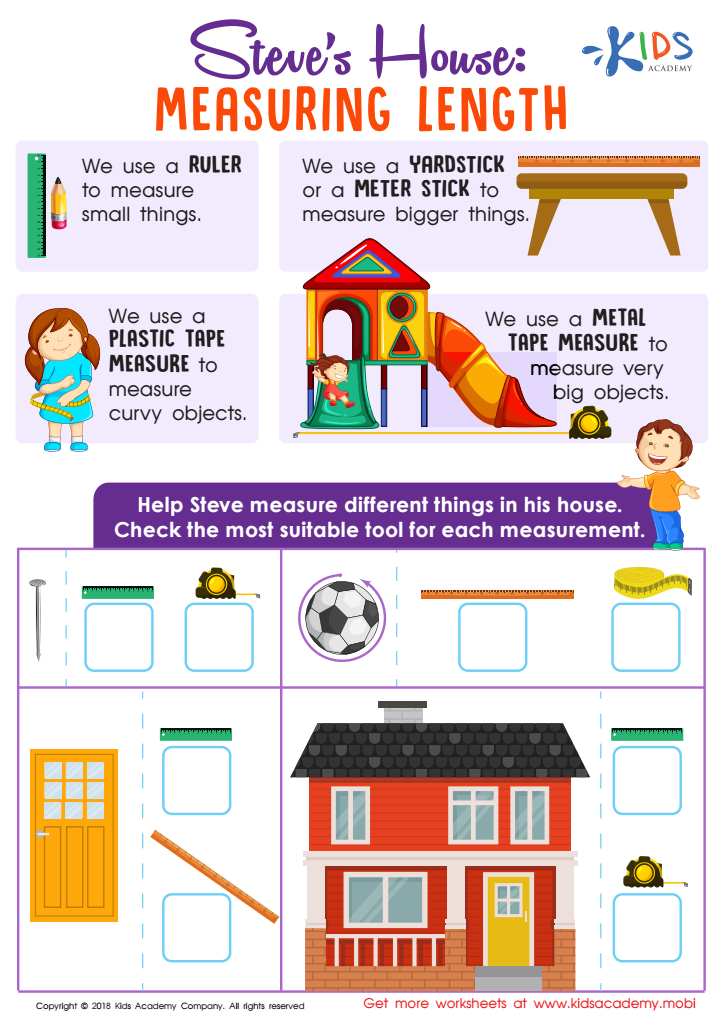
Steve's House: Measuring Length Worksheet
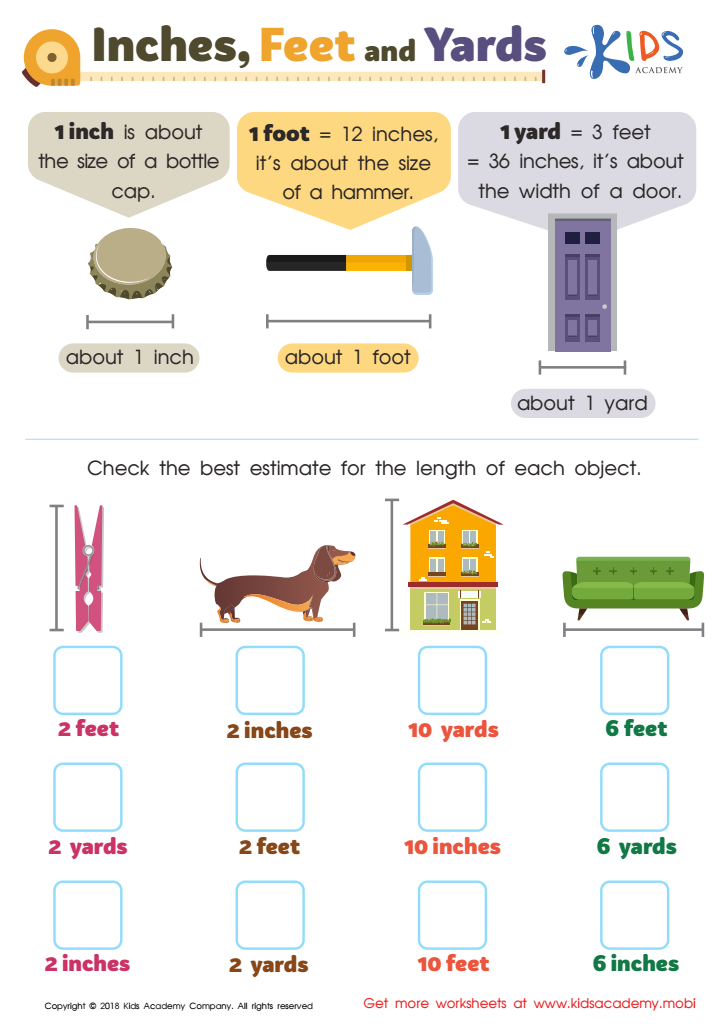
Inches, Feet and Yards Worksheet
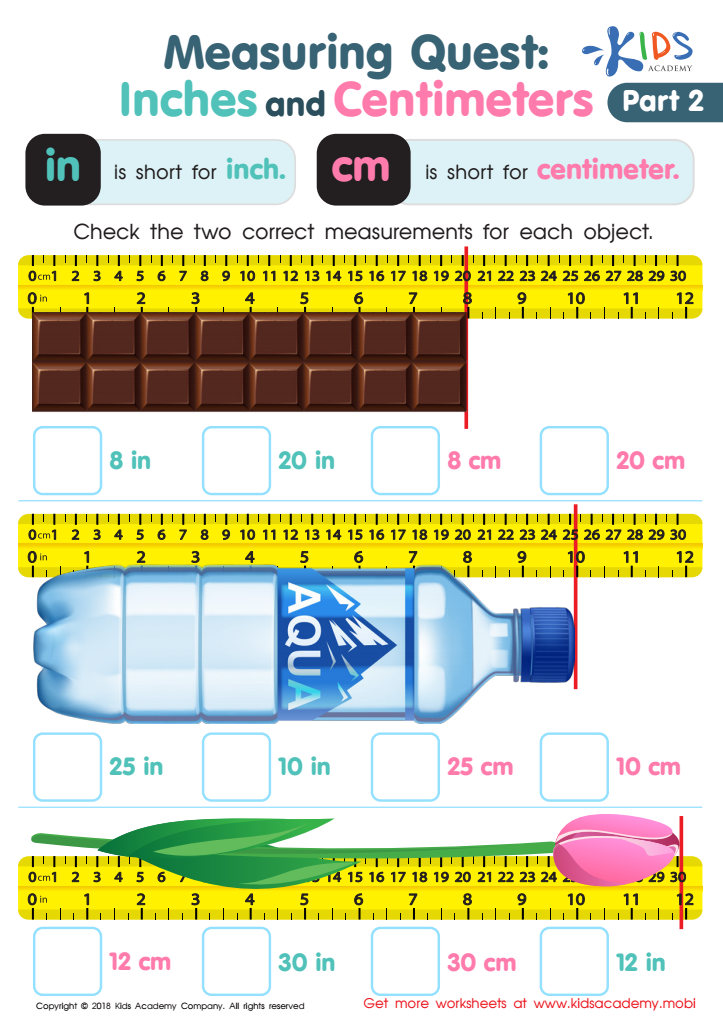
Measuring Quest: Inches and Centimeters - Part 2 Worksheet
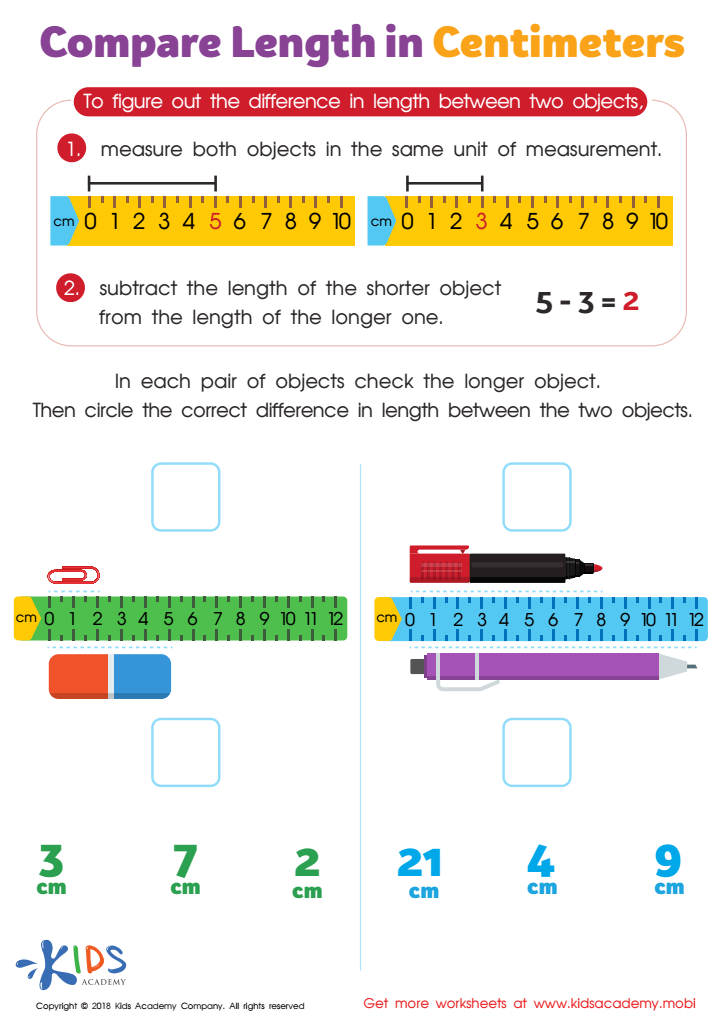
Compare Length in Centimeters Worksheet
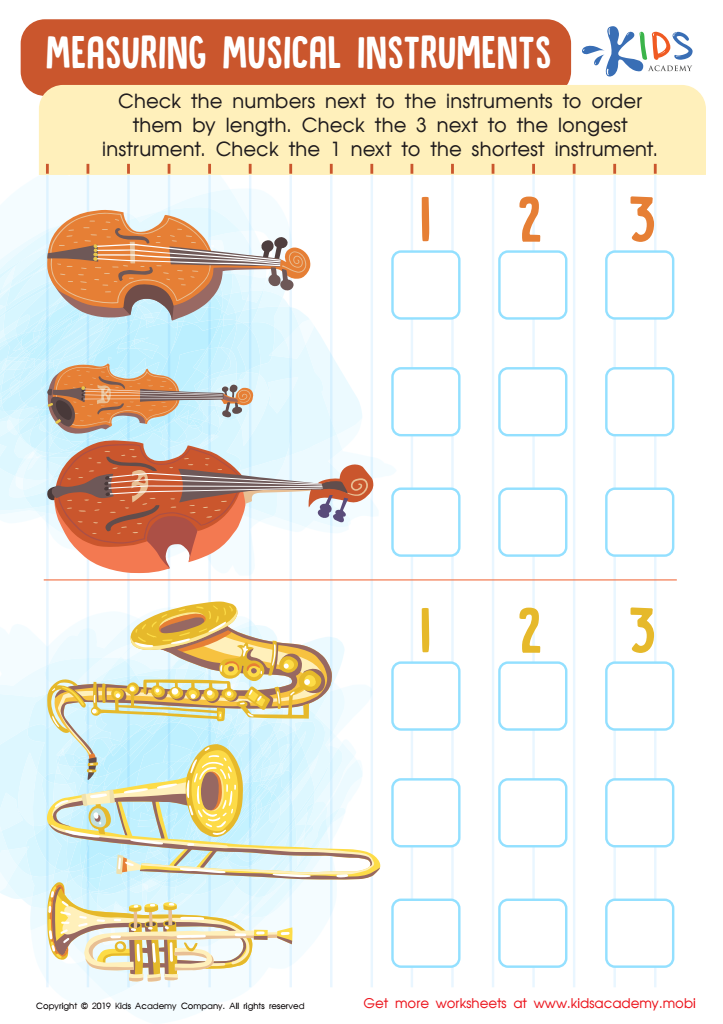
Measuring Musical Instruments Worksheet
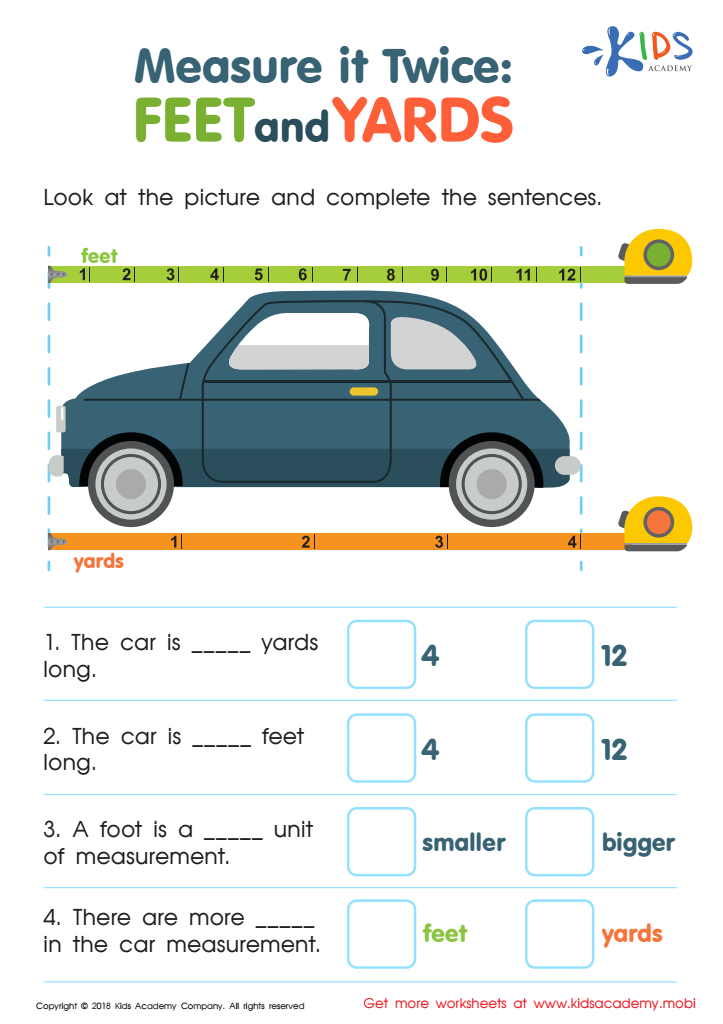
Measure It Twice: Feet and Yards Worksheet
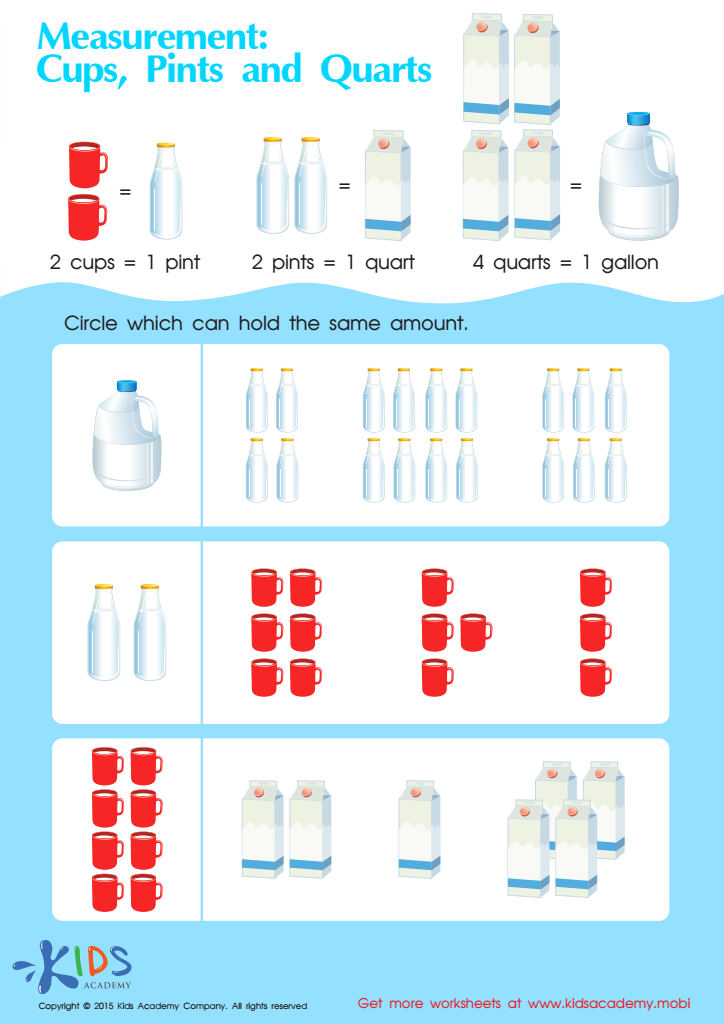
Cups, Pints and Quarts 2 Worksheet





.jpg)

Understanding measurements is vital for children ages 7-9, and it's important for both parents and teachers to recognize this. At this developmental stage, kids are beginning to grasp more concrete mathematical concepts, and measurement is a practical application of math knowledge that relates directly to their everyday experiences.
Firstly, learning measurements helps children develop critical thinking and problem-solving skills. When they measure objects or spaces, they learn to make estimates, comparisons, and decisions. These activities enhance their analytical abilities.
Secondly, understanding measurements fosters independence. Children who can measure ingredients for a recipe or determine if an object will fit in a particular space gain a sense of accomplishment and autonomy.
Thirdly, measurements form the foundation for future learning in science and mathematics. Accurate measurement skills are essential for understanding scientific experiments, technical subjects, and even in careers related to engineering, physics, and various trades.
Additionally, real-world contexts like cooking, building, and art projects become more accessible and enjoyable when children have a good grasp of different measurement units (inches, feet, centimeters, grams, liters, etc.).
In conclusion, foundational skills learned early in measurement provide cognitive and practical benefits that extend well beyond immediate academic performance, nurturing well-rounded, competent, and confident individuals. Therefore, it’s crucial for parents and teachers to prioritize and support understanding measurements in children.








