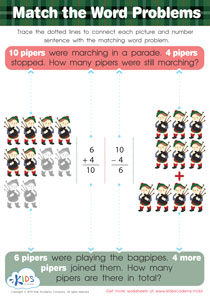
Understanding subtraction Normal Addition Worksheets for Ages 7-9
4 filtered results
-
From - To
Unlock the world of mathematics for your 7-9-year-olds with our "Understanding Subtraction Normal Addition Worksheets." Tailored to strengthen subtraction skills, these interactive worksheets engagingly present subtraction concepts alongside addition practice. As children navigate through varied exercises, they enhance their problem-solving abilities and build a solid foundation in math. Designed for both classroom and home use, these worksheets cater to different learning styles, ensuring every child grasps the essentials of subtraction in a fun and supportive way. Help your child gain confidence in math by exploring our thoughtfully crafted activities, paving the way for future academic success. Dive into learning today!
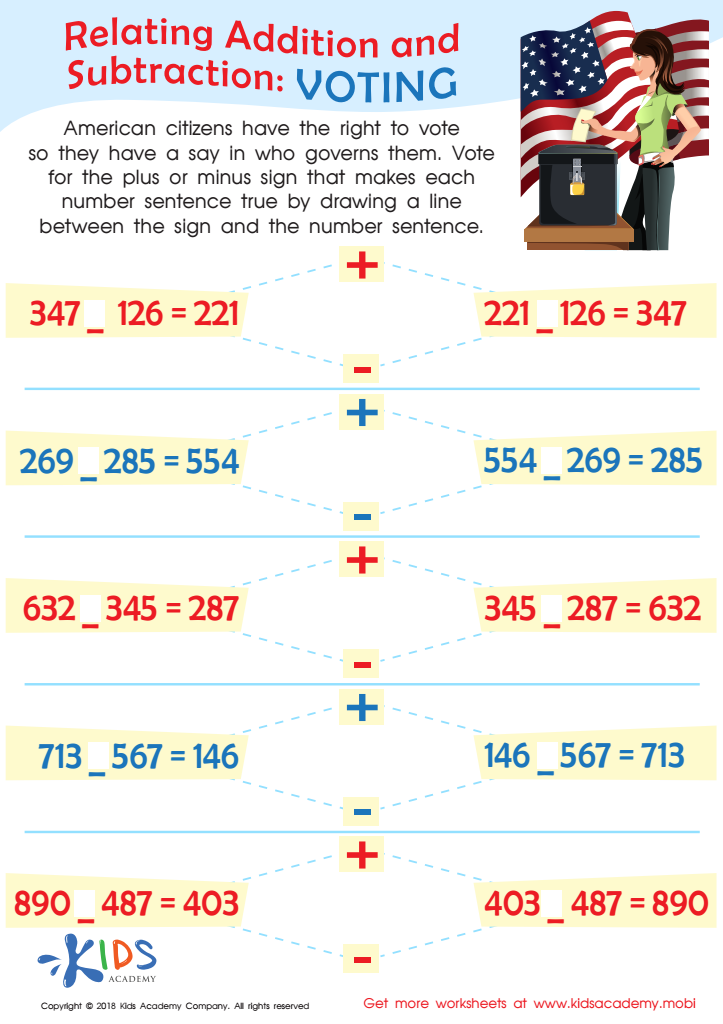
Voting Worksheet
 Assign to My Students
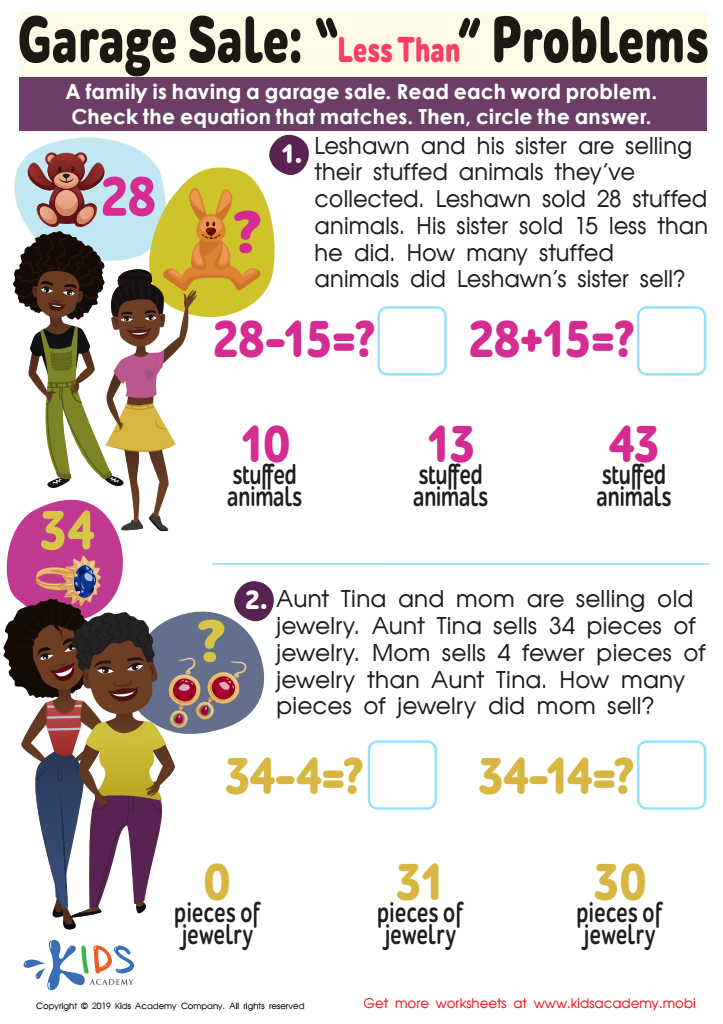
Garage Sale Less Than Worksheet
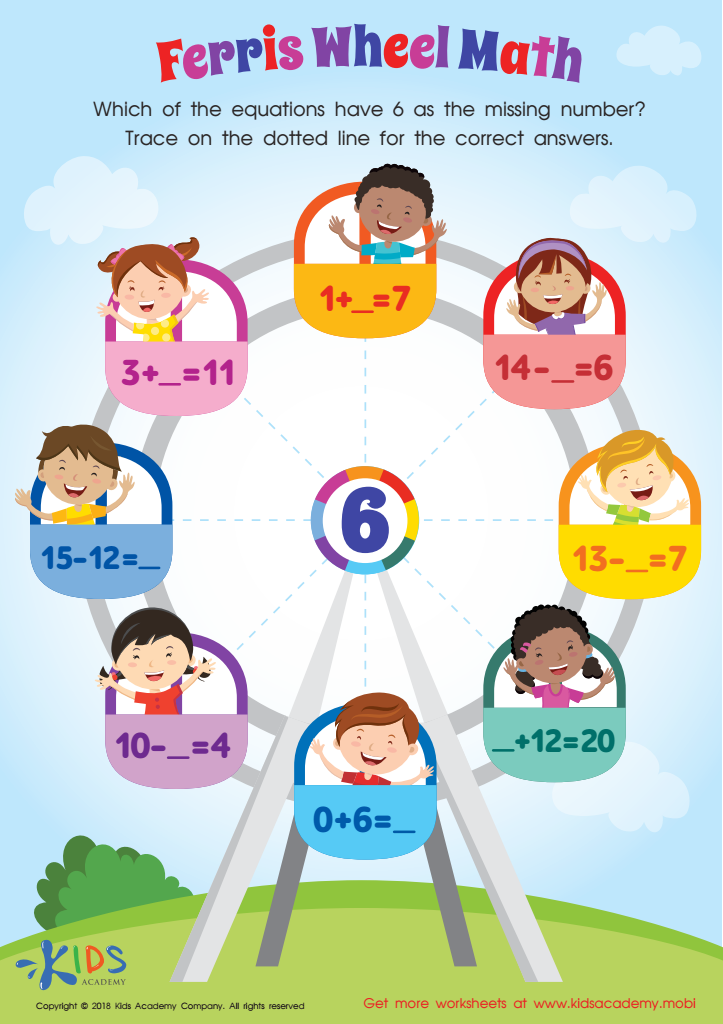
Missing Number: Ferris Wheel Math Worksheet
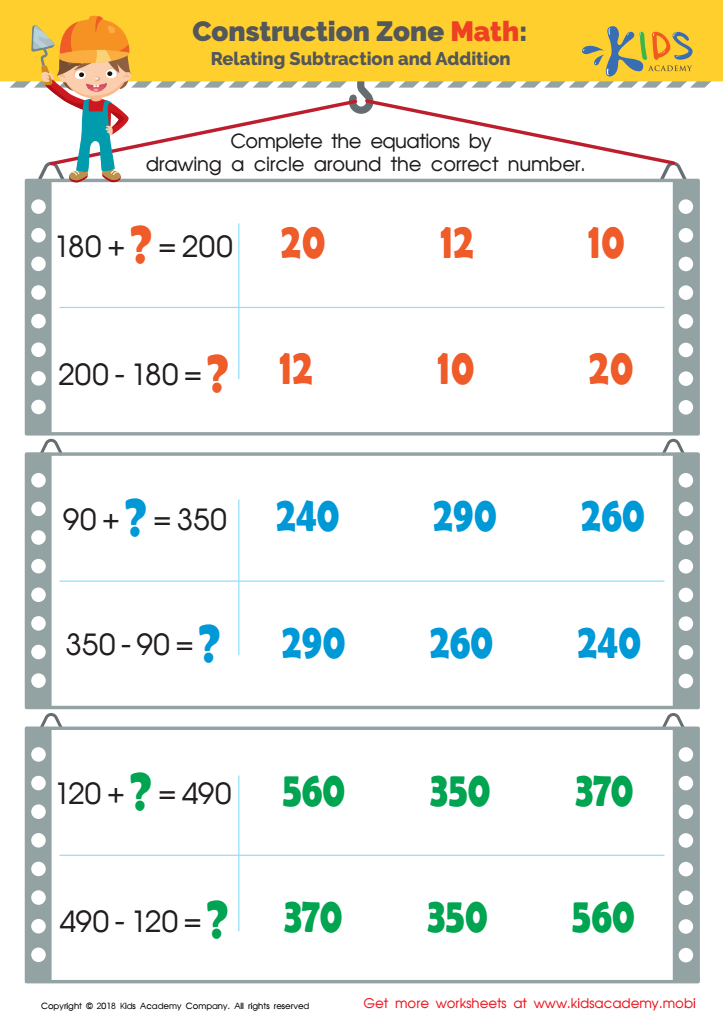
Construction Zone Math: Relating Subtraction and Addition Worksheet








Understanding subtraction as part of normal addition is crucial for children ages 7-9, as it lays the foundation for their future mathematical skills. At this age, children are increasingly transitioning from concrete to abstract thinking and are beginning to grasp more complex concepts. By comprehensively understanding subtraction in conjunction with addition, they can better recognize relationships between numbers, fostering problem-solving abilities and logical reasoning.
Teachers and parents should care about this because a solid grasp of these foundational math operations enhances children's cognitive development, boosts their confidence in problem-solving, and prepares them for more complex topics like algebra and fractions. Furthermore, mastery of subtraction within addition contexts fosters number sense, enabling children to make connections between additive and subtractive processes.
To successfully navigate daily life tasks—like budgeting, time management, and understanding quantities—kids benefit from an early understanding of how subtraction interacts with addition. Additionally, cultivating a strong mathematical foundation helps set the stage for academic success and a lifelong positive attitude towards math. By engaging actively in this learning process, adults not only support academic achievement but also help engender curiosity and resilience in their children’s approach to learning.