Normal Fractions of Shapes Worksheets for Ages 7-9
5 filtered results
-
From - To
Explore our engaging "Normal Fractions of Shapes Worksheets" designed for children aged 7-9! These worksheets provide a fun introduction to understanding fractions through visual representations of shapes. Young learners will have the opportunity to enhance their math skills by identifying, partitioning, and comparing different shapes, making fractions tangible and relatable. Each worksheet encourages critical thinking and problem-solving, ensuring a comprehensive grasp of basic fraction concepts. Perfect for classroom activities or home practice, our resources cater to various learning styles while making math enjoyable. Foster your child's mathematical confidence with these interactive and educational worksheets today!
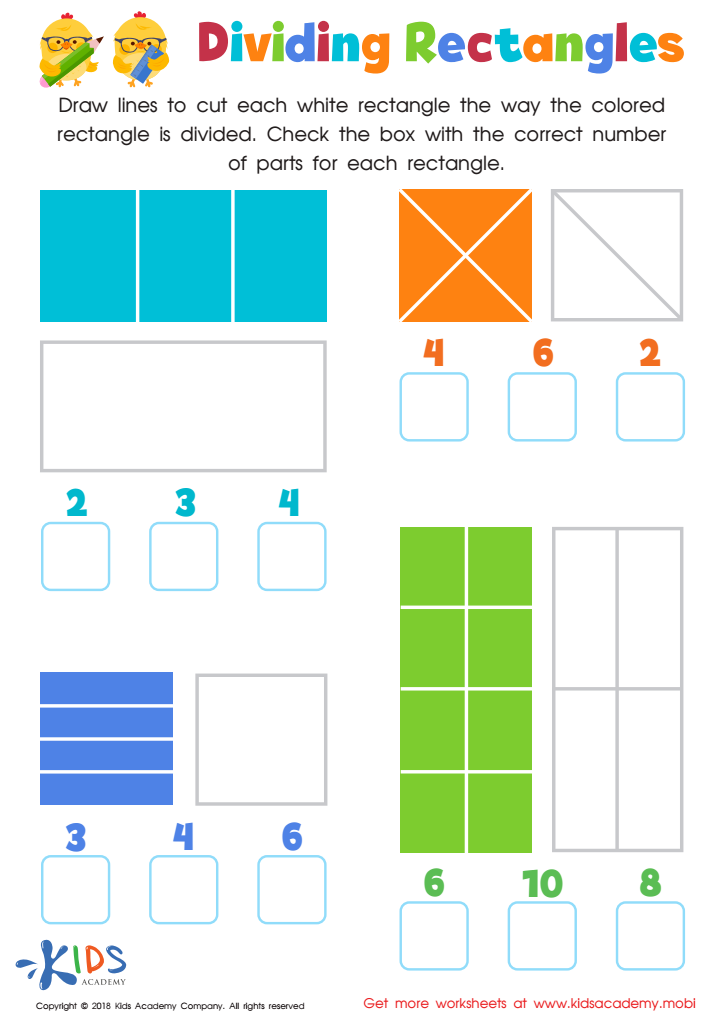
Dividing Rectangles Worksheet
 Assign to My Students
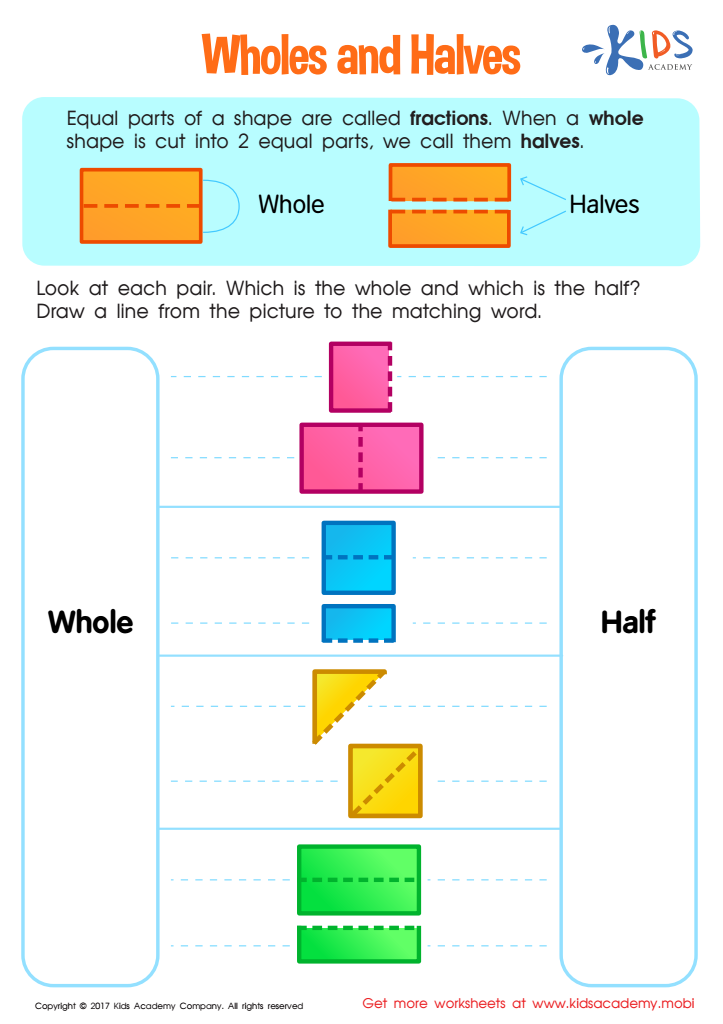
Wholes and Halves Worksheet
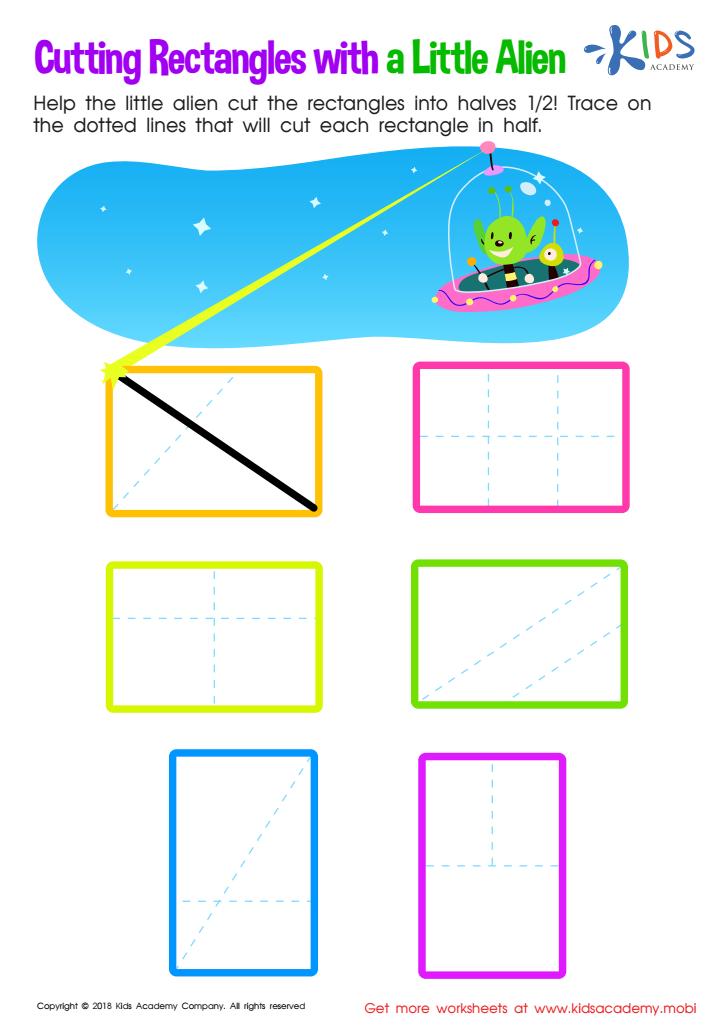
Cutting Rectangles with Alien Worksheet
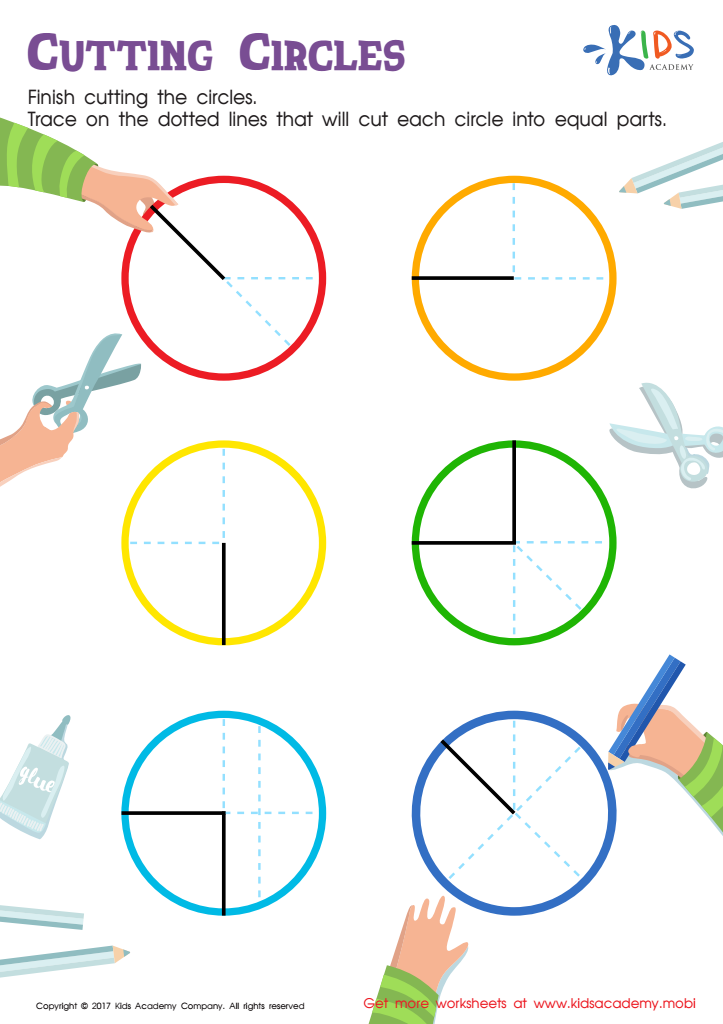
Cutting Circles Worksheet
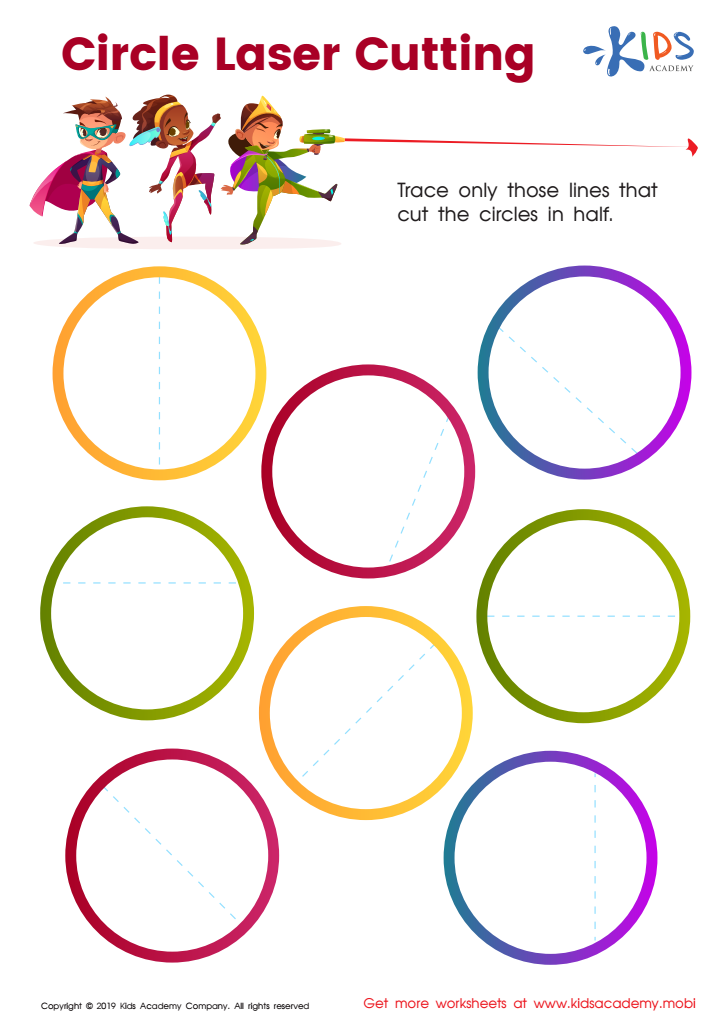
Circle Laser Cutting Worksheet








Understanding normal fractions of shapes is crucial for children aged 7-9 as it lays the foundation for their mathematical development and everyday problem-solving skills. At this age, students begin to grasp complex ideas, and introducing fractions through shapes helps make abstract concepts tangible and relatable.
Learning about fractions involves recognizing parts of a whole, which can be illustrated visually through various shapes such as circles, squares, and rectangles. By engaging with these concepts, children develop spatial awareness and critical thinking, which enhances their overall cognitive abilities. Furthermore, comprehending fractions fosters essential skills for higher-level math, making it crucial for future academic success.
Additionally, knowledge of fractions is applicable in real life—be it sharing food, dividing tasks, or making assessments in cooking and art projects. Parents and teachers who emphasize this subject not only contribute to a child’s mathematical understanding but also nurture their ability to make connections between math and practical situations.
Encouraging exploration of normal fractions in a hands-on way cultivates confidence, curiosity, and a positive attitude towards math. Raising awareness about the relevance of fractions is essential for equipping children with foundational skills that will benefit them throughout their education and beyond.