Understanding place values Normal Numbers Worksheets for Ages 7-9
9 filtered results
-
From - To
Explore our engaging "Understanding Place Values Normal Numbers Worksheets" designed for children aged 7-9! These worksheets will help young learners grasp the concept of place value, a fundamental math skill essential for understanding larger numbers. Featuring clear explanations, interactive exercises, and colorful visuals, these activities make learning both fun and effective. Students will work through various problems that reinforce their knowledge of units, tens, hundreds, and beyond. Perfect for classroom use or at-home practice, these worksheets support a hands-on learning experience that builds confidence in math. Visit us for a wealth of resources to ignite creativity and curiosity in your child's learning journey!
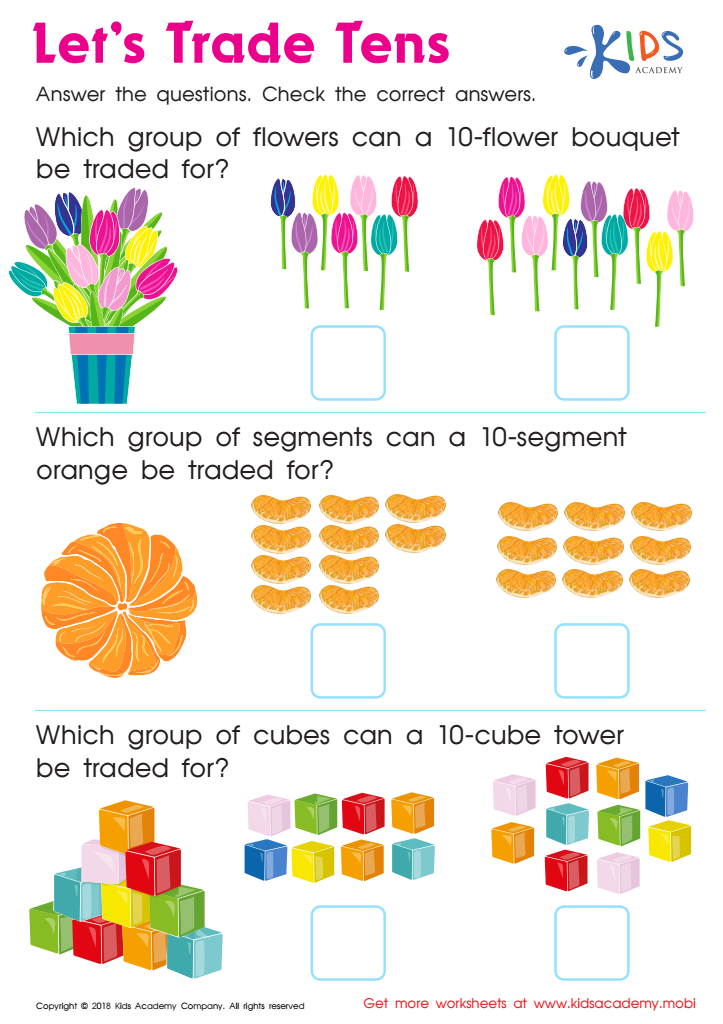
Lets Trade Tens Worksheet
 Assign to My Students
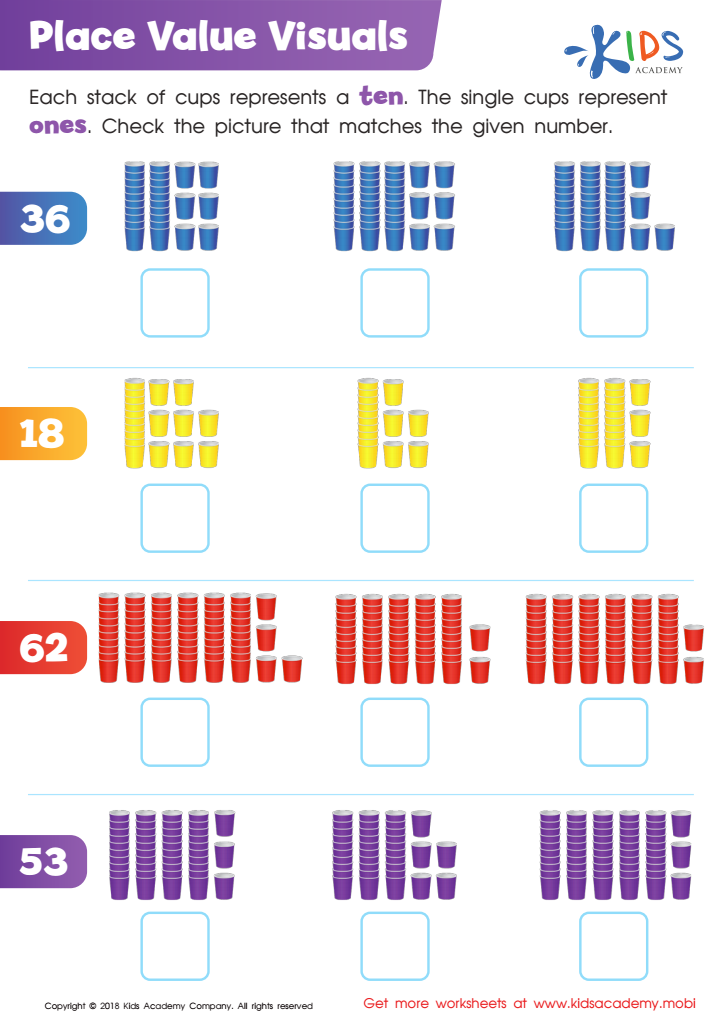
Place Value Visuals Worksheet
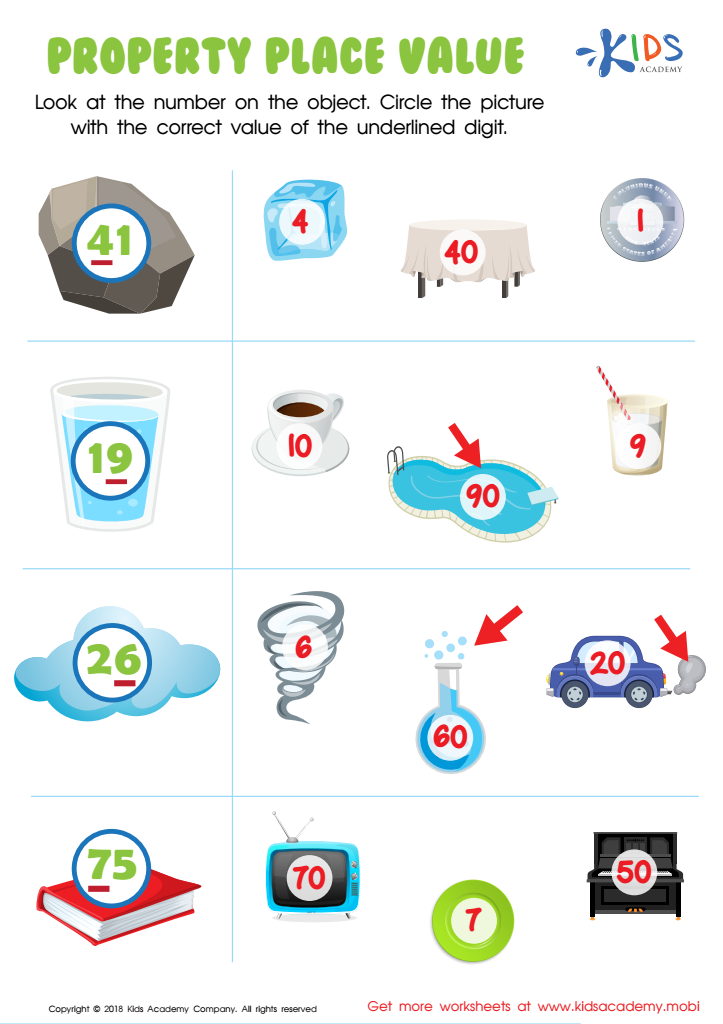
Property Place Value Worksheet
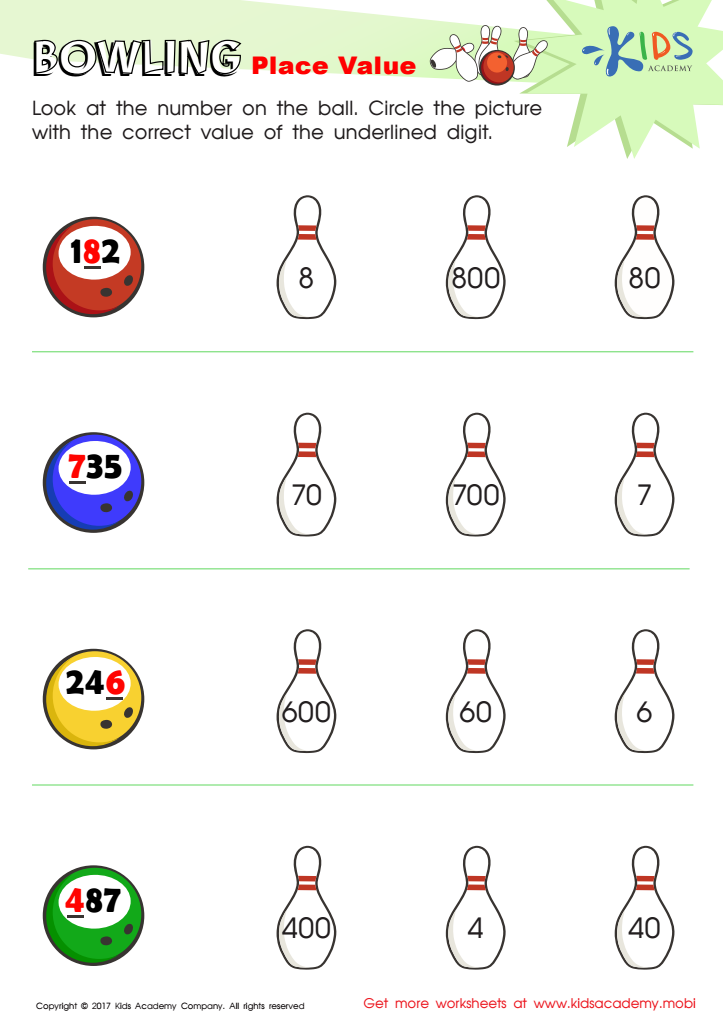
Place Value Worksheet
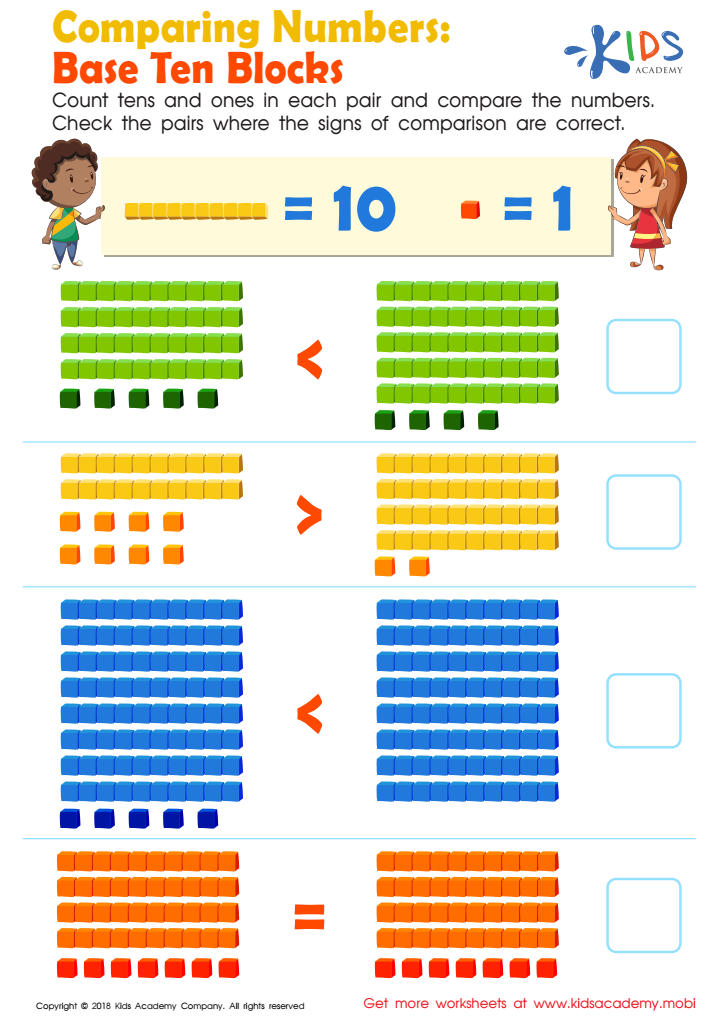
Comparing Numbers: Base Ten Blocks Worksheet
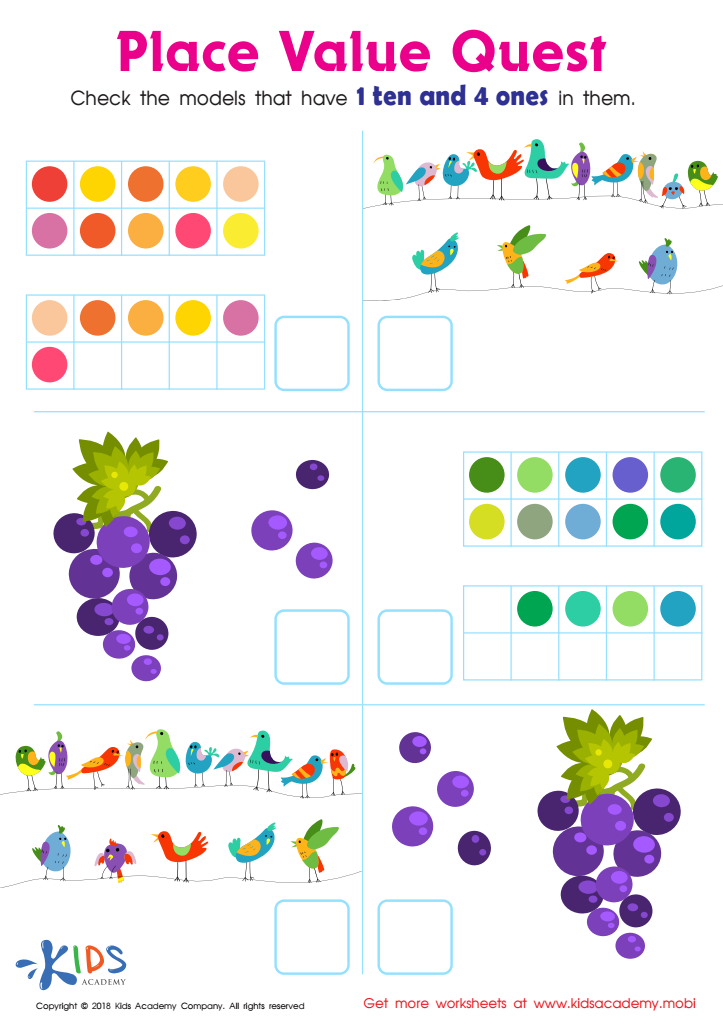
Place Value Quest Worksheet
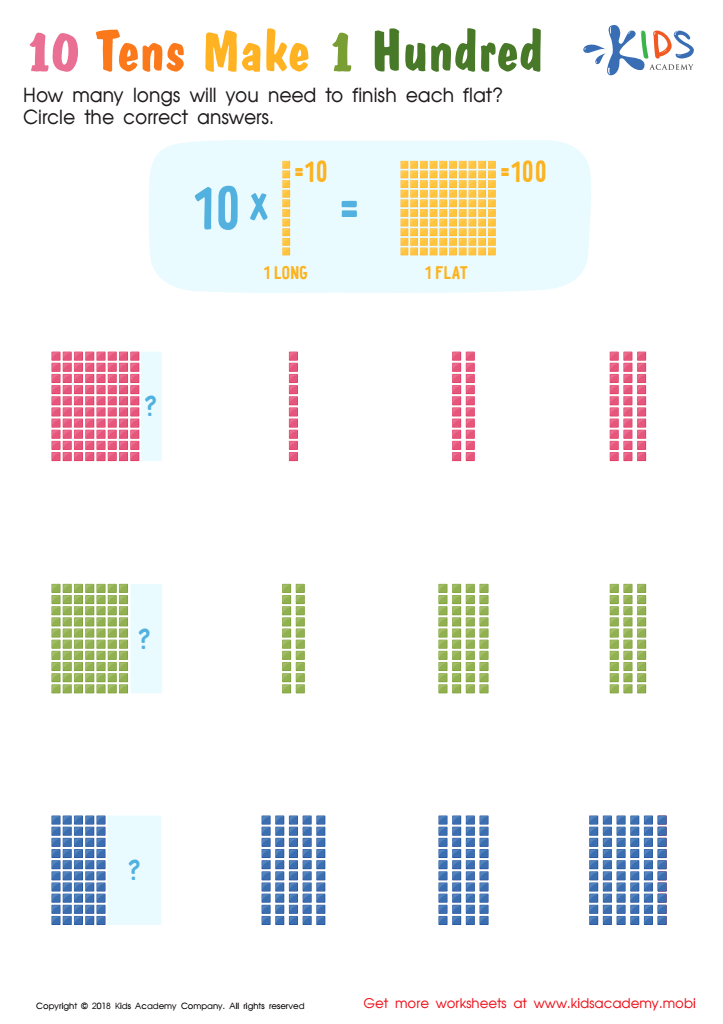
10 Tens Make 1 Hundred Worksheet
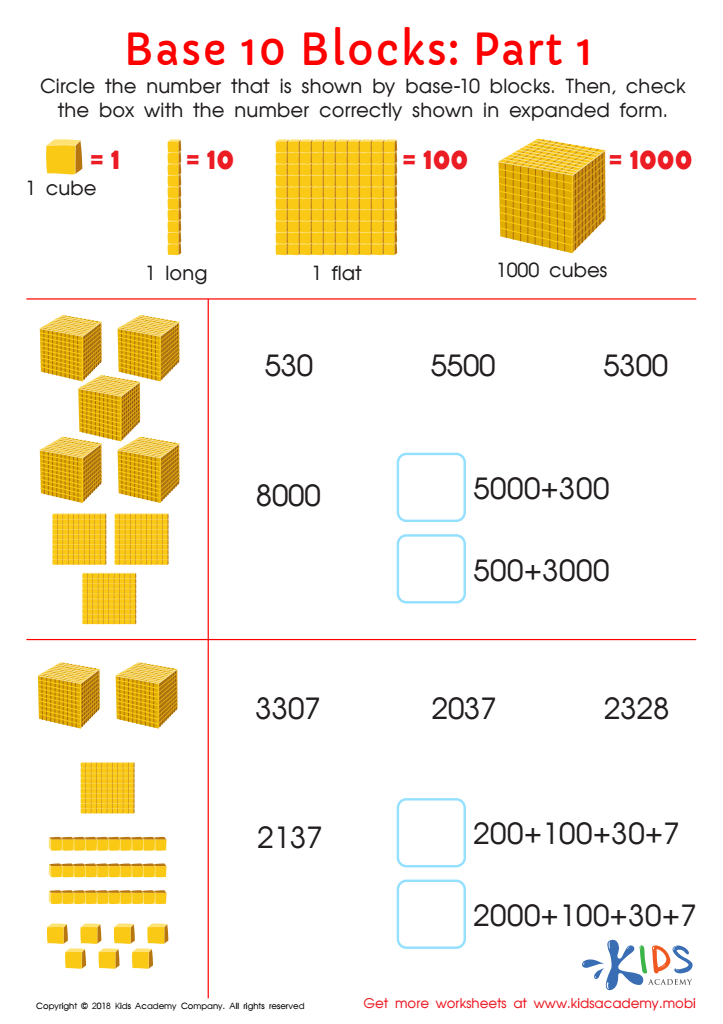
Base 10 Blocks Worksheet: Part 1
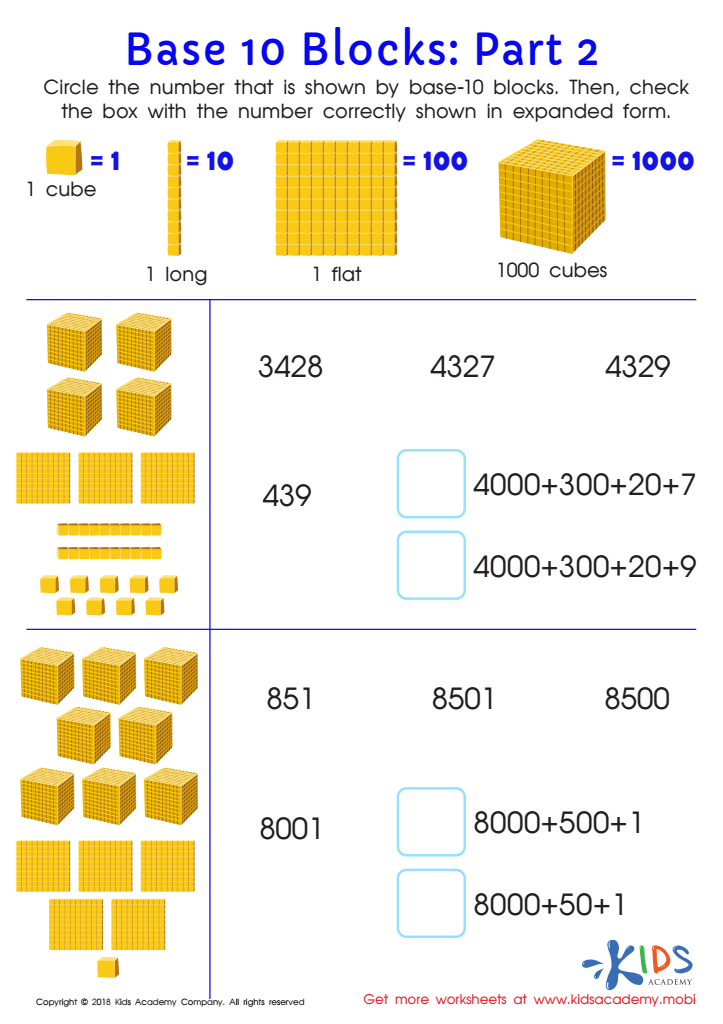
Base 10 Blocks Worksheet: Part 2







Understanding place values in normal numbers is crucial for children ages 7-9, as it lays the foundation for their mathematical skills. At this developmental stage, children begin to grasp more complex mathematical concepts, making a solid understanding of place value essential. This concept helps them comprehend how numbers operate within our base-10 system, where the position of a digit affects its value. For instance, in the number 237, the '2' represents 200, not just 2, which is fundamental for addition, subtraction, counting, and eventually multiplication and division.
As parents or teachers, fostering competence in place value enables children to develop advanced skills like multi-digit addition and subtraction, fractions, and more complex problem-solving techniques. It also enhances their confidence in mathematics, reducing anxiety and building a positive attitude towards the subject.
Moreover, a solid grasp of place value is applicable in real-life situations, such as making change, measuring distances, and understanding time, which are vital for their daily lives. When parents or teachers emphasize place value understanding, they empower children with critical thinking skills, aiding them in becoming proficient in mathematics and equipping them for future academic success. Thus, supporting children in mastering this concept should be a priority for everyone involved in their education.