Geography knowledge Normal Math Worksheets for Ages 7-9
6 filtered results
-
From - To
Discover our Geography Knowledge Normal Math Worksheets tailored for ages 7-9! These worksheets seamlessly blend geography with math, making learning engaging and fun. Kids will explore maps, practice essential math skills, and gain a deeper understanding of the world around them. Our activities are designed to challenge young minds while reinforcing key geographic concepts. Ideal for in-class learning or at-home practice, these worksheets are perfect for developing knowledge in a stimulating way. Boost your child's educational journey with our comprehensive resources that encourage curiosity and critical thinking. Try them today and watch your child’s skills flourish!
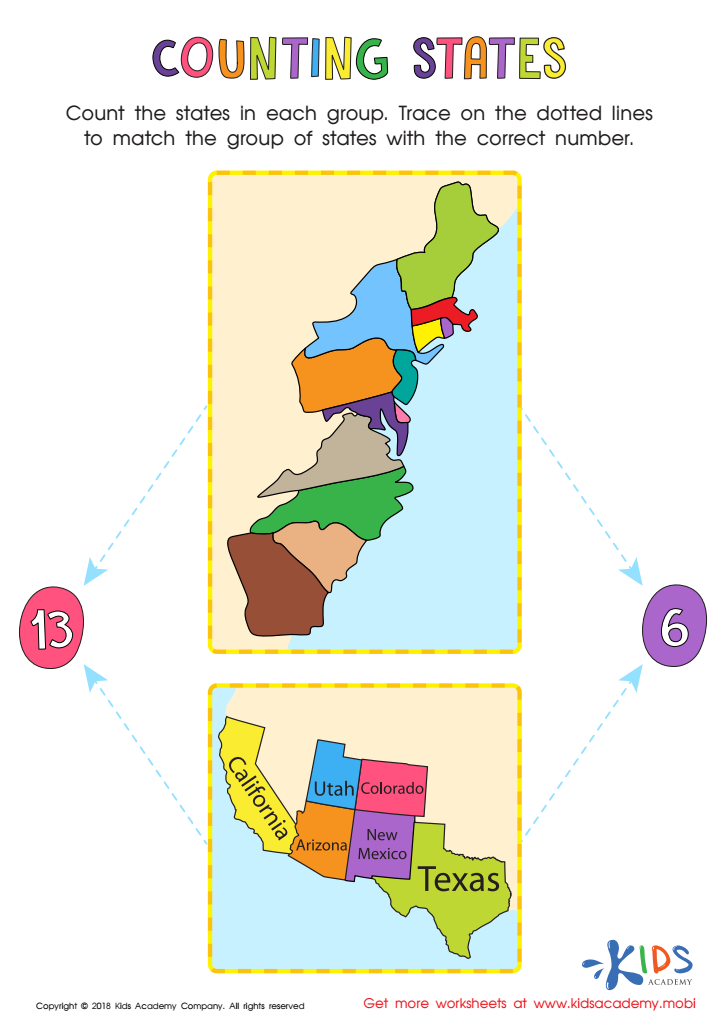
Counting States Worksheet
 Assign to My Students
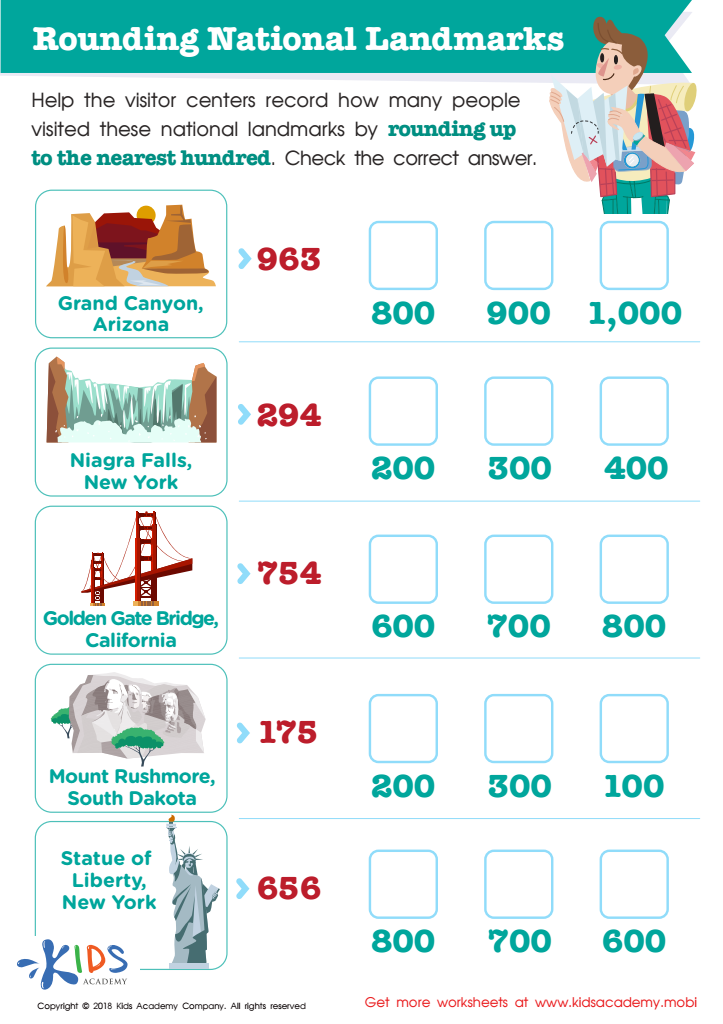
Rounding National Landmarks Worksheet
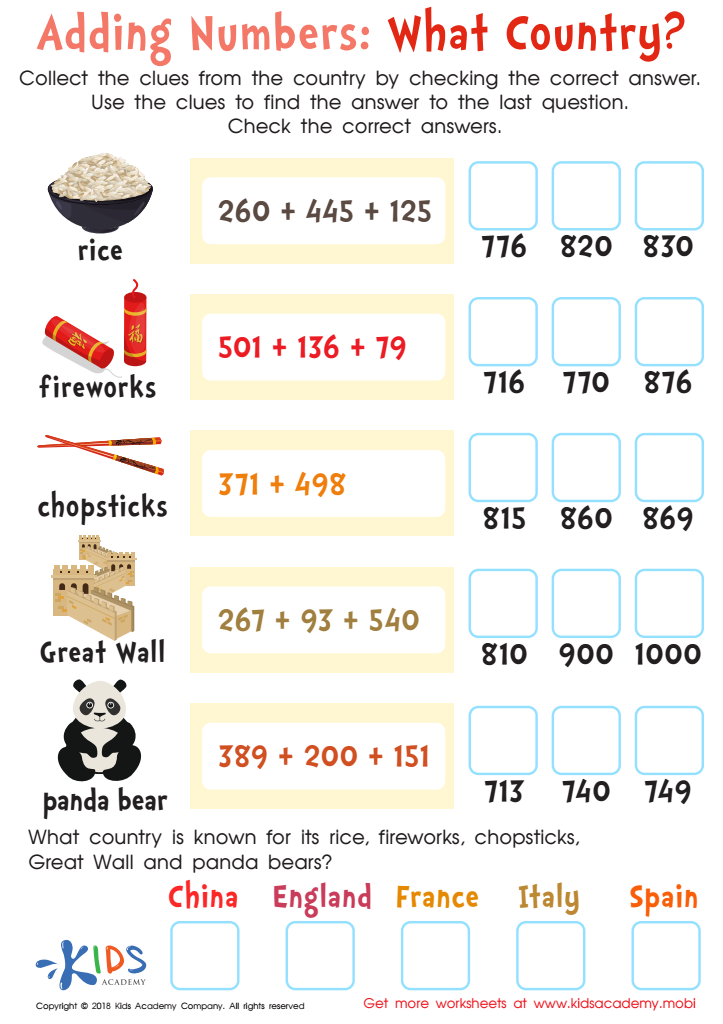
Adding Numbers: What Country Worksheet
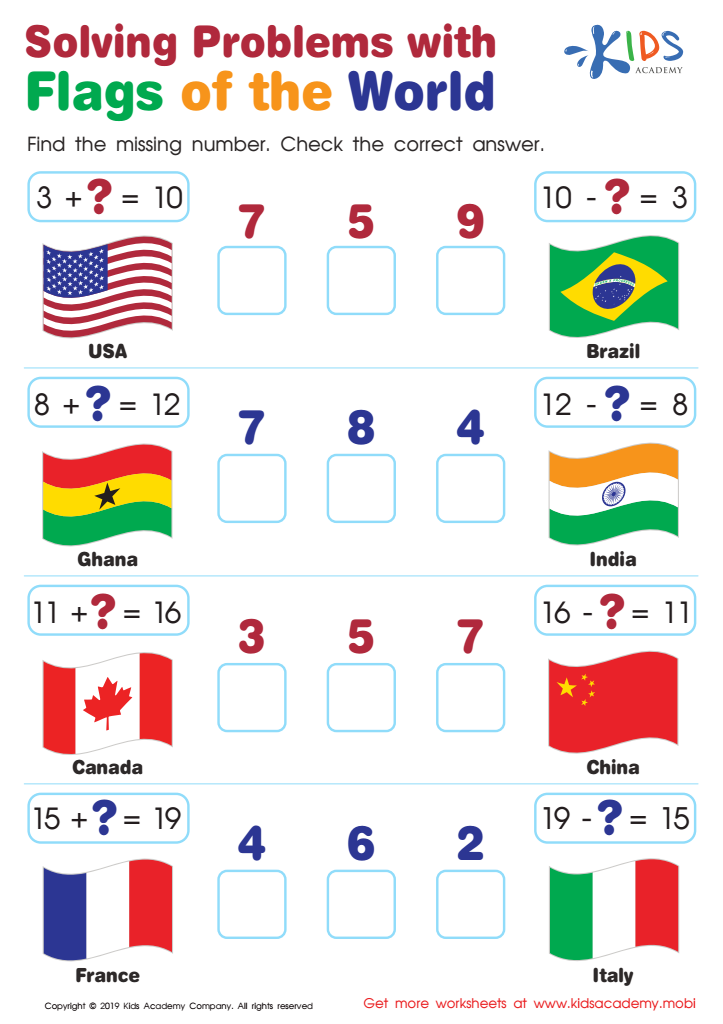
Solving Problems with Flags of the World Worksheet
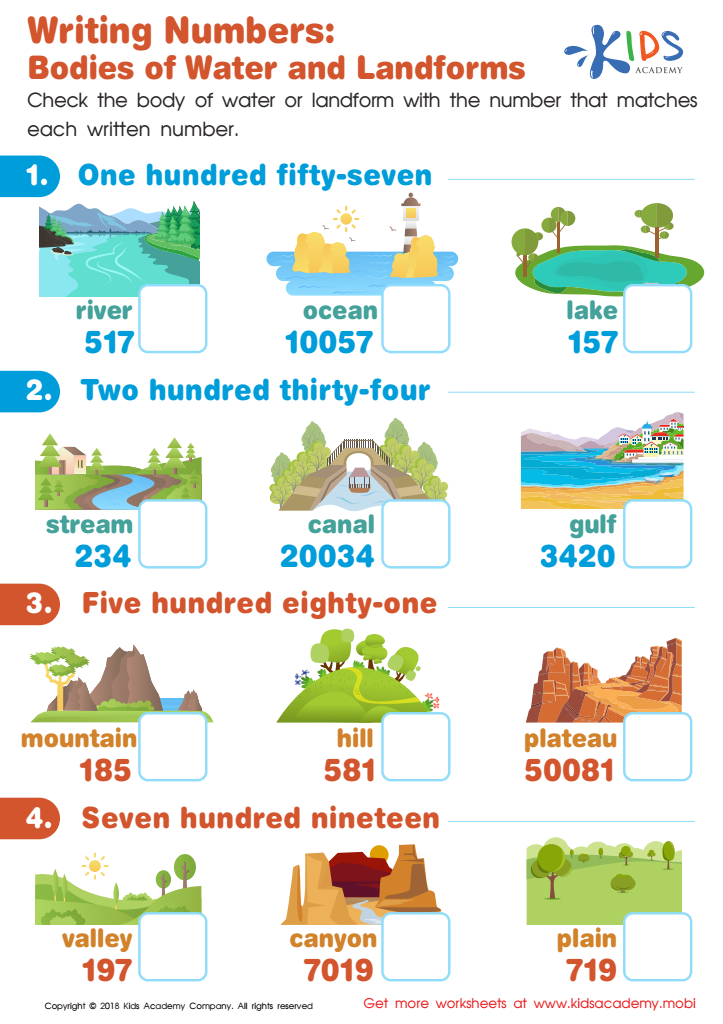
Bodies of Water and Landforms Writing Numbers Worksheet
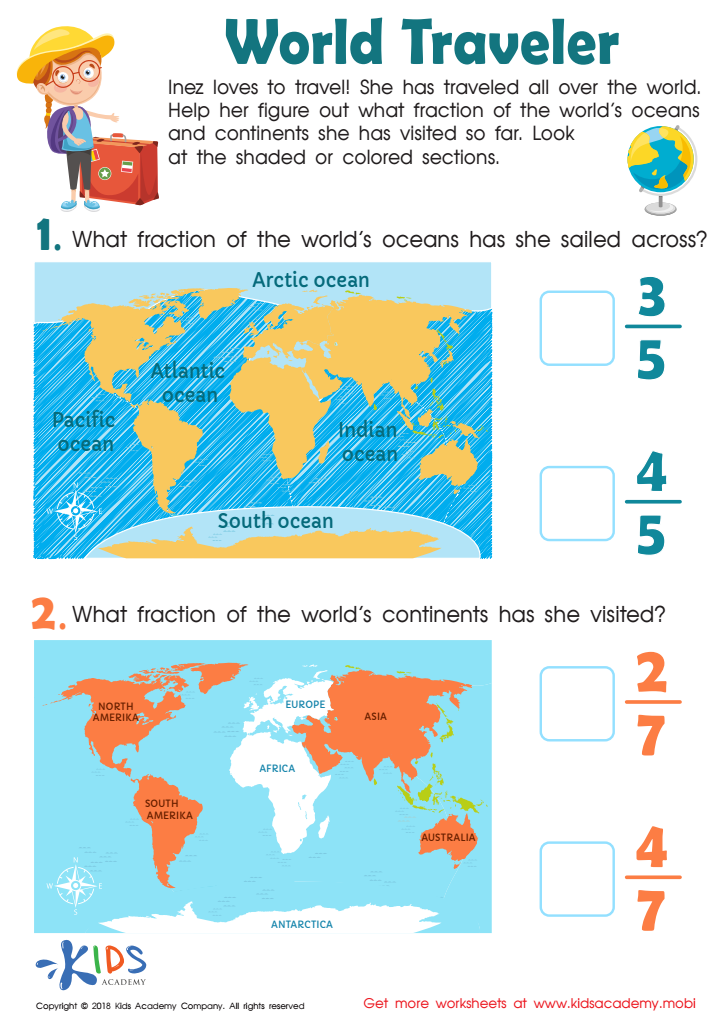
World Traveler Worksheet







Understanding geography and basic math is crucial for children aged 7–9 as these subjects play essential roles in their cognitive and personal development. Firstly, geography enriches children's knowledge about the world, helping them appreciate diverse cultures, natural landscapes, and the relationship between humans and their environment. This awareness fosters curiosity and global awareness, which are foundational for becoming informed, empathetic global citizens.
Geography lessons at an early age also enhance spatial thinking. Children learn to read maps, understand location and direction, and recognize patterns in nature and human settlement. These skills are invaluable in everyday life and academic subjects such as science and history.
Similarly, basic math up to the 3rd grade lays the foundation for higher-level mathematical concepts and problem-solving skills. Proficiency in early math, including addition, subtraction, multiplication, and division, is critical for understanding more complex topics later on. Early exposure to math promotes logical reasoning, critical thinking, and the ability to make sense of patterns and sequences.
Moreover, both subjects encourage persistence and resilience. Tackling geography and math challenges nurtures a growth mindset, showing children that effort and practice can lead to mastery. As they progress, their increasing competence and confidence spill over into other academic areas, contributing to overall school success and lifelong learning.








