Matching skills Normal Math Worksheets for Ages 7-9
3 filtered results
-
From - To
Enhance your child's mathematical understanding with our "Matching Skills Normal Math Worksheets" designed for ages 7-9. These engaging, printable worksheets focus on developing essential matching skills through fun and interactive activities. Each worksheet encourages children to recognize patterns, pairs, and relationships between numbers, which are fundamental for their mathematical foundation. Our carefully crafted materials promote critical thinking while making learning enjoyable. Perfect for classrooms or home study, these worksheets help reinforce key concepts, making math exciting and accessible. Discover the joy of learning through matching skills with Kids Academy’s thoughtfully designed resources tailored for young learners' needs. Start matching today!
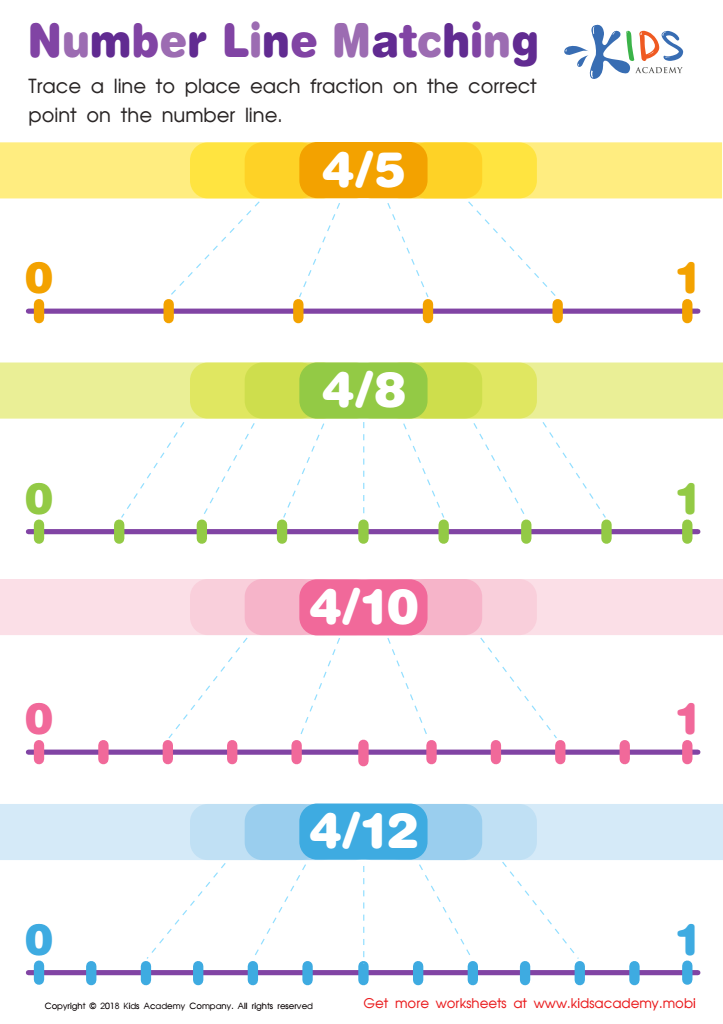
Number Line Matching Worksheet
 Assign to My Students
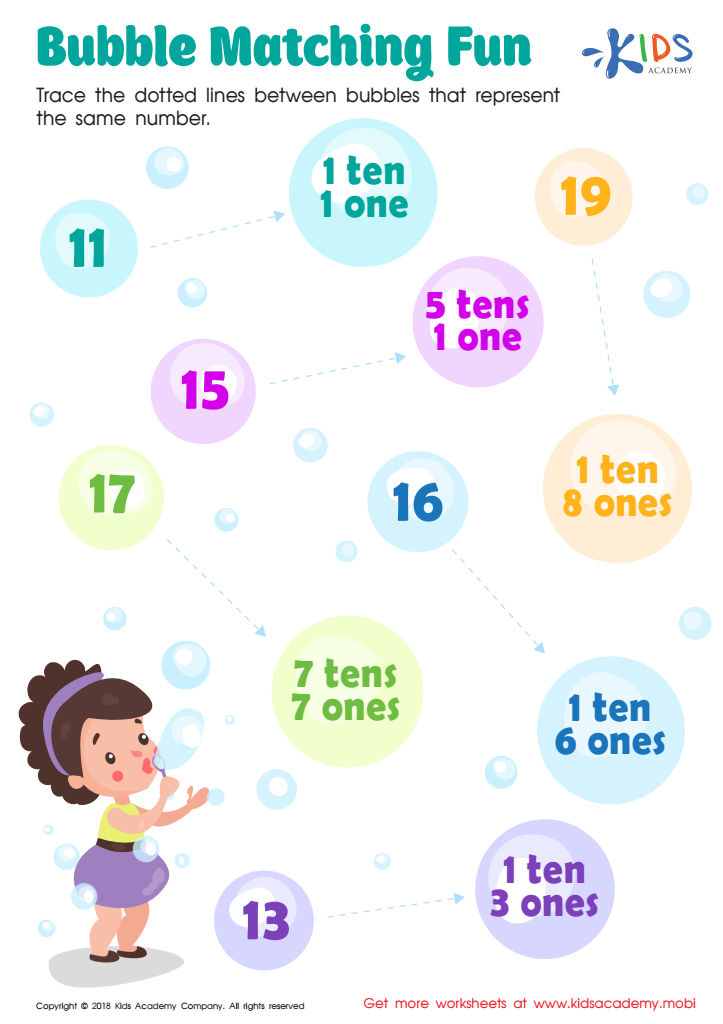
Bubble Matching Fun Worksheet
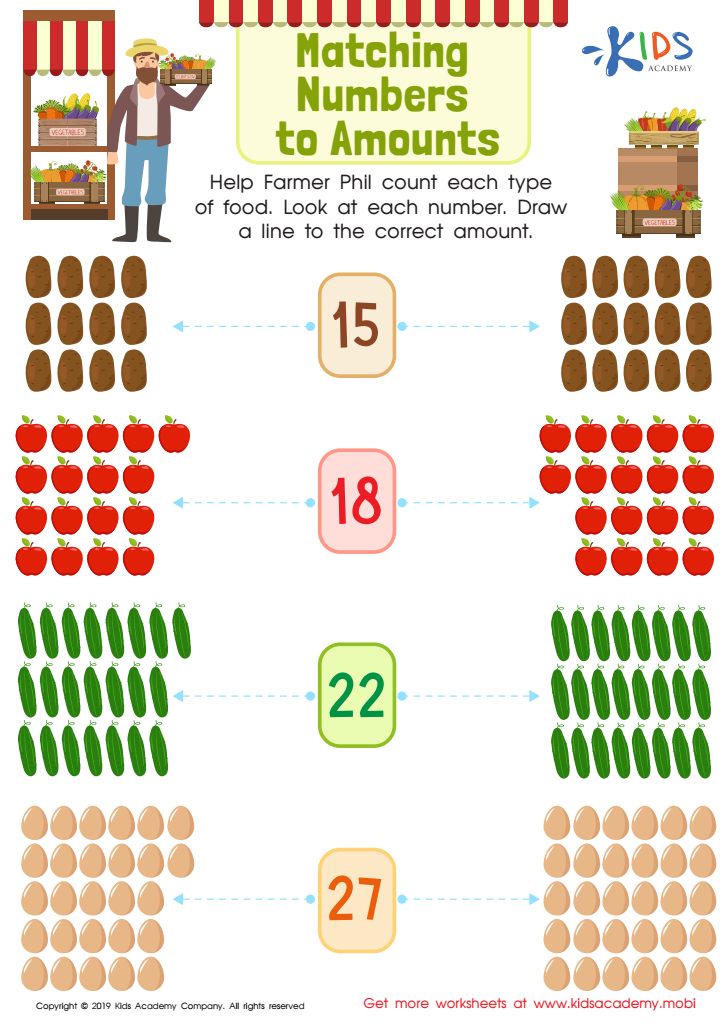
Matching Numbers to Amounts Worksheet







Parents and teachers should prioritize "Matching Skills Normal Math" for children aged 7-9 because these skills are crucial for cognitive development and foundational math understanding. At this age, children begin forming deep connections with mathematical concepts, and matching skills—such as recognizing equivalencies, patterns, and relationships—enhance their problem-solving abilities. These skills help children learn how to group and categorize numbers, which lays the groundwork for more complex math operations later on.
Furthermore, engaging activities that involve matching skills improve children's attention to detail and strengthen their critical thinking. As they participate in games or exercises that require matching numbers, shapes, or equations, they become adept at logical reasoning.
Developing matching skills also foster confidence in math. Children who find success in these activities are more likely to engage positively with challenging concepts as they progress in their education. This early success can significantly diminish math anxiety and promote a lifelong enjoyment of mathematics.
In sum, matching skills are essential not only for academic achievement in math but also for nurturing essential cognitive abilities. The investment made by parents and teachers in supporting the development of these skills propels children's future learning potential across various subjects.








