Time recognition Normal Measurement Worksheets for Ages 7-9
3 filtered results
-
From - To
Our "Time Recognition Normal Measurement Worksheets for Ages 7-9" are designed to make learning to tell time engaging and fun. Created specifically for young learners, these worksheets focus on essential skills such as reading analog and digital clocks, understanding AM and PM, and calculating elapsed time. Ideal for both classroom and home use, they provide a variety of exercises to reinforce learning, build confidence, and improve accuracy in time recognition. Packed with colorful visuals and interactive tasks, our worksheets help children master the important skill of telling time through practical and enjoyable activities.
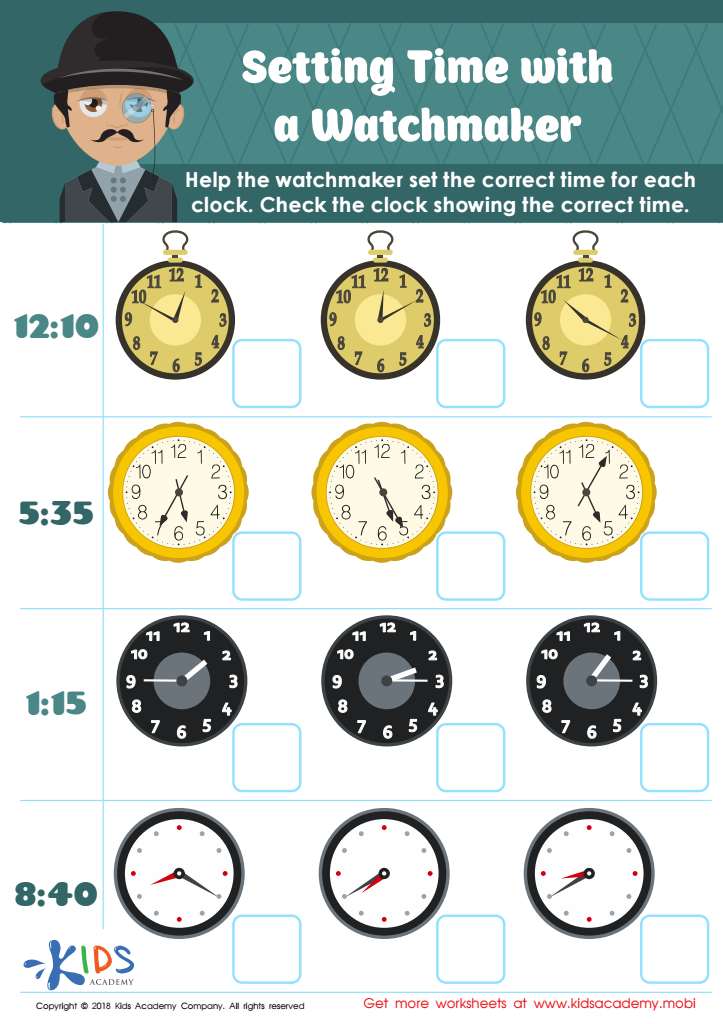
Setting Time with Watchmaker Worksheet
 Assign to My Students
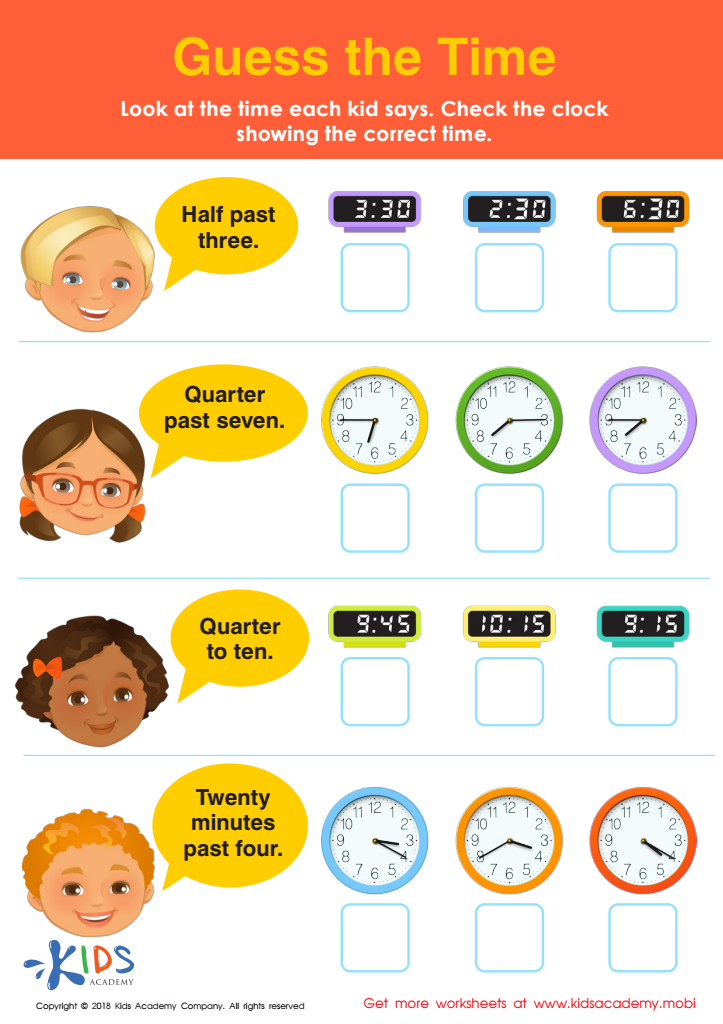
Guess the Time Worksheet
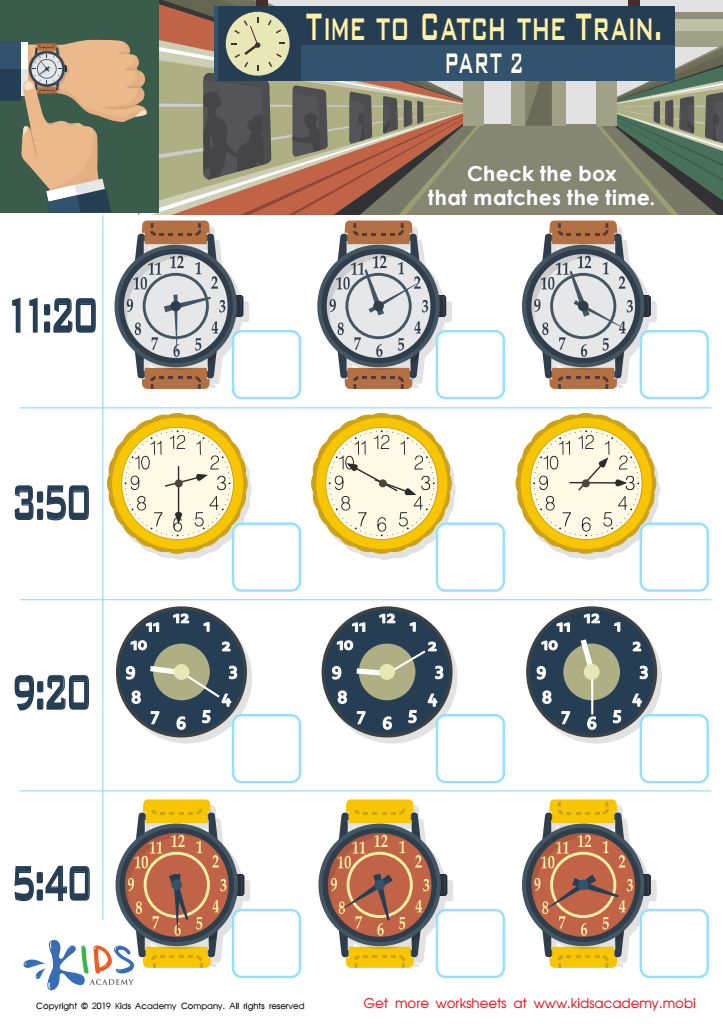
Time to Catch the Train Part 2 Worksheet








Understanding time recognition and normal measurement for children aged 7-9 is crucial for various reasons, pivotal for both teachers and parents. At this developmental stage, these foundational skills contribute significantly to a child's cognitive development and everyday functioning.
Firstly, recognizing and measuring time fosters a sense of responsibility and independence. Children begin to understand daily routines and schedule management, which helps them feel more confident and secure. This competence is necessary for timely school attendance, homework completion, and participation in extracurricular activities.
Secondly, time-telling skills enhance mathematical understanding. Learning to read clocks, measure time intervals, and comprehend concepts such as hours, minutes, and seconds bolsters numerical literacy, indirectly benefiting broader academic achievement.
Incorporating these skills also improves problem-solving and critical thinking. When children understand time, they become better at planning, organizing tasks, and anticipating future events. This foresight is important for setting goals and accomplishing tasks efficiently.
Lastly, mastering time recognition promotes social interactions. Children are expected to follow time-oriented social norms, such as arriving on time for playdates or understanding the sequence of events during a school day.
In summary, ensuring that children aged 7-9 grasp time recognition and measurement lays a vital groundwork for their overall academic, social, and personal development, making it an essential focus for educators and parents.








