Understanding patterns Normal Multiplication Worksheets for Ages 7-9
3 filtered results
-
From - To
"Understanding Patterns: Normal Multiplication Worksheets for Ages 7-9" is designed to make mastering multiplication an engaging and enjoyable journey for young learners. Our curated collection of printable worksheets uses entertaining activities and clear examples to help children grasp multiplication concepts seamlessly. By recognizing and exploring patterns, kids can enhance their problem-solving skills and build a solid mathematical foundation. Perfect for both classroom and at-home learning, these worksheets cater specifically to students aged 7-9, ensuring age-appropriate challenges. Empower your child or students to excel in math with this comprehensive, fun-filled educational resource.
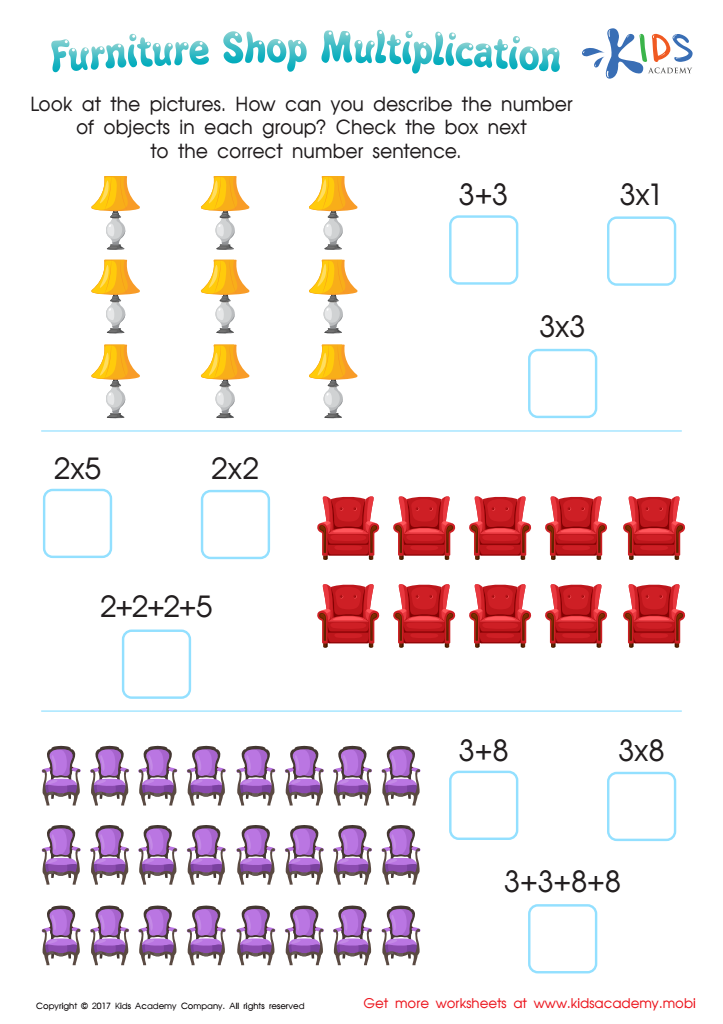
Furniture Shop Worksheet
 Assign to My Students
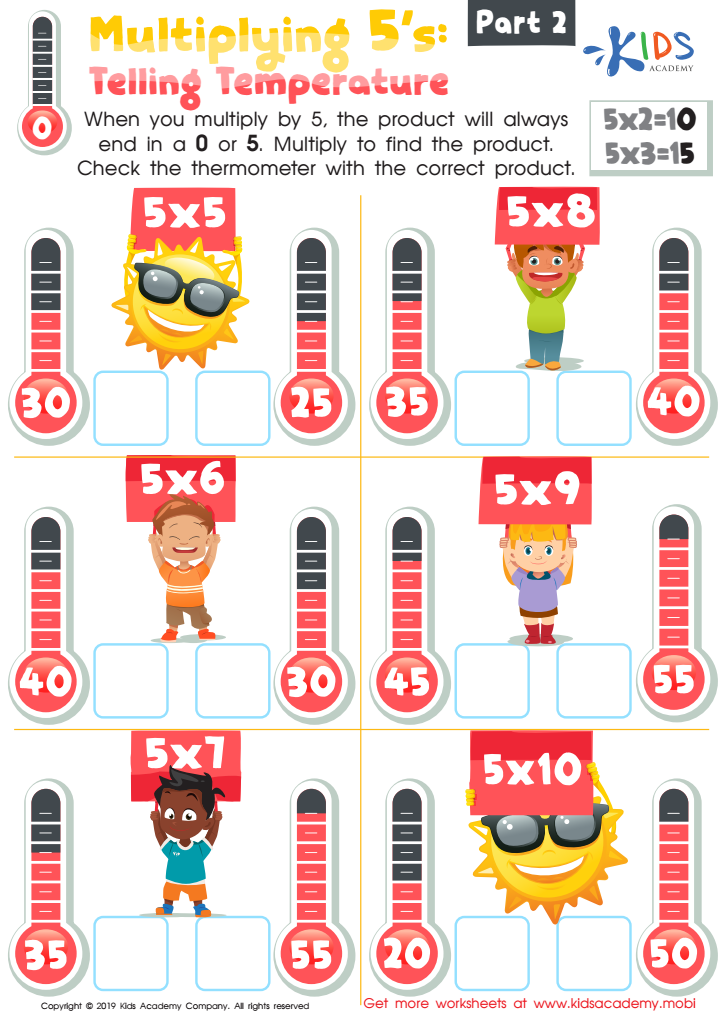
Multiplying 5’s: Telling Temperature Part 2 Worksheet
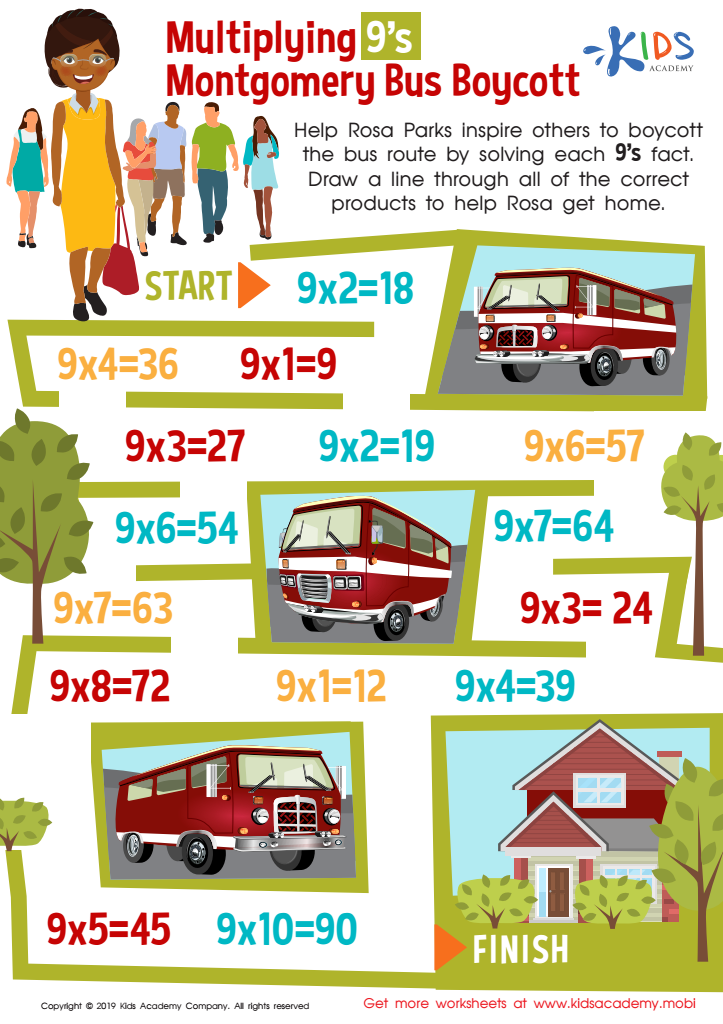
Multiplying 9’s Montgomery Bus Boycott Worksheet








Understanding patterns in normal multiplication is crucial for children aged 7-9 for multiple reasons, emphasizing why parents and teachers should care. First, mastering these patterns forms the foundation for arithmetic skills essential later in life. Recognizing multiplication patterns helps children to memorize multiplication tables more easily, fostering quicker recall and accuracy. For example, identifying that multiples of 5 end in either 0 or 5 establishes a predictable pattern that aids in fluency.
Moreover, this understanding promotes critical thinking and problem-solving skills. Recognizing patterns allows children to develop strategies for tackling more complex problems, as they learn to see connections and relationships between numbers. This cognitive skill is transferable across various subjects, enhancing overall academic performance.
From an academic standpoint, grasping these concepts aligns with curriculum standards, ensuring children meet educational benchmarks. Children confident in multiplication perform better in tests and build foundational skills necessary for advanced math topics like division, fractions, and algebra.
Additionally, an early appreciation for numbers nurtures a positive attitude towards math, reducing math anxiety and building self-confidence. In short, parents and teachers should prioritize teaching multiplication patterns to support cognitive development, academic success, and a lifelong skill of logical thinking in children.








