Filters

79 filtered results

Clear all filters
Favorites
With answer key
Interactive

79 filtered results

Difficulty Level

Grade


Check out this FREE Trial Lesson on Reading Fiction for age 7-9!

Illustrations in a Text

Favorites
With answer key
Interactive
  • 7-9
  • Reading Fiction
  • Normal
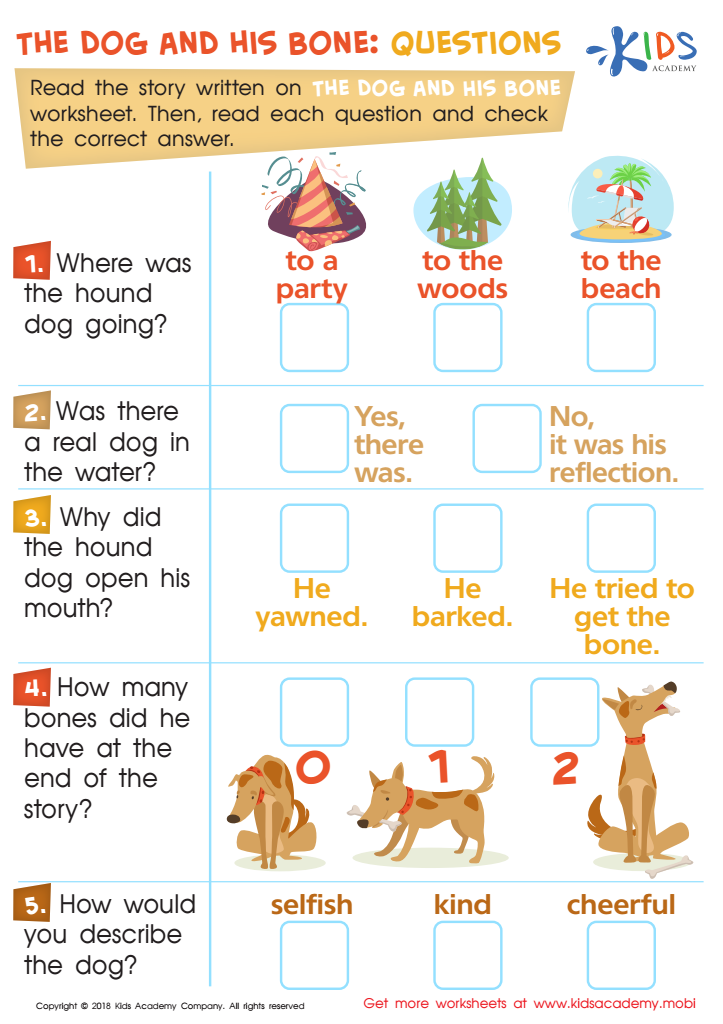
The Dog and His Bone: Questions Worksheet

The Dog and His Bone: Questions Worksheet

Read the story of The Dog and His Bone to your child and help them understand it. Have them read it aloud if possible. Then, read the five questions on the worksheet and guide them to select the correct answers.
The Dog and His Bone: Questions Worksheet
Worksheet
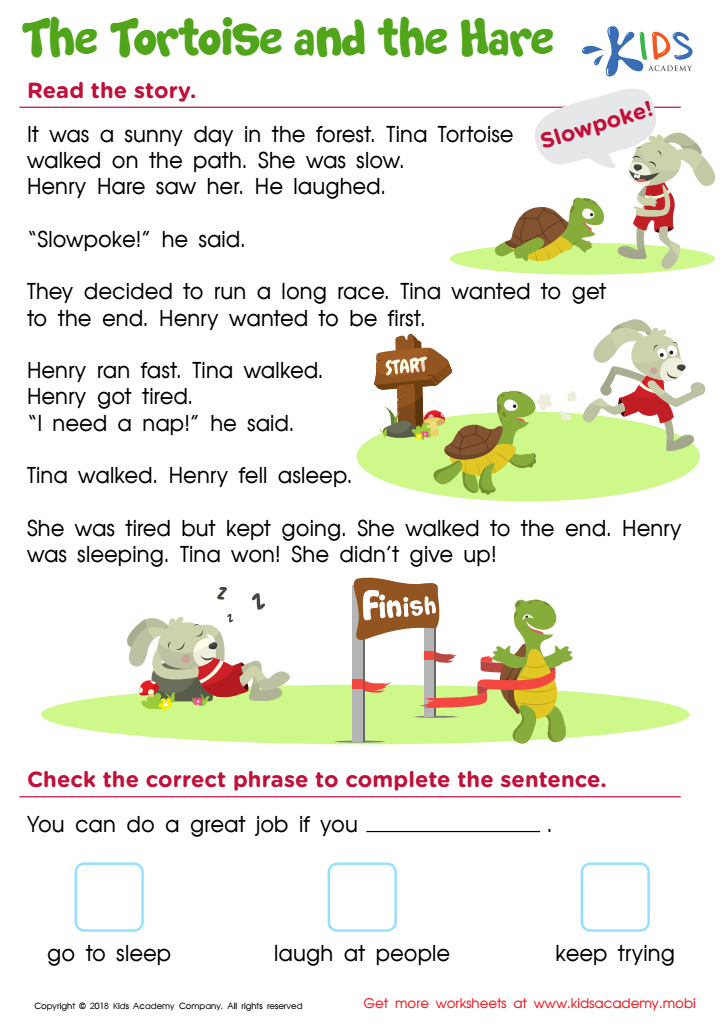
The Tortoise and the Hare Worksheet

The Tortoise and the Hare Worksheet

Help your child uncover the hidden moral in a classic children's tale with this free downloadable worksheet. Joyful illustrations bring the story to life and help young readers visualize the events. With your help, they can answer the question and fill in the blank with the phrase that serves as the story's lesson. Check the box to complete the worksheet!
The Tortoise and the Hare Worksheet
Worksheet
The Boy Who Cried Wolf Part 1 Worksheet

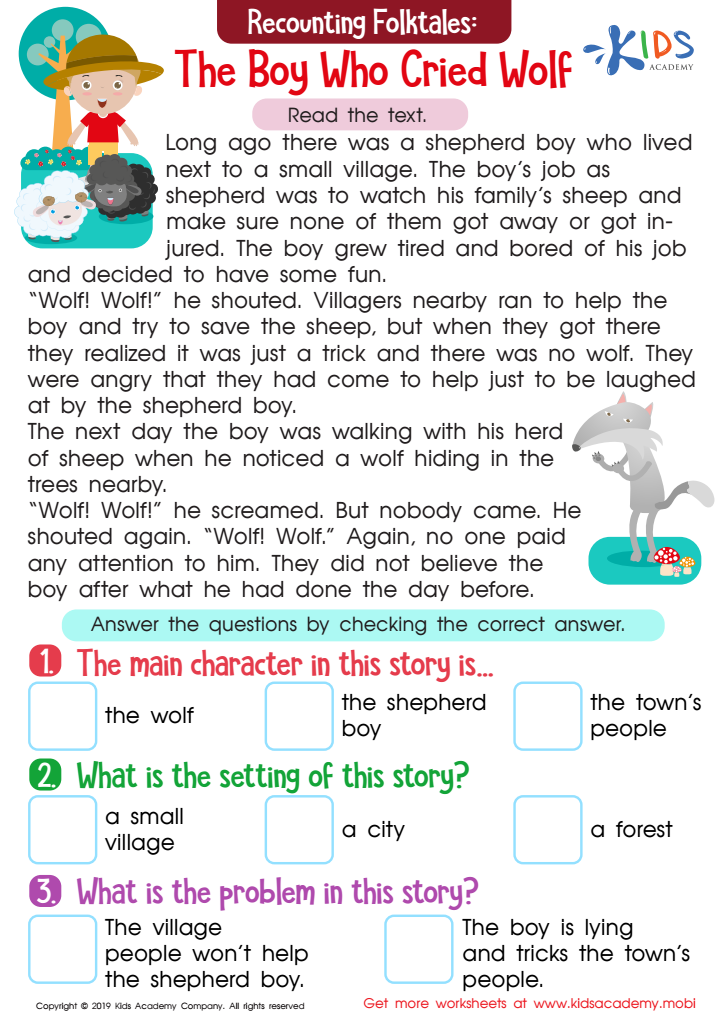
The Boy Who Cried Wolf Part 1 Worksheet

Storytime can be your kid's favorite part of the day. Ask them what their favorite stories are, then read the text in the printout. Read along with them, making sure they understand each word. At the end, go over the questions and have them check the correct answers.
The Boy Who Cried Wolf Part 1 Worksheet
Worksheet
Look at the Pictures: The Princess and the Pea Worksheet

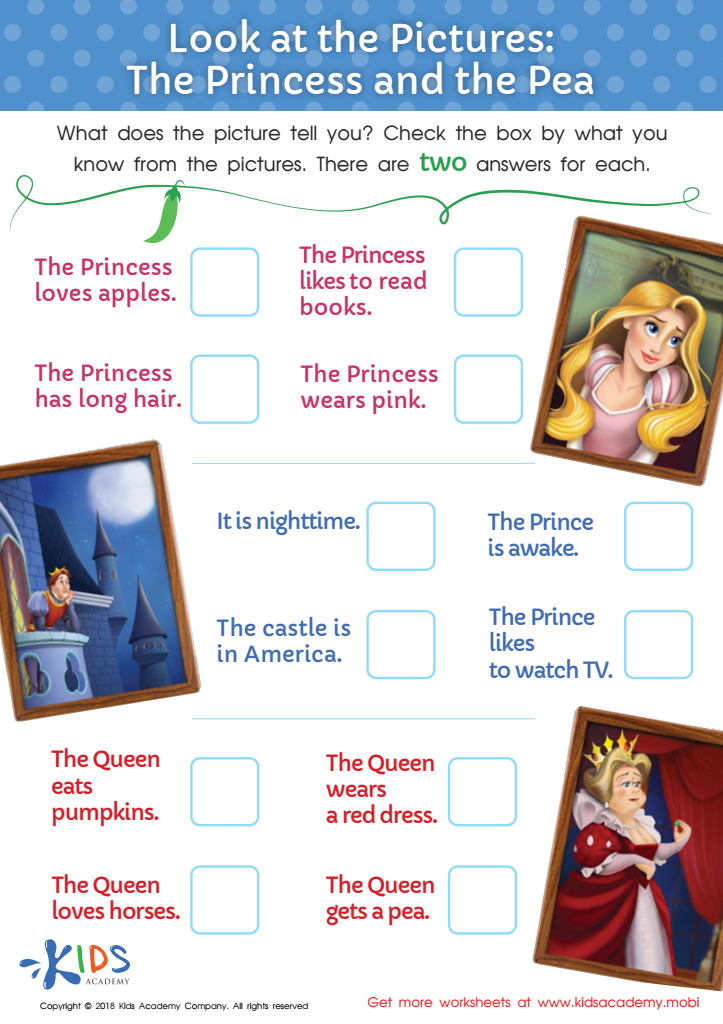
Look at the Pictures: The Princess and the Pea Worksheet

Early readers can benefit from picture clues to understand stories and text. Looking at images helps them learn the meaning of words and comprehend events. Use this worksheet on The Princess and the Pea to let students observe and learn from the pictures. It's a great way to help them comprehend early reading materials.
Look at the Pictures: The Princess and the Pea Worksheet
Worksheet
Think About It: Assessment Worksheet

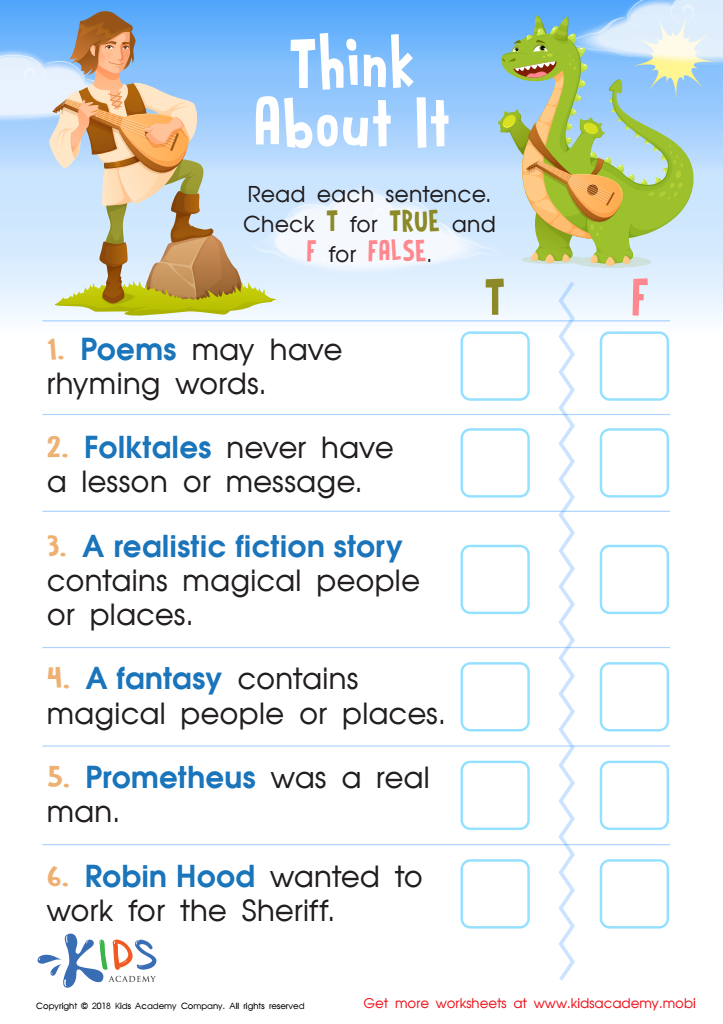
Think About It: Assessment Worksheet

Reading is a fun and important way to learn. Help your students become better readers with this simple yet colorful worksheet. Read each sentence aloud, then have them read it by themselves. Ask them to check T for True and F for False. It's a great way to practice their reading skills!
Think About It: Assessment Worksheet
Worksheet
Reading Comprehension Worksheet: Aladdin

Story Elements Printable

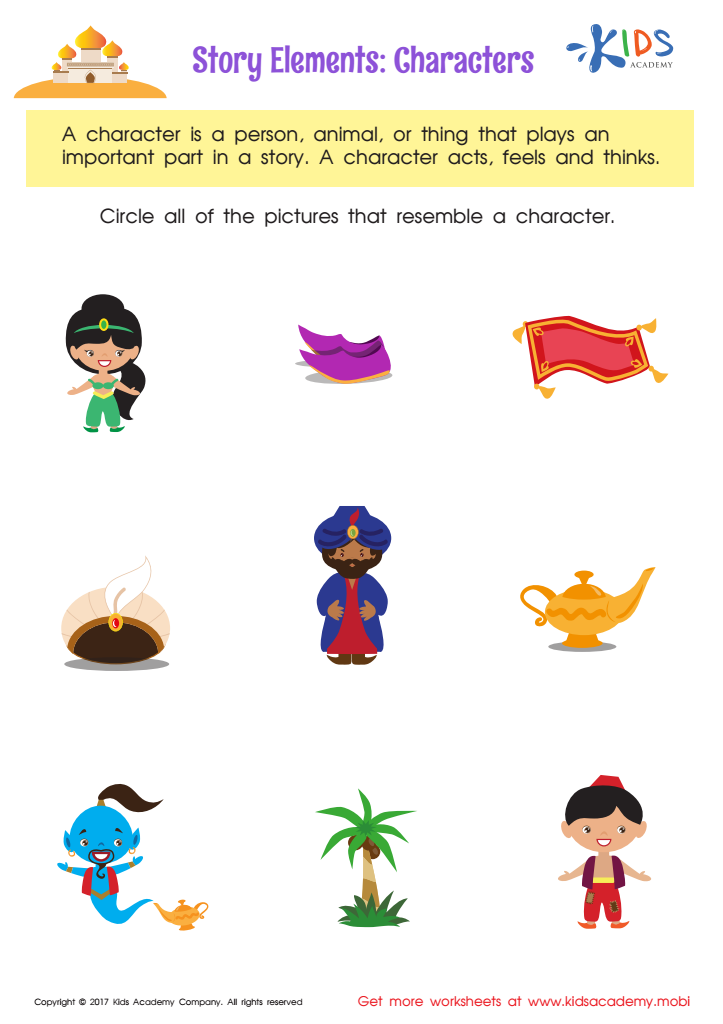
Read the text and review the characters, settings and plot in a guided discussion. Take your child on a journey to the Middle East and review the characters, settings and plot of their favorite childhood stories with this Aladdin-themed worksheet! It'll help them master early analysis skills and learn about characterization. Enjoy a fun, guided discussion with your child as you review important story elements.
Story Elements Printable
Worksheet
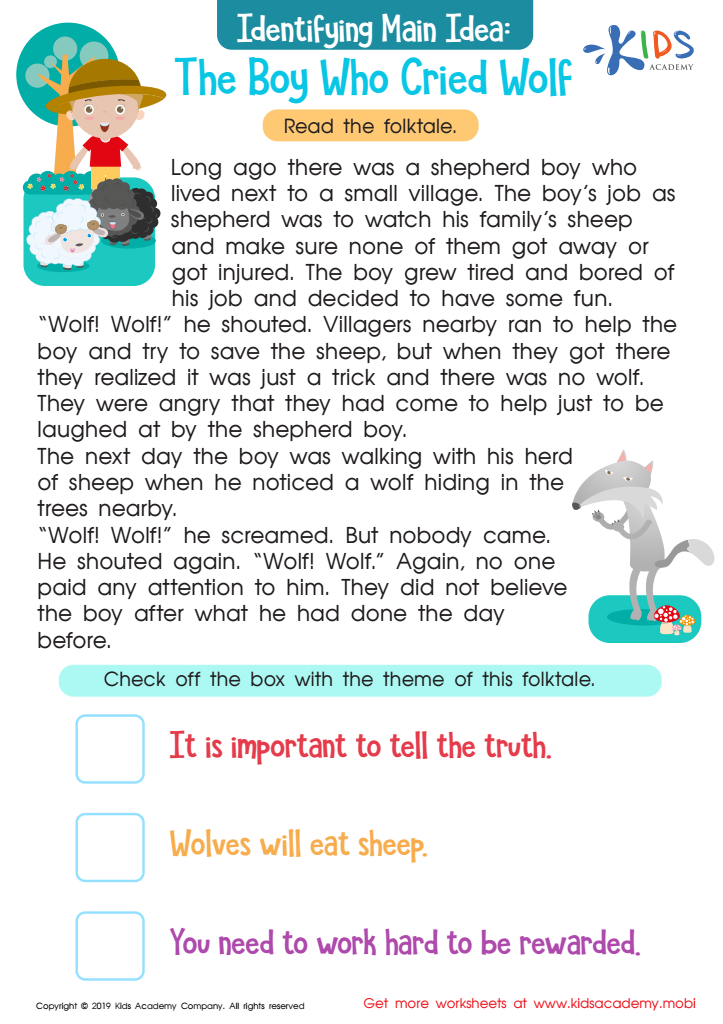
The Boy Who Cried Wolf Part 2 Worksheet


The Boy Who Cried Wolf Part 2 Worksheet

Kids love story time - no doubt they know their favorites! This worksheet tells a story with a theme or main idea. Read it carefully with your kids and ensure they understand every word. Then, help them answer the simple questions at the bottom of the page.
The Boy Who Cried Wolf Part 2 Worksheet

Worksheet


... 3 4

Parents and teachers should care about introducing normal reading fiction to children aged 7-9 because it plays a crucial role in their overall development. At this age, kids are developing their reading skills and transitioning from learning to read to reading to learn. Fiction books can captivate their imagination and fuel their love for reading, turning it into a lifelong habit. Engaging stories stimulate creativity and offer children a way to explore different worlds, cultures, and perspectives, which can enhance their empathy and understanding of others.

Reading fiction also supports cognitive development, improving language skills, vocabulary, and comprehension. It introduces children to new words and sentence structures in an engaging context, making learning effortless and enjoyable. Additionally, fiction encourages critical thinking and problem-solving as young readers follow plots, predict outcomes, and relate to characters’ experiences and decisions.

Emotionally, stories can help children process their feelings and navigate complex emotions by identifying with characters who face challenges and triumphs similar to their own. Importantly, establishing a regular reading habit in these formative years lays the groundwork for academic success and a lifelong pursuit of knowledge. In summary, normal reading fiction is a powerful tool for boosting intellectual, emotional, and social growth in children ages 7-9.