
Moral understanding Normal Reading Fiction Worksheets for Ages 7-9
5 filtered results
Difficulty Level
Grade
Age
-
From - To
Subject
Activity
Standards
Our "Moral Understanding Normal Reading Fiction Worksheets for Ages 7-9" are designed to nurture young minds by exploring important life values through captivating stories. Engaging and age-appropriate, these worksheets help children identify and reflect on moral themes, encouraging empathy, fairness, and kindness. Each exercise involves carefully selected excerpts from popular children's fiction, prompting kids to think critically and discuss various moral lessons. Ideal for classroom or home use, these resources not only enhance reading comprehension but also foster essential character development. Give your child the tools to grow both intellectually and ethically with these enriching worksheets.
Favorites
With answer key
Interactive
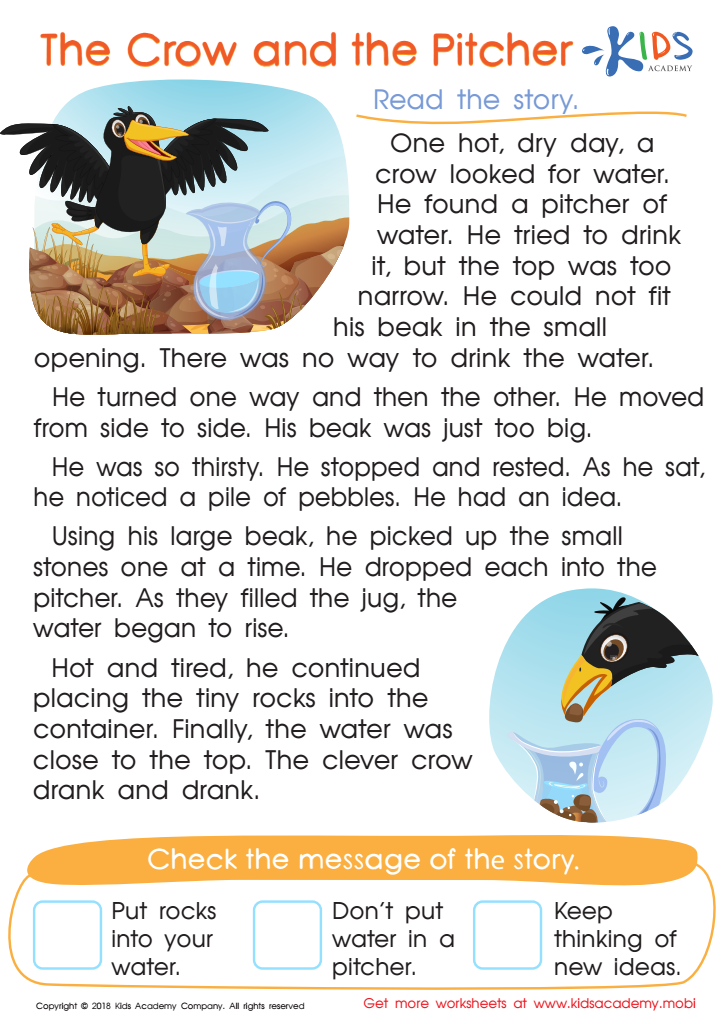
The Crow and the Pitcher Worksheet
Introduce your child to reading comprehension with this fascinating worksheet from Kids Academy! Featuring Aesop's fable of a thirsty crow, your child will enjoy reading and determining the central theme of the passage. This worksheet is a great way to give your child a purpose for reading while helping to build their comprehension skills.
 Assign to My Students
The Crow and the Pitcher Worksheet
Worksheet
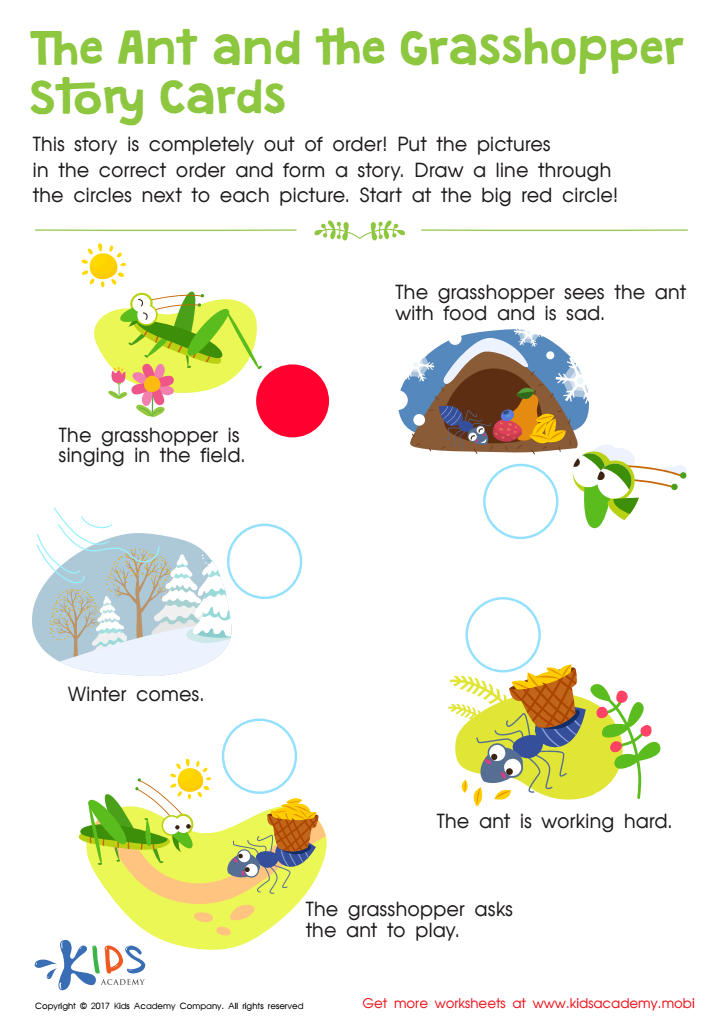
The Ant and The Grasshopper Worksheet
This worksheet uses the beloved childhood fable "The Ant and the Grasshopper" to teach your child about plot and order of events. Your child must read the events and put them in the right order. Once completed, review the story with your child to ensure its accuracy.
The Ant and The Grasshopper Worksheet
Worksheet
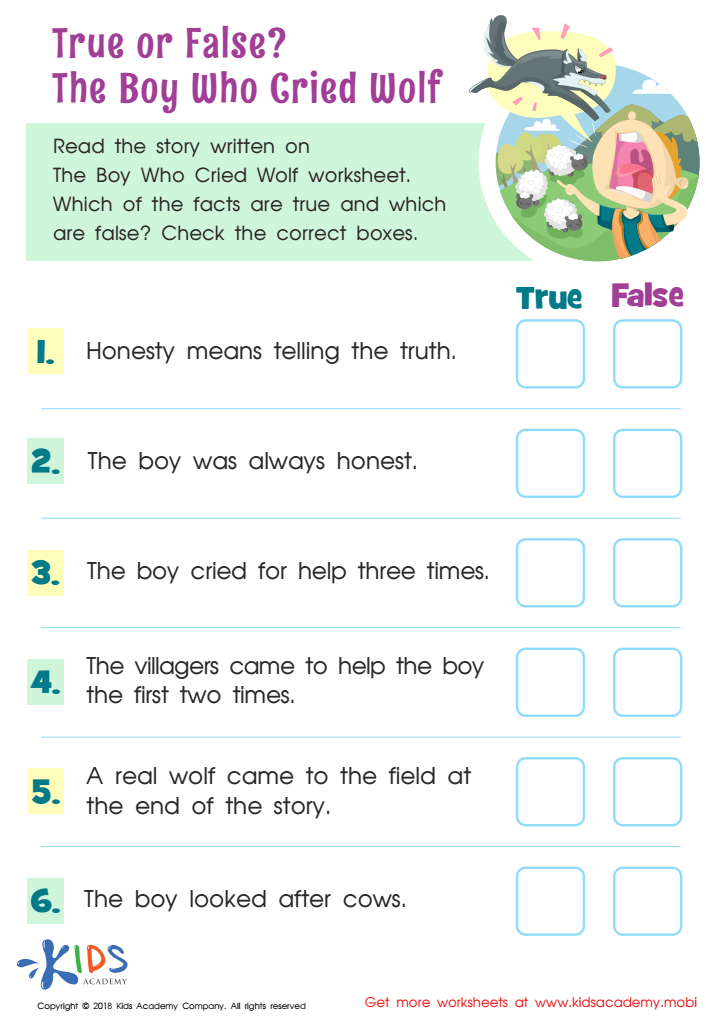
True or False? The Boy Who Cried Wolf Worksheet
Test students' understanding of The Boy Who Cried Wolf with this free downloadable worksheet. It contains true/false questions to assess comprehension of key events. Easy to complete, it checks students can recall facts from the story. Try it and see!
True or False? The Boy Who Cried Wolf Worksheet
Worksheet
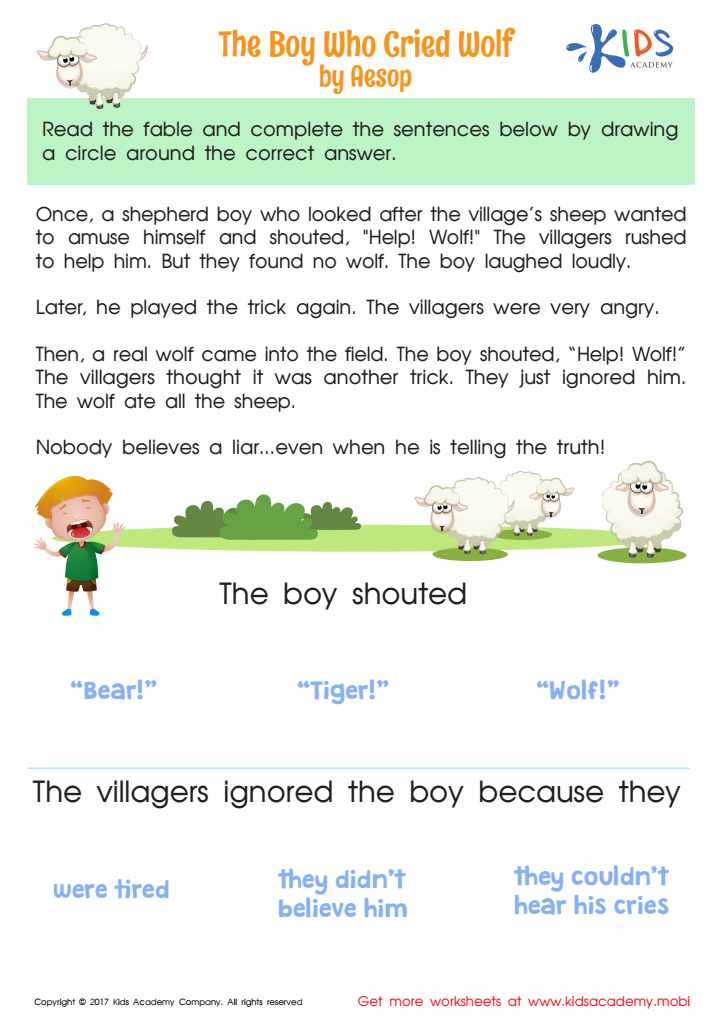
The Boy Who Cried Wolf Worksheet
Test your child's reading comprehension with The Boy Who Cried Wolf worksheet. Read the fable, then answer the questions. Use the text to help your child check their answers are correct. Boost reading skills in a fun, interactive way!
The Boy Who Cried Wolf Worksheet
Worksheet
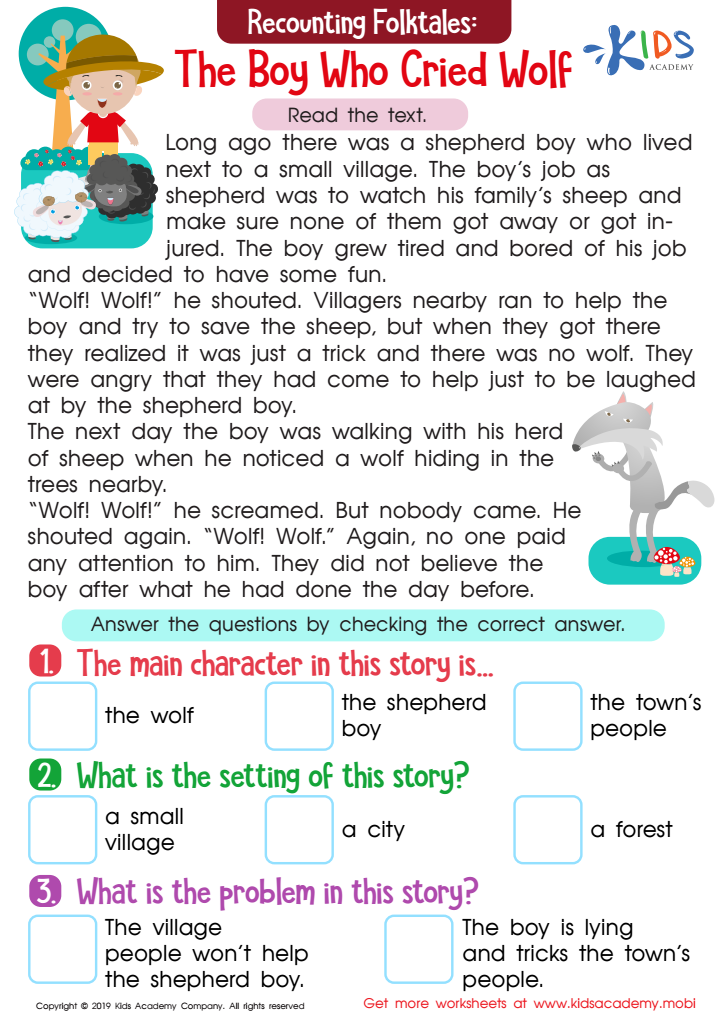
The Boy Who Cried Wolf Part 1 Worksheet
Storytime can be your kid's favorite part of the day. Ask them what their favorite stories are, then read the text in the printout. Read along with them, making sure they understand each word. At the end, go over the questions and have them check the correct answers.
The Boy Who Cried Wolf Part 1 Worksheet
Worksheet
Join Kids Academy for Free
Who is primarily going to use this learning content?








Moral understanding and reading fiction are essential aspects of a child's development, particularly between the ages of 7 and 9. Firstly, developing moral understanding helps children distinguish right from wrong and understand the consequences of their actions. This period is crucial as children's values and ethics begin to take shape, influenced significantly by their immediate environment, including family and teachers. It fosters empathy, respect, and responsibility, foundational attributes for a well-adjusted individual and a harmonious society.
Reading fiction, on the other hand, plays a pivotal role in this developmental stage. Fiction opens a window to diverse perspectives and scenarios, allowing children to experience a vast array of situations vicariously. Through stories, children encounter various moral dilemmas and outcomes, which help them understand complex concepts in a relatable manner. They witness how characters navigate challenges, make decisions, and deal with the consequences, thereby internalizing these lessons.
Additionally, reading enhances cognitive skills such as comprehension, imagination, and critical thinking. It boosts language development and encourages a love for learning. By integrating moral lessons within engaging narratives, parents and teachers can simultaneously nurture a child's ethical foundation and cognitive prowess, creating a balanced approach to holistic development. This dual emphasis helps mold children into compassionate, reflective, and intelligent individuals.







