Learning about ecosystems Normal Science Worksheets for Ages 7-9
3 filtered results
-
From - To
Discover the fascinating world of ecosystems with our "Learning about Ecosystems" science worksheets designed for children ages 7-9! These educational resources from Kids Academy help young learners understand the intricate relationships between plants, animals, and their environments. Engaging activities, colorful illustrations, and easy-to-follow instructions make complex concepts accessible and fun. Perfect for classroom or at-home learning, these worksheets can enhance curiosity, critical thinking, and environmental awareness in your child. Equip your budding scientist with the knowledge and skills to explore and appreciate the natural world around them!
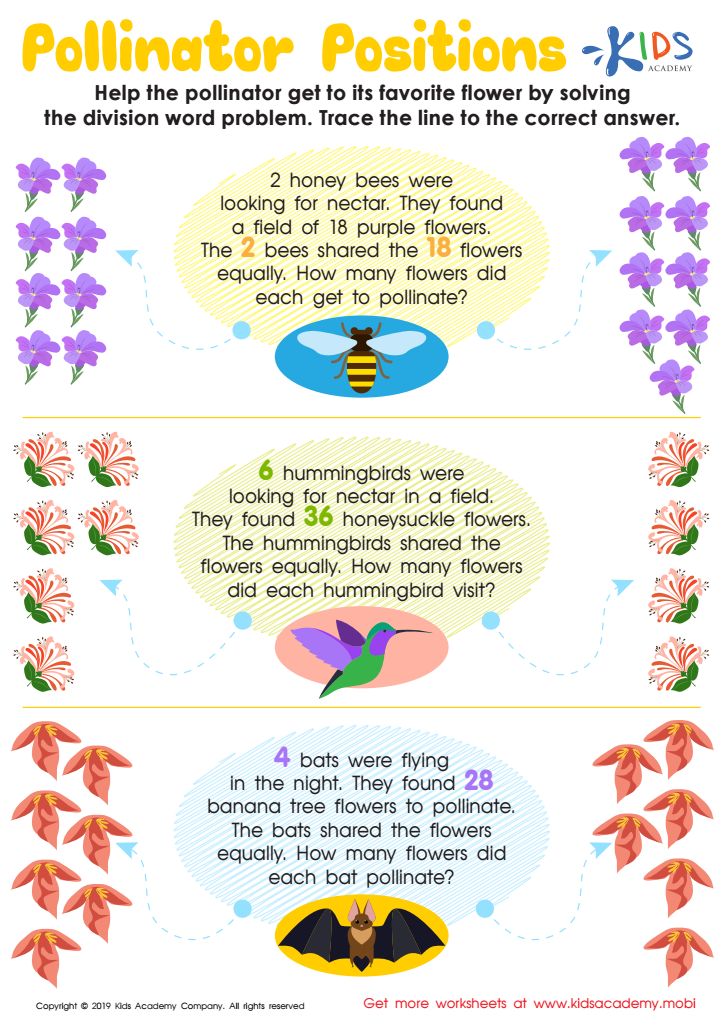
Pollinator Positions Worksheet
 Assign to My Students
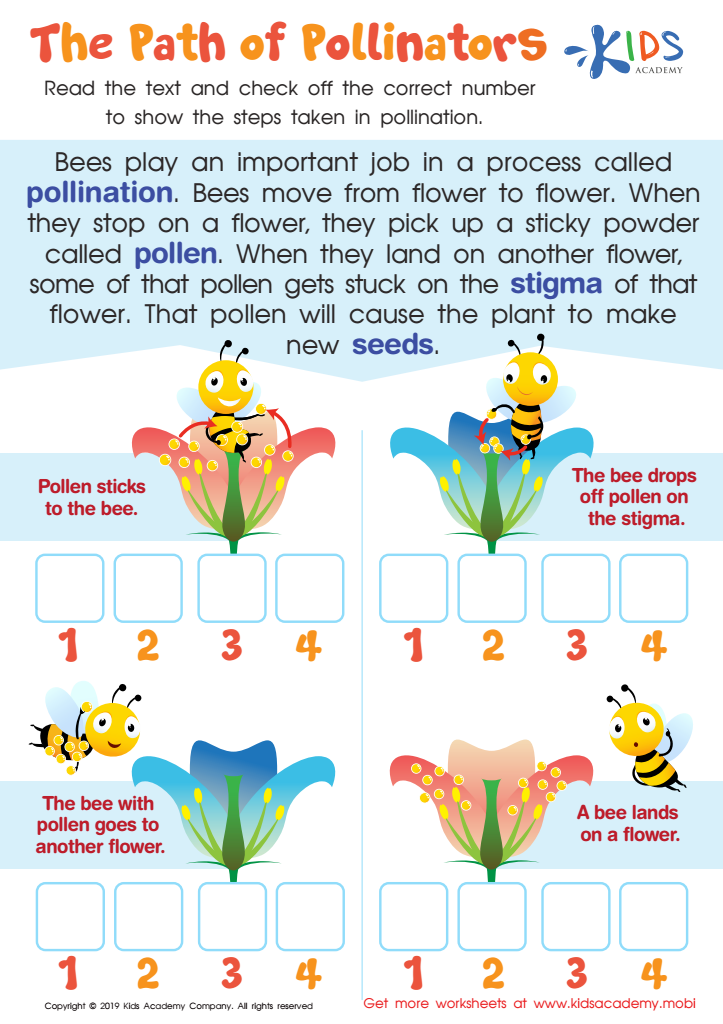
The Path of Pollinators Worksheet
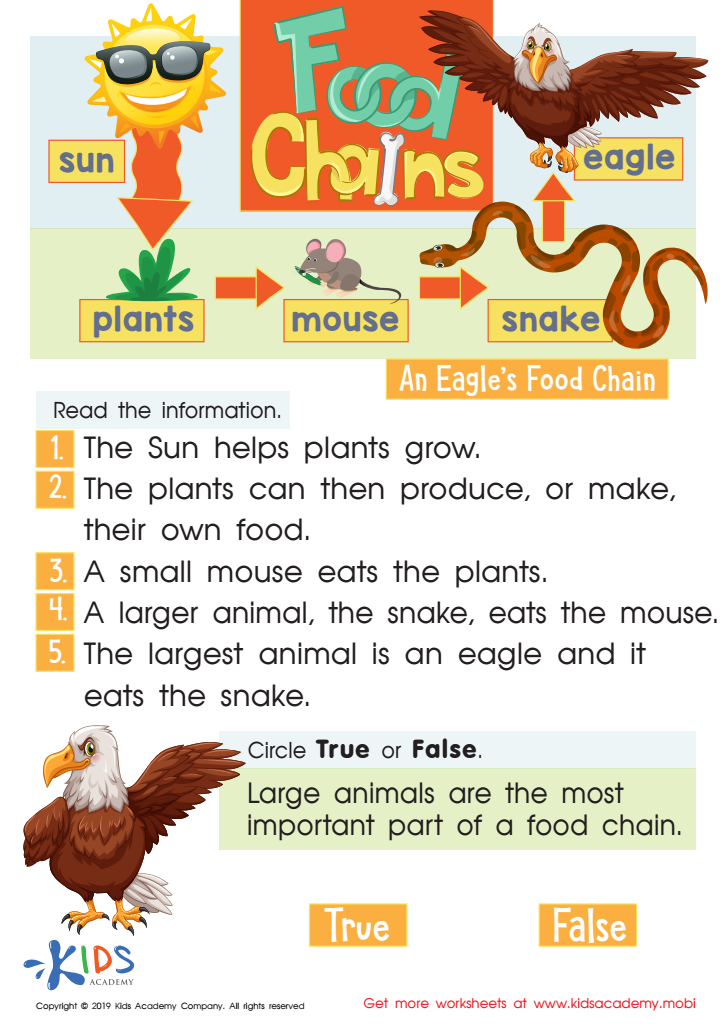
Food Chains Worksheet







Parents and teachers should deeply care about introducing children, particularly those between the ages of 7-9, to the concept of ecosystems in their science education. At this critical developmental stage, children's natural curiosity about the world provides a prime opportunity to instill a foundational understanding of how living and non-living things interact within their environments.
Learning about ecosystems enables young students to appreciate the intricate web of life, fostering an early sense of environmental stewardship and responsibility. Comprehending basic ecological principles fosters empathy and respect for all forms of life, thereby cultivating conscientious future citizens who are mindful of their impact on the planet. This is especially pertinent in the current era of environmental challenges, where informed future generations will need to navigate and address issues such as climate change, habitat destruction, and resource depletion.
Additionally, integrating ecosystems into early science education boosts critical thinking and observational skills. It introduces children to scientific methods and encourages them to ask questions, make predictions, and observe interactions within nature, leading to a broader understanding of science in general. Hands-on experiences, such as exploring local parks or creating classroom terrariums, enhance engagement and retention of knowledge.
By prioritizing ecosystem education, parents and teachers nurture a lifelong interest in science and a commitment to preserving our natural world.







