Sentence comprehension Normal Writing Worksheets for Ages 7-9
6 filtered results
-
From - To
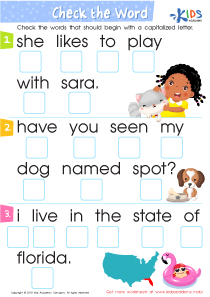
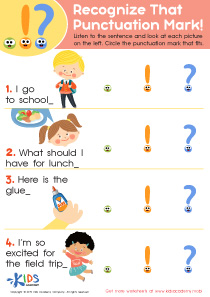
Enhance your child's writing skills with our "Sentence Comprehension Normal Writing Worksheets" designed specifically for ages 7-9. These engaging and interactive worksheets foster comprehension through various sentence structures, encouraging children to decode, analyze, and create sentences effectively. Each activity focuses on essential skills such as understanding meaning, context clues, and vocabulary expansion. Ideal for both classroom use and home practice, these worksheets make learning enjoyable and effective. Perfect for enhancing your child's language arts curriculum, these resources will build confidence in their writing abilities while developing a strong foundation in sentence comprehension. Start your child’s writing journey today!
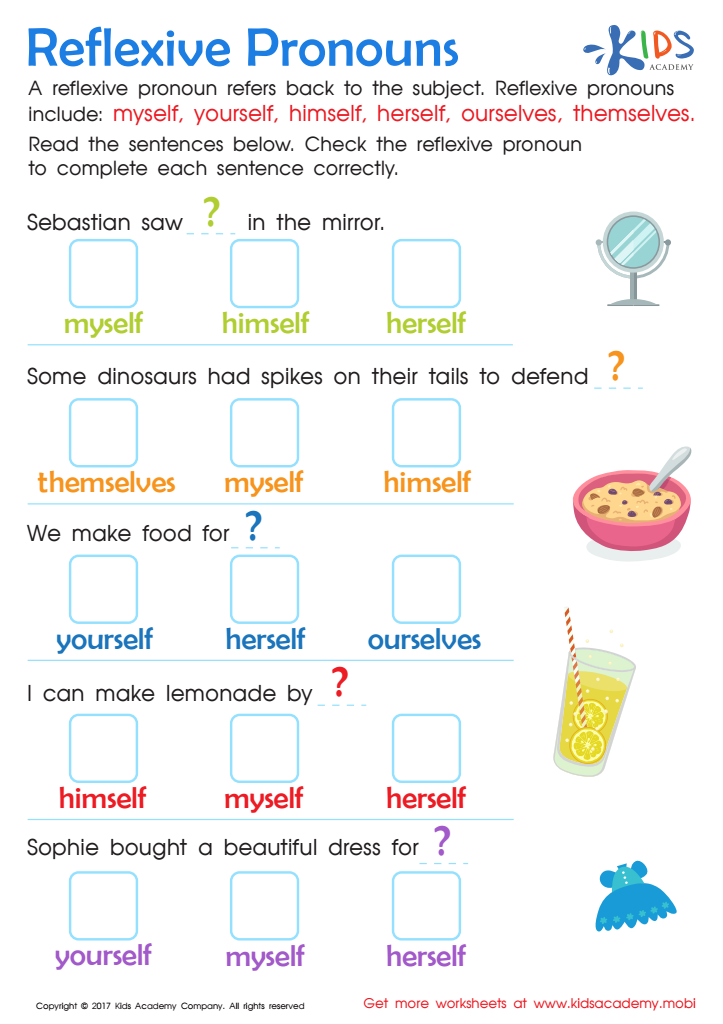
Reflexive Pronouns Worksheet
 Assign to My Students
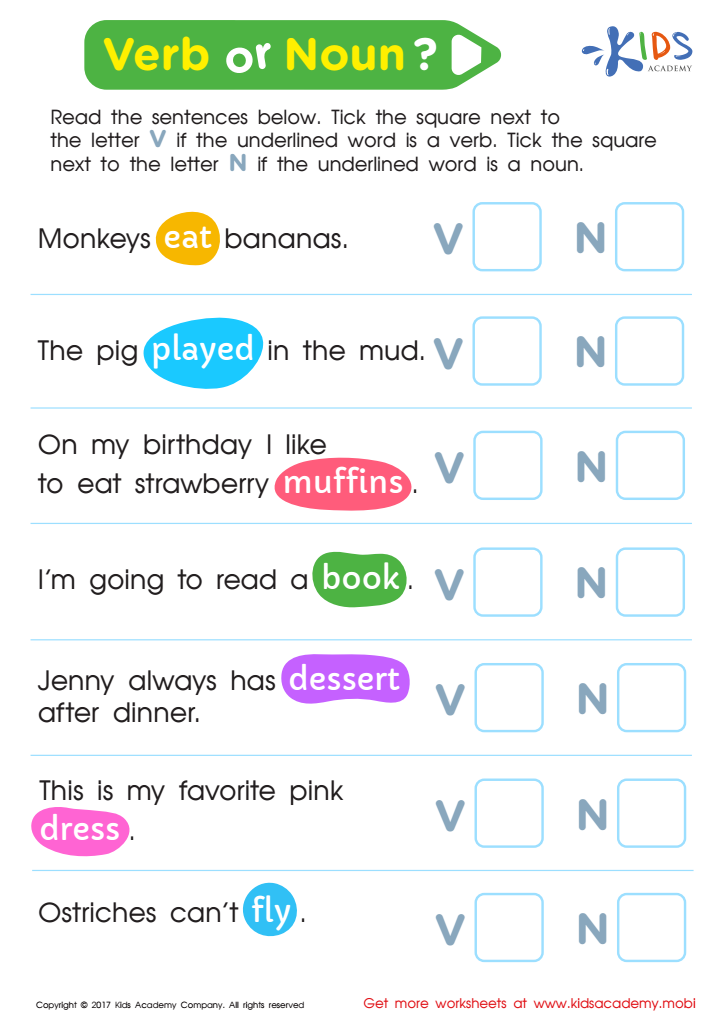
Verb or Noun Worksheet
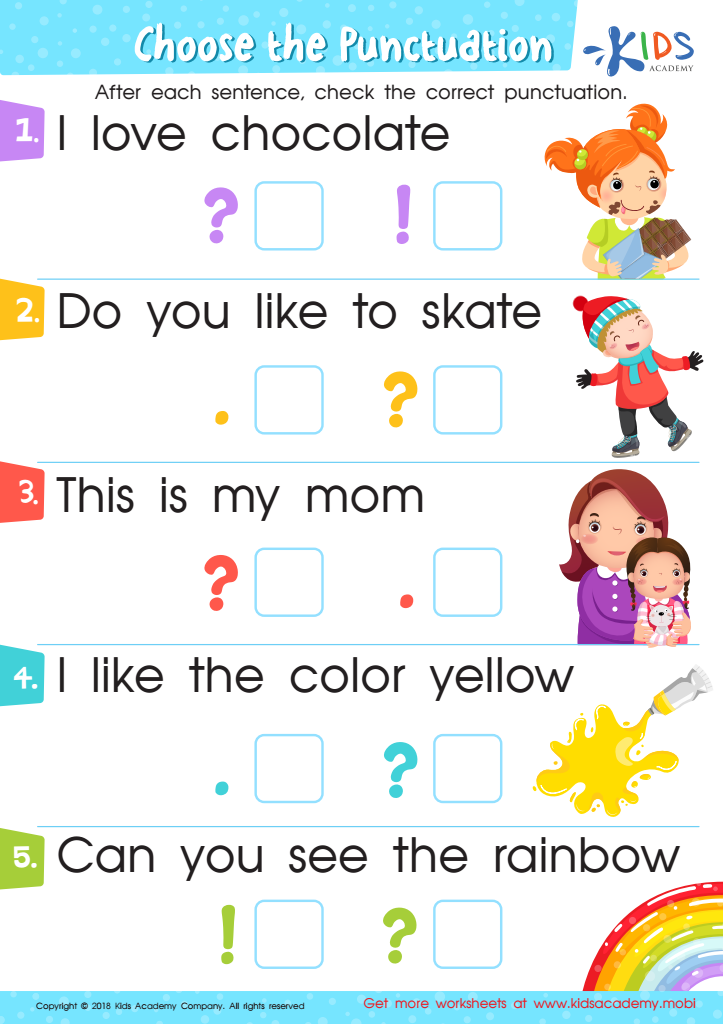
Choose the Punctuation: Assessment Worksheet
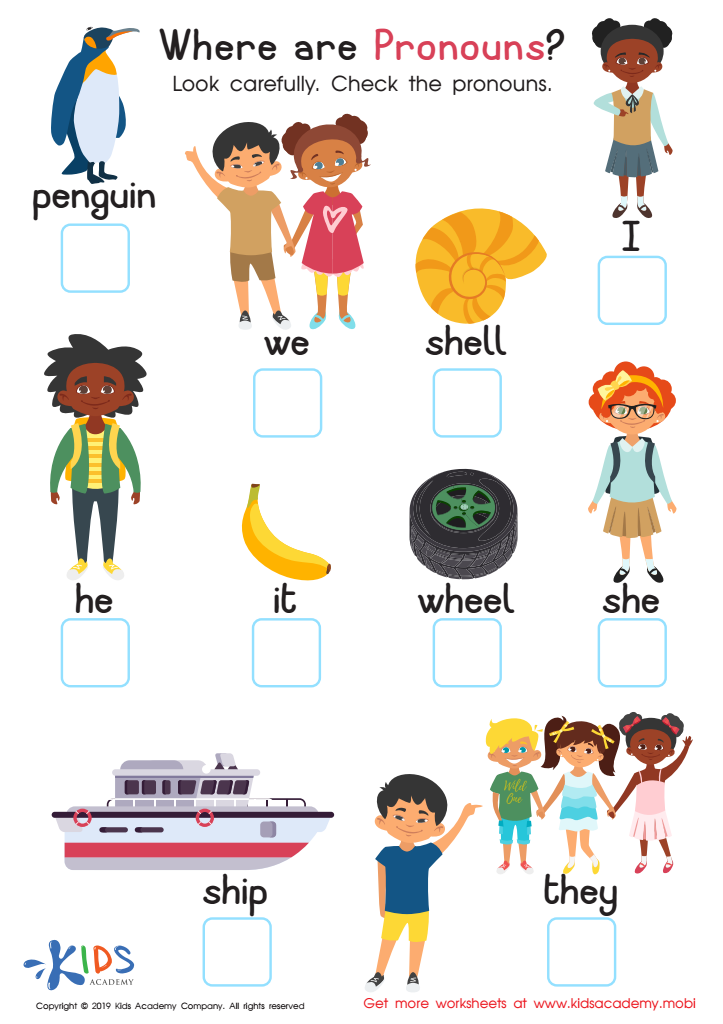
Where Are Pronouns? Worksheet
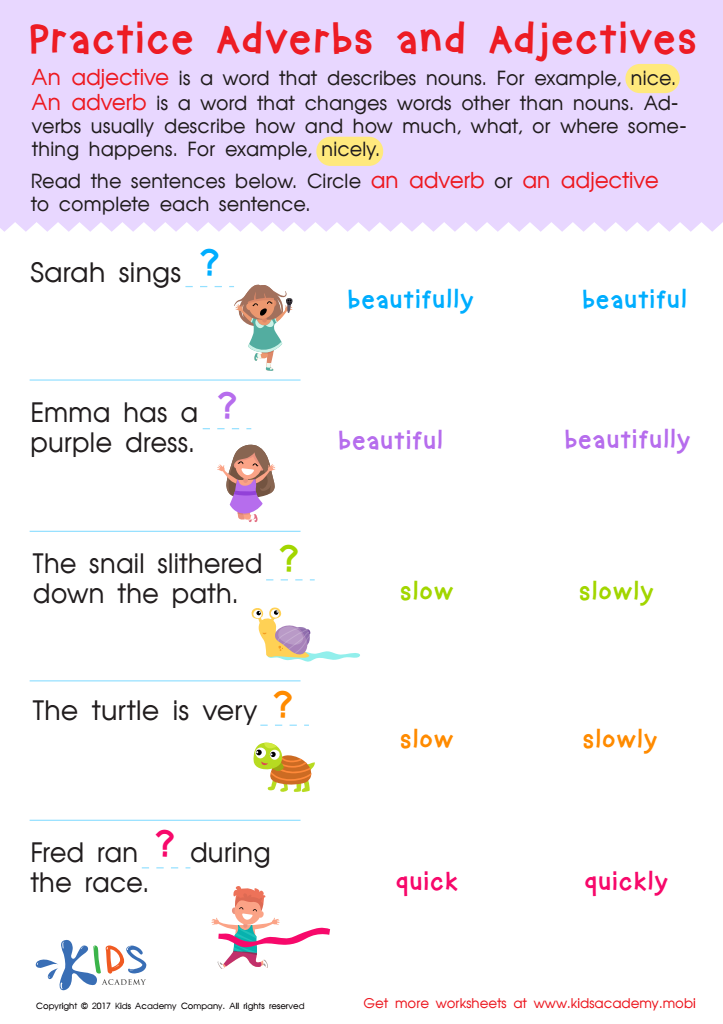
Adverbs and Adjectives Worksheet
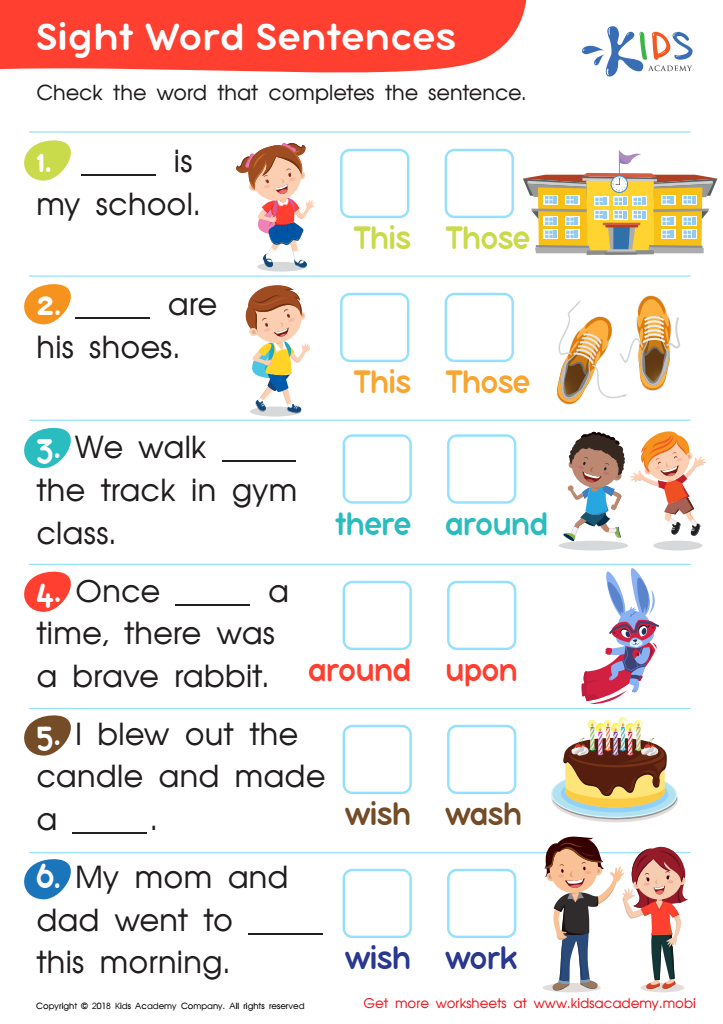
Sight Word Sentences Worksheet



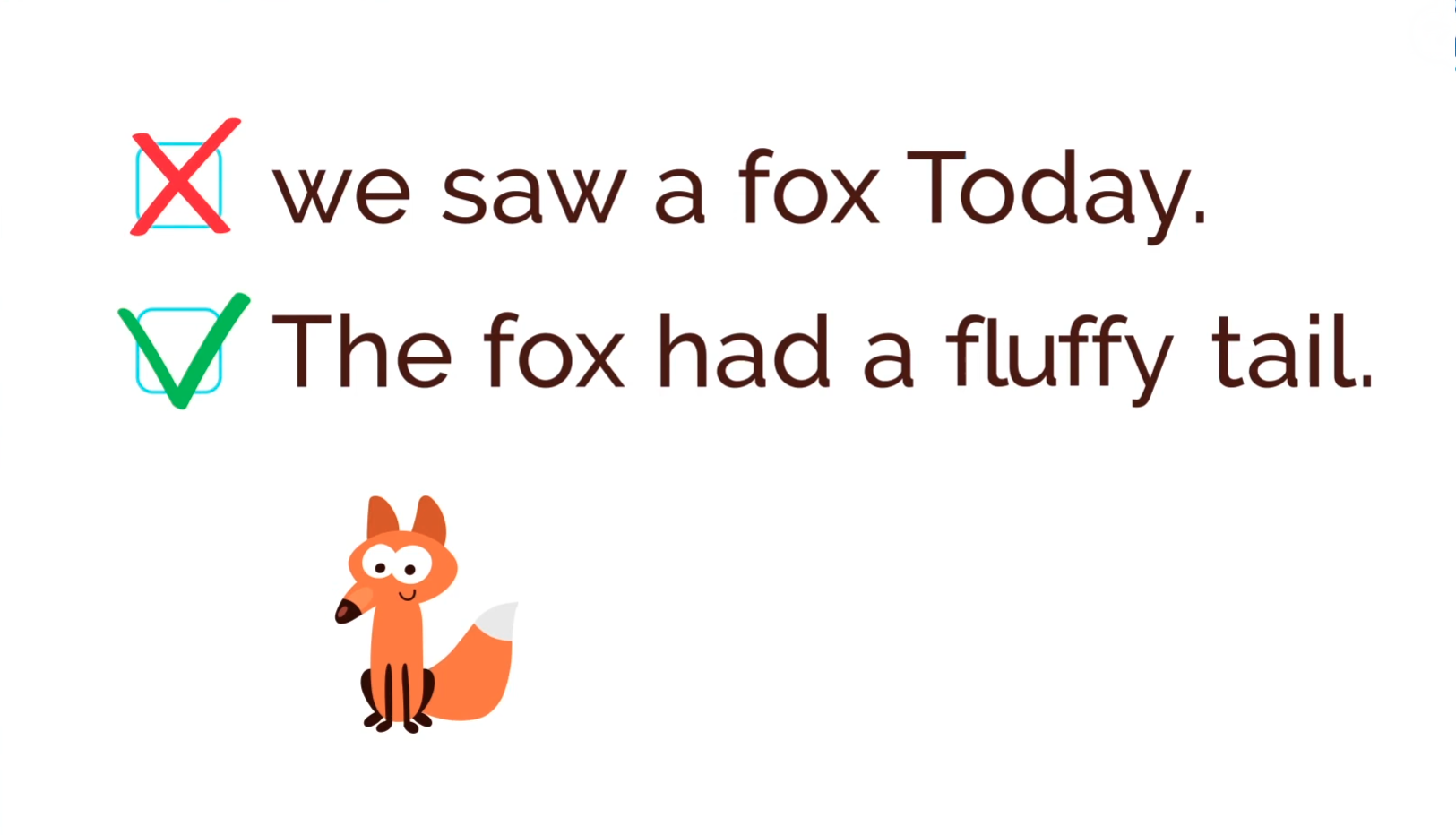


Sentence comprehension is crucial for children aged 7-9 as it serves as a foundation for their overall literacy skills. At this age, children move from basic decoding of words to understanding the meaning behind sentences, making it vital for their academic growth. When parents or teachers prioritize sentence comprehension, they equip children with the ability to grasp the context and nuances of language, which is essential for reading more complex texts.
Understanding sentence structure aids students in following instructions, participating actively in conversations, and expressing their thoughts clearly in writing. Improved comprehension skills also boost confidence, making children more willing to engage with reading and writing tasks. Additionally, during this developmental stage, children are increasingly exposed to informational content across subjects such as science and social studies, where comprehension is key to understanding concepts.
Moreover, strong sentence comprehension skills are linked to better performance on standardized tests, affecting a child’s academic future. By fostering an engaging learning environment that emphasizes comprehension, parents and teachers play a crucial role in building children's cognitive abilities and preparing them for higher-level literacy tasks in subsequent years. Therefore, nurturing these skills is essential for children’s success in both education and lifelong communication.