Reading comprehension Normal Consonant Digraphs Worksheets for 7-Year-Olds
6 filtered results
-
From - To
Boost your 7-year-old's reading skills with our engaging Reading Comprehension Normal Consonant Digraphs Worksheets! Specially crafted for young learners, these worksheets emphasize consonant digraphs like "ch," "sh," and "th" to strengthen their understanding of sound combinations. Each activity enhances reading comprehension, ensuring kids not only recognize these digraphs but also understand the context in which they appear. Perfect for interactive learning, these worksheets make mastering phonics fun and effective. Fuel your child's literacy journey and watch their confidence soar with every completed sheet! Download now and transform reading practice into an enjoyable adventure.
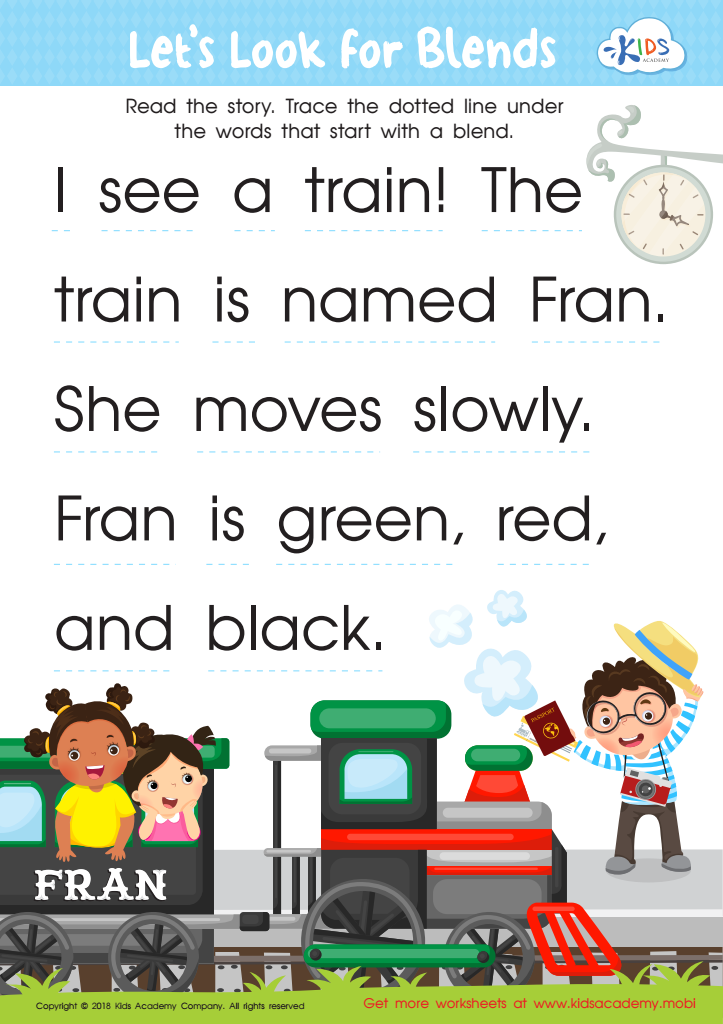
Let's Look for Blends Worksheet
 Assign to My Students
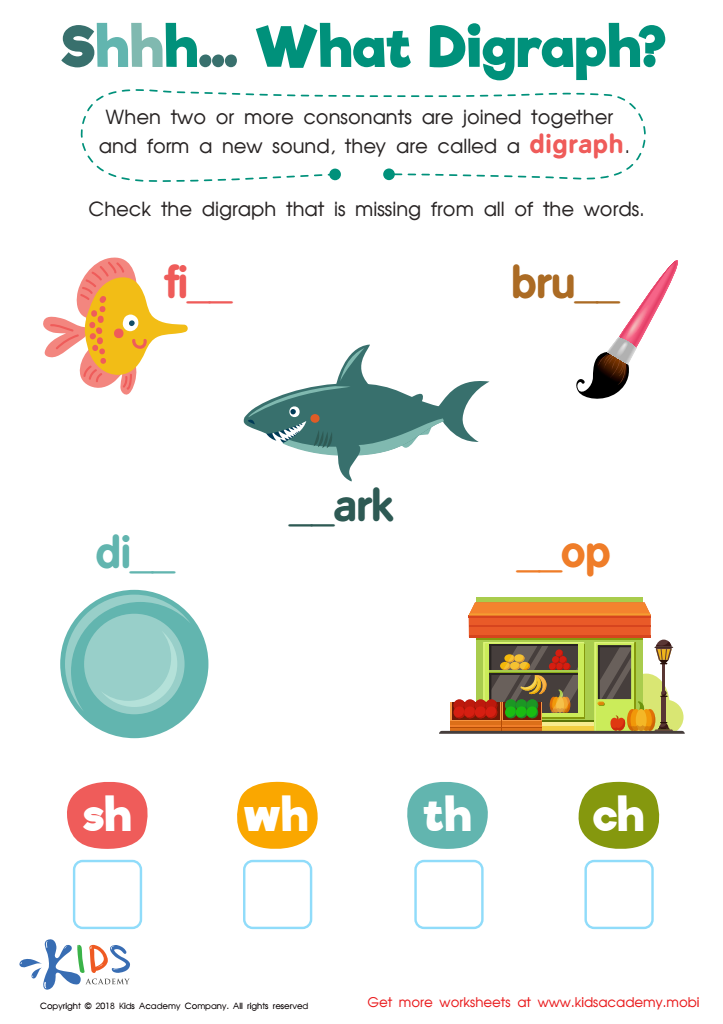
Shhh... What Digraph? Worksheet
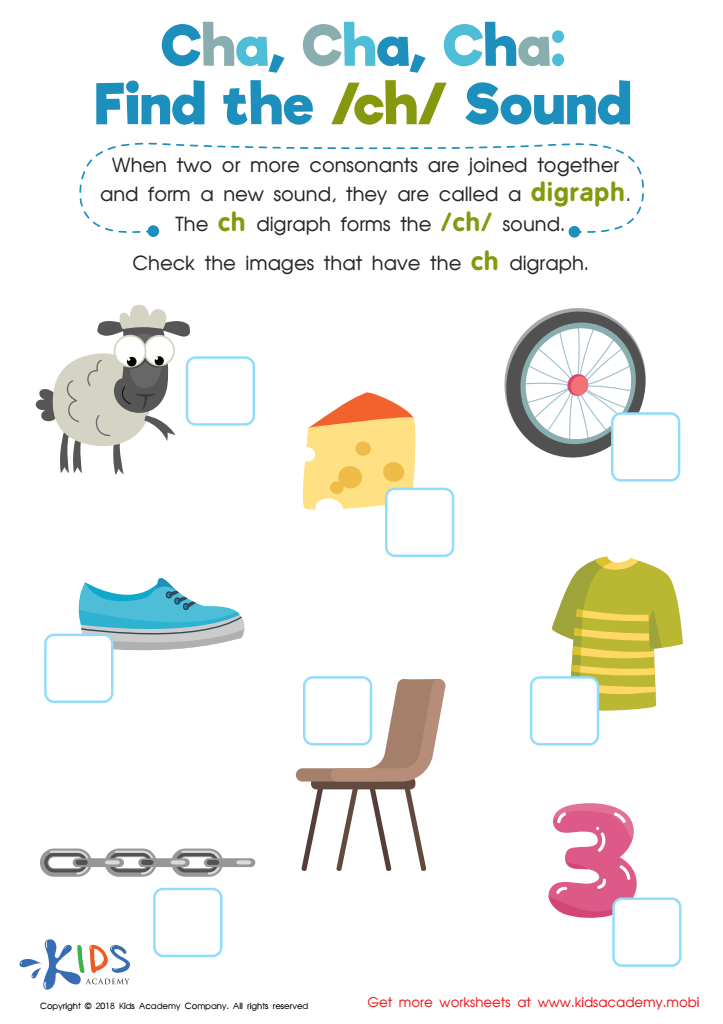
Cha, Cha, Cha: Find the /Ch/ Sound Worksheet
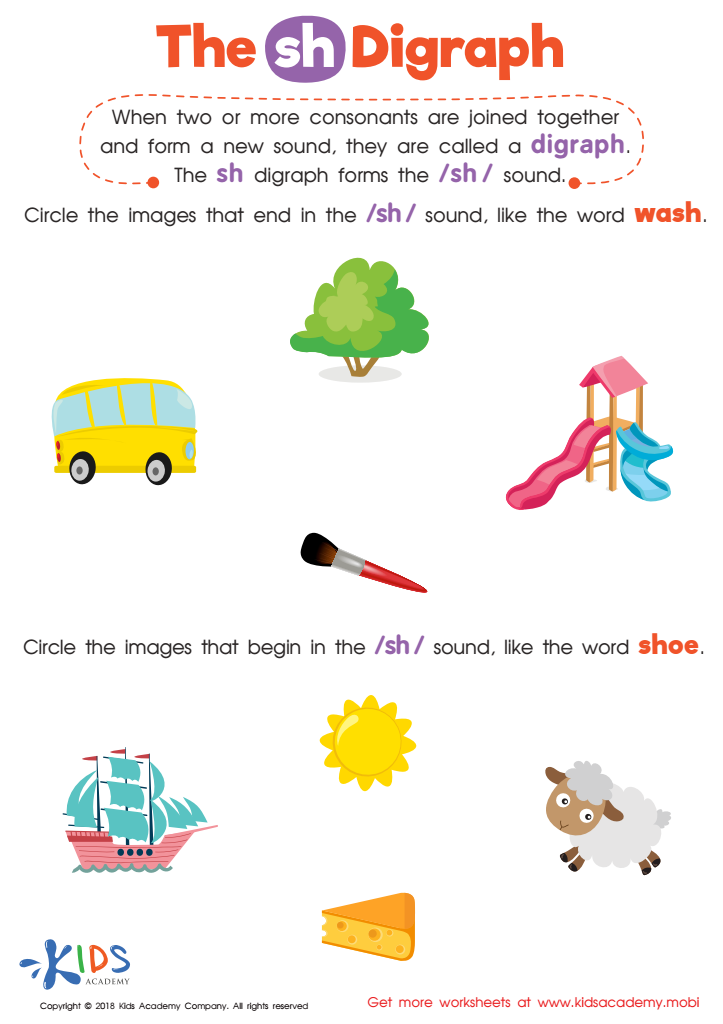
The SH Digraph Worksheet
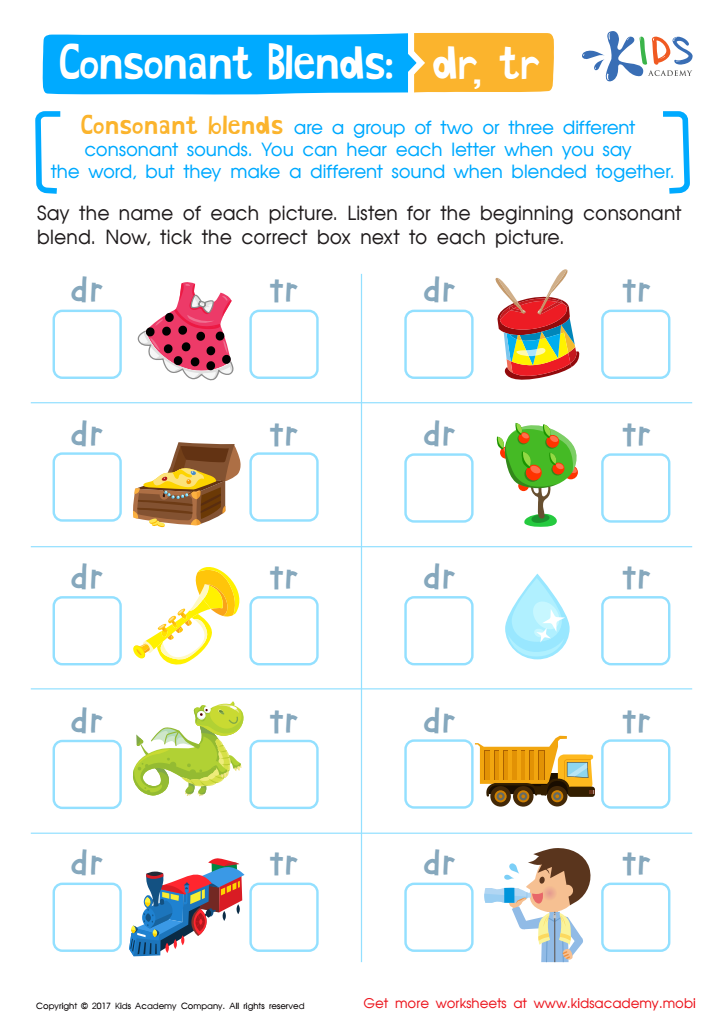
Consonant Blends: "Dr" and "Tr" Printable
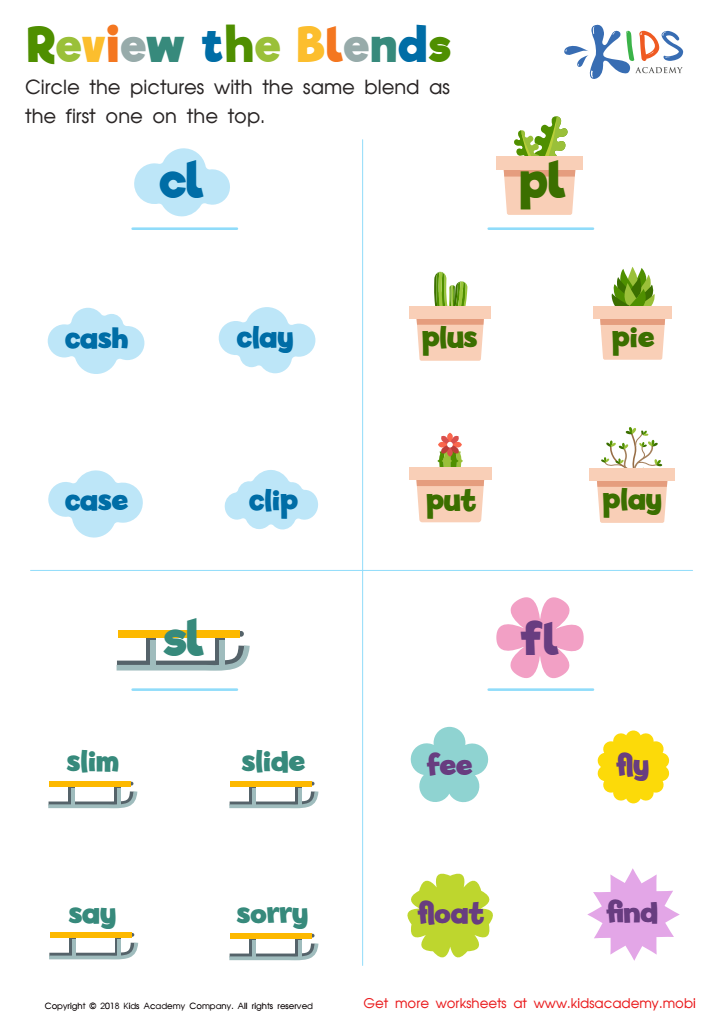
Review the Blends Worksheet


Reading comprehension is a fundamental skill that greatly impacts a child's academic success and lifelong learning. For 7-year-olds, a critical aspect of developing strong reading comprehension involves mastering normal consonant digraphs, which are pairs of consonants that produce a single sound (e.g., "sh", "ch", "th", "wh"). This phonetic skill is crucial for several reasons:
Firstly, understanding consonant digraphs helps children decode unfamiliar words more efficiently. When they recognize that "sh" in "ship" or "fish" consistently represents a specific sound, it reduces confusion and enhances their ability to read fluently.
Secondly, proficiency with digraphs contributes to better spelling and writing. As children learn to sound out words, they also learn correct spellings, which supports effective written communication.
Thirdly, mastery of consonant digraphs boosts confidence in reading. When children encounter less difficulty recognizing words, their enjoyment of reading increases, fostering a positive attitude towards learning.
Lastly, strong reading comprehension skills are foundational for all academic subjects. Whether it’s understanding a math problem or following a science experiment's instructions, being able to comprehend text is essential for academic growth.
Therefore, parents and teachers should prioritize lessons around normal consonant digraphs as part of early literacy education, setting the stage for continued academic achievement and a lifelong love of reading.