Normal Color Words Worksheets for 7-Year-Olds
8 filtered results
-
From - To
Explore our engaging Normal Color Words Worksheets designed specifically for 7-year-olds! These worksheets are perfect for enhancing vocabulary and boosting reading skills, making learning fun and interactive. Tailored for young learners, each activity focuses on essential color words, promoting language development and comprehension. With a variety of exercises, including coloring, tracing, and matching, children will enjoy mastering the names of colors in a playful way. Ideal for both ESL learners and native speakers, our worksheets foster creativity while reinforcing important foundational language skills. Download our worksheets today and watch your child's confidence in language flourish!
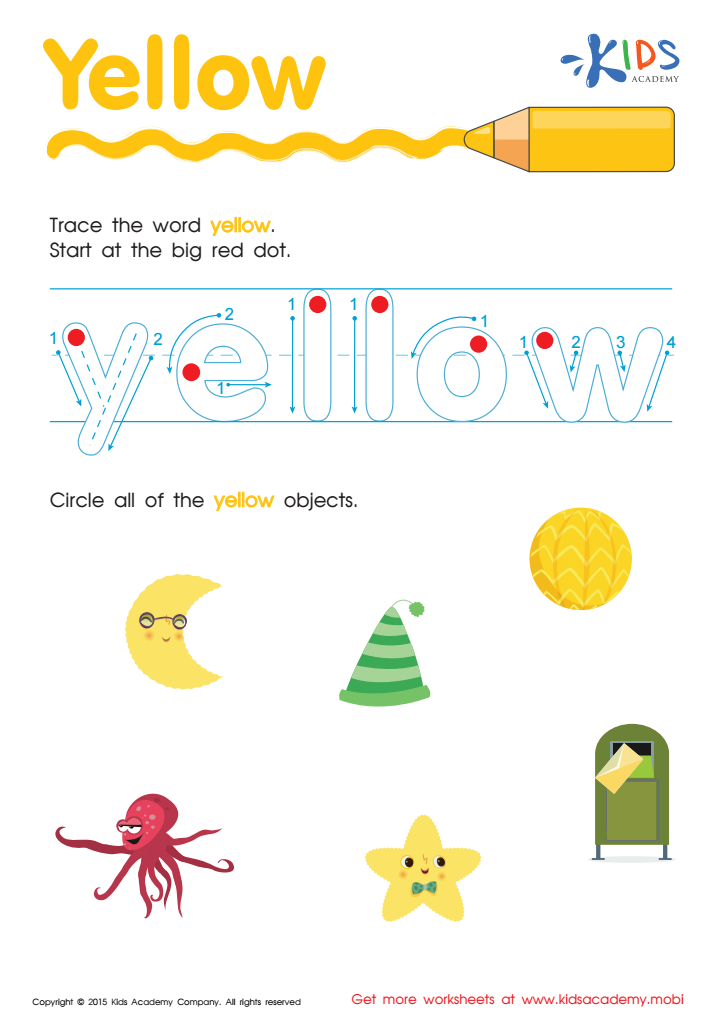
Yellow Tracing Color Words Worksheet
 Assign to My Students
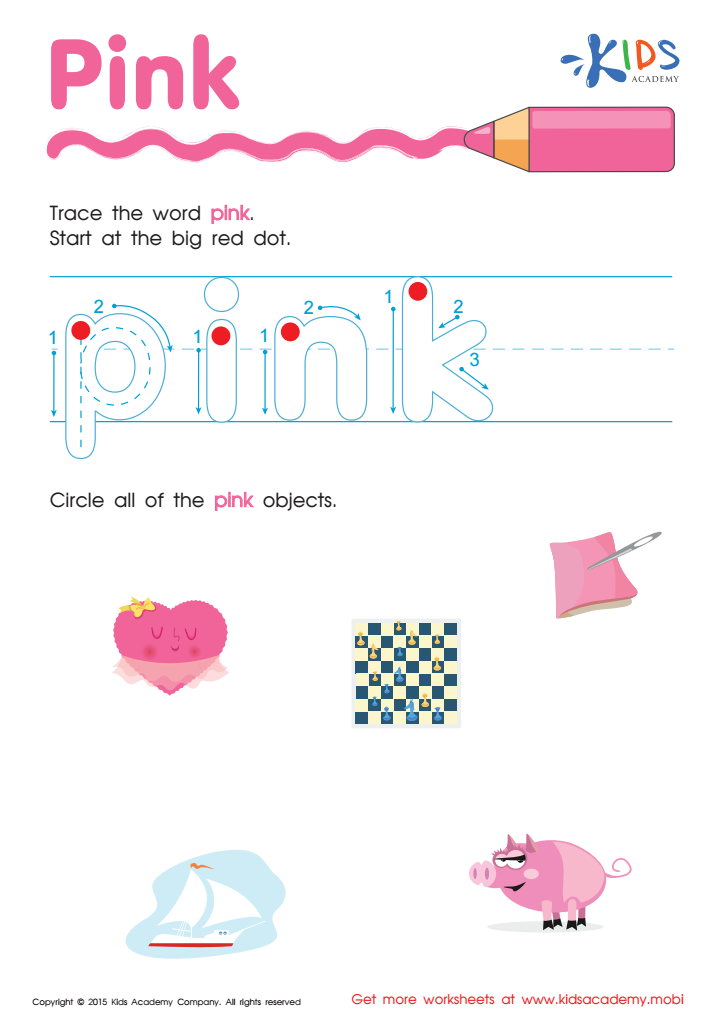
Pink Tracing Color Words Worksheet
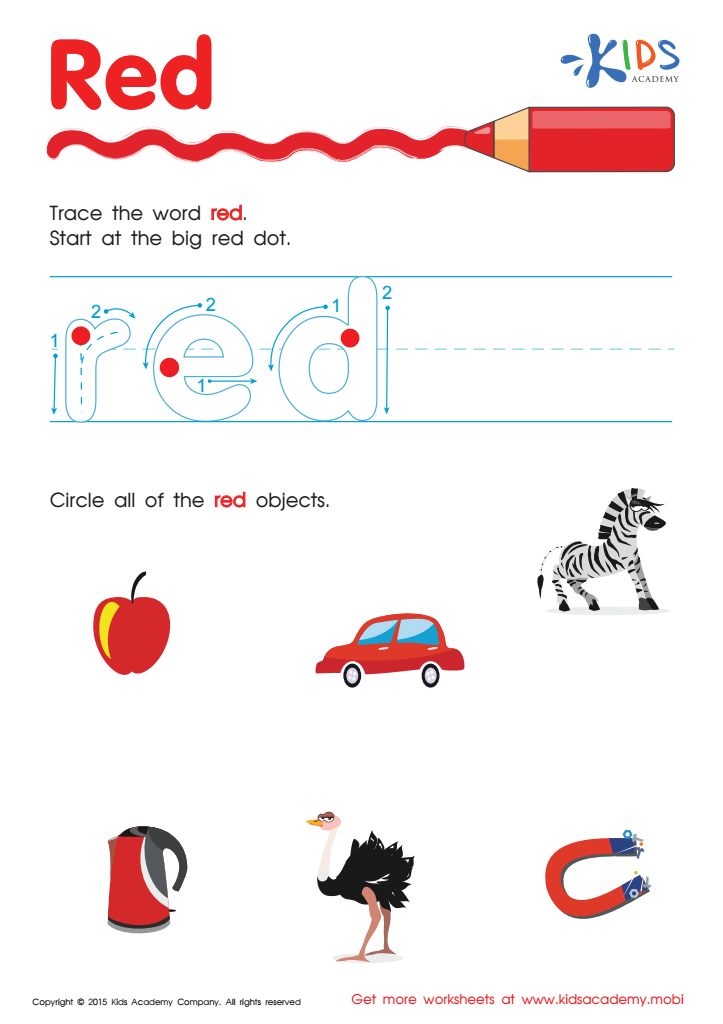
Red Tracing Color Words Printable
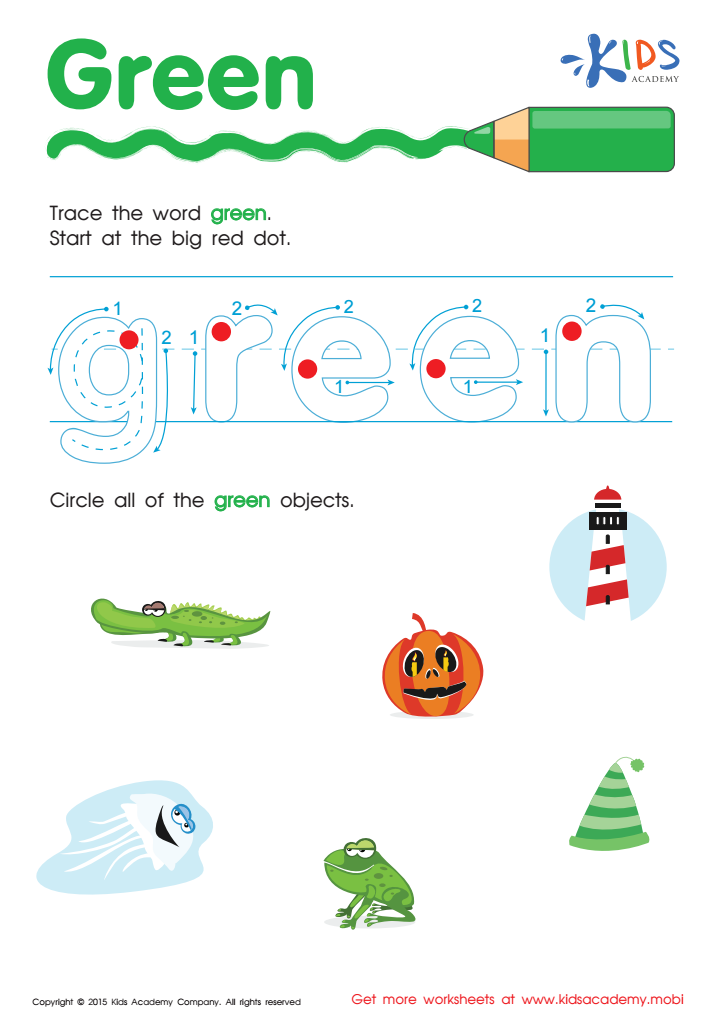
Green Tracing Color Words Worksheet
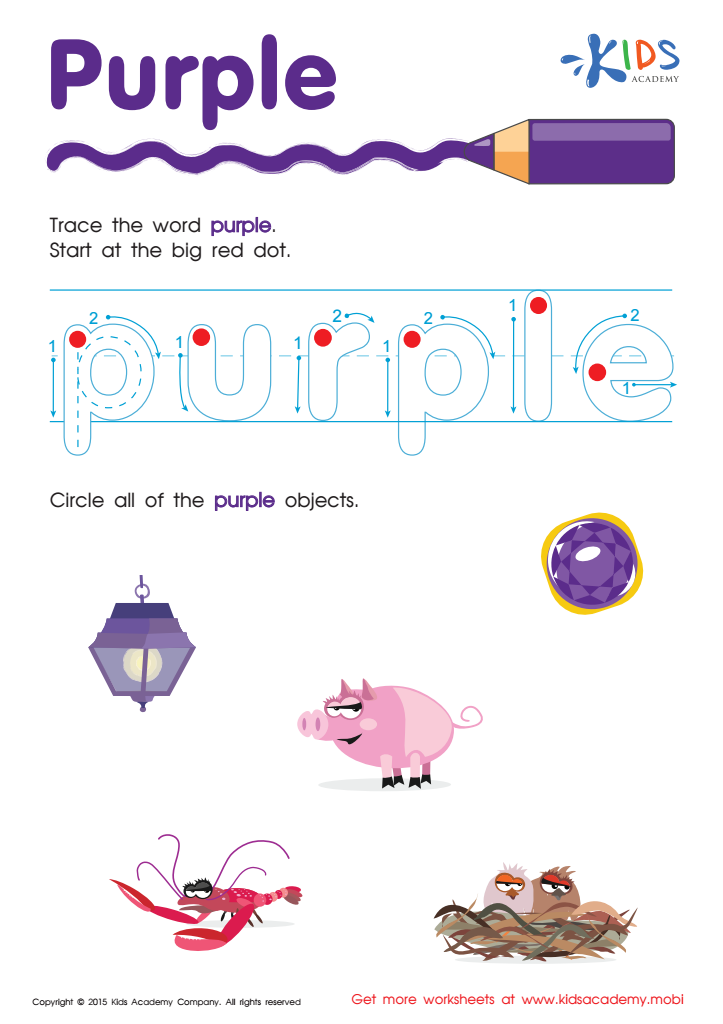
Purple Tracing Color Words Worksheet
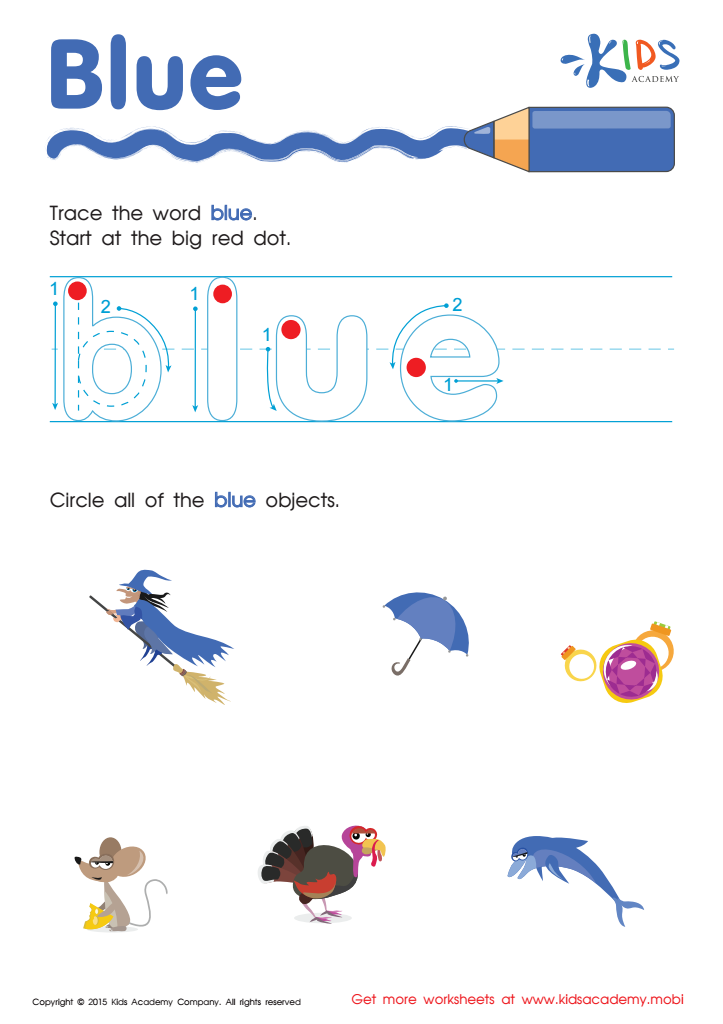
Blue Tracing Color Words Printable
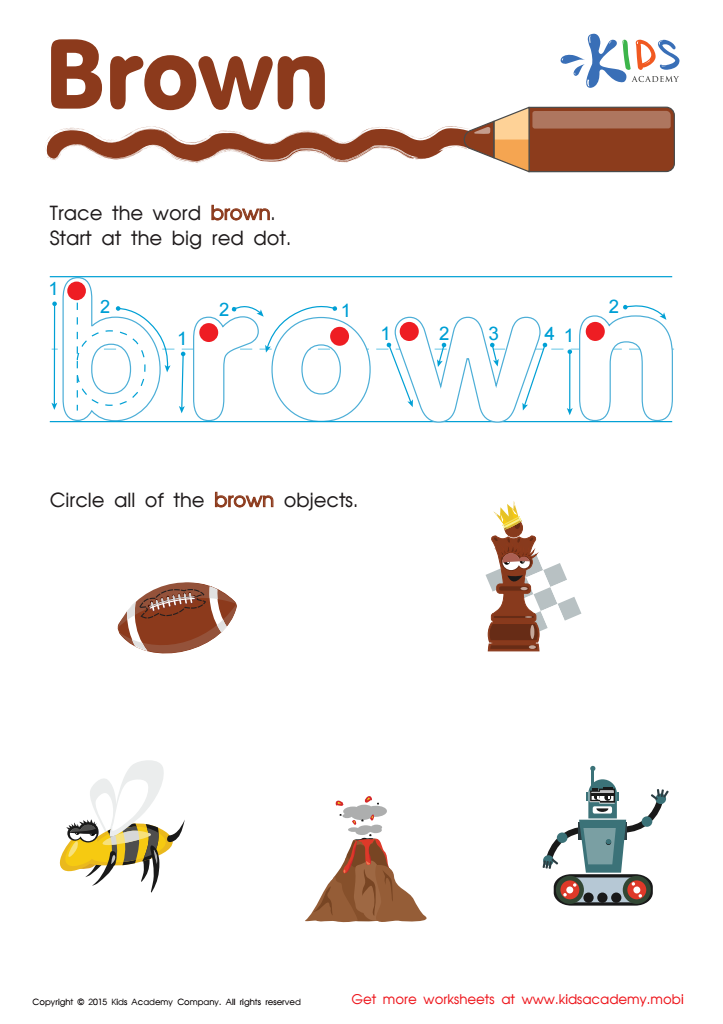
Brown Tracing Color Words Worksheet
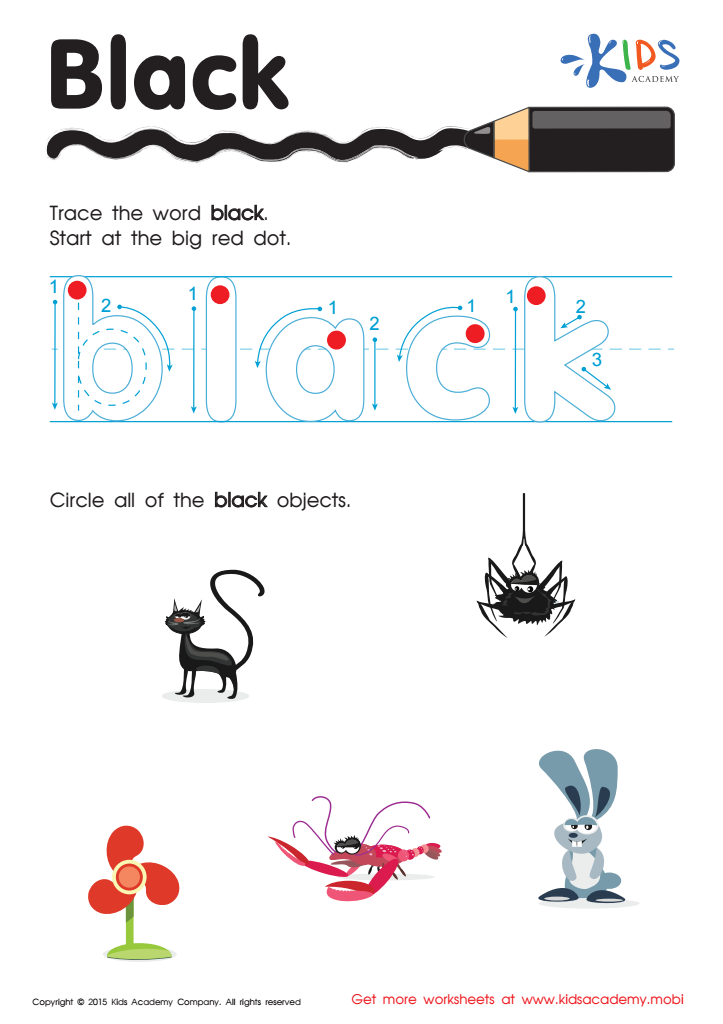
Black Tracing Color Words Printable



Understanding and using normal color words is essential for 7-year-olds as it plays a crucial role in their cognitive and linguistic development. At this age, children are expanding their vocabulary and language skills, and color words serve as foundational elements of communication. By grasping basic colors like red, blue, and yellow, kids enhance their ability to describe their world, express emotions, and engage in conversations.
For parents and teachers, emphasizing normal color words benefits learning in various subjects. In art, color vocabulary helps them identify and mix colors, fostering creativity. In science, recognizing colors can aid in understanding concepts such as camouflage in nature or plant biology. Moreover, incorporating color words into daily activities—like sorting objects by color—can reinforce math skills such as categorization and pattern recognition.
Additionally, developing a robust color vocabulary can enhance social skills; kids start to engage in discussions and play that requires sharing thoughts about colors, especially in cooperative games. Encouraging children to use color words enriches their interactions, contributing positively to their socialization. Therefore, emphasizing normal color words equips children with essential tools for better communication and learning, making it crucial for both parents and teachers to prioritize this area of their development.








