Understanding biodiversity Normal Worksheets for 7-Year-Olds
3 filtered results
-
From - To
Our "Understanding Biodiversity" worksheets for 7-year-olds offer engaging and educational activities to help young learners appreciate the diversity of life on Earth. Designed to align with primary school learning skills, these worksheets include fun exercises, vibrant illustrations, and age-appropriate content. From exploring different habitats to identifying various species, children will develop a deep understanding of how ecosystems function. Perfect for both classroom and home use, these worksheets encourage curiosity and environmental stewardship, laying the foundation for future scientific exploration and a lifelong love of nature.
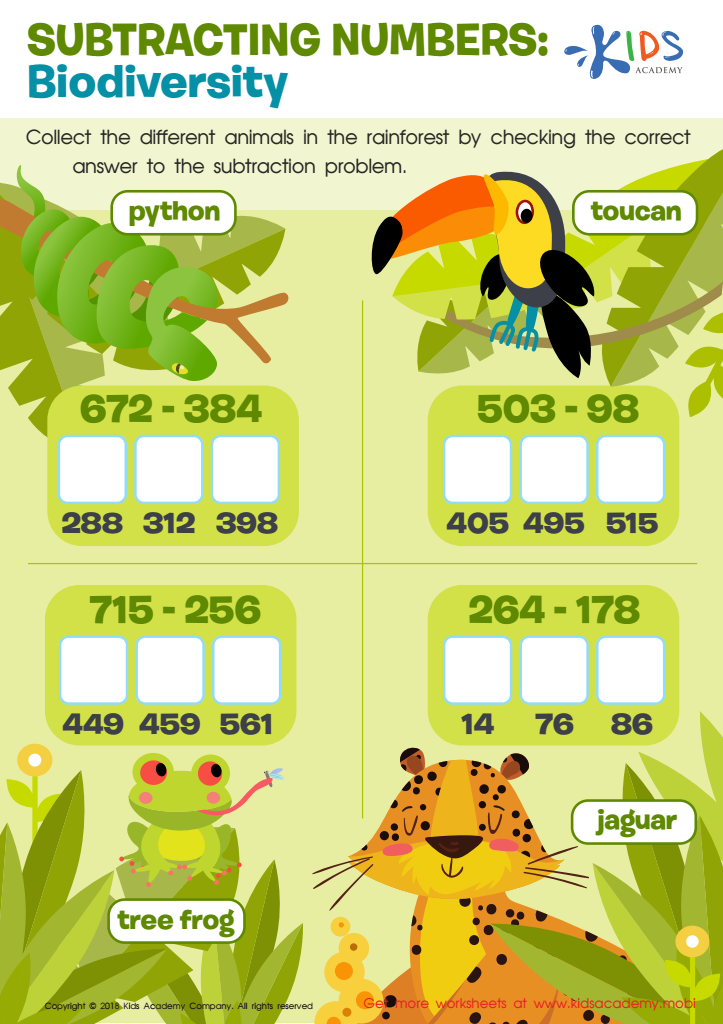
Subtracting Numbers: Biodiversity Worksheet
 Assign to My Students
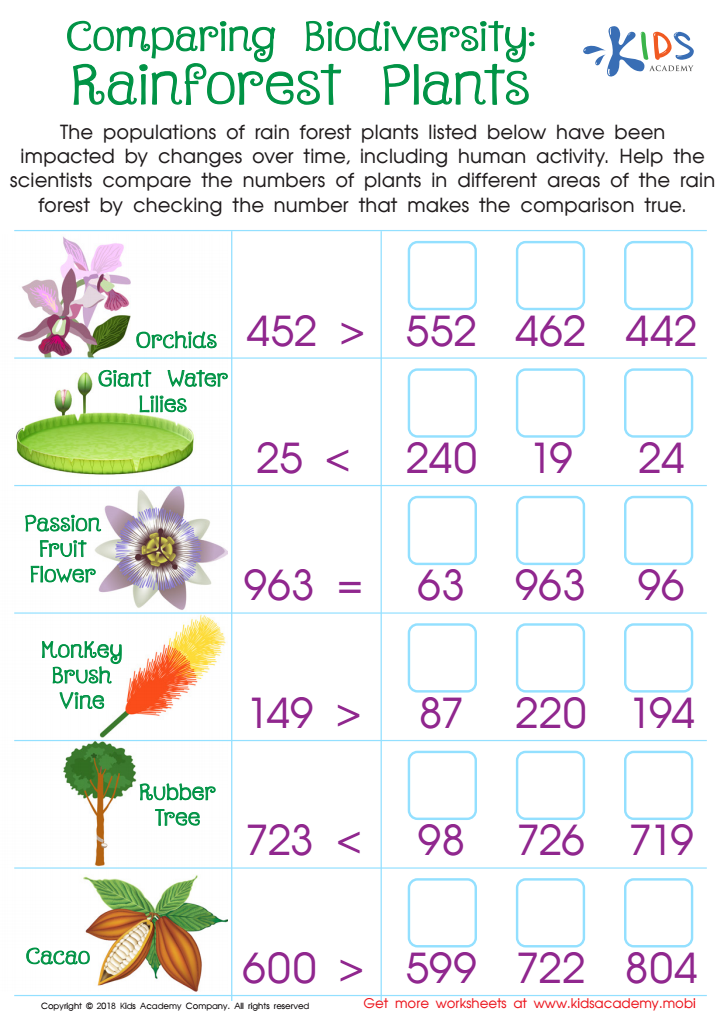
Comparing Biodiversity: Rainforest Plants Worksheet
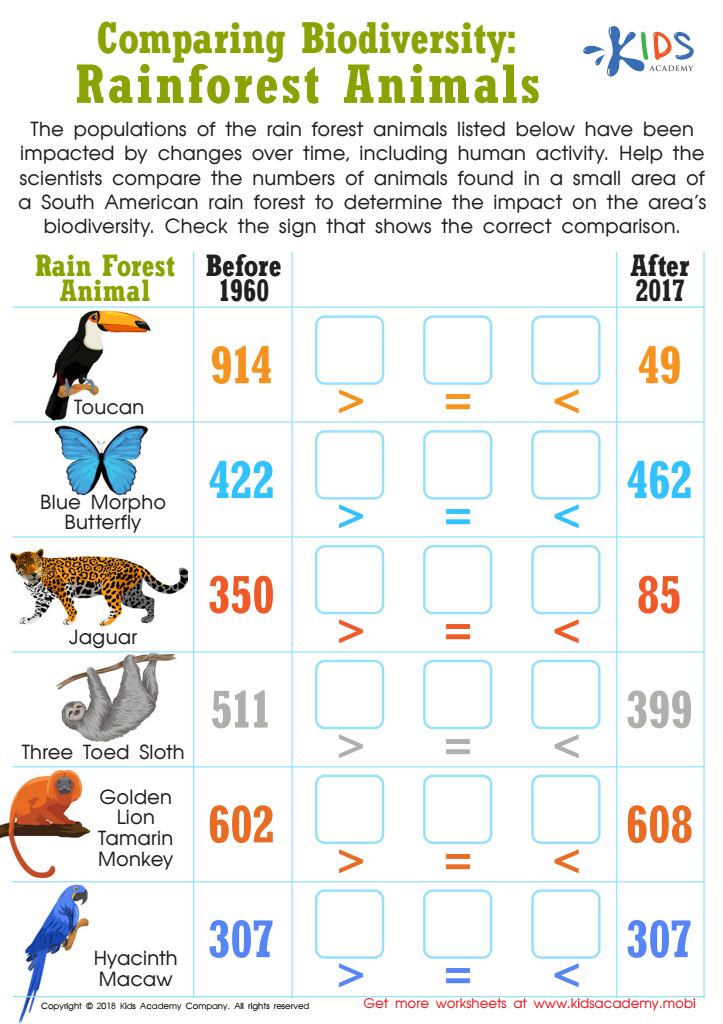
Comparing Biodiversity: Rainforest Animals Worksheet





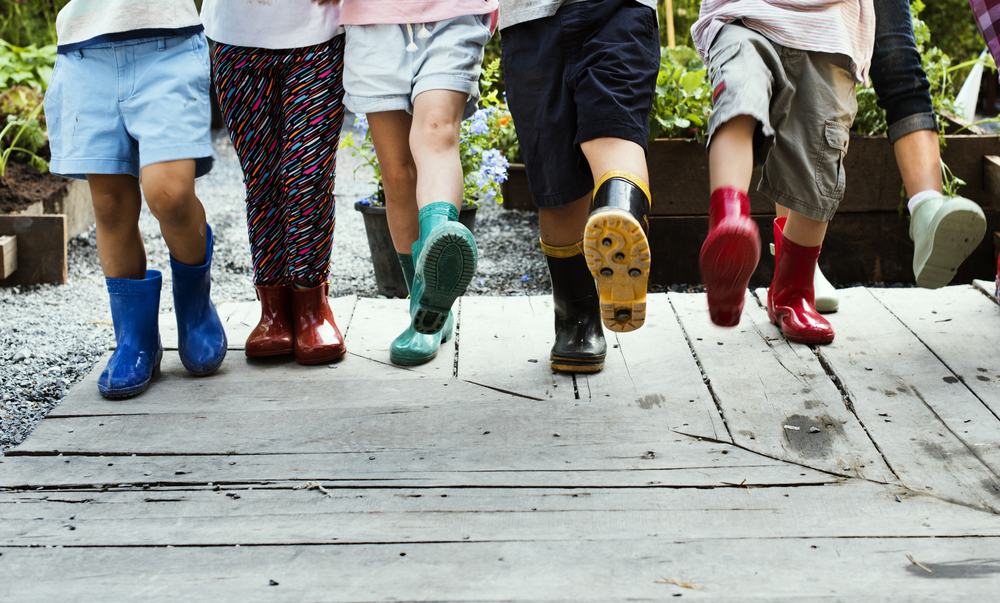

Understanding biodiversity is crucial, even for 7-year-olds, because it shapes how they relate to the world. Biodiversity means the variety of life, from tiny insects to huge whales, and the ecosystems they live in, like forests and oceans. When children learn about this, they appreciate the beauty and complexity of nature. They start to value every plant, animal, and the role they play.
For parents and teachers, teaching biodiversity builds a foundation for environmental stewardship. Kids are naturally curious, and introducing them to concepts like diverse animal habitats and plant life cycles fosters a lifelong respect for nature. This understanding helps them grasp why it's important to protect endangered animals, reduce waste, and not pollute.
Moreover, learning about biodiversity can improve critical thinking. For example, they can learn how bees help plants grow through pollination, which teaches about interdependence in nature. These lessons can translate into problem-solving skills in other areas of their life.
Lastly, kids who spend time learning about nature are often happier and healthier. Playing outside, observing animals, and planting gardens can reduce stress and boost well-being. So, understanding biodiversity isn't just about science—it's about nurturing empathy, curiosity, and a healthy lifestyle for young minds.








