
Understanding fractions Normal Worksheets for 7-Year-Olds
6 filtered results
Difficulty Level
Grade
Age
-
From - To
Subject
Activity
Standards
"Understanding Fractions Normal Worksheets for 7-Year-Olds" by Kids Academy offer a fun and engaging way for young learners to grasp the basics of fractions. These expertly designed worksheets utilize colorful visuals and interactive exercises to make learning both enjoyable and effective. Kids will learn to recognize and compare fractions, understand the concept of half, and practice dividing shapes into equal parts. With clear instructions and age-appropriate challenges, these worksheets are perfect for building a solid foundation in math. Encourage your child to explore fractions with confidence and ease, unlocking new levels of understanding and academic success.
Favorites
With answer key
Interactive
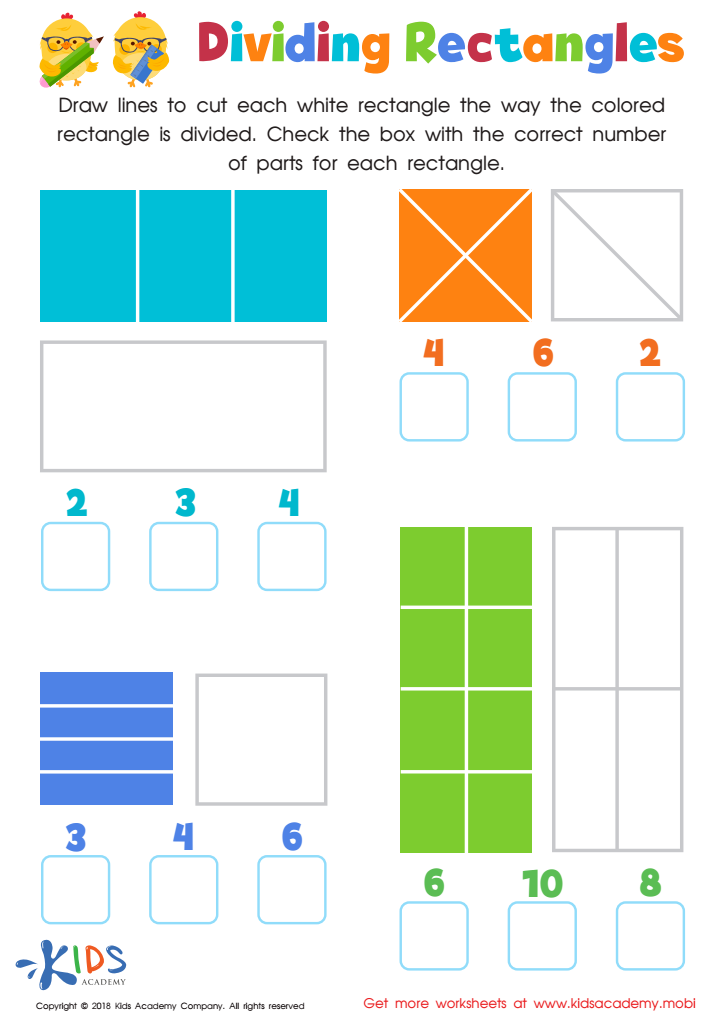
Dividing Rectangles Worksheet
Ask your child to draw lines to divide the white rectangles like the colored ones. Then, have them count the parts in each and choose the correct number. This worksheet will help them practice counting and dividing.
 Assign to My Students
Dividing Rectangles Worksheet
Worksheet
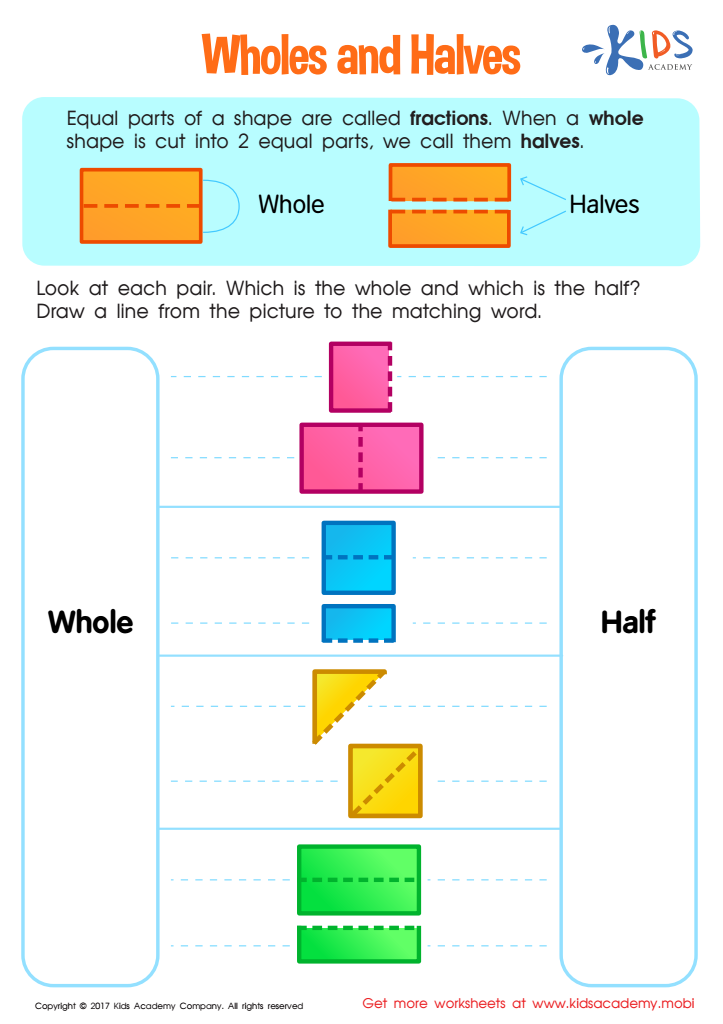
Wholes and Halves Worksheet
Students can feel overwhelmed with fractions. Help take the stress off by using a colorful worksheet to explain whole shapes and how to find halves. Ask them to identify the whole and point to the matching word for the half. A free printout can help guide them.
Wholes and Halves Worksheet
Worksheet
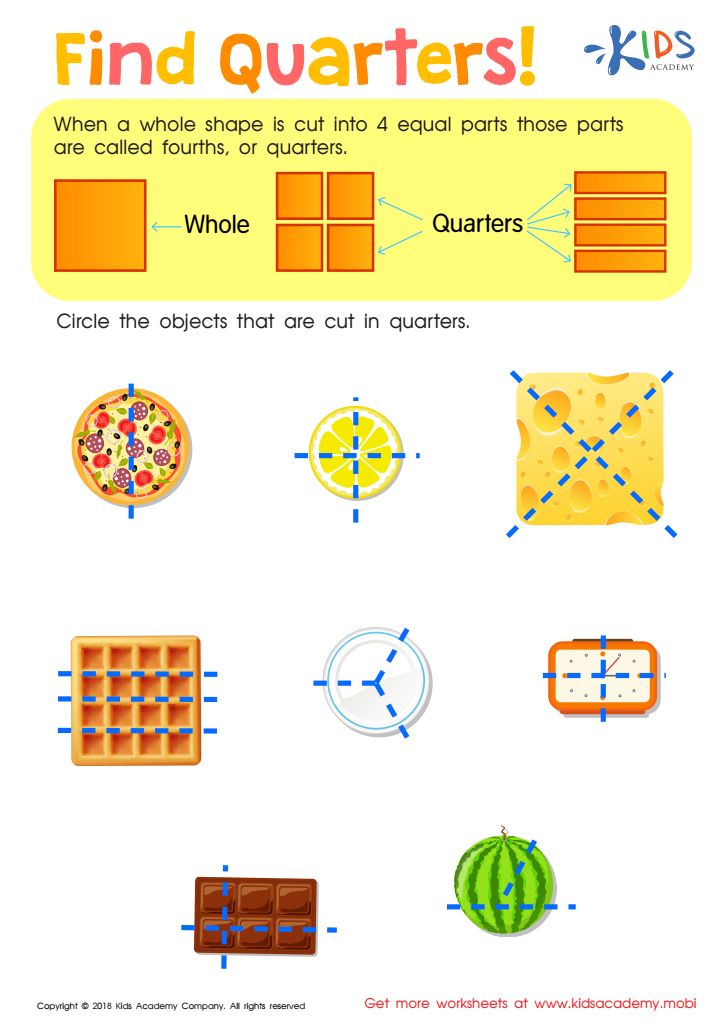
Find Quarters Worksheet
Ask your child if they know what it is called when a shape is cut into two equal parts. If yes, introduce them to quarters. Tell them that when a shape is cut into 4 equal parts, each part is called a quarter. Have them do this exercise by finding and circling objects split into quarters.
Find Quarters Worksheet
Worksheet
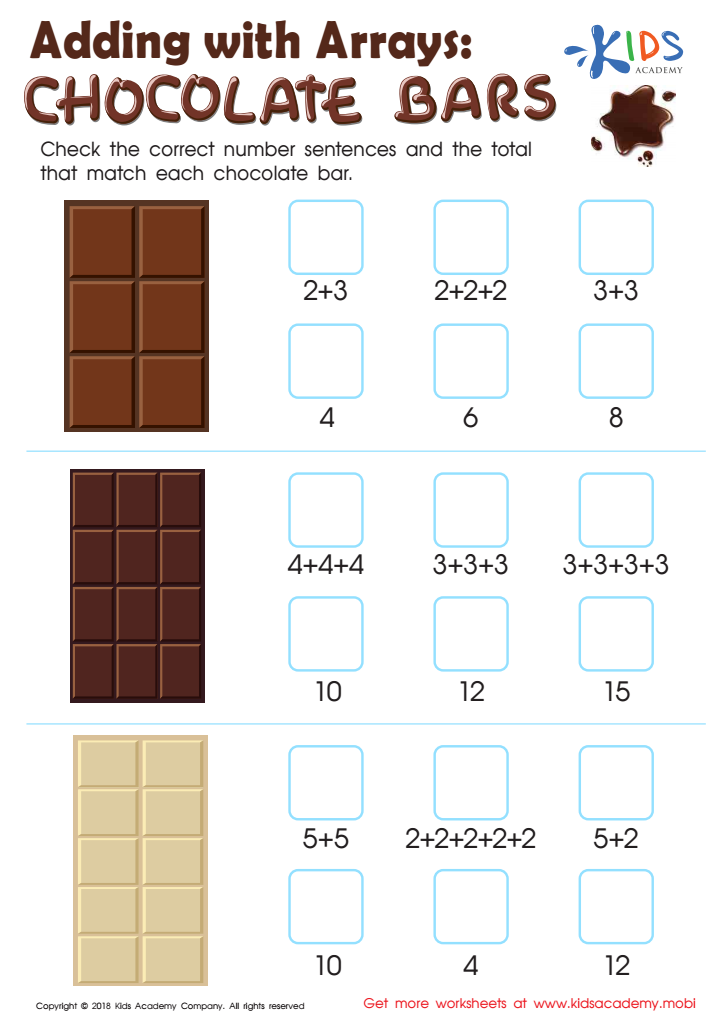
Adding with Arrays: Chocolate Bars Worksheet
Kids love chocolates! Gauge how enthused your kids get when you mention them. This worksheet is a fun exercise about chocolates - get your kids to check the correct number sentences and totals for each chocolate bar. Reward their hard work with some chocolates - extra incentive for a job well done!
Adding with Arrays: Chocolate Bars Worksheet
Worksheet
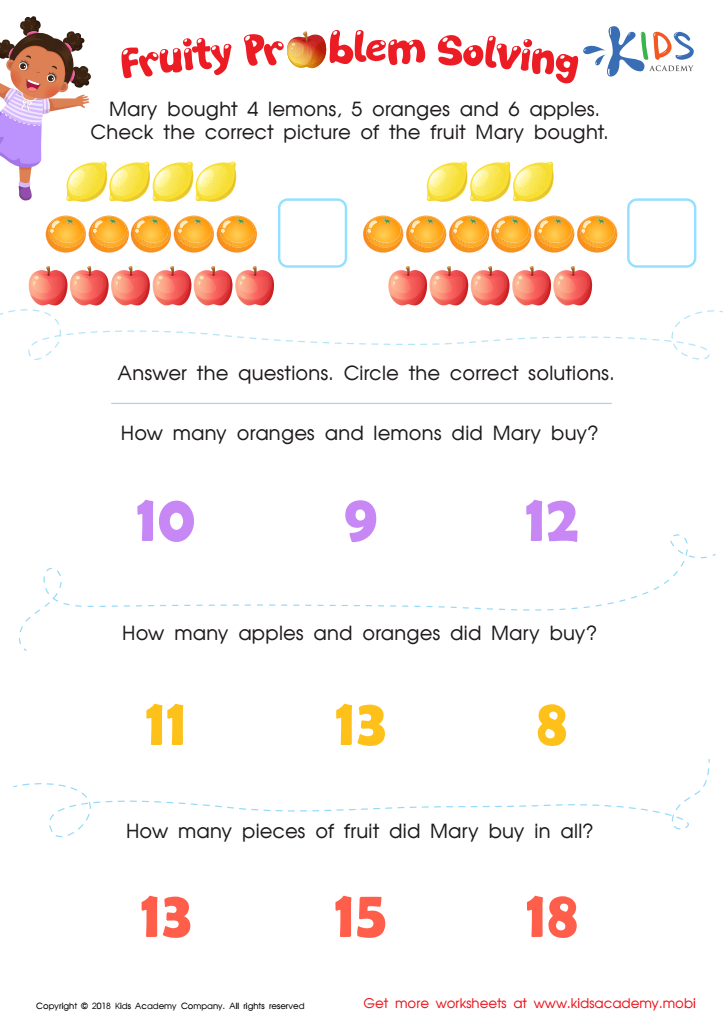
Fruity Problem Solving Worksheet
Practice addition word problems with young mathematicians using this PDF worksheet featuring fruit. As they read each problem carefully and circle the correct sums, they'll reinforce attention to detail and fine motor skills. Tangible representations are key to helping them with basic addition.
Fruity Problem Solving Worksheet
Worksheet
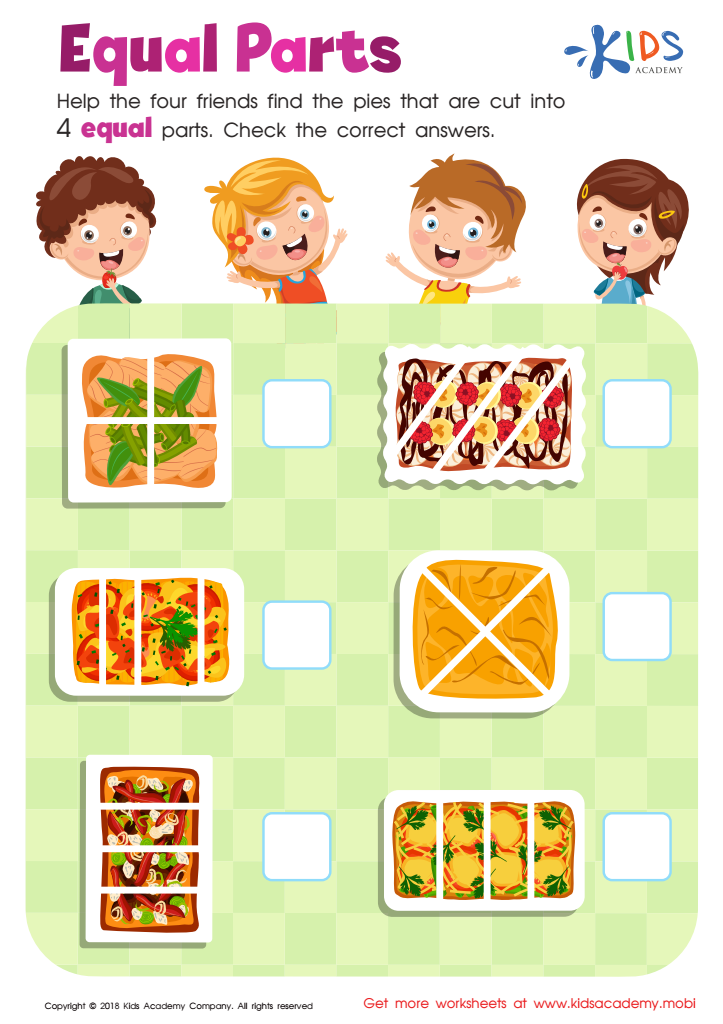
Equal Parts: Food Worksheet
Kids love pies! In this worksheet, they must help four friends share one equally. Six pictures of pies cut in different ways are provided. Your child must choose the one where the pie is divided into four equal parts. That way, each friend gets an equal share.
Equal Parts: Food Worksheet
Worksheet
Join Kids Academy for Free
Who is primarily going to use this learning content?






Understanding fractions is a crucial part of early math education, especially for 7-year-olds. At this age, children are typically in second grade, where foundational math skills are being solidified. Fractions help in developing important cognitive abilities like logical thinking, problem-solving, and the ability to understand and compare different quantities.
Firstly, fractions form the basis for many advanced math topics such as ratios, proportions, and algebra. Early mastery ensures that children are well-prepared for more complex mathematical concepts in later grades. For instance, understanding that fractions represent parts of a whole helps kids visualize and grasp multiplication and division.
Furthermore, fractional knowledge is highly applicable to real-life situations. From sharing a pizza equally among friends to understanding measurements in recipes or time, fractions are everywhere. Properly understanding fractions makes these everyday activities easier and more intuitive for young learners.
For parents, engaging with their child's learning fosters a supportive educational environment at home. Parental involvement can build children’s confidence and encourage a love for learning. For teachers, emphasizing the importance of fractions through engaging, hands-on activities ensures students can relate these abstract concepts to the world around them, reinforcing both comprehension and retention. Ultimately, understanding fractions equips children with essential skills that are vital for both academic success and daily life.








