Understanding fractions Normal Math Worksheets for 7-Year-Olds
6 filtered results
-
From - To
Unlock the world of fractions with our "Understanding Fractions Normal Math Worksheets for 7-Year-Olds"! Perfect for young learners, these engaging worksheets transform basic fraction concepts into fun and interactive experiences, ensuring that your child grasps the essentials with ease. Our expertly designed activities cover simple fractions, comparisons, and real-world applications, providing a solid foundation for future math success. Tailored for 7-year-olds, each worksheet is packed with colorful visuals and practical exercises that make learning fractions enjoyable and accessible. Empower your child with the skills they need to master fractions confidently – explore our collection today!
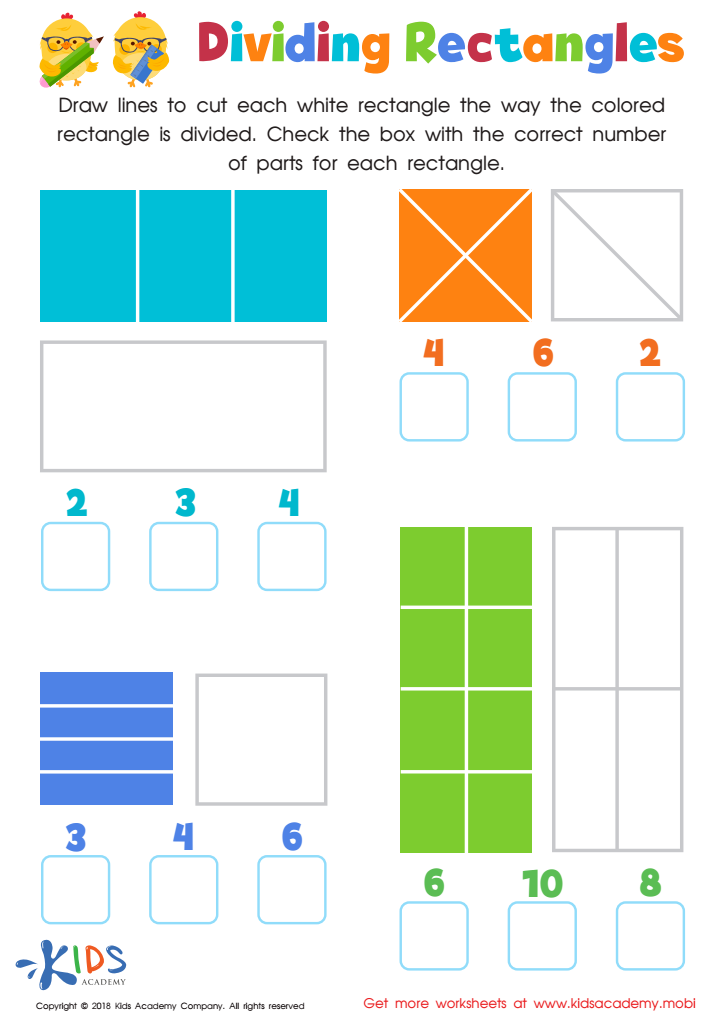
Dividing Rectangles Worksheet
 Assign to My Students
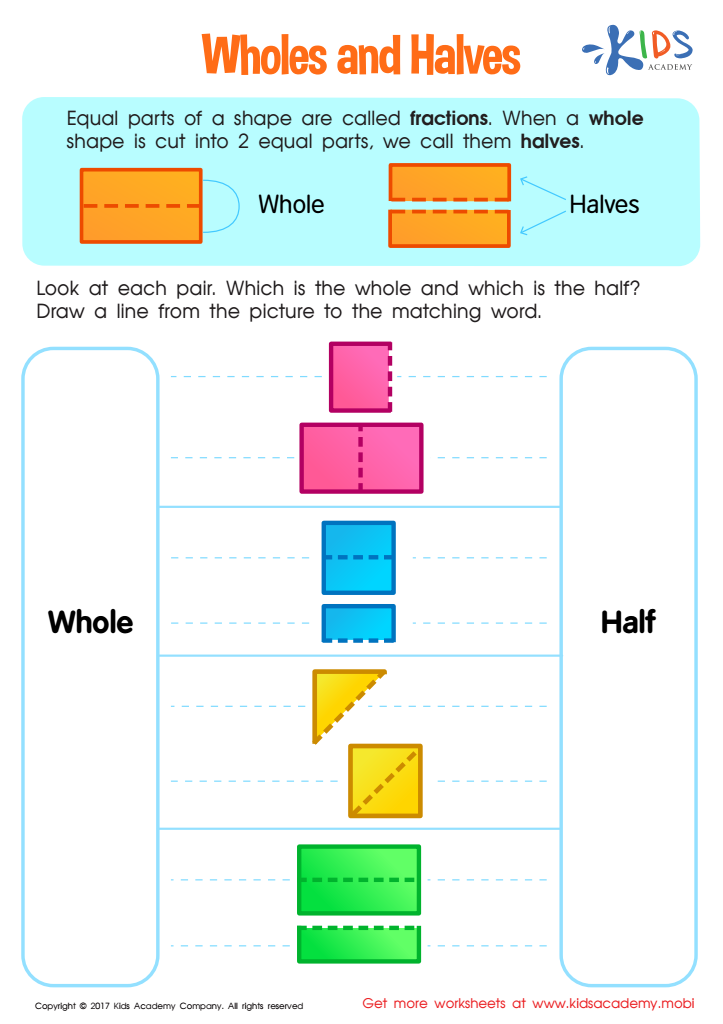
Wholes and Halves Worksheet
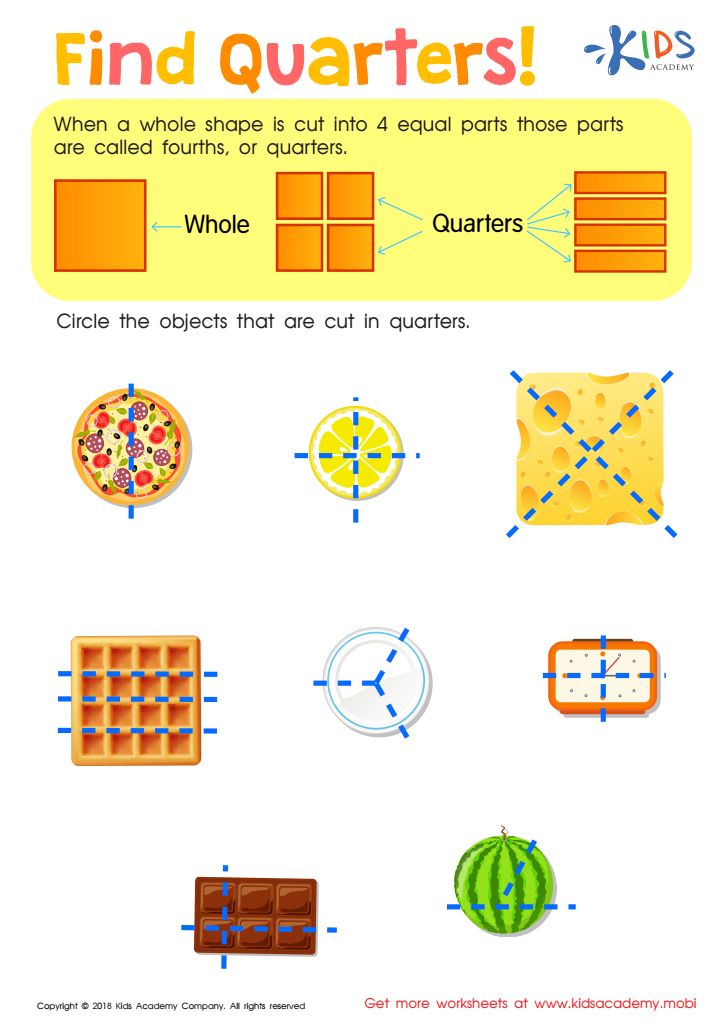
Find Quarters Worksheet
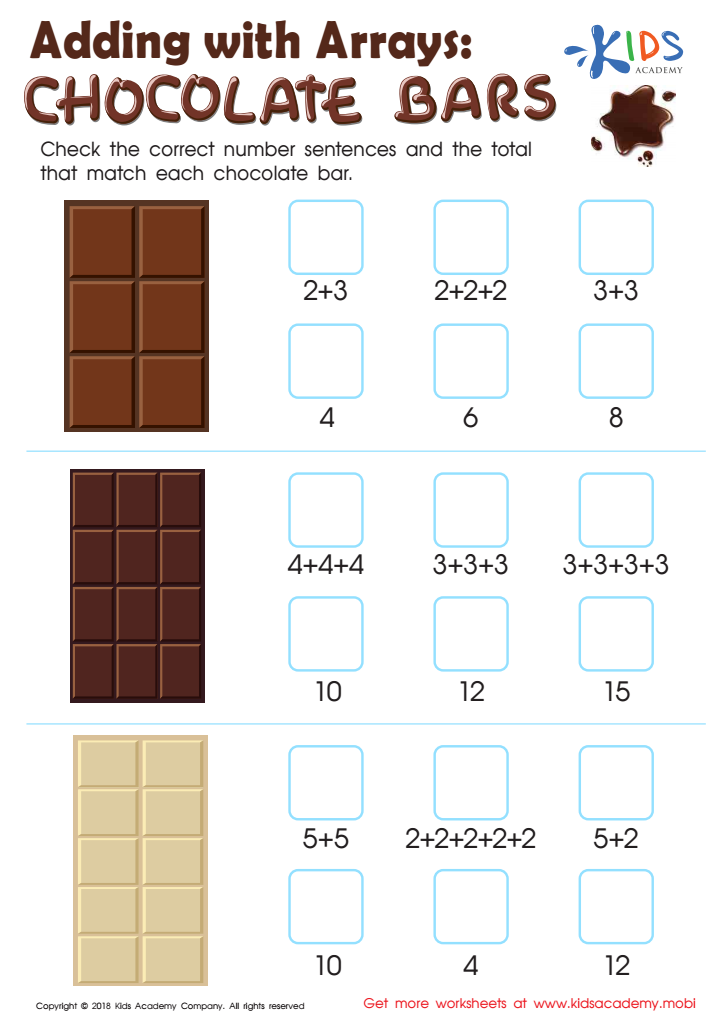
Adding with Arrays: Chocolate Bars Worksheet
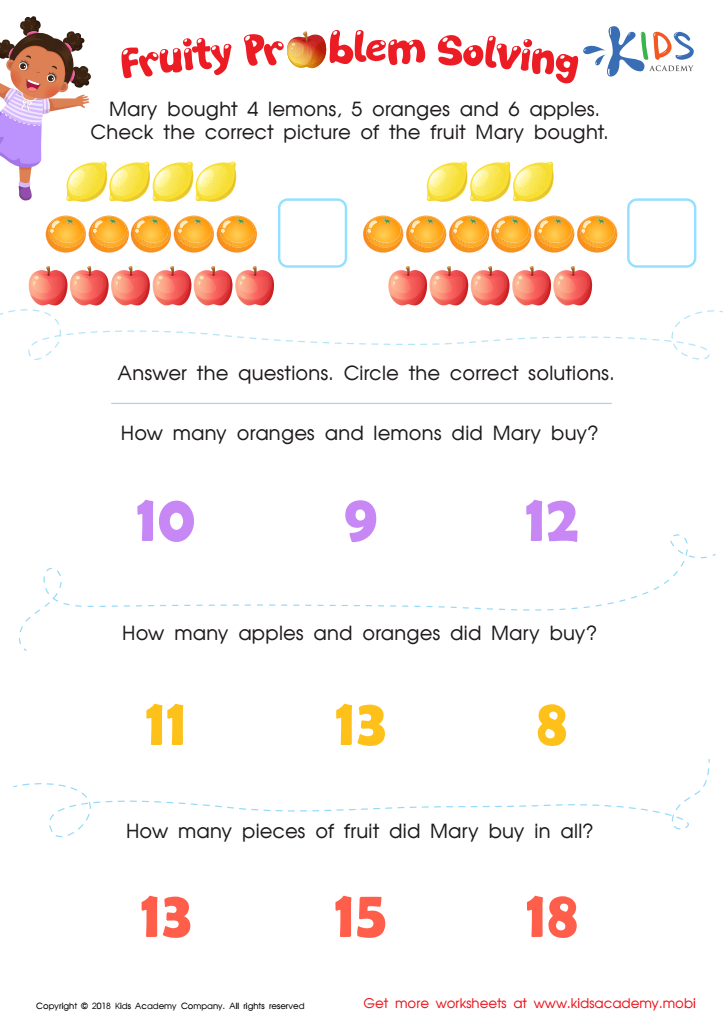
Fruity Problem Solving Worksheet
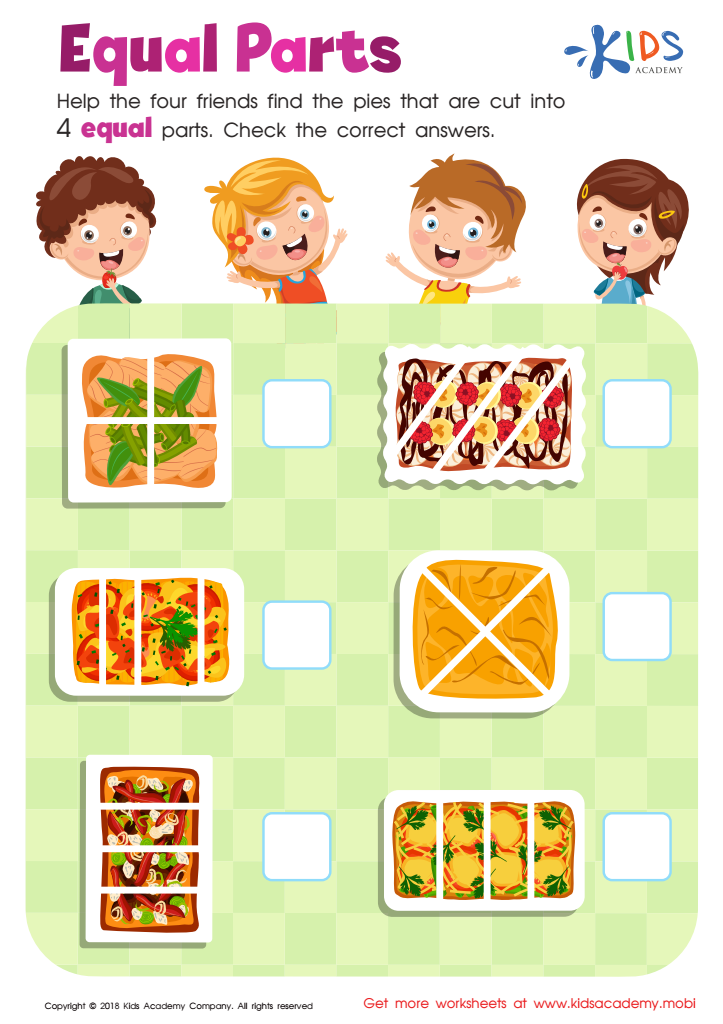
Equal Parts: Food Worksheet








Understanding fractions is a fundamental aspect of foundational math skills for 7-year-olds that parents and teachers should deeply care about. At this age, children are developing their numerical understanding and problem-solving abilities, which are essential for their future academic success. Fractions represent a critical step in this journey because they introduce the concept of parts of a whole, an idea that extends beyond simple counting to more complex mathematical concepts.
Grasping fractions supports children in understanding proportional reasoning, which is applicable in everyday activities such as sharing food, dividing up time, or managing money. By comprehending fractions, students can better visualize and reason about quantities that are not whole numbers, enhancing their ability to tackle more advanced math topics like ratios, percentages, and algebra in future stages.
Moreover, engaging with fractions builds confidence and encourages a positive attitude toward learning math. When children grasp these concepts early, they are more likely to approach math with curiosity and persistence, rather than fear and frustration. Parental and teacher support plays a pivotal role in this learning process, providing encouragement and creating opportunities for practical, hands-on experiences. By prioritizing fraction comprehension, adults lay a strong mathematical foundation that benefits children both academically and in everyday life.








