Understanding measurements Normal Worksheets for Ages 8-9
6 filtered results
-
From - To
Unlock your child’s potential with our "Understanding Measurements" worksheets, designed specifically for ages 8-9. These engaging worksheets offer a variety of exercises to help young learners grasp essential measurement concepts such as length, weight, and volume. Through hands-on activities and visual aids, kids will develop their skills in estimating, comparing, and converting units. Perfect for classroom or home use, these worksheets blend education with fun, ensuring children stay motivated and confident in their math abilities. Step up your child’s learning journey today with resources that make mastering measurements both exhilarating and rewarding.
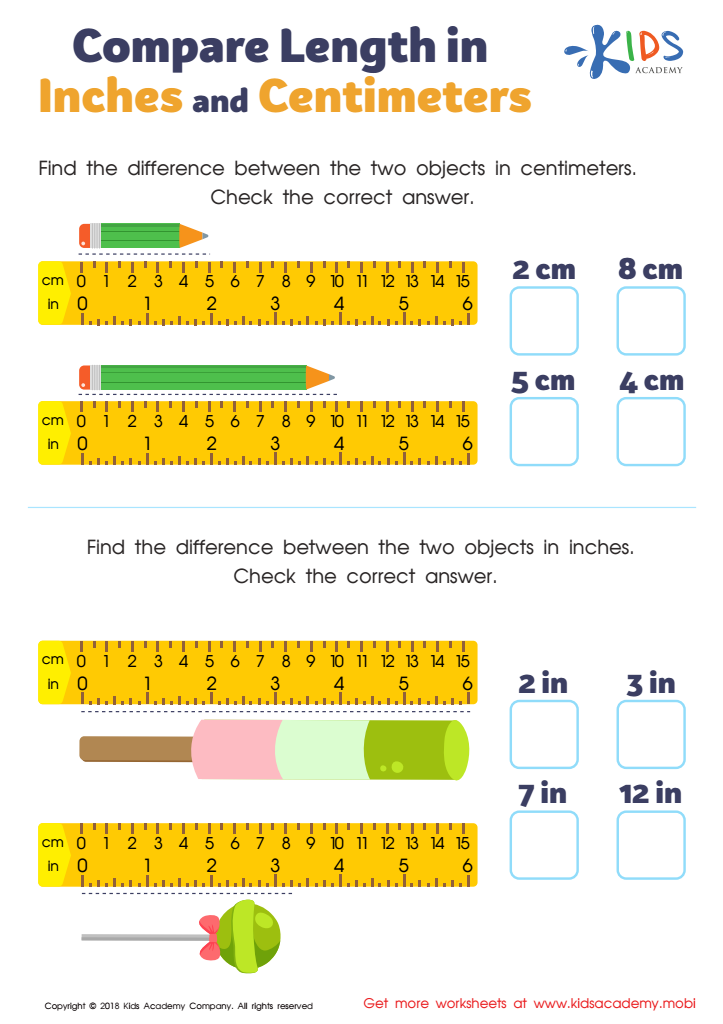
Compare Length in Inches and Centimeters Worksheet
 Assign to My Students
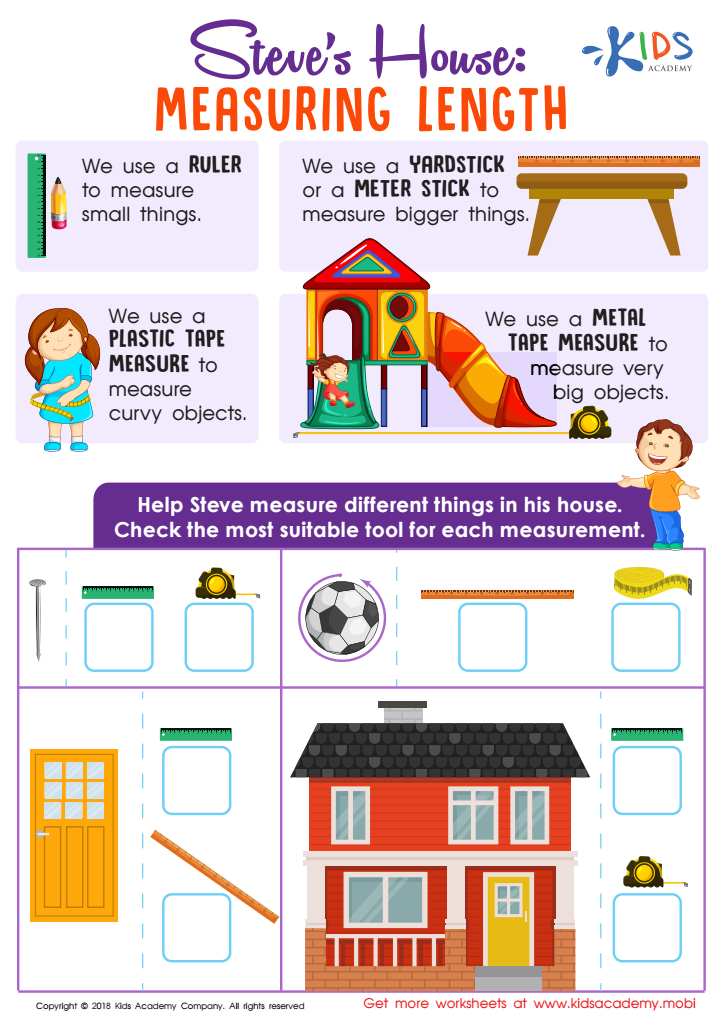
Steve's House: Measuring Length Worksheet
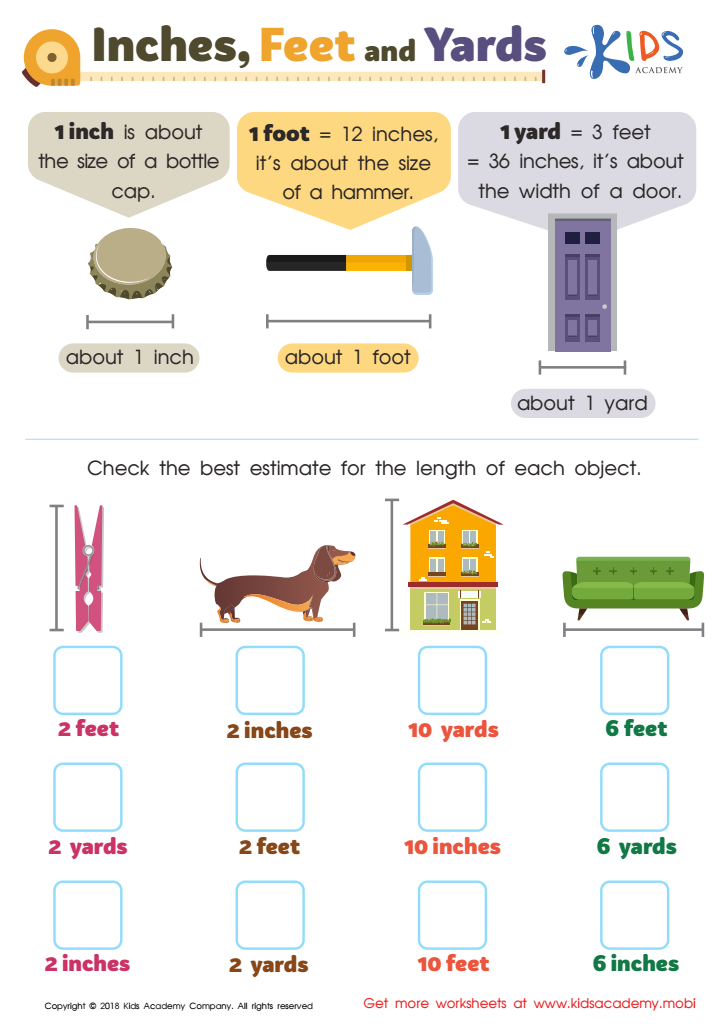
Inches, Feet and Yards Worksheet
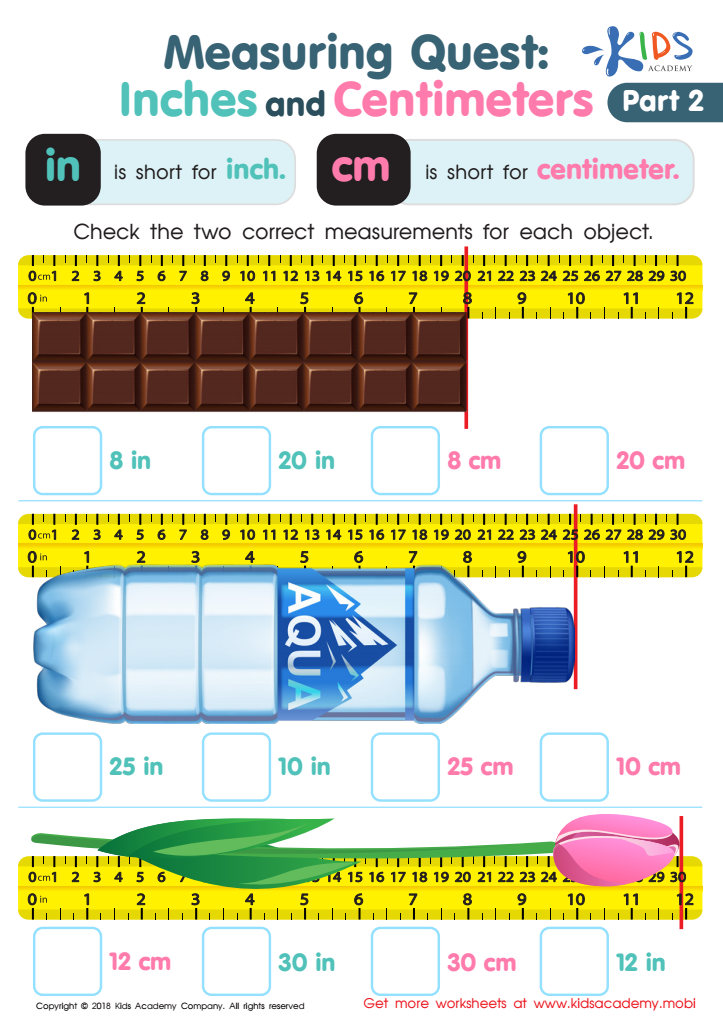
Measuring Quest: Inches and Centimeters - Part 2 Worksheet
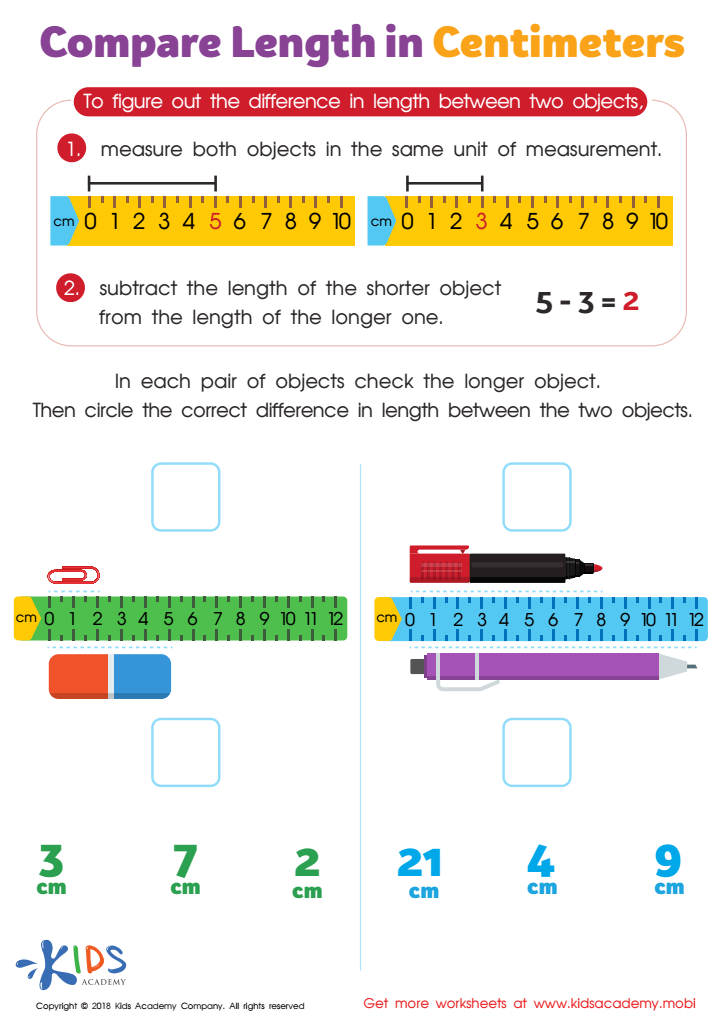
Compare Length in Centimeters Worksheet
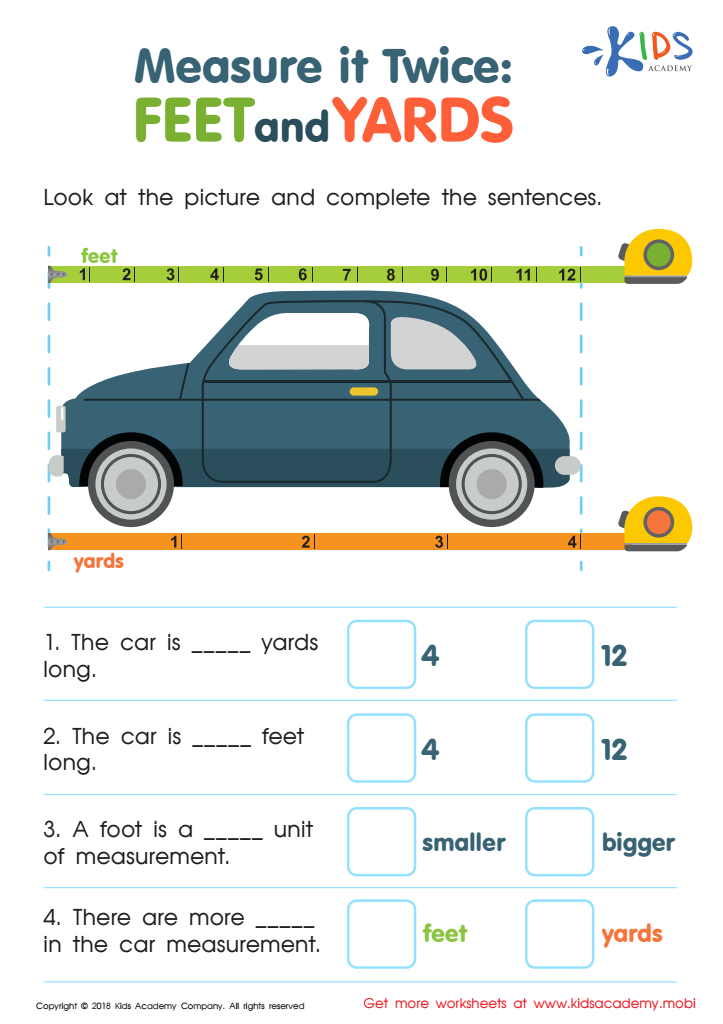
Measure It Twice: Feet and Yards Worksheet


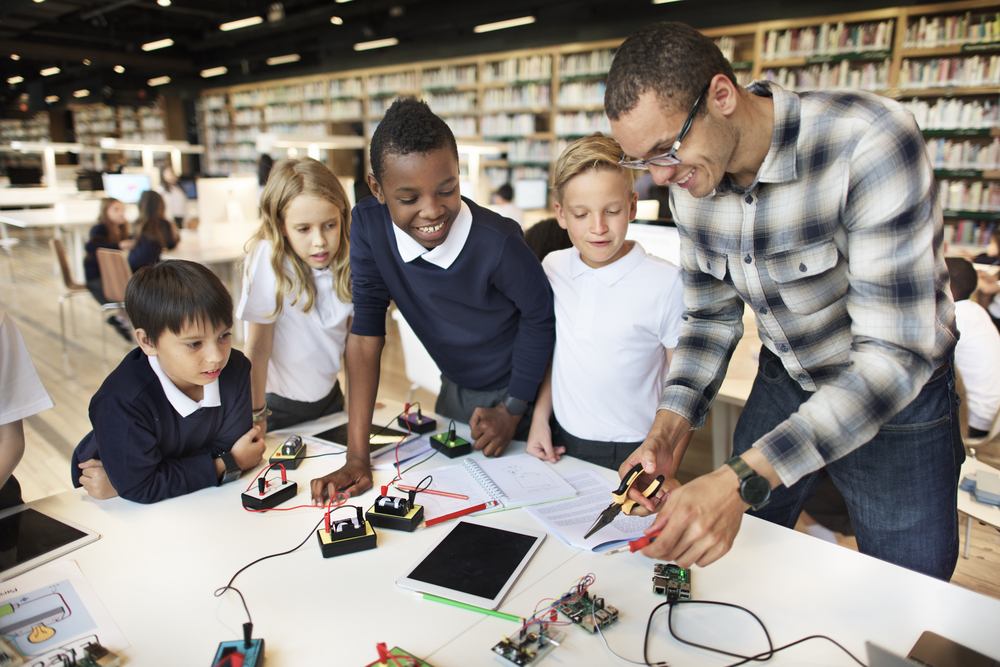
.jpg)
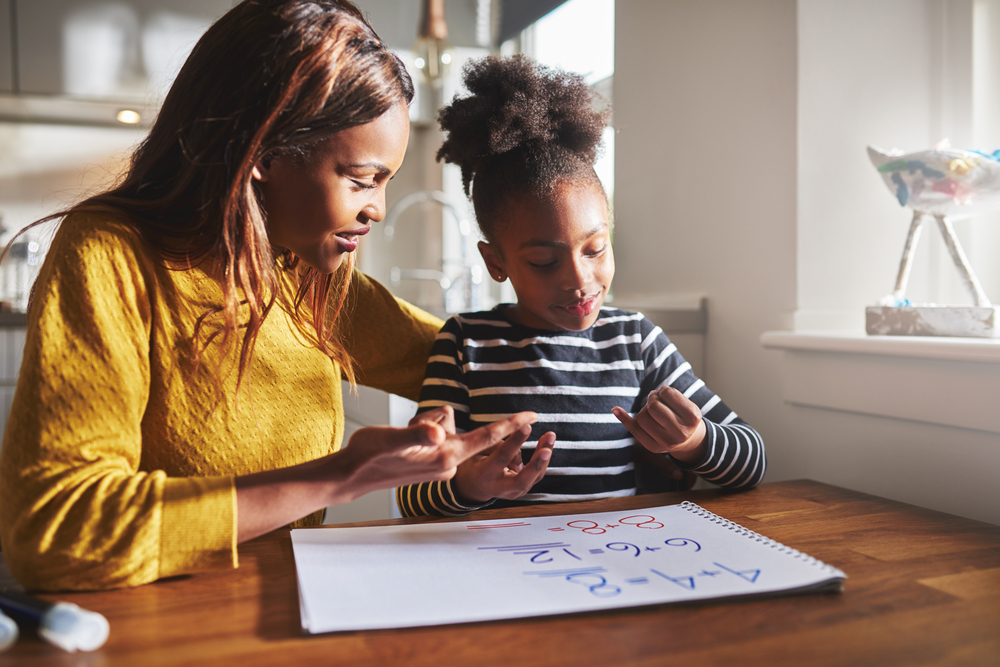


Understanding measurements is crucial for children aged 8-9 as it lays the foundation for essential life skills and mathematical concepts that they will use throughout their lives. At this age, children are developing cognitive abilities to grasp abstract concepts, and learning measurements helps them comprehend the world around them more accurately. Knowing how to measure length, weight, and volume allows children to apply these skills in everyday tasks, such as following a recipe, understanding distances, or determining quantities.
For parents and teachers, fostering these skills is critical in helping children build confidence and competence in math and science. Measurements are deeply integrated into many other subjects, including physics, chemistry, geography, and even art. When children understand basic measurement principles, they can approach more complex problems with a solid foundational knowledge.
Furthermore, understanding measurements enhances a child's problem-solving abilities and critical thinking skills. When students learn to estimate and measure correctly, they also learn to be precise and pay attention to detail.
Encouraging proficiency in measurements not only prepares students for academic success in higher education but also equips them with practical skills valuable in everyday life. By engaging in fun, hands-on activities like cooking, building, or creating art projects, parents and teachers can make learning measurements an enjoyable and meaningful experience.








