Visual Perception Skills Normal Worksheets for Ages 8-9
3 filtered results
-
From - To
Enhance your child's learning journey with our Visual Perception Skills Worksheets designed for ages 8-9. These engaging, printable resources focus on improving visual discrimination, spatial awareness, and figure-ground perception through fun activities and exercises. Perfect for reinforcing classroom learning or homeschooling, our worksheets promote critical thinking and concentration while keeping kids motivated. With colorful visuals and age-appropriate challenges, your child will gain confidence in their visual processing skills that are essential for academic success. Explore our selection today and help your young learner develop essential cognitive abilities in a playful, supportive manner!
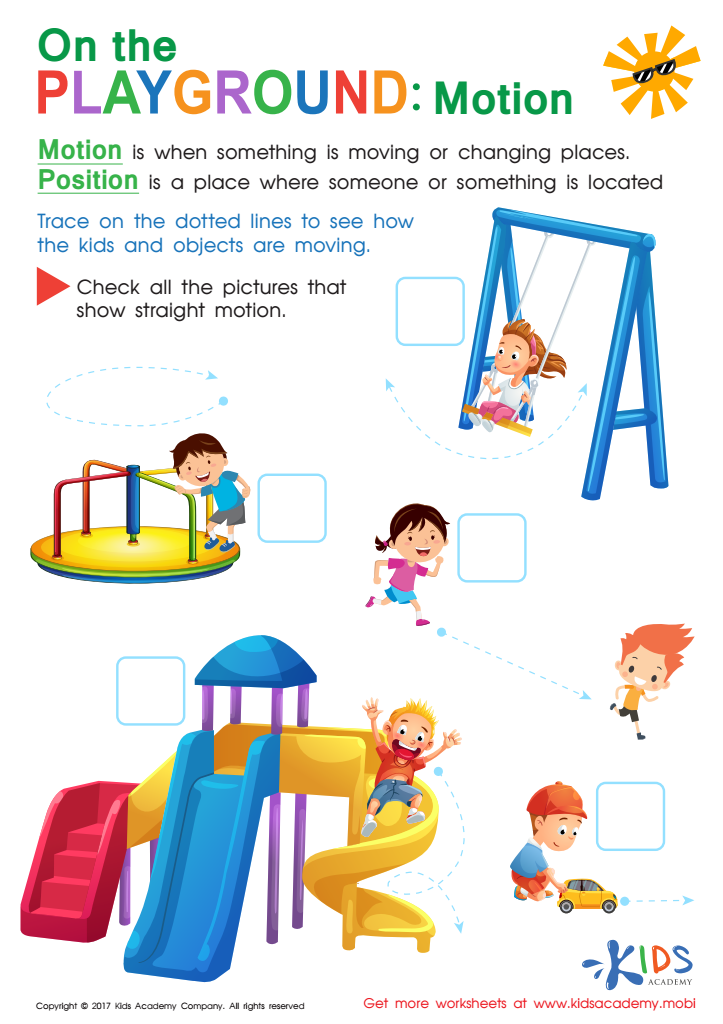
Position and Motion Worksheet
 Assign to My Students
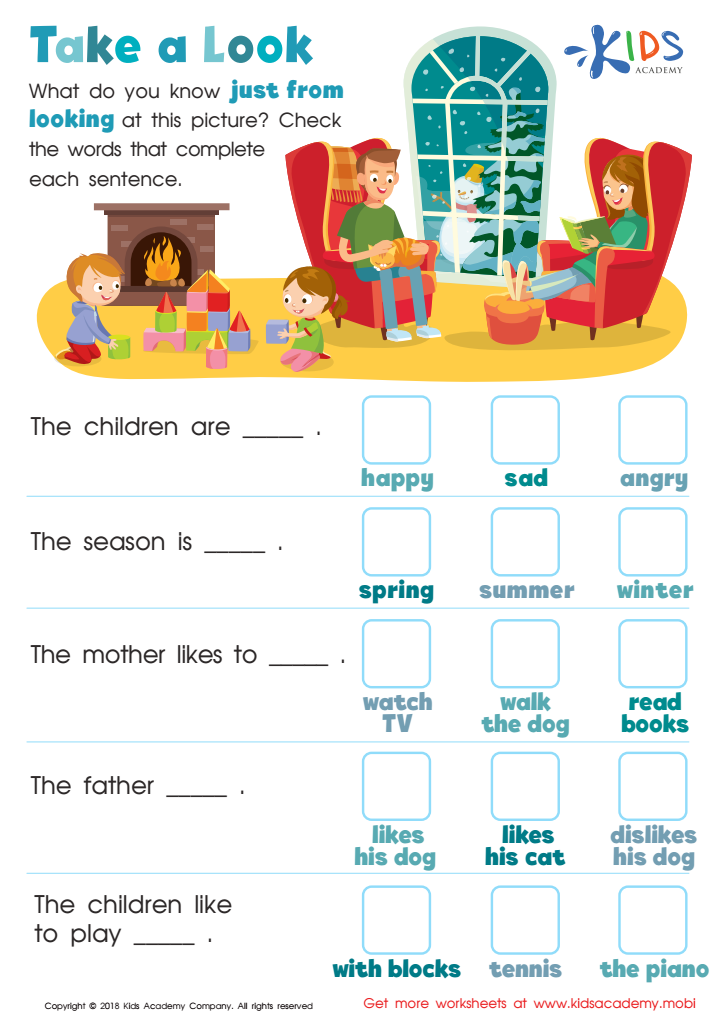
Take a Look - Part 1 Worksheet
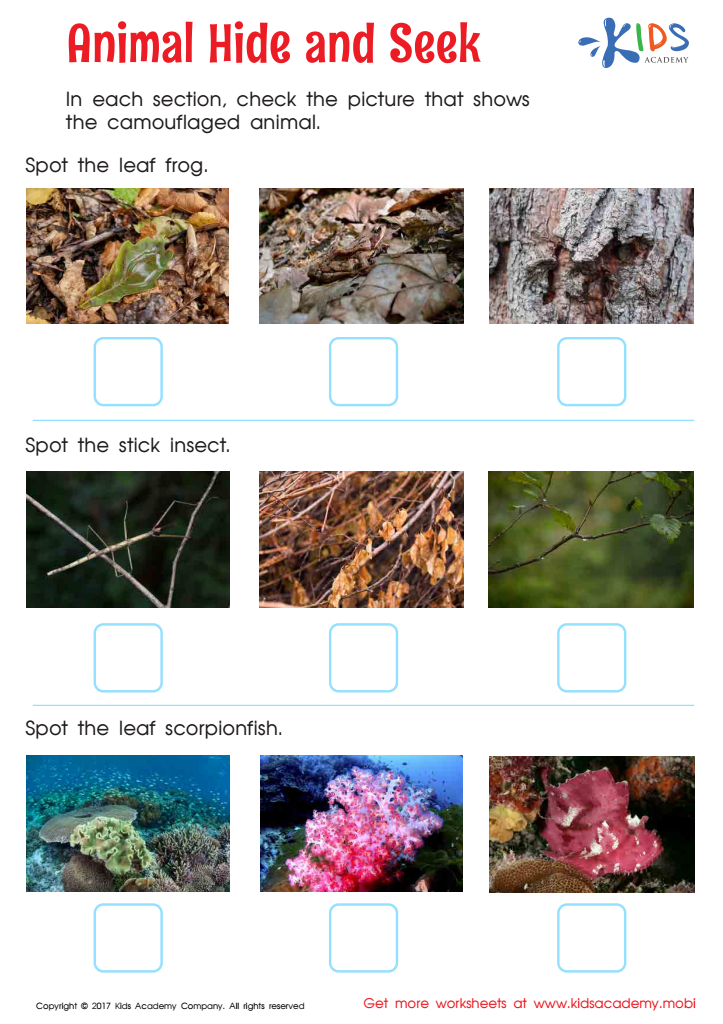
Animal Hide and Seek Worksheet







Visual perception skills are crucial for children aged 8-9 as they significantly impact learning and everyday functioning. These skills enable children to interpret and make sense of the visual information they encounter, which is essential in various academic areas, particularly reading and mathematics. A child who struggles with visual perception may have difficulty recognizing letters, shapes, or numbers, leading to challenges in literacy and numeracy.
Parents and teachers should care about the normal development of these skills because they directly influence a child’s ability to grasp new concepts and succeed in school. When visual perception skills are strong, children can effectively engage in classroom activities, follow instructions, and participate in cooperative learning experiences. Additionally, poor visual perception can contribute to frustration, decreased motivation, and low self-esteem, which can have long-lasting effects on a child's academic journey.
By monitoring and supporting the development of visual perception skills, parents and teachers can help identify any difficulties early on, facilitating timely interventions. This proactive approach not only enhances academic performance but also fosters a child's confidence and independence, setting a strong foundation for future learning and personal growth. Ultimately, investing in these skills aids in nurturing well-rounded, capable learners.








