Understanding subtraction Normal Addition & Subtraction Worksheets for Ages 8-9
6 filtered results
-
From - To
Help your child develop solid subtraction skills with our "Understanding Subtraction: Normal Addition & Subtraction Worksheets for Ages 8-9." These expertly designed worksheets cover various subtraction concepts, ensuring that young learners build a strong foundation in mathematics. Suitable for kids ages 8-9, our engaging exercises include solving word problems, understanding the relationship between addition and subtraction, and mastering basic subtraction facts. Enhance your child's learning experience with clear instructions, fun illustrations, and practical practice that fosters confidence and accuracy in math. Visit our page for free, printable resources to support your child's educational journey.
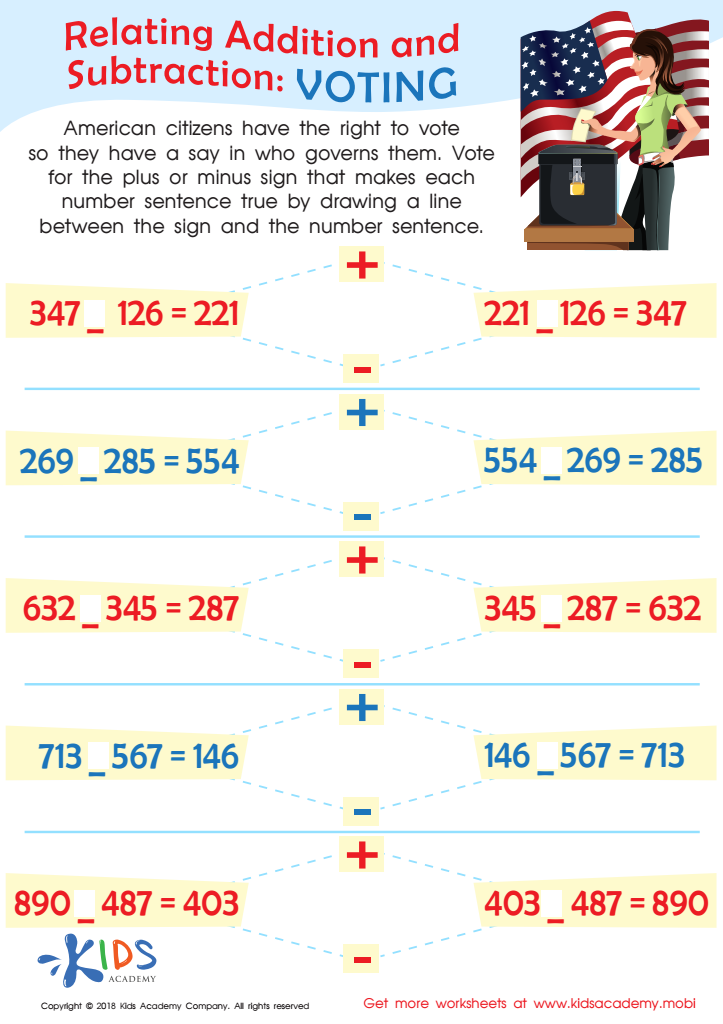
Voting Worksheet
 Assign to My Students
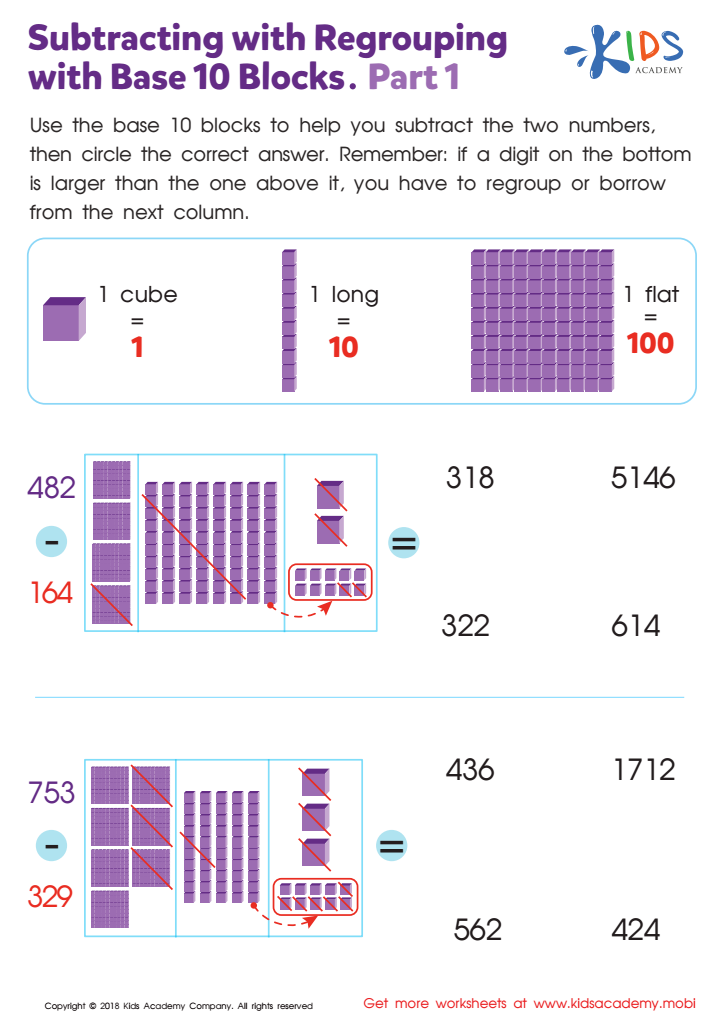
Subtracting with Regrouping with Base 10 Blocks. Part1 Worksheet
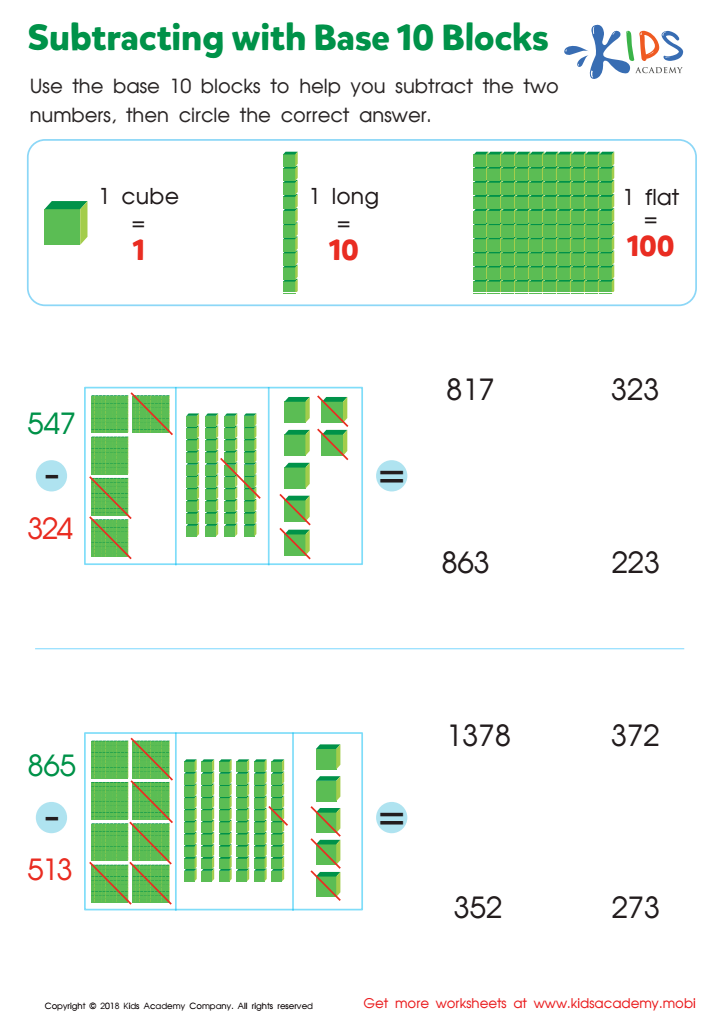
Subtracting with Base 10 Blocks Worksheet
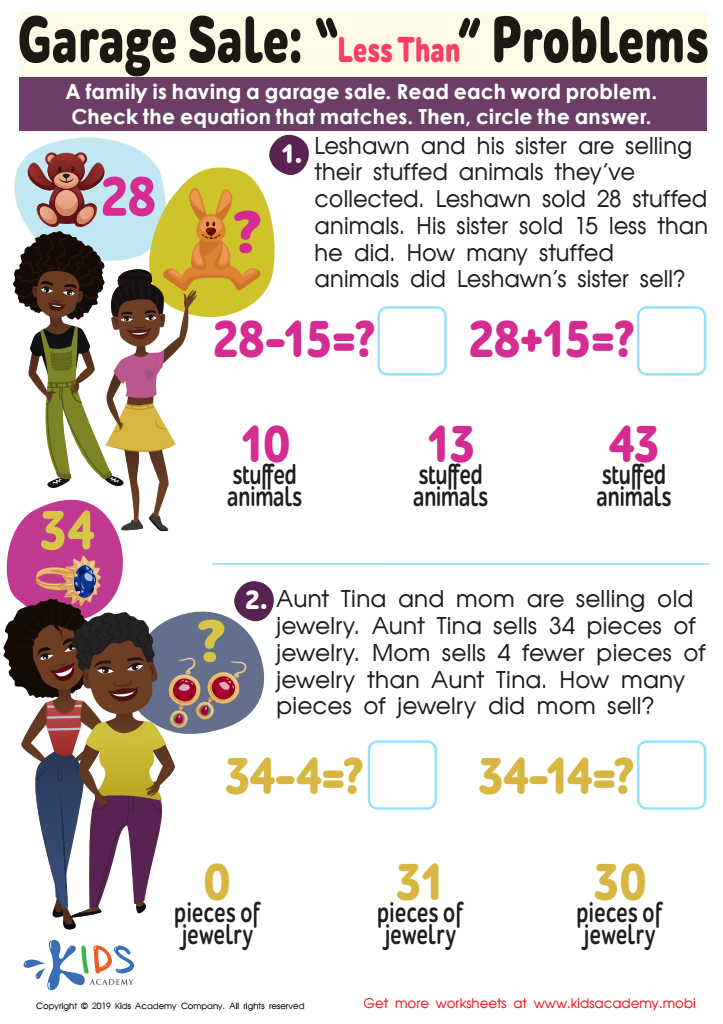
Garage Sale Less Than Worksheet
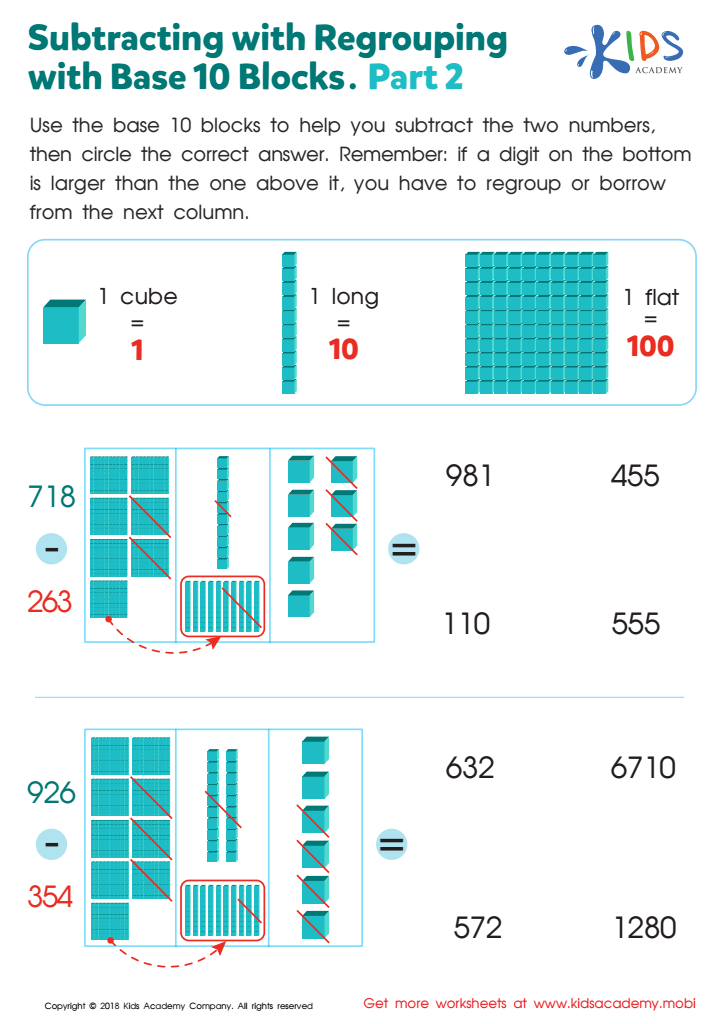
Subtracting with Regrouping with Base 10 Blocks. Part 2 Worksheet
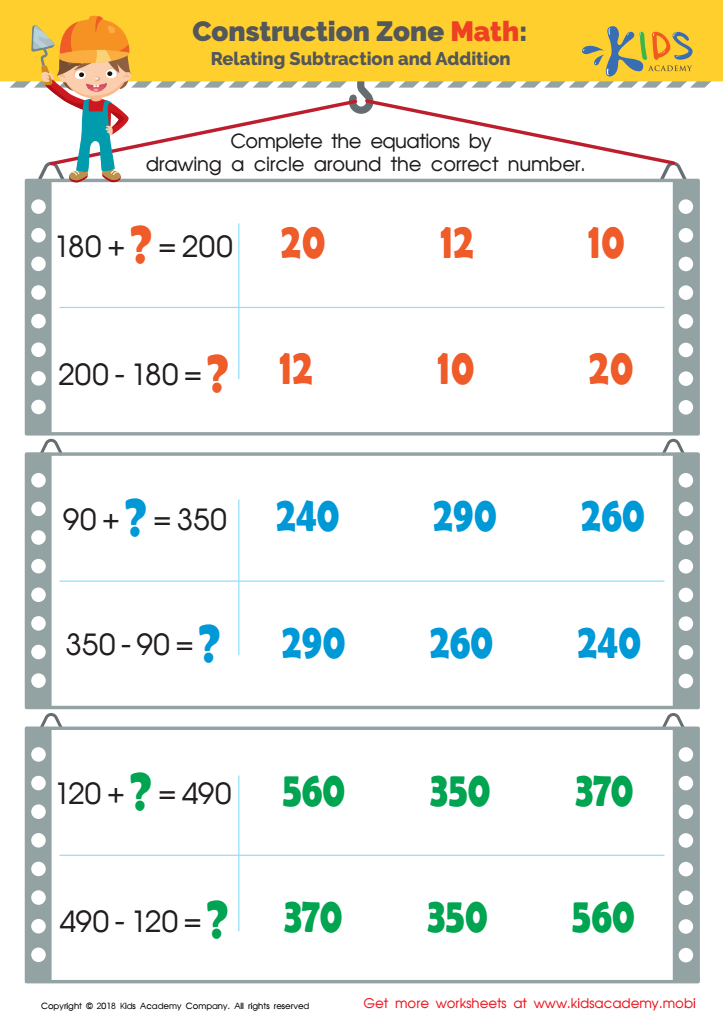
Construction Zone Math: Relating Subtraction and Addition Worksheet








Understanding subtraction and normal addition and subtraction is crucial for children aged 8-9, as it forms the foundation for more advanced mathematical concepts. At this age, students are transitioning from concrete to abstract thinking. Mastery of these basic operations is essential for developing cognitive skills such as logical reasoning, problem-solving, and critical thinking.
Parents and teachers should emphasize these skills because they are not only vital for academic success but also for everyday life. Simple tasks like making change, measuring ingredients, and understanding time rely heavily on these basic arithmetic operations.
Moreover, fluency in addition and subtraction builds confidence in children, making them more willing to tackle challenging problems. This self-assurance is pivotal for maintaining their interest in mathematics, which is critical for future learning in subjects such as algebra, geometry, and beyond.
Furthermore, understanding these concepts early on helps to prevent gaps in knowledge that can hinder later learning. By ensuring students grasp these fundamentals, parents and teachers can help create a smooth educational progression, setting the stage for continued academic achievement and a positive attitude towards learning. Engaging practices, such as puzzles and interactive games, can make this learning process inviting and effective for young learners.








