Multiplication practice Normal Worksheets for 8-Year-Olds - Page 2
30 filtered results
-
From - To
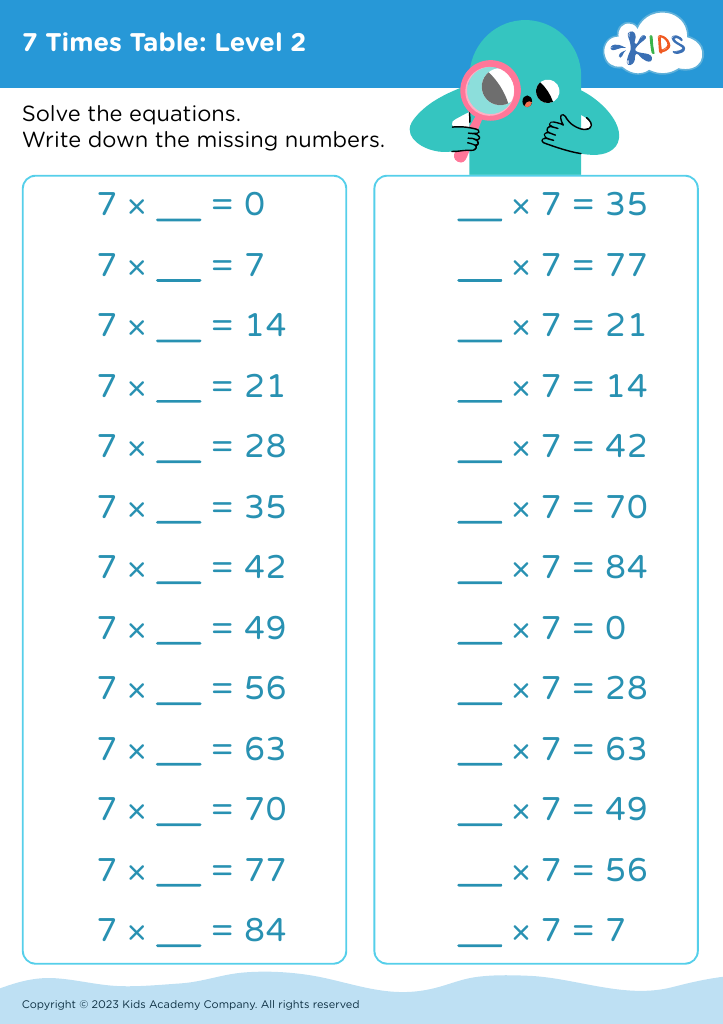
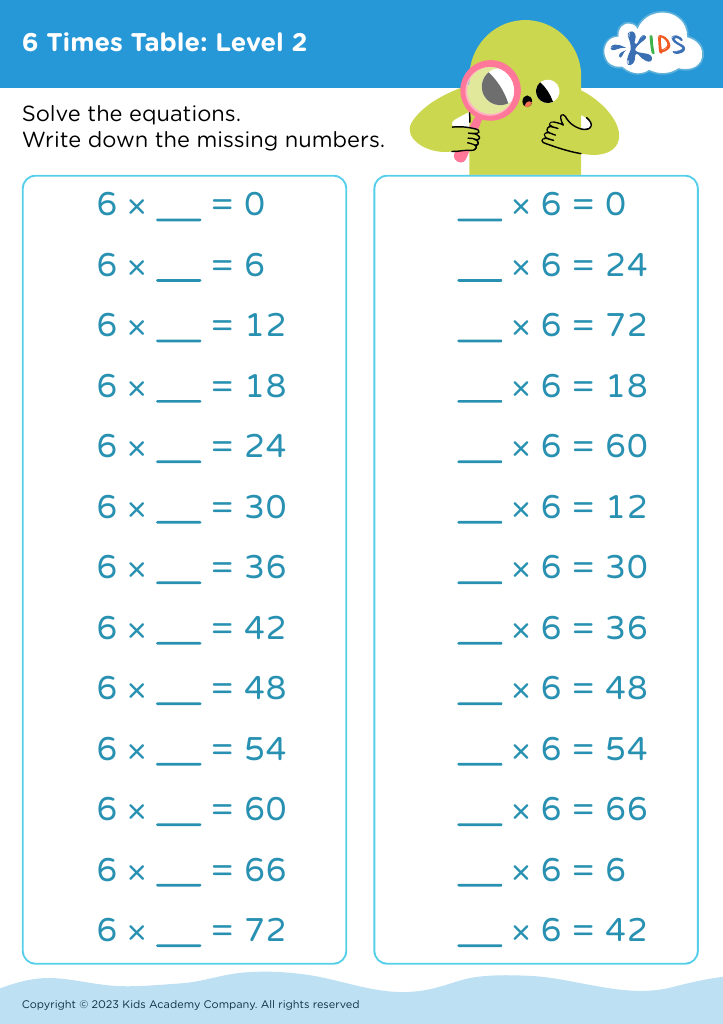
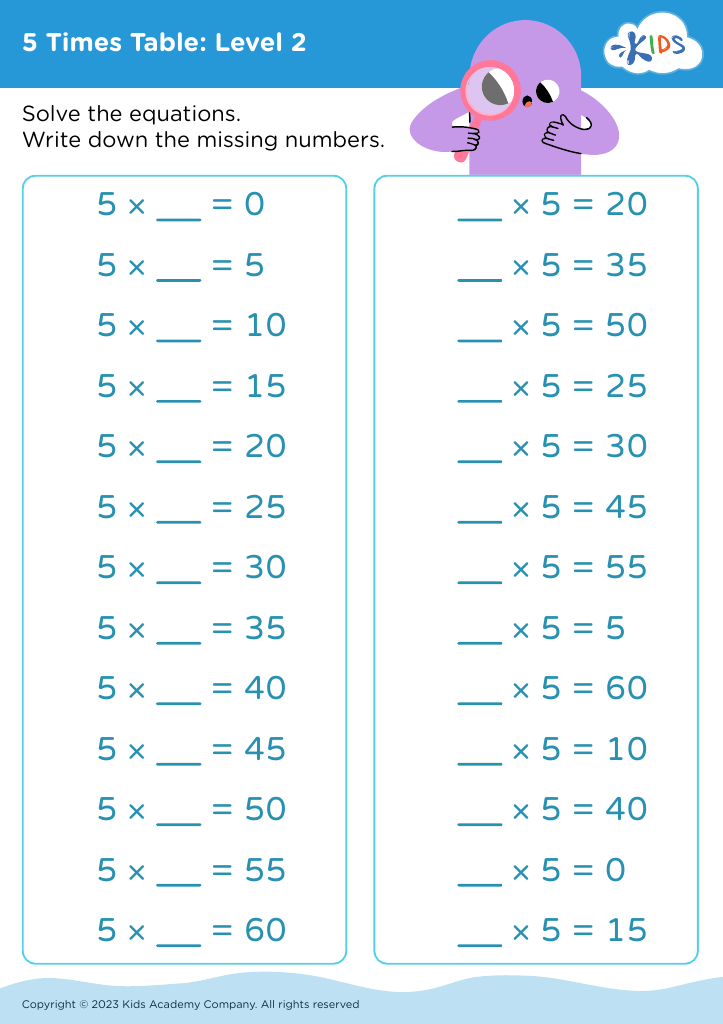
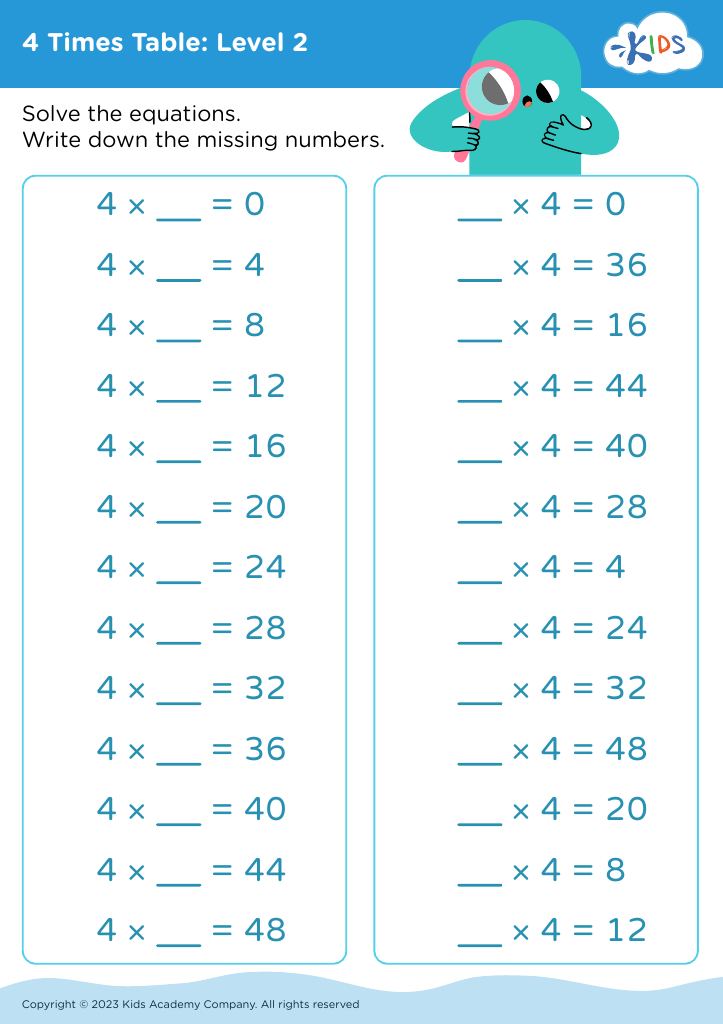
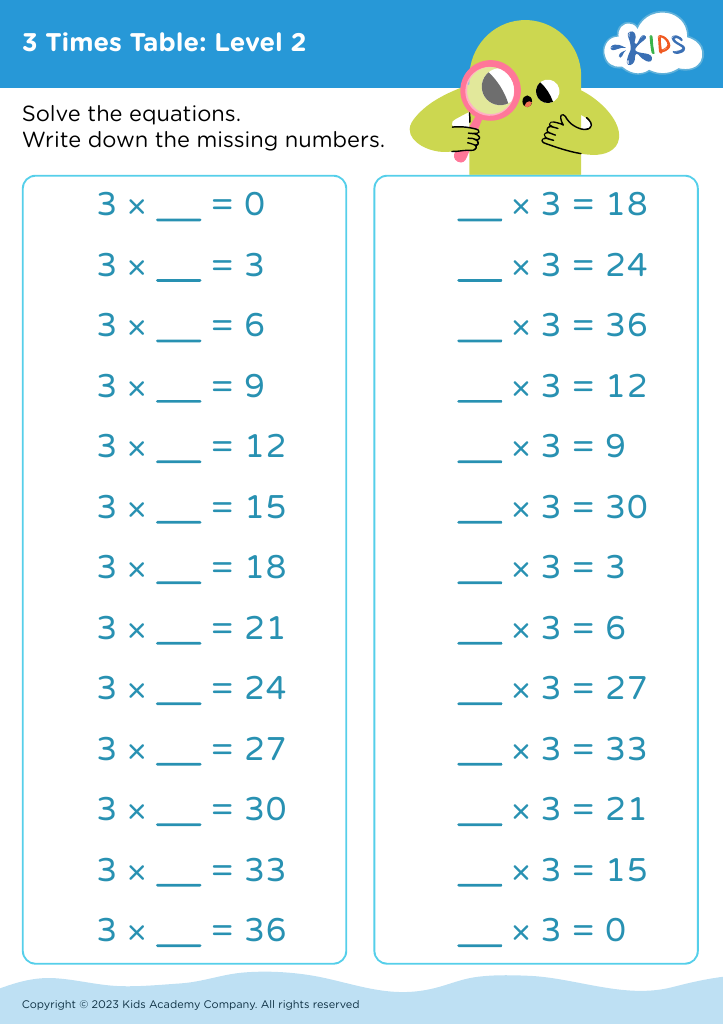
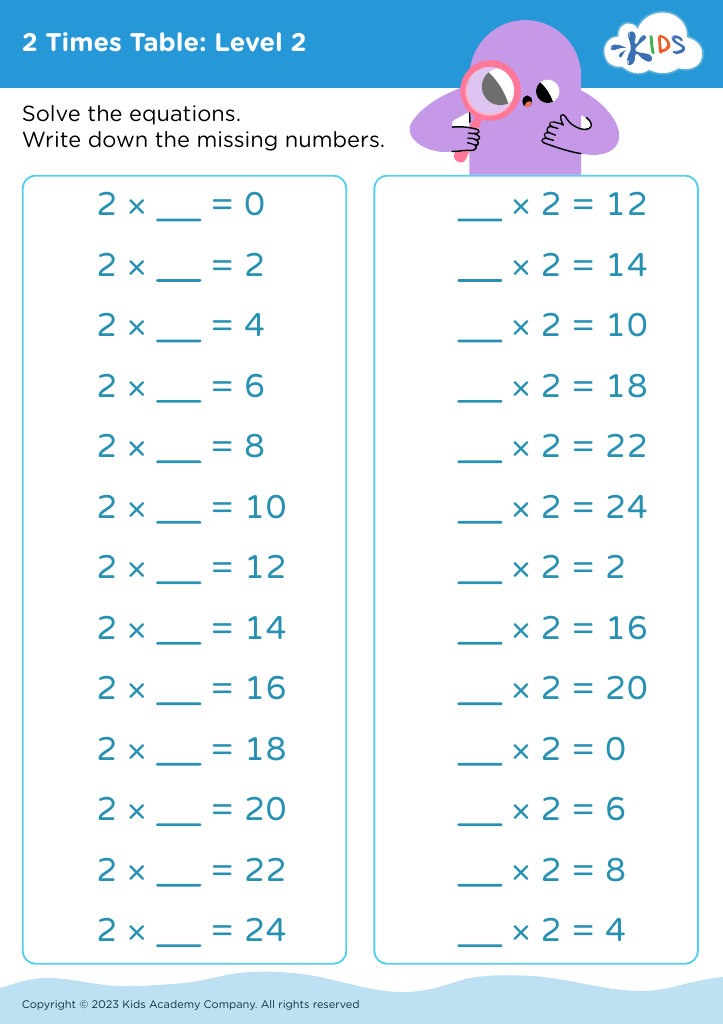




Parents and teachers should care about multiplication practice for 8-year-olds because it serves as a foundational skill essential for future mathematical readiness. Mastery of multiplication improves overall cognitive development and problem-solving abilities. At this age, children begin to encounter more complex math concepts, making multiplication a critical building block for subjects like division, fractions, and algebra.
Regular practice helps foster a strong number sense, encouraging children to recognize patterns and relationships between numbers. By engaging in multiplication drills, students improve their fluency, which is key to increasing their confidence in math. Furthermore, strong multiplication skills enhance a child's ability to tackle real-world challenges, such as calculating costs, measuring ingredients in cooking, or determining time intervals.
Additionally, consistent multiplication practice can make learning more enjoyable. Creative approaches—such as games, songs, and interactive activities—can help keep children motivated. Importantly, when parents show interest and support in their child’s learning, it creates a positive environment that encourages academic success. By prioritizing multiplication practice, both parents and teachers contribute to building a solid arithmetic foundation that will support various avenues for a child’s academic and personal growth in the years ahead.








