Story sequencing Normal Worksheets for 8-Year-Olds
5 filtered results
-
From - To
Unlock your 8-year-old's storytelling potential with our engaging Story Sequencing Normal Worksheets. These expertly designed printables from Kids Academy help young learners master the essential skill of sequencing events in a story. With fun, age-appropriate exercises, children can practice putting story segments in order, enhancing their comprehension and narrative skills. Perfect for both classroom and at-home learning, these worksheets are crafted to make learning enjoyable and effective. Boost your child's confidence in reading and creativity today by introducing them to our collection of Story Sequencing Normal Worksheets.
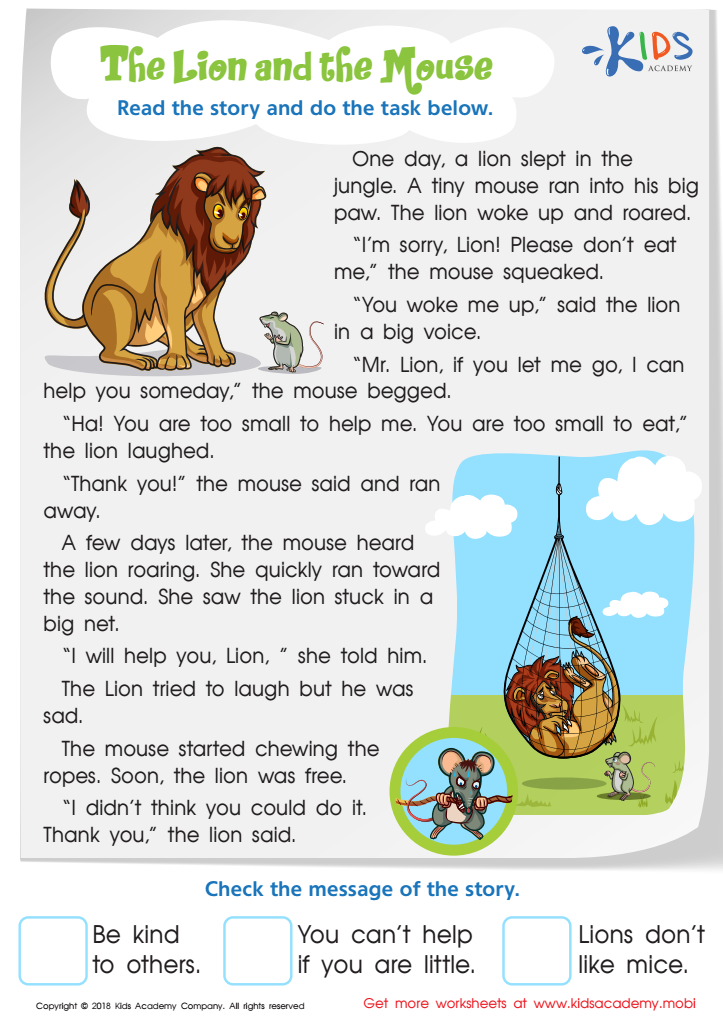
The Lion and the Mouse Worksheet
 Assign to My Students
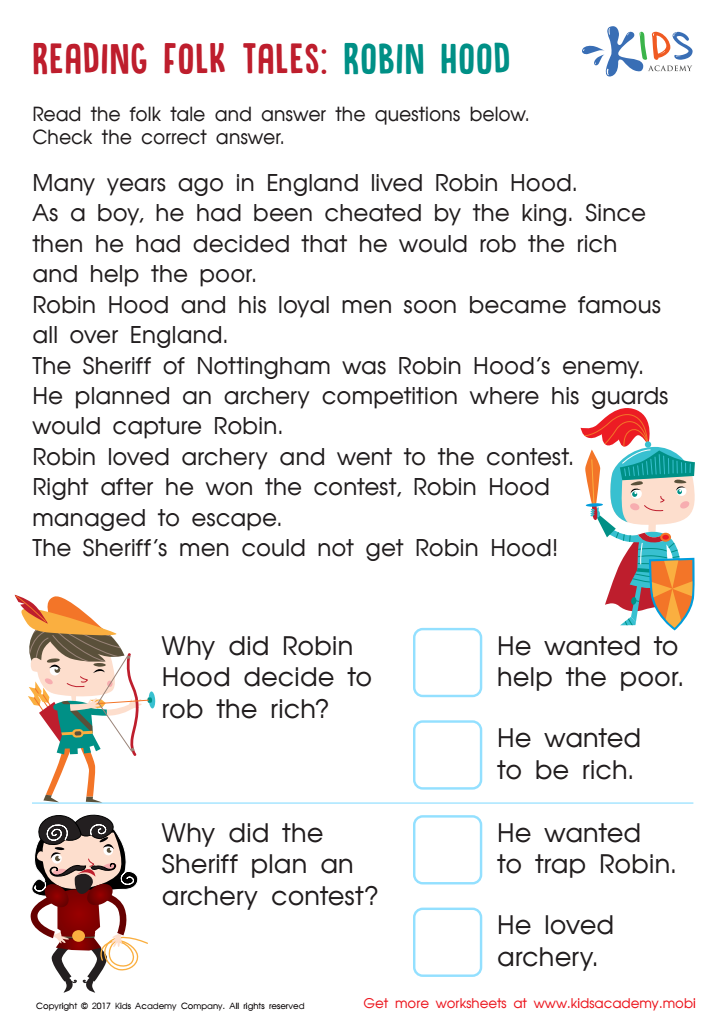
Robin Hood Folktale Worksheet
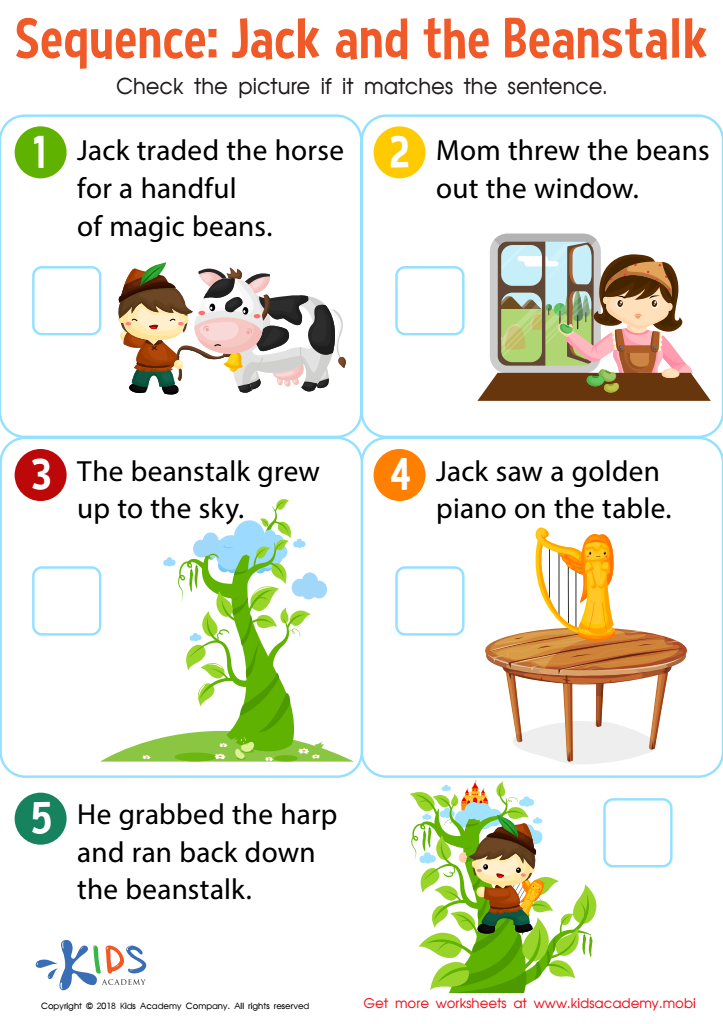
Sequence: Jack and The Beanstalk Worksheet
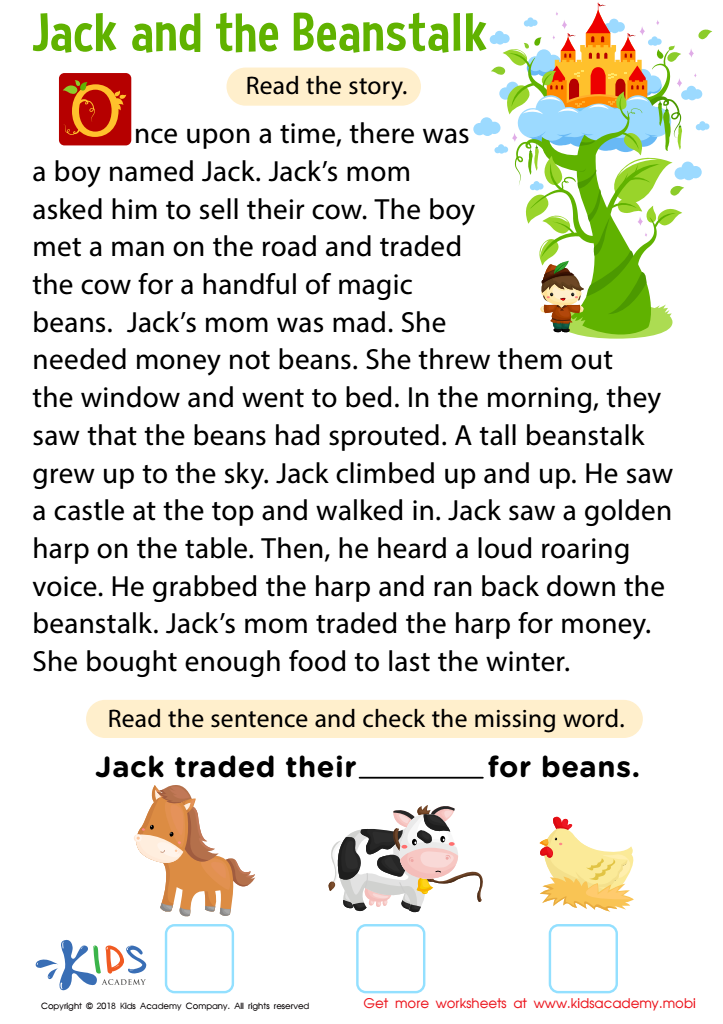
Jack and Beanstalk Worksheet
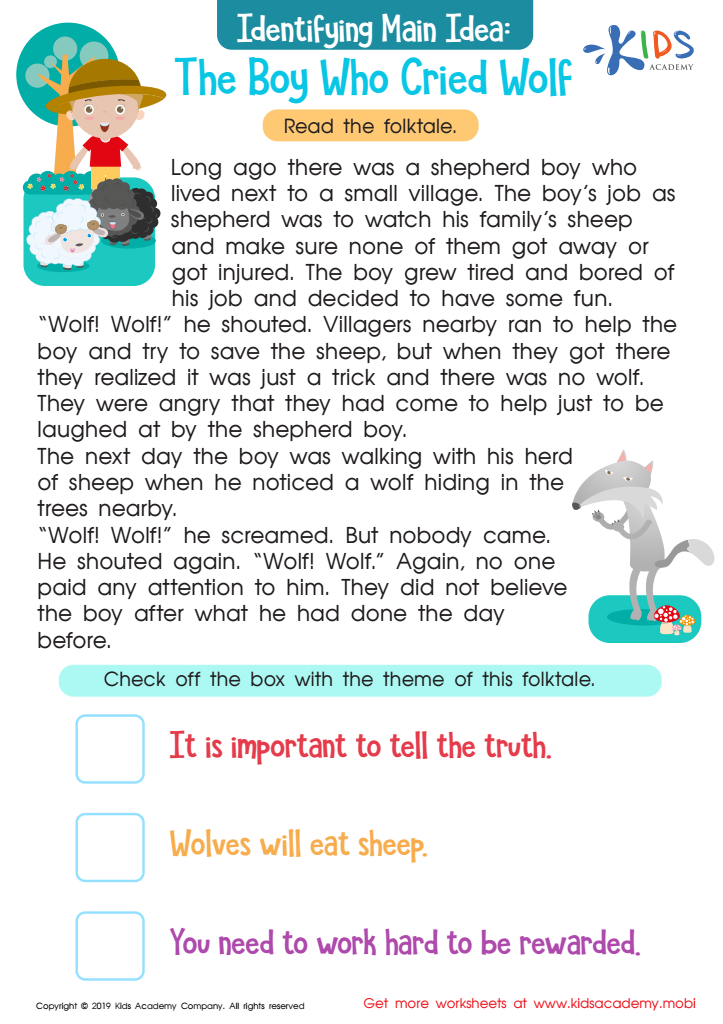
The Boy Who Cried Wolf Part 2 Worksheet








Understanding story sequencing is essential for 8-year-olds, as it fundamentally contributes to their literacy and cognitive development. This skill involves recognizing the logical order of events within a story, promoting comprehension and retention. For parents and teachers, emphasizing story sequencing helps children grasp the narrative structure, enhancing their ability to predict outcomes and comprehend cause-and-effect relationships.
When children master story sequencing, they become better listeners and readers. It also aids in improving their organizational skills, as sequencing requires them to place events in a linear, understandable order. This ability to logically arrange information transfers into other academic areas, such as mathematics and science, where step-by-step processes are crucial.
Moreover, understanding and creating sequences helps nurture essential communication skills. Children learn to articulate their thoughts coherently and improve their writing by constructing well-ordered narratives. This, in turn, boosts their confidence in both verbal and written expression.
Focusing on story sequencing also fosters a love for reading, as children who understand plot developments are more likely to stay engaged and find joy in storytelling. For parents and teachers, promoting this skill supports holistic child development, equipping young learners with the tools needed for academic success and effective communication.








