Time recognition Normal Worksheets for 8-Year-Olds
3 filtered results
-
From - To
Discover our specialized Time Recognition Worksheets designed for 8-year-olds. These engaging worksheets from Kids Academy help children master the essential skill of telling time. With a variety of interactive exercises, students will learn to read both analog and digital clocks, understand terminology like 'quarter past' and 'half past,' and practice calculating elapsed time. Perfect for enhancing classroom lessons or home learning, our worksheets make time-telling both fun and educational. Boost your child’s confidence and proficiency in reading the clock with these thoughtfully crafted worksheets. Explore today for a seamless blend of learning and enjoyment!
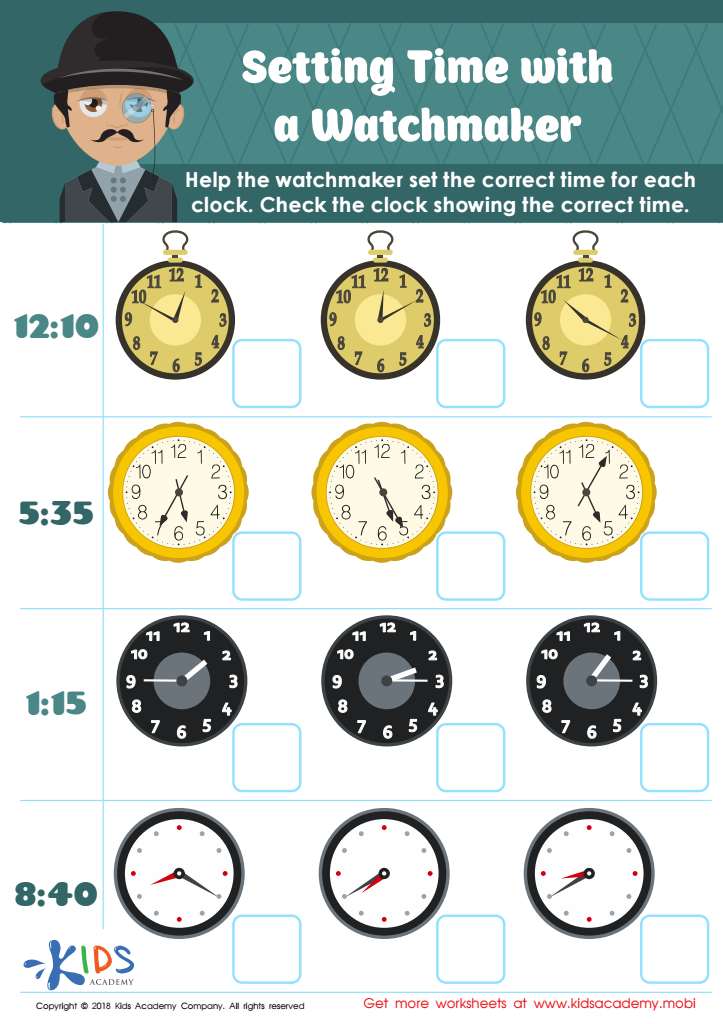
Setting Time with Watchmaker Worksheet
 Assign to My Students
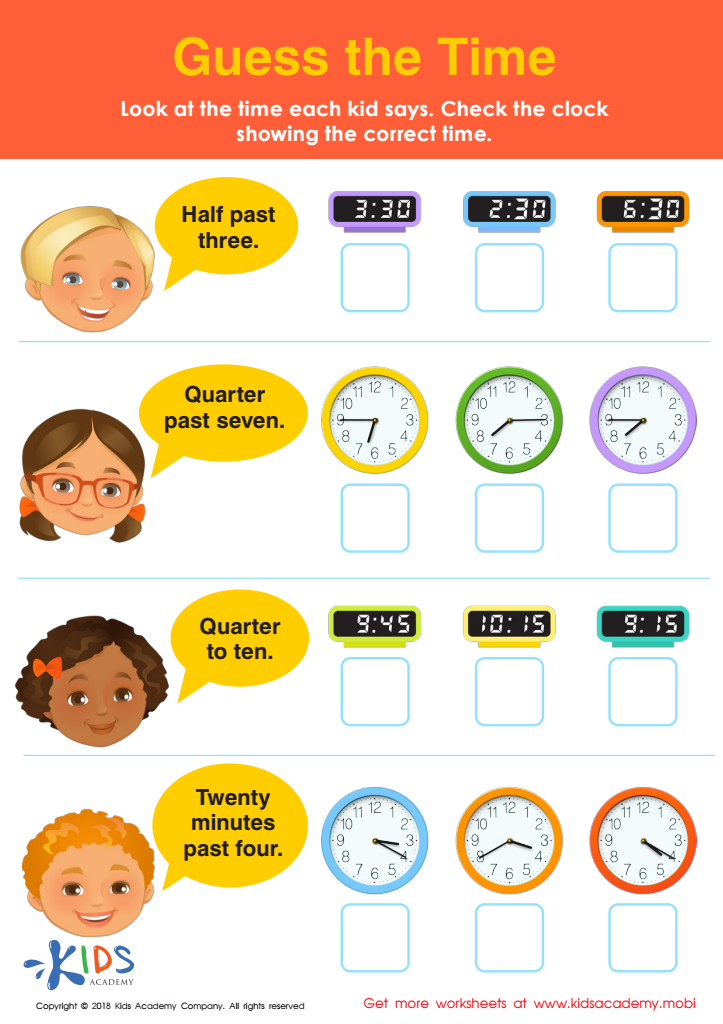
Guess the Time Worksheet
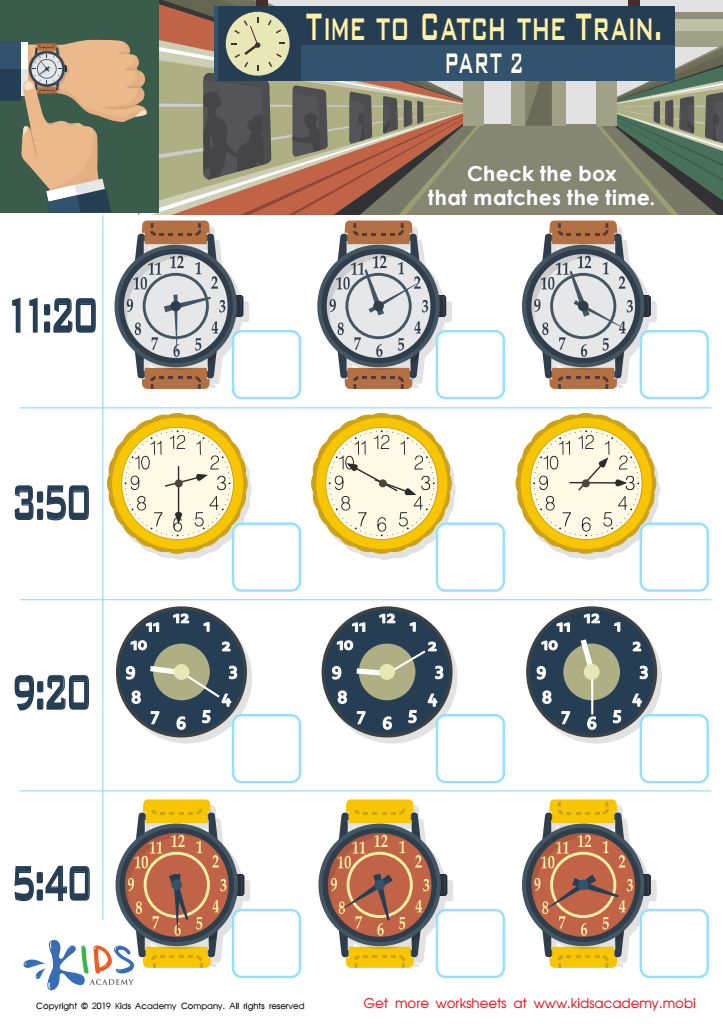
Time to Catch the Train Part 2 Worksheet







Teaching time recognition to 8-year-olds is crucial for several reasons, both academically and developmentally. First, understanding time strengthens math skills. Reading clocks requires recognizing numbers, simple math (like addition and subtraction), and an understanding of fractions since clocks are essentially divided into quarters and halves. This lays a vital foundation for more complex math concepts they will encounter later in school.
Second, time recognition fosters responsibility and independence. When children can tell time, they are better equipped to manage their daily routines, transitions, and deadlines. This skill develops a sense of autonomy because children don’t need to rely on adults to know when it’s time for activities such as meals, bedtimes, or school departure.
Third, telling time enhances a child’s punctuality and time management, essential life skills in both personal and professional settings. Knowing how to gauge and allocate time can help them complete tasks promptly and efficiently, reducing stress and promoting a sense of achievement.
Finally, understanding time blends seamlessly into historical and social learning. Comprehending scheduling, dates, historical events, and the chronological order of these events builds context for various subjects they will study. Thus, developing time-recognition skills early holistically benefits children, setting the stage for a successful academic journey and a structured, manageable daily life.








