Understanding measurements Normal Worksheets for 8-Year-Olds
6 filtered results
-
From - To
Discover fun and educational worksheets designed to help 8-year-olds understand measurements! Our "Understanding Measurements" worksheets cover essential skills such as length, weight, and volume. With engaging activities and colorful illustrations, these worksheets make learning interactive and enjoyable. Perfect for home or classroom use, they help children grasp the basics of measurement through practical exercises. Build your child’s confidence and competence in math by exploring our comprehensive collection tailored to their age and developmental stage. Give your child the tools they need to succeed in understanding and applying measurement concepts with ease. Explore now and enhance their learning journey!
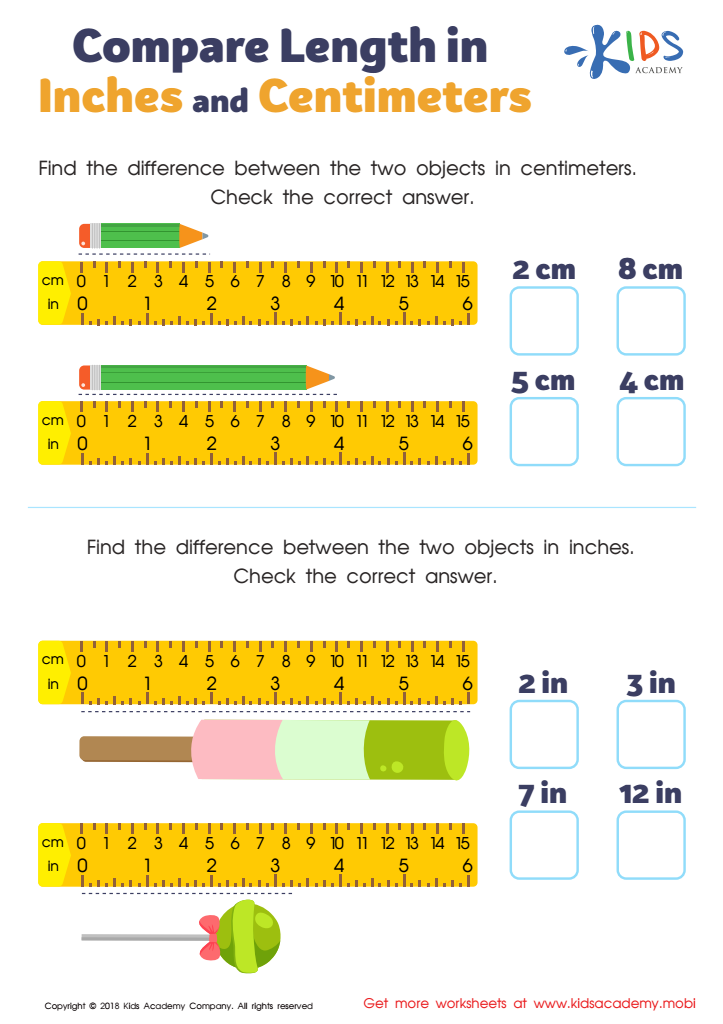
Compare Length in Inches and Centimeters Worksheet
 Assign to My Students
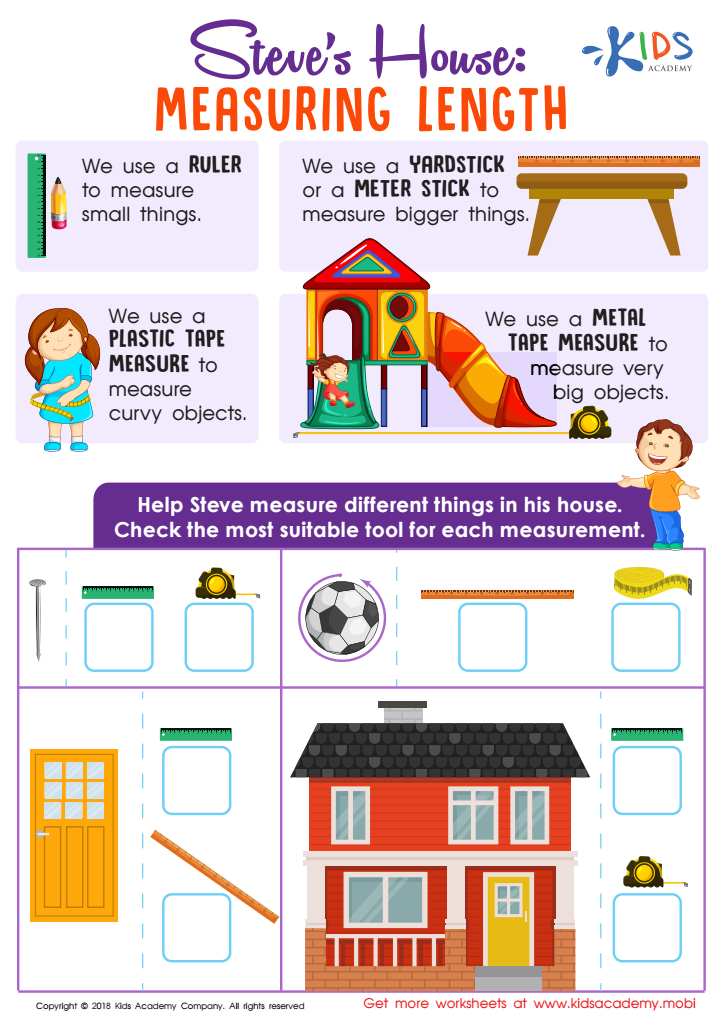
Steve's House: Measuring Length Worksheet
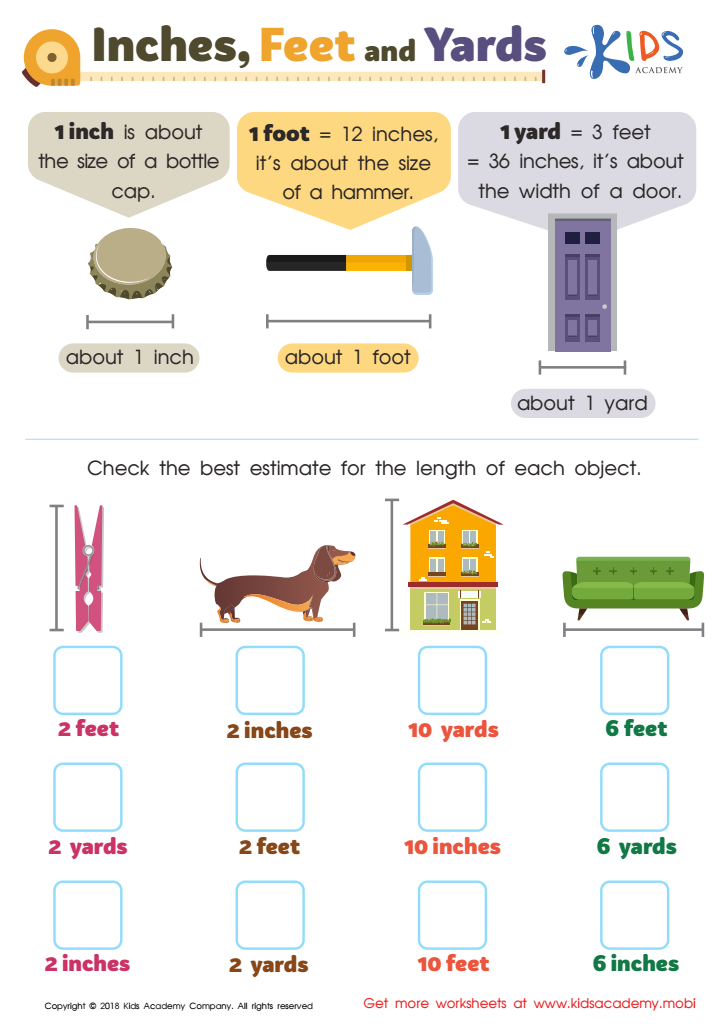
Inches, Feet and Yards Worksheet
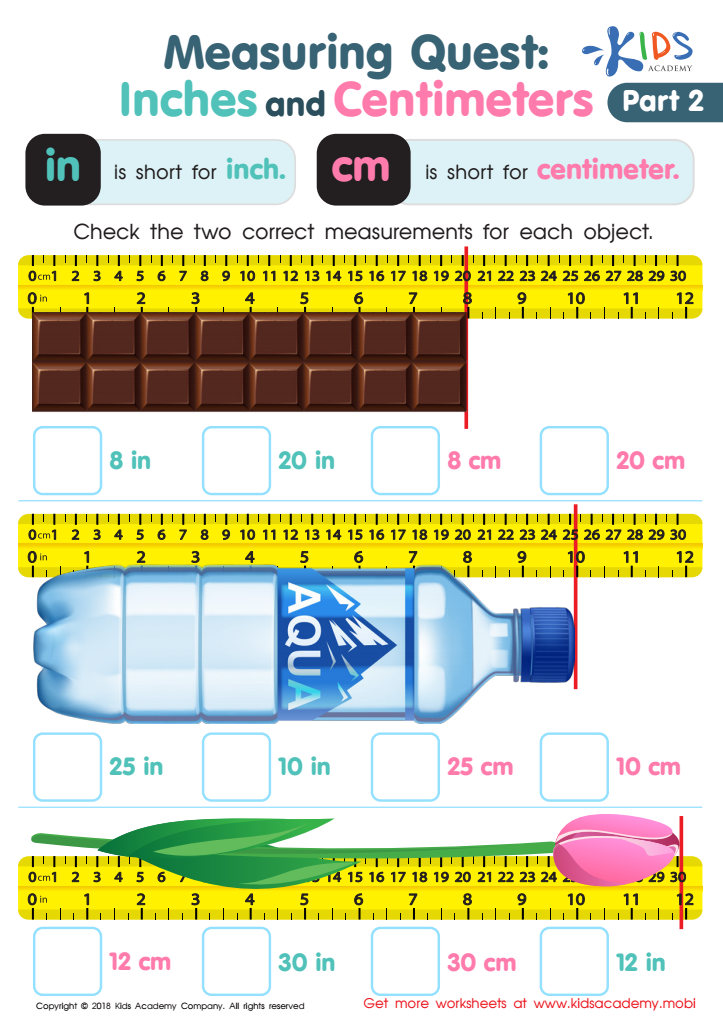
Measuring Quest: Inches and Centimeters - Part 2 Worksheet
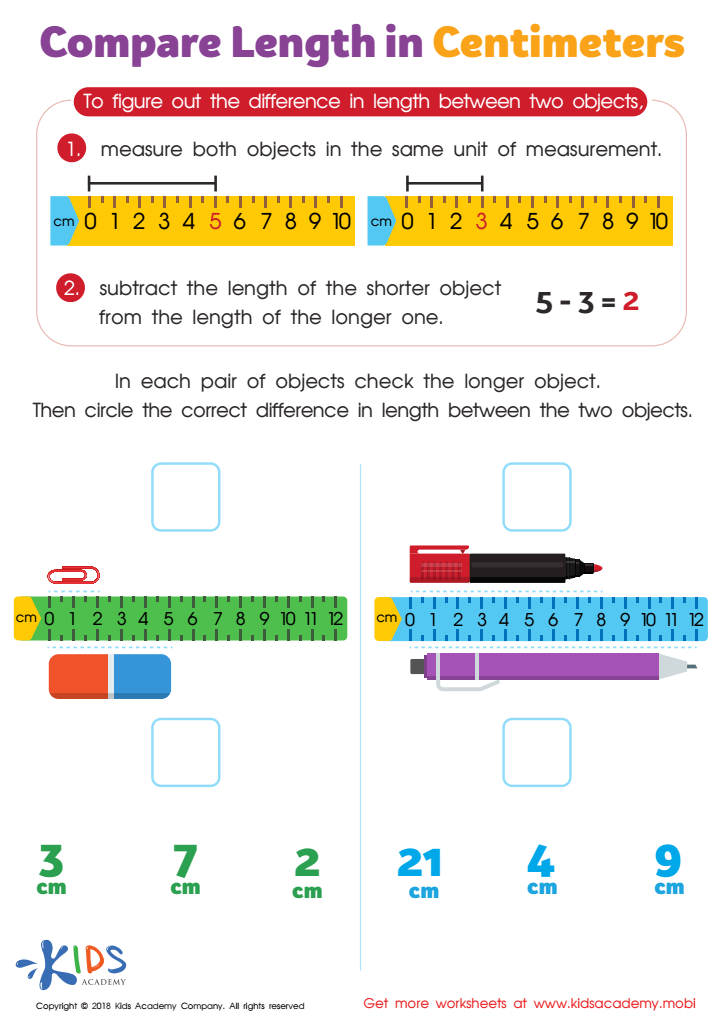
Compare Length in Centimeters Worksheet
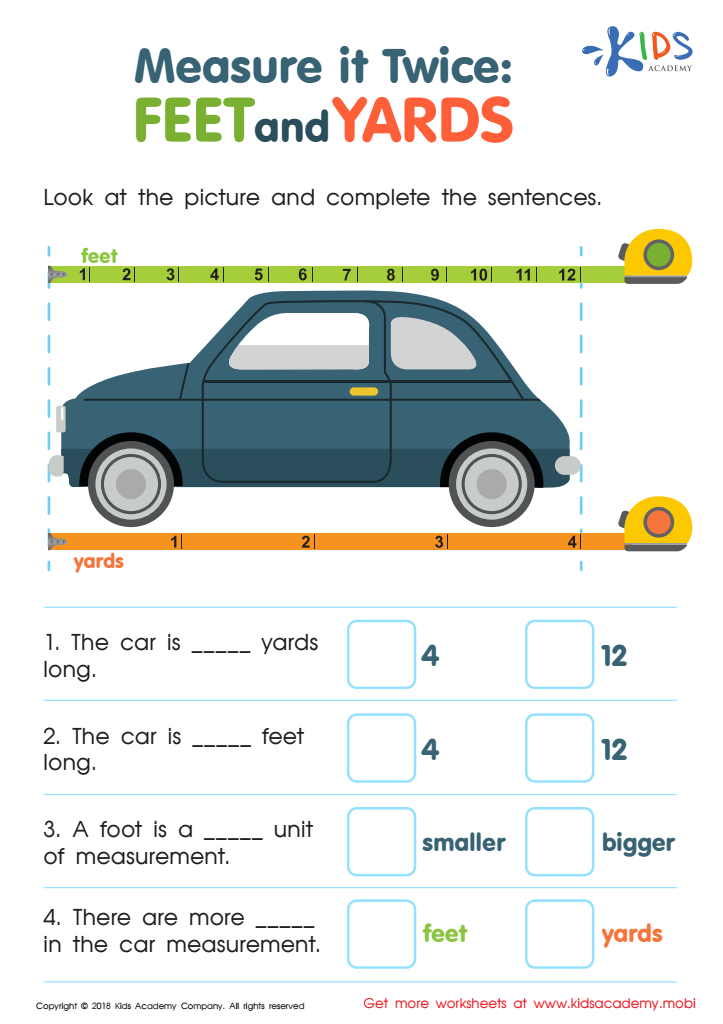
Measure It Twice: Feet and Yards Worksheet






Understanding measurements is a fundamental skill for 8-year-olds that builds the foundation for future academic success and practical life skills. Parents and teachers should recognize its importance for several reasons. Firstly, measurement concepts, including length, weight, volume, and time, are integral to everyday tasks, such as cooking, shopping, or scheduling activities. By mastering these concepts early, children can gain confidence and independence in their daily lives.
Academically, measurement skills are closely linked to subjects like math and science. Children learn to use rulers, scales, and clocks, which deepens their understanding of numbers, units, and spatial relationships. This comprehension is essential for higher-level math concepts like geometry and helps in scientific observations and experiments.
Moreover, measurement activities promote critical thinking and problem-solving. When children measure objects, compare quantities, or estimate lengths, they are engaged in active problem-solving, which enhances their analytical skills.
Socially and emotionally, confidence in measurement tasks empowers children, making them more willing to engage in group activities and discussions that involve these skills. They feel competent and capable, which fosters a positive attitude towards learning in general.
Overall, understanding measurements not only broadens an 8-year-old's academic horizons but also equips them with practical skills indispensable for everyday life, thereby supporting their holistic development.








