Understanding syllables Normal Worksheets for 8-Year-Olds
3 filtered results
-
From - To
Welcome to our "Understanding Syllables Normal Worksheets" page designed specifically for 8-year-olds! These engaging worksheets help young learners master the concept of syllables through fun activities and exercises. By breaking down words into their syllabic components, children enhance their reading and pronunciation skills, paving the way for literacy success. Our carefully crafted resources include colorful illustrations, interactive tasks, and a variety of practice formats that cater to different learning styles. Ideal for classroom or home use, these worksheets make learning about syllables enjoyable and educational. Explore our collection now and help your child gain confidence in their reading abilities!
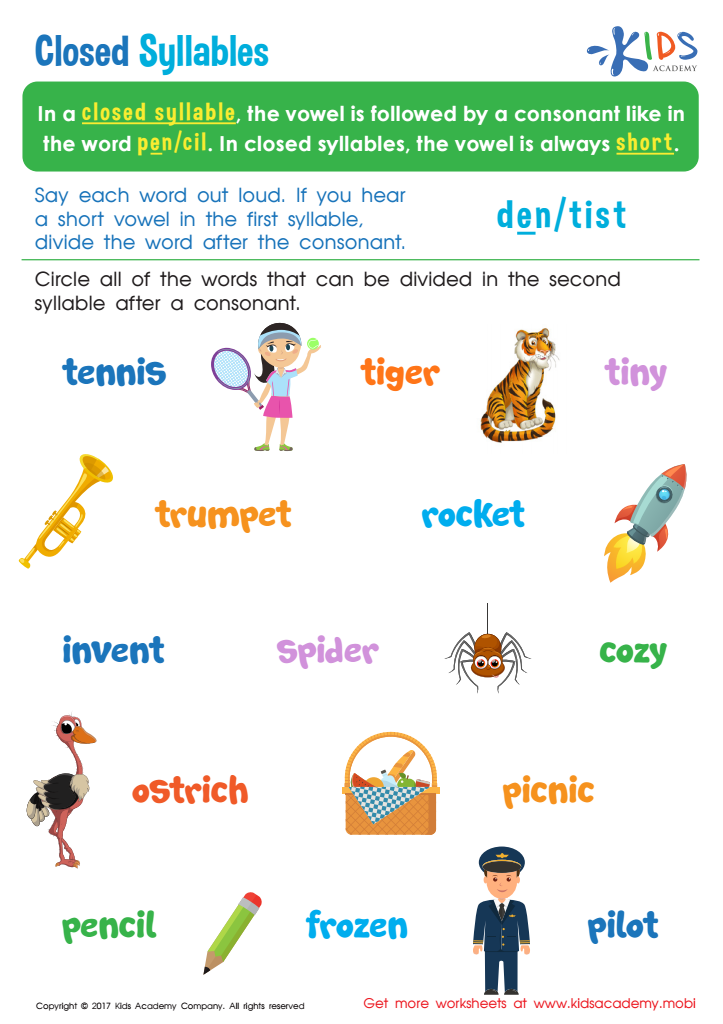
Closed Syllable Spelling Worksheet
 Assign to My Students
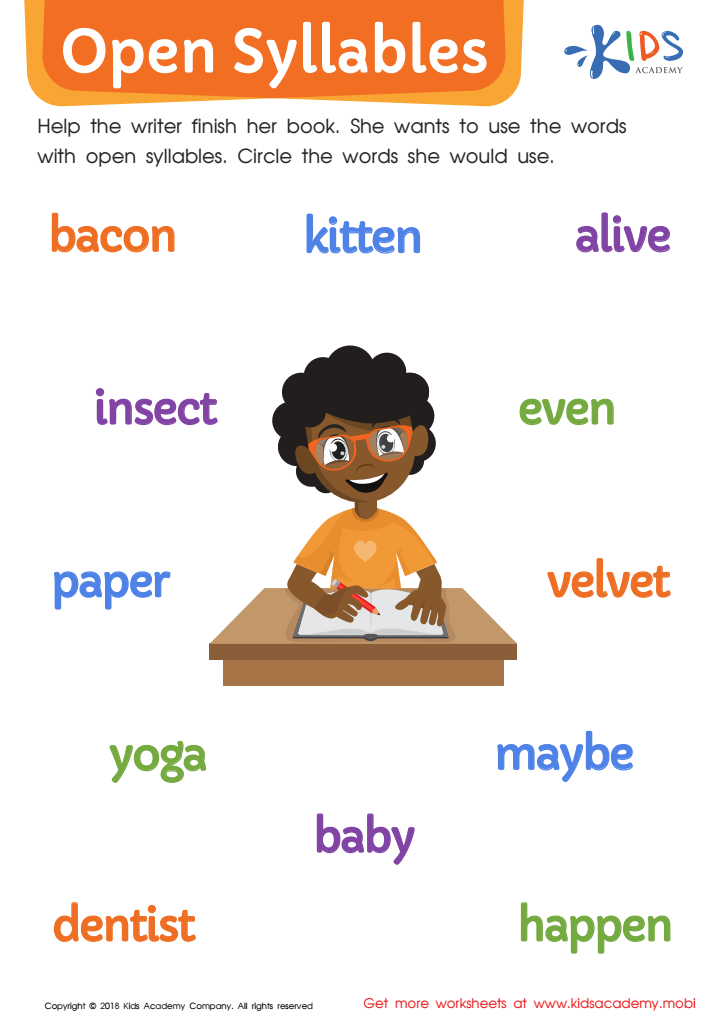
Open Syllables Worksheet
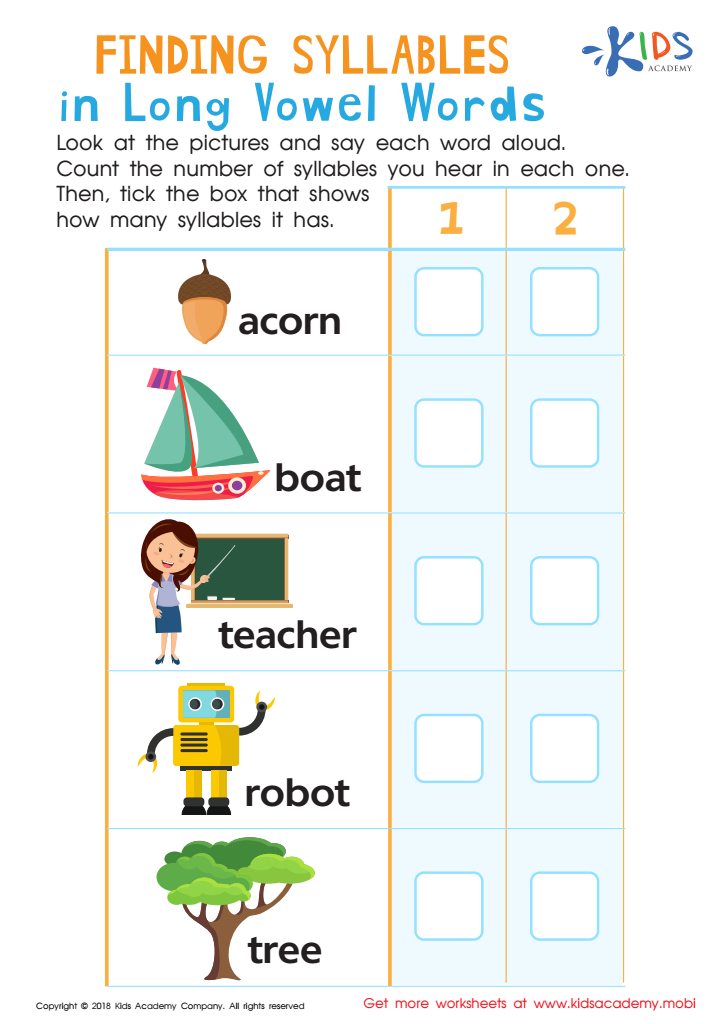
Finding Syllables in Long Vowel Words Worksheet



.jpg)




Understanding syllables is crucial for 8-year-olds as it forms the foundation of literacy skills, enabling children to read and write effectively. Syllables are the building blocks of words. When children learn to identify and break words into syllables, they enhance their phonemic awareness, essential for decoding unfamiliar words. This skill helps improve their reading fluency and comprehension.
For parents and teachers, focusing on syllables is vital in developing children's spelling skills. As these young learners grasp how syllables function within words, they can better predict spelling patterns, making writing and literacy more accessible and enjoyable. Additionally, understanding syllables fosters a love for language; when kids can experiment with sounds and word formations, they become more engaged and confident in their communication abilities.
Furthermore, this foundational skill supports mathematical and rhythmic learning, as measuring syllables can also introduce concepts of patterns and rhythms, applicable in poetry and music. Cultivating a strong understanding of syllables can lead to improved academic performance and a greater appreciation for language, which contributes to overall cognitive development and educational success. Therefore, it is imperative for parents and teachers to prioritize syllable awareness in children’s educational journeys.








