Understanding base ten Normal Numbers Worksheets for 8-Year-Olds
3 filtered results
-
From - To
Welcome to our "Understanding Base Ten Normal Numbers Worksheets" designed specifically for 8-year-olds! These worksheets provide engaging, age-appropriate activities that help young learners explore the base ten number system, enhancing their numerical fluency and mathematical understanding. Through interactive exercises, students will practice composing and decomposing numbers, identifying place values, and mastering counting techniques. Our resources encourage fun, hands-on learning, making complex concepts accessible and enjoyable. Whether in the classroom or at home, these worksheets aim to build a strong foundation in mathematics, preparing children for future challenges. Explore our collection and watch your child's confidence in math grow!
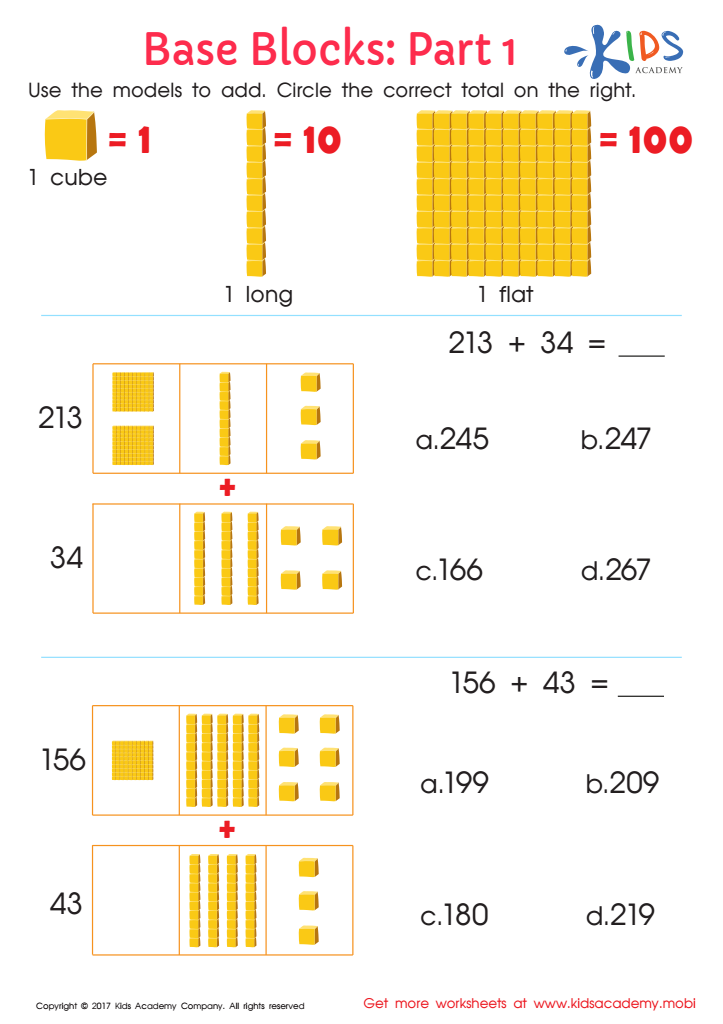
Base Ten Blocks Worksheet: Part 1
 Assign to My Students
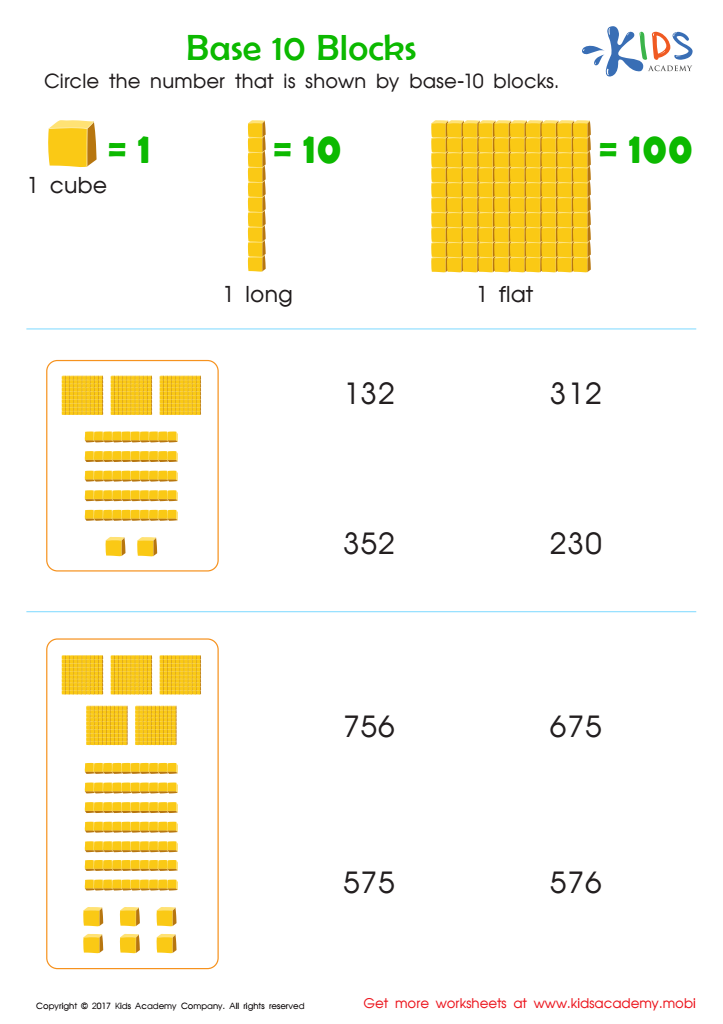
Base Ten Blocks Worksheet
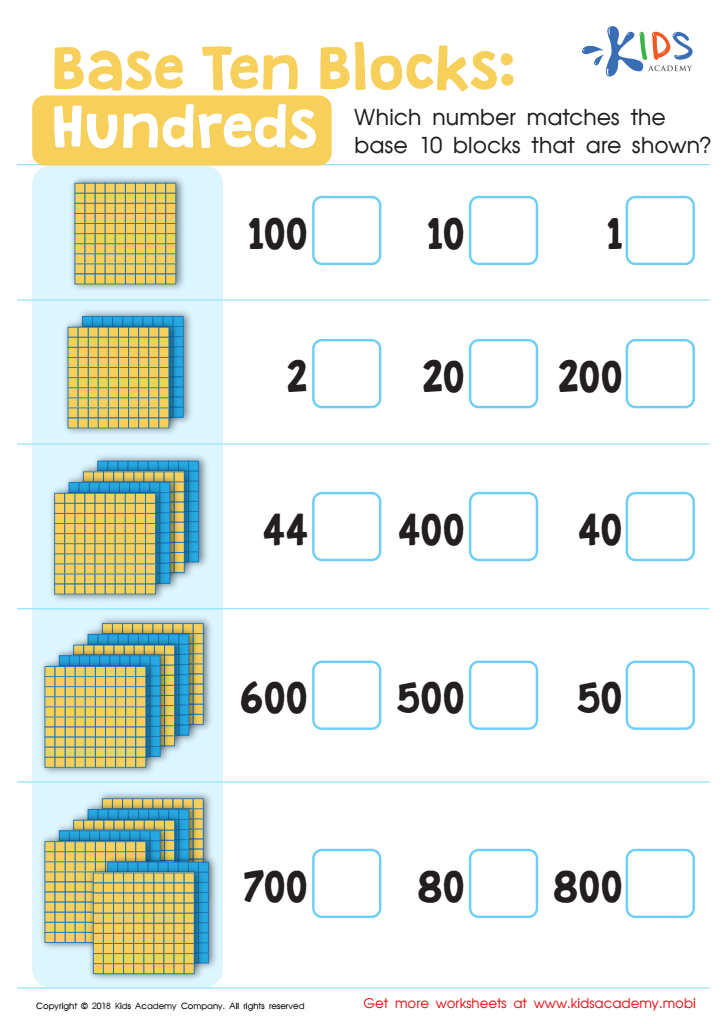
Base Ten Blocks: Hundreds Worksheet




.jpg)



Understanding base ten and normal numbers is crucial for 8-year-olds as it lays the foundation for their mathematical skills. At this age, children transition from basic counting to more complex number manipulation, which includes operations like addition, subtraction, and even an introduction to multiplication and division. Base ten number systems help children grasp place value, an essential concept that determines the value of digits based on their position.
Parents and teachers should care about this as a strong understanding of base ten numbers enhances a child's ability to perform calculations confidently. It enables children to recognize patterns, make connections between numbers, and solve real-world problems with ease. Moreover, foundational skills in number sense are correlated with future academic success in mathematics and other subjects.
Fostering a robust understanding of normal numbers promotes critical thinking and encourages children to explore mathematical concepts more deeply. Ultimately, when children are comfortable with these concepts, they not only improve in mathematics but also develop a positive attitude towards the subject, fostering lifelong learning and curiosity. Investing time and resources into teaching base ten systems can significantly impact children's overall academic journey and self-esteem in their mathematical abilities.








